With its expansive highway system, demanding industries, and one of the nation’s largest medical hubs, Houston is a place where opportunity and risk often intersect. Residents move between construction sites, healthcare facilities, corporate offices, and busy roadways every day, and when an unexpected injury occurs, the effects can reach far beyond physical recovery.
Many victims find that the most difficult losses involve emotional strain, lifestyle disruption, and the inability to enjoy daily routines as they once did. Unlike financial losses, these harms are deeply personal and require careful legal evaluation to ensure they are properly recognized. The Insurance Outlaw personal injury lawyers help individuals understand how attorneys assign value to these intangible impacts, using legal methods and evidence to present a clear picture of suffering. Knowing how non-economic damages are calculated allows injury victims to pursue claims that reflect the true extent of their experience.
Defining Non-Economic Damages
Non-economic damages refer to losses that are not tangible. Damages that fall under this category are pain, suffering, emotional distress, loss of companionship, and loss of enjoyment in life. The effects of these conditions are real and cannot be ignored, so courts will usually account for them in an injury case.
Key Factors Considered by Attorneys
Before proposing a number for non-economic damages, attorneys consider multiple factors. Factors including age, injury severity, type of medical treatment, and expected healing time are evaluated. And how much it affects activities of daily living (ADLs) and relational interactions is another determinant of the degree of these losses.
How Non-Economic Damages are Estimated
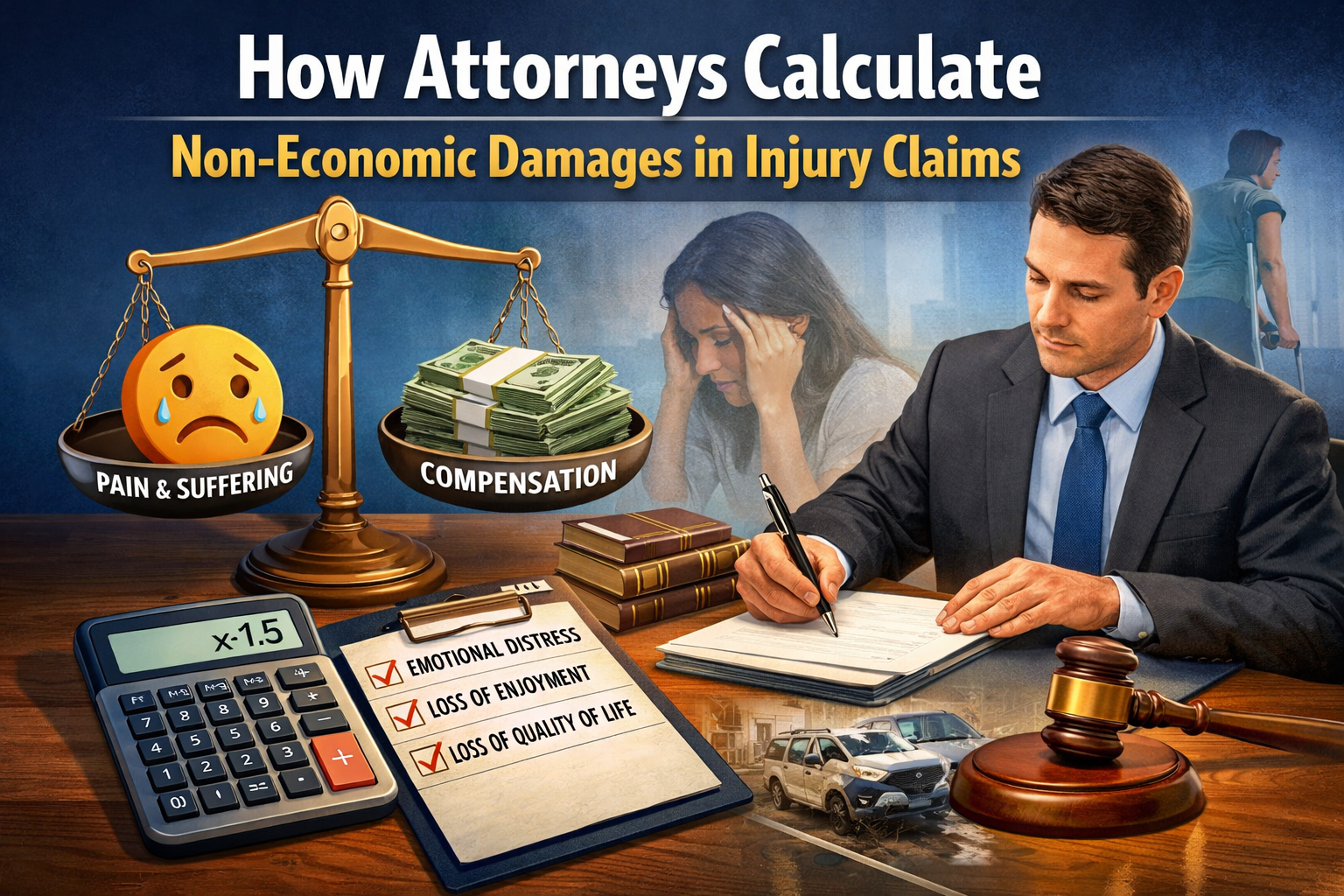
Legal professionals often make their calculations based on two main approaches. The multiplier approach uses a number to multiply the actual financial losses to account for the severity of the injury. Depending on the case, this number can be from one to five. The per diem method establishes a daily rate for pain and suffering and is then multiplied by the number of days the victim endures the effects.
The Multiplier Method
Attorneys choose a multiplier according to the severity of an injury and its impact on someone’s quality of life. A lower number is used for less serious injuries. That number increases for more serious injuries, which means more pain and suffering and longer-lasting consequences.
The Per Diem Approach
Placing a daily price on non-material losses is a tough prospect. A lawyer may use an average workday wage to approximate the fee. This number is then multiplied by the number of days of pain or emotional distress that lasted.
Supporting Evidence Strengthens Claims
Attorneys collect data to back up their calculations. Doctor records, therapist notes, and the opinions of other experts are frequently used to show the depth of the pain and emotional toll. Evident from testimonies by family or colleagues, indicating changes in mood or behavior, or the ability to continue activities. The documentation justifies the amount requested and proves that it corresponds to the extent of your suffering.
Personal Impacts Receive Careful Attention
Each case presents unique challenges. Lawyers need to study case details and find out exactly how the injury has altered an individual’s day-to-day life, relationships, and future plans. The more information that can be presented about how life has changed, the more persuasive the arguments for non-economic damages are likely to be.
Challenges in Calculating Non-Economic Damages
Non-economic damages, unlike medical bills or lost wages, do not come with clear receipts or paystands. Because of its subjective nature, different insurance adjusters, or even juries, may come to different conclusions on the value of losses. There needs to be a compelling case as to why a certain dollar value is being requested.
The Importance of Settlement Negotiations
Some injury claims may be settled during negotiations or through court sessions. In each case, the evidence brought forth and the arguments provided influence the resultant figure. Juries do have discretion, however, as they consider all of the details of the case presented at trial. In other words, this process of gathering evidence and legal reasoning is used in negotiations to settle; it takes two to tango.
Conclusion
Non-economic damages, such as pain and suffering, need careful consideration of what each person experienced. Lawyers utilize best practices and evidence to make a fair request. They take into account all unique situations surrounding a loss and articulate their reasoning to give the best chance for injured parties to be farily compensated for their losses.