Introduction
Honda CR-V guide covers a very popular compact SUV known for practicality, comfortable seating, cargo space, fuel economy and dependability. Over the years, since it was introduced in the 1990s, the CR-V has gone through great transformations, which saw, in addition to base models, more tech, better safety features, turbocharged engines, hybrid power options, and all-wheel drive becoming available. These changes present different ownership experiences, which in turn makes it important to do your research before you buy.
A comprehensive overview of the Honda CR-V lineup will help shoppers to compare between the older used models and the new gasoline and hybrid options. The present CR-V is offered in gasoline and hybrid powertrains, front-wheel drive or with optional AWD, and up to 76.5 cubic feet of cargo space in the gas models. Hybrid versions report to get up to 40 mpg combined, which we see as a plus for families which want better fuel efficiency without going to a full electric SUV.
Honda CR-V Generations Explained
First-Generation CR-V: 1997-2001
First out of the gate with the CR-V, Honda put forth their compact SUV platform. We saw a four-cylinder gas engine and the option of all-wheel drive. At a smaller scale than present-day CR-Vs, it still did well in the city and managed to bring in that which is useful for passengers and cargo. The design was at a simpler scale than what we see in today’s CR-Vs, but what it lacked in frills it made up for in the practical, which in turn helped to set the model’s reputation as a family-friendly SUV.
Presently, the main issue with these models is age. Even a well-kept Honda from that time may still need work on the suspension, air conditioning, seals, electrical equipment, and other issues of wear and tear. Buyers do well to research the vehicles’ history and physical condition very well instead of choosing the lowest-priced option.
Second-Generation CR-V: 2002-2006
The CR-V’s second generation brought in a more refined look, improved comfort, and maintained options of the four-cylinder engines and AWD. It did what it set out to do, which was practical over off-road performance, which made it great for commuting, shopping, family trips, and everyday driving. Also, its simple design, which some may find appealing, put it in a position for success in the used SUV market for those with a tight budget.
Also, by this point in time, these cars are of an age where the car’s condition outweighs the importance of the trim level. We see it best in the transmission, engine, air conditioning, suspension, cooling system, and electrical equipment, which do or do not work. It is also noted that a car which has a full maintenance history is a better buy than a cheaper CR-V whose past history is a mystery.
Third-Generation CR-V: 2007-2011
The CR-V 2007 and onward models came out with a more contemporary look, both outside and in. Still, they kept the same four-cylinder engine and option of AWD. It also became a very good choice for families, which we credited to it having great passenger space, practical boot space, and compact dimensions. Also, the ride quality on the highway improved over past models.
Used car buyers should still have a thorough inspection of the vehicles, which is due to their age. In some model years, we have reported issues with air conditioning, drivetrain, engine, and other mechanical problems. While these issues do not affect all cars out there, a professional inspection may point out the more serious problems before you buy.
Fourth-Generation CR-V: From 2012 to 2016
The CR-V, which is in its 4th generation, reports to have a better interior that, in terms of use, comfort, technology, and safety, at the same time has maintained the four-cylinder gas engine and also offers AWD. It also has a roomy cabin and very practical cargo space, which is a hit with family customers. As for options, which vary by model year and trim, you may find Bluetooth, touchscreen systems, backup cameras, and more advanced driver-assistance technologies.
Some years have seen greater owner complaints, which in turn mostly report issues with the engine, transmission, and drivetrain. That doesn’t mean the whole generation is unreliable, but it is wise for buyers to test-drive the car and check its maintenance history before purchase.
Fifth-Generation CR-V: 2018-2022
In the CR-V’s full reinvention for the fifth generation, we see the introduction of what would become a mainstay in Honda’s lineup, the 1.5-liter turbocharged four-cylinder engine. Also, we see a more contemporary interior, better tech features, and eventually the CR-V Hybrid. Front-wheel drive and AWD options were made available to the buyer, which in turn gave them the choice of what best fit their specific driving conditions and fuel efficiency needs.
In the early 2017-2018 model years, Honda put out updates regarding oil dilution, which affected certain vehicles in cold-weather areas. Buy time to research which vehicles were recalled or run your VIN through the Honda database for service campaigns. Also, see to it that the car you are interested in has had proper maintenance. A well-serviced fifth-generation CR-V still is a great used SUV.
Sixth-Generation CR-V: From 2023 to Present
The CR-V, which is sixth generation, brought out a more large-scale and modern design with a greater focus on hybrid options. At present, the lineup has a 1.5-liter turbo, which produces 190 horsepower in the gas models, and in the hybrid, which puts out a 2.0-liter engine and a two-motor hybrid system for a total of 204 system horsepower.
Today’s CR-V models in the current generation have a cargo capacity of 39.3 cubic feet behind the second row, which increases to 76.5 cubic feet with the rear seats down; in the case of hybrids, the figures are 36.3 and 71.8, respectively. Also, we see modern connectivity, driver-assist tech, AWD, which is available, and better interior quality in the latest generation.
Honda CR-V Fuel Economy
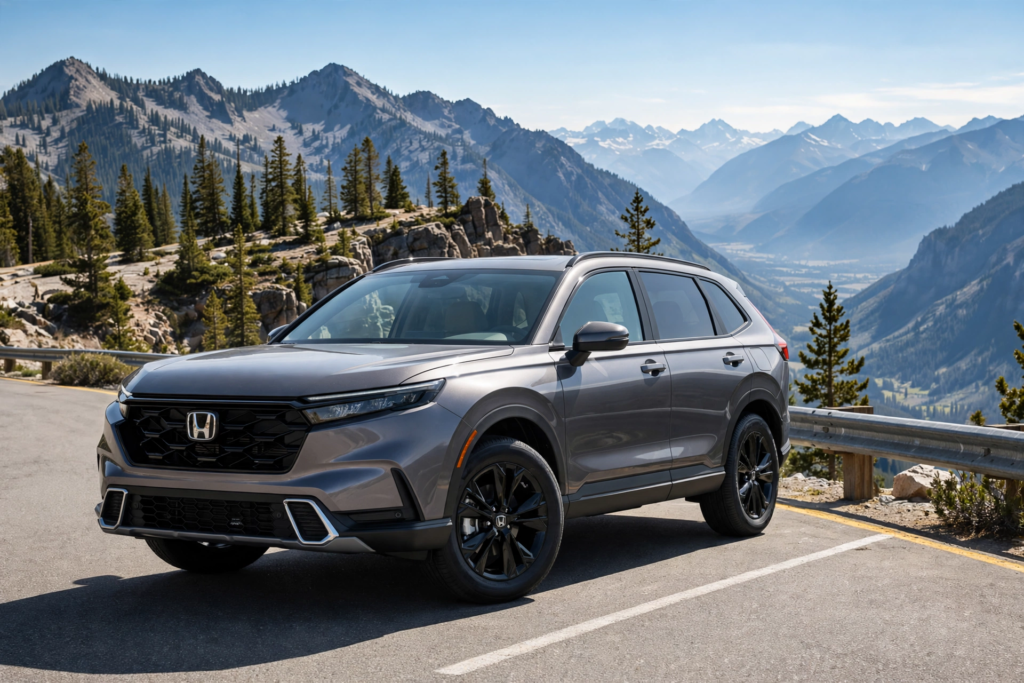
Fuel economy does indeed vary a great deal by generation, engine, trim, and drivetrain. For the 2026 CR-V, Honda reports front-wheel-drive gas models at up to 30 mpg combined, while AWD gas versions do up to 29 mpg combined. Hybrid models are much more so in terms of efficiency, with some front-wheel-drive versions reaching 40 mpg combined.
In the real world, MPG is a variable that changes based on traffic, your driving style, weather, vehicle load, tire pressure, and road conditions. In city driving, hybrid models tend to do very well because of the electric motors, which play a large role at low speeds. Also, AWD usually sees a drop in fuel economy as a result of the extra drivetrain components and weight.
CR-V AWD and Hybrid Options
AWD has for some time been an option on CR-V models, and it does add to traction in wet or slippery conditions. But it is not meant to transform the CR-V into a full off-road vehicle. Buyers who mostly use paved roads may prefer front-wheel drive, which in turn tends to cost less and also reports better fuel economy.
The CR-V Hybrid is a great choice for consumers that want to see a drop in fuel use out of their SUV, which still runs on gas. We are seeing at present that the hybrid system puts out a total of 204 horsepower, which also brings in AWD to certain trims. For families which do a lot of city driving or which are in heavy traffic, the hybrid does very well in terms of efficiency, power, and practicality.
Common Honda CR-V Issues

The CR-V has an excellent record of durability, that is until you get into which generation or model year, which then may see a variety of issues. In some older models, you will see suspension issues, air conditioning going out, electrical issues, transmission problems, fluid leaks, and other mechanical failures. Also, some of the mid-2010s and early fifth-gen models report issues with the engine and drivetrain.
It is best to reduce your risk when purchasing a used CR-V by doing your research on that individual car instead of that car’s model-year reputation. Check out maintenance records, warning lights, fluid leaks, tire wear, brakes, suspension, transmission issues, and engine performance. Also, buyers should check that any applicable recalls and service campaigns have been taken care of.
Best Honda CR-V for Families
The best CR-V for you will depend on your budget and what you prioritize. Older models are an affordable option for transport, but trade in that for greater issues related to maintenance as they age. With care, the 5th-generation CR-V does very well in terms of bringing together modern features, space, fuel efficiency, and good used-car value. The 6th-generation CR-V does best for those that want the latest in safety tech, interior design, hybrid options, and that new-car feel.
For best fuel efficiency, the CR-V Hybrid is your best choice. As for cargo capacity, some buyers may go for the gas model, which at present does put out a little more space. AWD is what you want if you are driving in low traction often; front-wheel drive is still the way to go for those that are mostly on paved roads.
Conclusion

The Honda CR-V has been a competitive player by reason of its practicality, efficiency, comfort, and reliability. Through six generations, it has gone from a basic compact SUV to a modern family vehicle, which includes turbocharged gasoline engines, hybrid power, advanced safety tech, and available AWD. It also provides useful cargo space and a comfortable five-seat interior, which in turn makes it a practical choice for the everyday family needs.
When it comes to the CR-V, what generation it is and its history of care are as important as the brand itself. Older models require close inspection due to their age, and some of the more recently used models should be looked at for any issues with the engine or the drivetrain. In terms of what is current, the latest CR-V has the best in terms of features and hybrid power. Also, it is a great pick for those that want a very practical, fuel-efficient, and large feature-set compact SUV.