Introduction
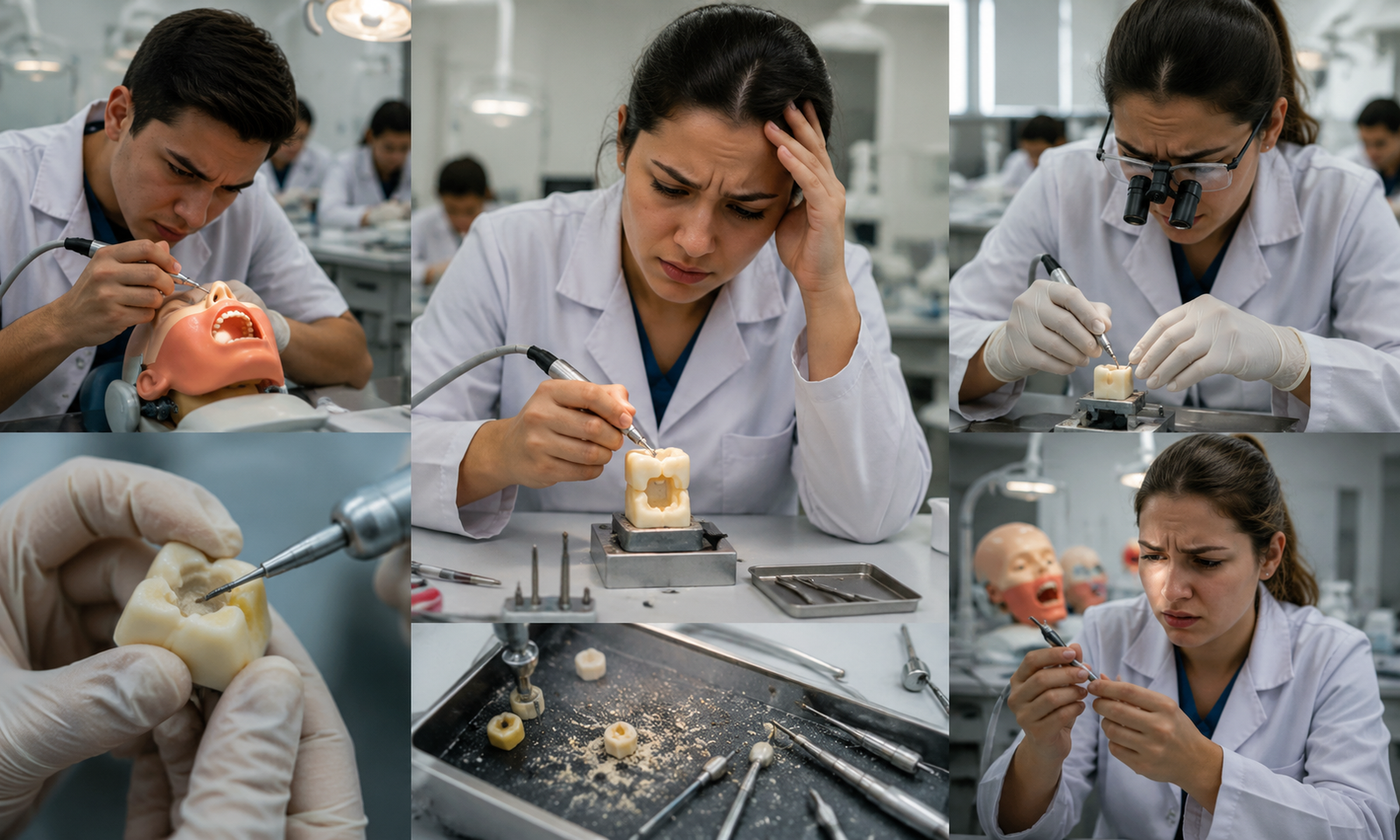
The pre-clinical stage of operative dentistry is the fundamental component in the learning process of dentistry in the sense that before training in the clinical setting, students acquire technical skills needed to provide safe and effective service to the patients. It is in this stage that students will be introduced to various dental instruments, materials and laboratory tools that simulate real clinical situations in a controlled setting. These are the building blocks of precision, ergonomics and procedural confidence in restorative dentistry and are oftentimes mastered first to ensure excellent mastery of the skills. In addition to identifying instruments, students should know the purpose of them, and how to use and maintain them. Understanding this phase well will greatly benefit one’s clinical work in the future and decrease the number of errors in a procedure. Students can dive deeper into the academic aspect of this level with a deeper understanding of pre-clinical training, emphasizing its function in developing proficiency prior to working with patients. The purpose of this article is to thoroughly describe the instruments, materials and tools employed in the planning, execution and learning of pre-clinical operative dentistry training and their importance in developing competent and confident dental professionals.
Pre-Clinical Operative Dentistry Equipment
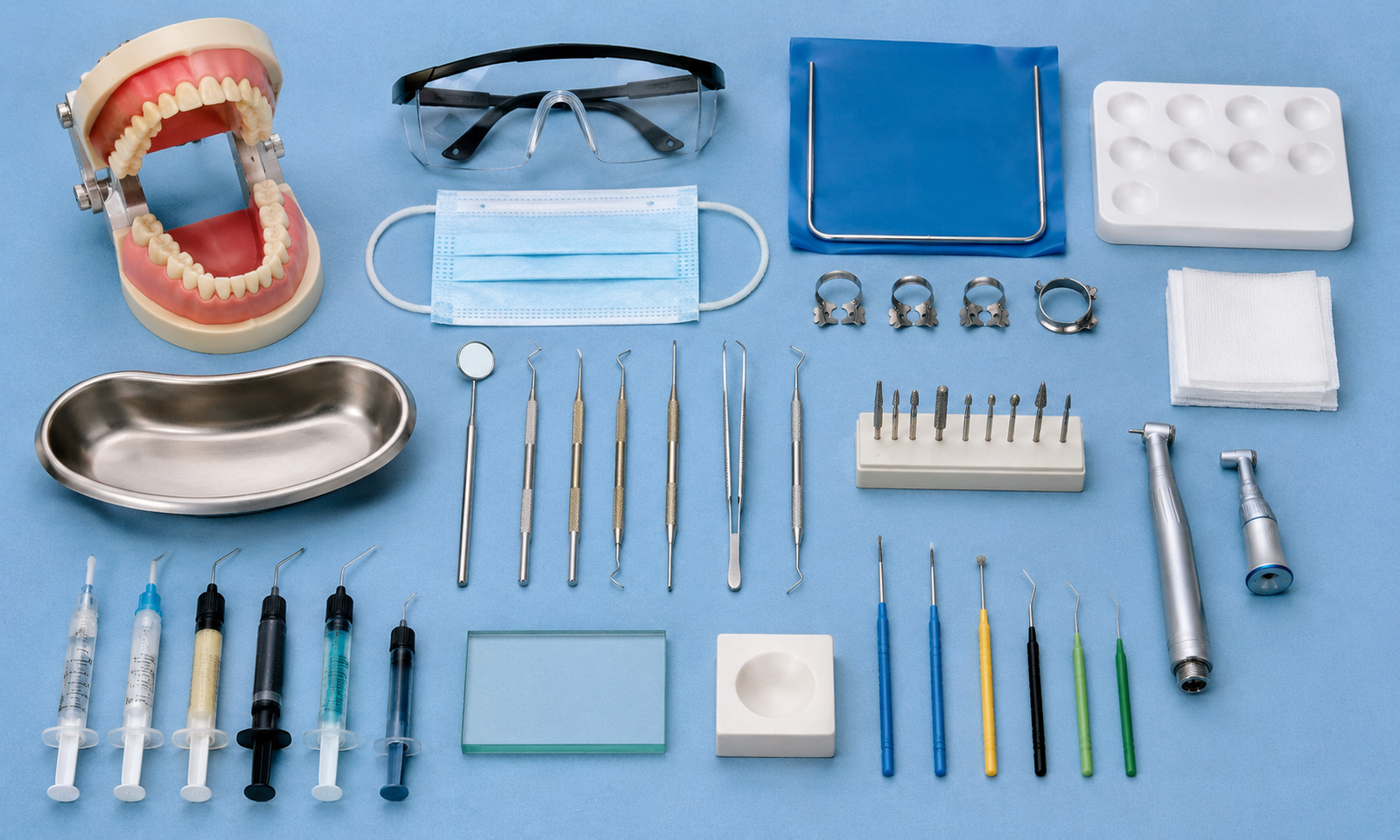
This includes equipment that helps to simulate the various dental procedures performed in a usual dental setting, and that perform the tasks safely and repetitively for students. These tools are classified into diagnostic, hand, rotary, restorative and laboratory tools. These each have their own unique function in the development of clinical skills. Diagnostic instruments can be used to evaluate tooth structure and oral conditions, and hand instruments are used for cavity preparation, caries removal, and restoration contouring. Handpieces are used with rotary instruments for effective cutting and shaping of tooth structure. Students are offered practice at filling techniques using restorative materials and/or amalgam substitutes. These procedures can be complemented and enhanced with the use of tools at the laboratory that will help to create models and fix the finishing. These instruments, combined, form an all-encompassing training context similar to actual clinical situations. The understanding of how each tool engages with the dental tissues and with the restorative materials is of major importance in an attempt to gain precision while, at the same time, preventing excessive mistakes or procedural errors in the future treatment.
Effective diagnostic and basic examination instruments
In pre-clinical and all operative dentistry, a diagnostic and examination instrumentation is the basis for all procedures. These tools enable a before and after analysis of tooth structure, to help detect various lesions and establish a dental model’s integrity. Some of the commonly used instruments are: Mouth mirrors, Explorers, periodontal probes, college pliers called tweezers and cotton pliers. The mouth mirror will give indirect vision, illumination and retraction, so that the posterior areas of dental models can be visualized. The explorer is used to see the irregularity on the surface and to evaluate margins of the cavities and periodontal probes for making measured pocket depths in simulated periodontal assessments. Cotton pliers can help to move materials without contaminating them. Simple to play at first glance, these instruments demand precision, hand control, and knowledge of proper ergonomics. Repeated use of these instruments during pre-clinical training tasks provide the tactile sensitivity and visual co-ordination needed during actual clinical diagnosis and treatment planning.
Hand-instruments for cavity preparation
The hand instruments are one of the critical aspects of cavity preparation and in restorative procedures, particularly, in the early stages of dental education. Tools are used for cutting and shaping: these include excavators, chisels, hatchets, enamel knives and carvers. Softened carious dentin is routinely removed with the use of an excavator, cavity floor preparation with chisels and hatchets are utilized to chip away enamel walls, and to smooth out cavity edges. Enamel knives are useful for cutting unsupported enamel rods for proper cavity design and carvers are utilized to contour restorative materials to impart anatomical shape. Students in pre-clinical settings must be familiar with which way the angulation, pressure and stroke need to be applied for each instrument so as to not harm the simulated tooth constructs. The effectiveness of these tools will be related to how well the operator uses them, as well as their sharpness. Students perform repeated exercises promoting hand stability, spatial perception and precision, which are key skills for clinically effective procedures.
Dale-Breland Rotary Instruments and Cutting Tools
The rotary instruments have gained significant importance in modern operative dentistry as they increase the efficiency as well as precision during the preparation of the tooth surface. During pre-clinical training, the students learn how to use high speed and low speed handpieces powered by different types of burs used to cut enamel, dentin, and restorative materials. High speed handpieces are generally employed for cavity preparations as they can prepare cavities at high speed and low pressures and low speed handpieces are utilized to finish, polish and remove caries in more controlled environments. The burs available in these handpieces are available in varying shapes including round, fissure, tapered and flame which perform specific functions during cavity design and refinement. It is essential that rotary instruments are handled correctly, attention to safe contact, using water coolants and bur selection. Students in the pre-clinical environment should also be taught how to control vibration and how to avoid overcutting; of course, these skills directly transfer to clinical skills and are of importance for patient safety in the future.
The handpieces and burs are pivotal parts of rotary instrumentation and it is important to give them a good introductory understanding when completing pre-clinical training. This allows rotation of the bur at speed on the dental handpiece, resulting in efficient cutting of the tooth structure. Various burs are available based upon type of procedure – some carbide for smooth cutting, some diamonds for enamel reduction. The selection of the bur has important implications for cavity preparation and each type of bur will affect the cavity preparation in a different way. Also, in simulated situations regimens of handpiece upkeep, which includes proper lubrication as well as sterilization procedures, are emphasised, giving professional discipline. Students need to be able to understand when an instrument is on the verge of becoming inefficient and to be able to switch off one and over to another. Good coordination in handpiece control with the application of the bur contributes to the student obtaining a smooth cavity wall, with the correct depth and accurate margins. Because of this balance in mechanical skill and material knowledge, it is the cornerstone of creating successful restorations in pre-clinical and clinical practice.
Colours used for the restoration of materials in pre-clinical training.
Operative Dentistry training is a large part of restorative materials, with the use of cavity restoratives mimicking real clinical situations. Filler materials can be various composite resins, glass ionomer cements, amalgam substitutes, liner, and bonding agents. Because of their esthetic characteristics and bonding to tooth structure with the use of adhesive systems, composite resins are popularly used. The glass ionomer cements are released of fluoride and therefore, they are used in simulated cases that require cervical restorations. Environmental concerns mean that it’s not as common in the most contemporary pre-clinical labs anymore, but replacement materials are often used for training. Students are required to become knowledgeable in proper mixing techniques, working time management and using layering techniques with these materials. Knowing about polymerisation, setting of reactions and compatibility with materials are also necessary. The ability to manipulate the restorative materials precisely is a good indicator of the quality of the restorations performed and a good measure of the student’s preparation for clinical use in real patient care situations.
Laboratory Tools and Simulation Equipment
In pre-clinical operative dentistry, laboratory materials help to create the necessary structure for the development of skill. These are Dental Manikins, Typodont Models, Articulators, Wax Knives, Spatulas, Glass Slab and Polishing Machines. Typodont models are models of human dentition that enable students to repeatedly perform cavity preparation and restoration procedures on the models without adversely impacting patients. Articulators are useful for occlusion study and investment recording the jaw motion, which allows for a proper alignment of restoration. Materials are shaped and mixed with a wax knife and spatula, and are smoothed into a final shape using a polishing machine. These aids not only transfer theory to practice, but also offer a realistic training environment. Also students are taught how to keep their work area clean and tidy, a vital component of dental practice. Learners acquire a grasp of the process aspects of these lab instruments, accuracy, and consistency as required for successful entry into clinical dentistry.
Pre-clinical instruments and materials.
For pre-clinical operative dentistry it’s important that the student becomes confident and competent at the instruments and materials. This is an important point of training where students aren’t overwhelmed at the transition to dealing with actual patients. To perform restorative procedures in an efficient way, hand-eye coordination, tactile sensitivity, and procedural memory will be important, and these abilities are improved by repeated instrumental practice. As students gain knowledge of material properties they will also become more informed with regards to decision making in the clinical setting, such as choosing the correct treatment method when treating cavity types. Moreover, being knowledgeable about instruments decreases the chances of error, ensures the safety of the patient in treatment, and promotes better results. Pre-clinical training also teaches discipline in the handling of instruments, sterilization procedures and instrument maintenance, essential steps for infection control in clinical situations. In conclusion, this final stage is crucial for connecting theory to clinical practice, and it is designed to equip students with the knowledge and skills needed to provide excellent care with proficiency and competency.
Conclusion
Pre-clinical operative dentistry is an integral part of the dental program where students learn the basic skills by actually handling dental instruments, materials, and laboratory tools. Whether it’s the simple diagnostic tools or the more advanced types of rotary systems and restorative materials, each one has a significant impact on the technical skills and clinical judgement of a student. Repetition in a structured format in simulated settings gives students the opportunity to develop skills, gain confidence and learn about the practical implications of the dental management of their patient. Laboratory tools complement this learning, by offering realistic models for practice and measurement. During this stage, students slowly start to achieve the accuracy, order, and skill needed for practice. Learning and proficiency of these instruments is not a technical skill they should learn but a prerequisite skill that will enable them to become a competent and professional dental clinician who can provide quality and acceptable dental services for their patients.