Introduction
Life is unpredictable. One day you feel as though everything is okay and the next day you get into a sudden cost- medical bill, car repair, loss of job or even emergency house repairs. Such scenarios may easily cripple your budget in case you are not ready. An emergency fund comes in at that.
An emergency fund is a safety net and gives you the peace of mind and comfort that you can now face the uncertainties in life without getting into debt and financial hardships. It might have occurred to you at one time or another how to construct this cushion or why we need it so much, this guide will take you through all the things you need to know about it, not only in knowing why we need it but also in making and maintaining it successfully.
Actually a solid financial safety net is among the most significant measures you can make towards financial security and tranquility.
What is an Emergency Fund?
An emergency fund is money that will be used as a reservoir of funds that will be used in case of unforeseen costs. It is not intended to be used on scheduled purchases such as vacation, devices or shopping. Rather it is only used in case of financial emergencies like:
- Sudden medical expenses
- Loss of work, or low income.
- Home or automobile repairs.
- Emergency travel as a result of family emergencies.
- Surprise electricity bills or rise in rent.
This fund is all about this: to ensure that you do not have to use credit cards, borrowings, or borrowing when life surprises you.
The reasons to have an emergency fund
1. Financial Shock protection.
The unforeseen costs may occur at all times. Lack of savings will compel you to borrow money at high interest rates which can make you have a long-term debt. Emergency fund cushions you against such shocks and stabilizes your finances.
2. Alleviates Stress and Anxiety.
Uncertainty about finances may lead to a lot of emotional strain. Being aware that you will have some money to use in case of an emergency gives you a sense of relief and lessens anxieties in moments of need.
3. Prevents Debt Accumulation
The reason why many people end up in debt is because they do not save in case of an emergency. You do not need to borrow money or use credit cards, an emergency fund enables you to foot the unforeseen bills.
4. Is Flexible in the face of job loss?
In case you lose a job or in case of loss of income, you can use your emergency fund to sustain you with the basic living expenses as you seek an alternative.
5. Assists You to Be on Track financially
In the absence of an emergency fund, long-term savings or investments will have to be tapped, sabotaging financial aspirations. An independent fund is one that keeps your long-term plans intact.
How much to save?
A question that is most frequently asked is: How much is enough? This will depend on your personal lifestyle, income and financial obligations.
General Rule of Thumb
The majority of financial experts suggest that you should save:
- 3-6 months of the living expenses of those who have a stable income.
- 6 to 12 months value in case of self-employment or an uneven income.
Estimate Your Monthly Budget.
Divide your monthly necessities to know how much you need to save:
- Rent or mortgage
- Utilities
- Food and groceries
- Transportation
- Insurance
- Debt payments
Divide this by the number of months that you wish to cover.
Start Small if Needed
In case it seems daunting to save several months’ worth of costs, begin with a smaller one:
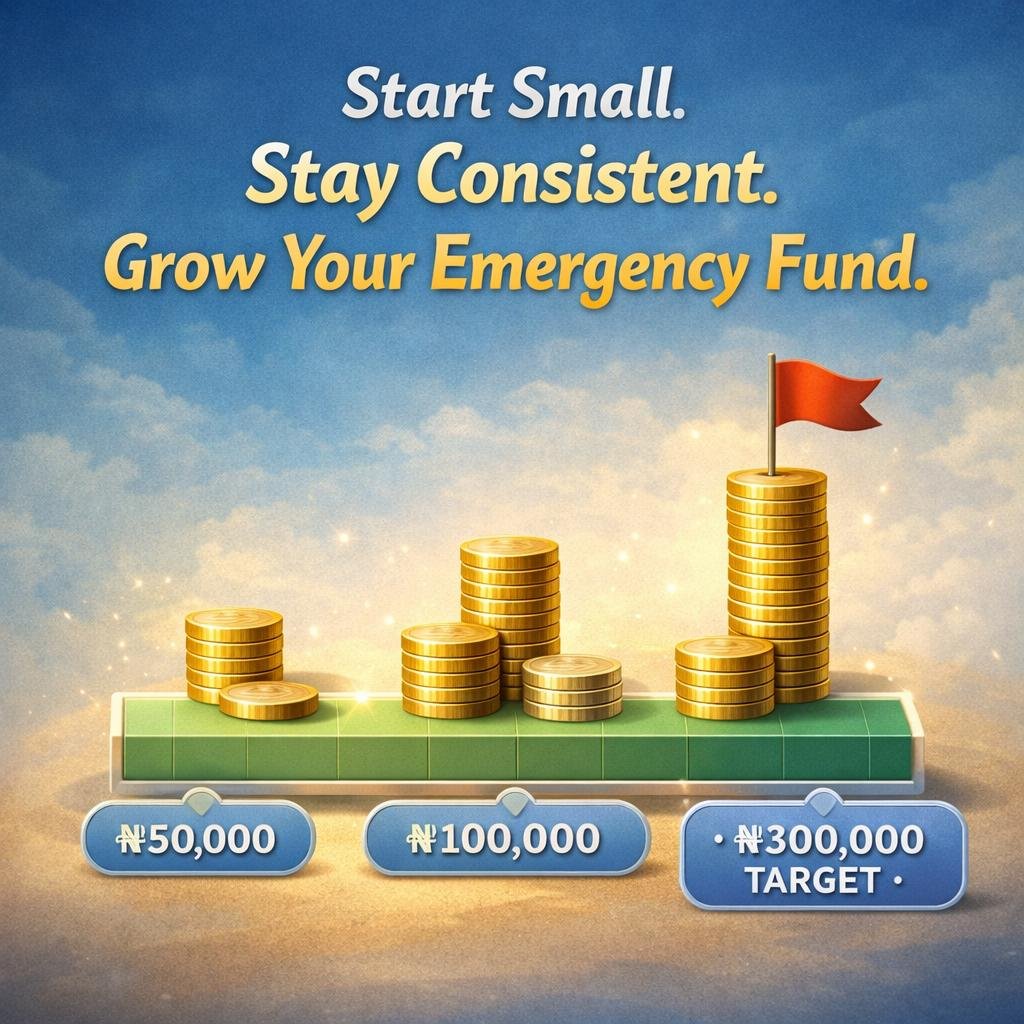
- ₦50,000 to ₦100,000 as a beginner
- Short-term objective of one month expenses.
It is preferable to start small than not to start.
Where to Store Your Emergency Fund?
You should also make the correct decision about where to keep your emergency fund, as much as you are creating one. The cash should be:
- Easily accessible
- Safe and secure
- Separate from your daily spending account
Best Options
1. Savings Account
One of the most appropriate locations to store your emergency fund is in a regular or high-yield savings account. It is conveniently located and your money is secure.
2. Money Market Account
This alternative is usually a better choice with higher interest rates as compared to savings accounts and it still enables you to access your money quickly.
3. Mobile Banking Wallets
Certain safe mobile banking systems enable you to store and retrieve funds easily and are thus a convenient choice.
Where Not to Store It
Avoid storing your emergency fund in:
- Volatile investments or stocks.
- Cryptocurrency
- Long-term fixed investments
These alternatives might not be readily available or could lose worth at the time when you require money the most.
How to Build an Emergency Fund
It may sound challenging to build emergency fund, particularly when you are living on paycheck to paycheck. But it can be done, through discipline and proper strategies.
1. Set a Clear Goal
Begin by determining the amount of saving you want to do. Divide it into smaller milestones to make it less cumbersome.
For example:
- Goal: ₦300,000
- Monthly savings target: ₦25,000
2. Create a Budget
Monitor your incomes and expenses to find out where you can reduce. Divert such savings to your emergency fund.
3. Pay Yourself First
Use your emergency fund as a bill. You must save money towards it immediately you get your income before putting money on other items.
4. Automate Your Savings
Automatically transfer to your savings account. This eliminates spending urge and provides consistency.
5. Cut Unnecessary Expenses
Find things that you can cut, which are non-essential, like:
- Eating out frequently
- Subscriptions that are not utilized.
- Impulse purchases
Even tiny investments will over time accumulate.
6. Use Windfalls Wisely
When you get some additional money in the form of bonuses, gifts, or tax refund, think about adding some to your emergency fund.
7. Increase Your Income
In the event that you can, identify means to get additional revenue:
- Freelancing
- Side businesses
- Selling unused items
Divert this savings amount to your savings target.
Typical Obstacles and Ways to overcome them
1. Low Income
When you have a low income, and then prioritize being consistent and not the amount. Although it may seem insignificant to save a small sum at regular intervals, it will gain force and power with time.
2. Lack of Discipline
Automation helps in minimizing the urge to access your savings, and so do separate accounts.
3. Surprising Costs in the process of saving.
Ironically, you may have an emergency when you are accumulating money in your fund. Don’t be discouraged, save what you have and save later.
4. Feeling Overwhelmed
Divide your goal into smaller, manageable pieces. Remember to celebrate every milestone to be motivated.
When is it Time to use your Emergency Fund?
It’s important to use your emergency fund only for genuine emergencies. Ask yourself:
- Does this cost come as a surprise?
- Is it necessary?
- Is it urgent?
When yes to all the three, and then probably it is a good reason to spend your fund.
Examples of Valid Uses
- Emergency medical treatment
- Urgent car repairs
- Bill or rent in case of job loss.
Examples of Invalid Uses
- Shopping or sales
- Vacations
- Non-essential upgrades
Rebuilding Emergency Fund
Once you have used your emergency fund, the second thing that you need to do is to refill it. Think of it as a best financial objective till it is completely fixed.
Tips for Rebuilding
- Recommence regular contributions.
- Cut back temporarily on non-essential expenses
- Any additional income can be used to replenish the fund at a quicker pace.
The Role of Emergency Fund in Financial Planning
The basis of a good financial plan is an emergency fund. This safety net must be in place before investing or taking on big financial objectives.
Why It Comes First
- Secures your investments against being run off.
- Eliminates debt.
- Offers economic security and freedom.
When you have your emergency fund in place then you can with confidence work on:
- Investing
- Retirement planning
- Wealth building
Benefits of an Emergency Fund Psychologically
An emergency fund has more than just financial security, it has emotional and mental advantages as well.
1. Confidence: Being aware that you have the financial readiness in the case of an emergency enhances your financial confidence.
2. Peace of Mind: You can stop worrying about what might happen, all the time.
3. Better Decision-Making: When you are not under pressure in terms of financial issues, you are able to make more rational and informed choices.
Emergency Funds and Other Savings
You should make a difference between your emergency fund and other savings. Emergency money is only to be used in case of unexpected costs and other savings can be used in various ways like traveling, investments or even education. Having them separate will not cause you to spend money on the emergency fund and it will enable you to remain organized with your financial objectives.
Practical Example
Suppose that you have a monthly income of ₦150, 000 and that you need to spend ₦100 000.
- Target (3 months): ₦300,000
- Monthly savings: ₦20,000
You will be able to complete your emergency fund in 15 months. You can do this even more rapidly, should you save more or earn more money.
Conclusion
Emergency fund is not a luxury, it is a need. You can never tell what will happen in life, but your financial readiness doesn’t need to be the same. You also secure your financial future by establishing a financial safety-net that helps you to mitigate against unexpected costs, minimizes stress, and provides a stable base to your financial future.
You may have to start small, but start now. It can be a saving a couple of dollars a week, or saving a couple of dollars a month, but every small step will take you one step closer to being financially resilient.
Keep in mind, it is not about perfection but about consistency. With time, this emergency fund will increase to give you the assurance and safety to meet whatever life presents to you.
Get more well researched information about emergency fund here.