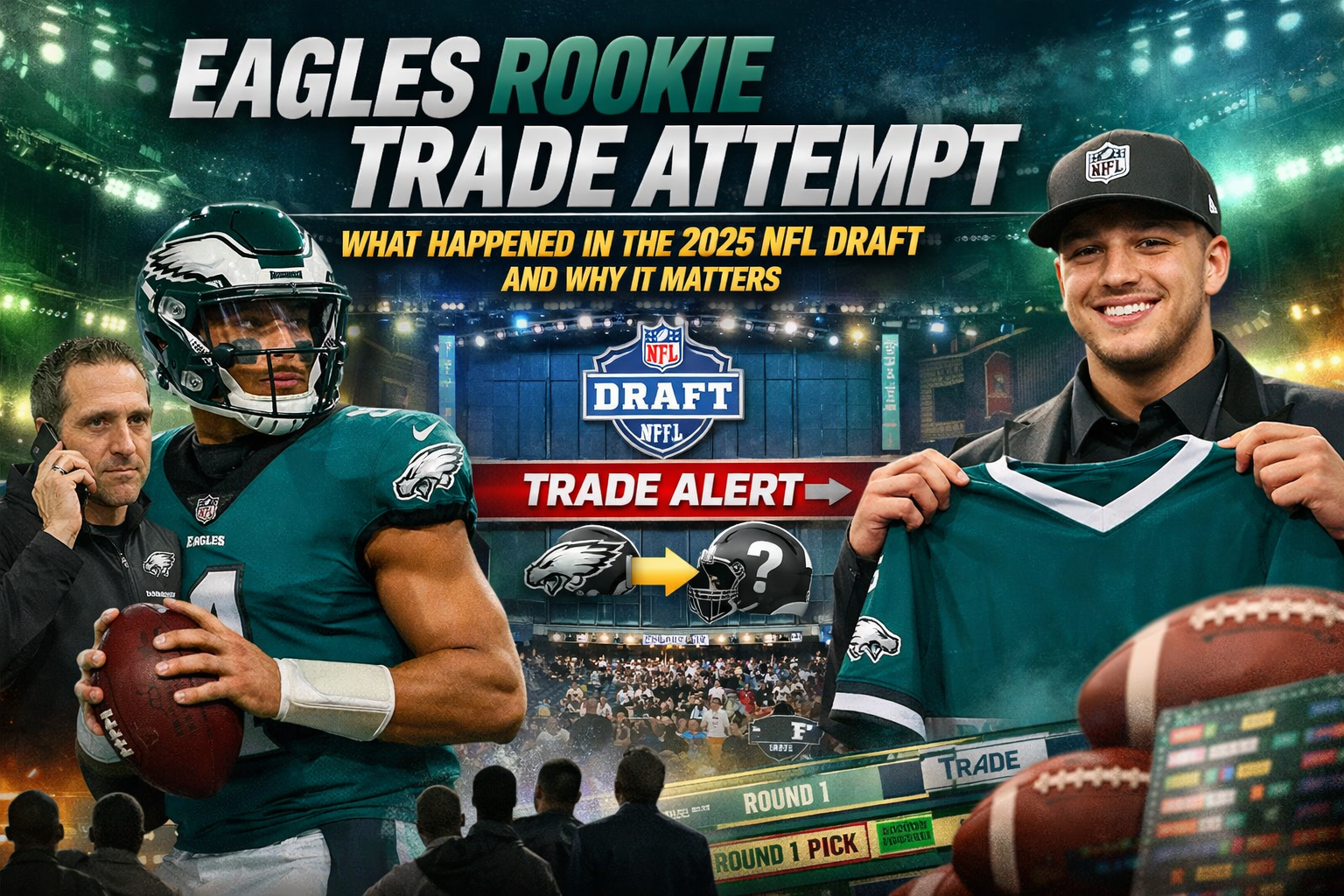
The phrase “Eagles Rookie Trade Attempt” gained attention during the 2025 NFL Draft, when the Philadelphia Eagles actively explored trading up the draft board to secure a highly rated defensive prospect. The team’s front office, led by general manager Howie Roseman, reportedly pursued multiple trade opportunities before eventually making a smaller move to guarantee their target.
In the end, the Eagles traded up one spot—from pick No. 32 to No. 31—with the Kansas City Chiefs and selected linebacker Jihaad Campbell from the University of Alabama.
Although the move might appear minor, it reflected the organization’s aggressive approach to draft strategy. Reports indicated the Eagles had attempted to move much higher in the first round before finalizing the smaller trade to secure Campbell.
This article provides a complete breakdown of the Eagles rookie trade attempt, including why the team targeted Campbell, how the draft unfolded, the strategic thinking behind the trade discussions, and what the move means for the franchise moving forward.
Understanding the Eagles Rookie Trade Attempt
What the Term “Eagles Rookie Trade Attempt” Means
The Eagles Rookie Trade Attempt refers to the Philadelphia Eagles’ efforts during the 2025 NFL Draft to move up the draft board in order to secure a specific rookie prospect—ultimately linebacker Jihaad Campbell.
Trade attempts during the draft are common because teams want to:
- Draft players they consider elite prospects
- Prevent rival teams from selecting their targets
- Address specific roster needs
- Gain better value from their draft capital
In this case, the Eagles believed Campbell had exceptional talent and wanted to ensure they could secure him before another team did.
When the Trade Attempt Happened
The trade discussions took place during the first round of the 2025 NFL Draft, particularly as the draft approached its later selections.
Philadelphia originally held the No. 32 overall pick, the final selection of the first round. However, the front office became concerned that another team might draft Campbell before their turn arrived.
As a result, the Eagles traded:
- Pick No. 32 overall
- Pick No. 164 (fifth round)
to the Kansas City Chiefs in exchange for No. 31 overall, ensuring they could select Campbell.
Why It Became a Major NFL Draft Story
The story attracted attention because the Eagles reportedly attempted multiple trades earlier in the draft before finalizing the deal with Kansas City.
It also highlighted the team’s long-standing philosophy:
- Identify elite talent
- Act aggressively in the draft
- Trust scouting evaluations
Philadelphia’s willingness to pursue Campbell demonstrated how seriously the organization valued the prospect.
The Philadelphia Eagles’ Draft Philosophy
How the Eagles Approach the NFL Draft
The Eagles have built a reputation as one of the NFL’s most proactive teams on draft day.
Under general manager Howie Roseman, the franchise often:
- Trades up for players they highly value
- Trades down to accumulate additional picks
- Targets versatile athletes capable of playing multiple roles
This strategy has helped the Eagles maintain a competitive roster for years.
Why the Eagles Frequently Trade Up or Down
Draft-day trades occur because teams constantly evaluate the value of each pick.
Philadelphia frequently moves around the draft board to:
- Acquire higher-ranked prospects
- Address positional needs
- Maximize draft capital
For example, the Eagles traded up in several previous drafts to secure players they believed would become cornerstone pieces of the roster.
The Front Office Strategy Behind Draft-Day Decisions
The Eagles’ draft strategy is built on three main principles:
- Value-based scouting – selecting players who rank highest on their internal board
- Roster balance – strengthening positions of need without sacrificing long-term development
- Aggressive decision-making – acting quickly when an opportunity arises
The rookie trade attempt fits perfectly into this approach.
Who Is Jihaad Campbell?
Jihaad Campbell’s College Career
Jihaad Campbell emerged as one of the top defensive prospects in college football while playing for the Alabama Crimson Tide.
During the 2024 season, Campbell recorded impressive statistics including:
- 117 tackles
- 5 sacks
- 12 tackles for loss
- 2 forced fumbles
These numbers helped him earn All-SEC honors and boosted his reputation among NFL scouts.
Key Strengths and Playing Style
Campbell stood out because of his rare combination of physical traits:
- Exceptional speed for a linebacker
- Ability to rush the passer
- Strong tackling technique
- Advanced football instincts
He also demonstrated strong coverage skills against tight ends and running backs.
Why He Was a Top Defensive Prospect
Modern NFL defenses require linebackers who can perform multiple roles. Campbell fits that description perfectly.
Scouts praised him for:
- Versatility
- Athletic ability
- Football intelligence
Because of these attributes, several teams reportedly had Campbell rated as a first-round talent.
Why the Eagles Targeted Jihaad Campbell
Defensive Needs on the Eagles Roster
Despite having a strong defense, the Eagles still wanted to strengthen their linebacker unit.
Key goals included:
- Improving speed in the middle of the defense
- Adding depth at linebacker
- Preparing for long-term roster changes
Campbell addressed each of these needs.
Campbell’s Fit in the Eagles’ Defensive Scheme
Defensive coordinator Vic Fangio runs a complex system that requires linebackers to handle multiple responsibilities.
Campbell’s versatility allows him to:
- Play inside linebacker
- Rush the passer as an edge defender
- Drop into coverage
This flexibility makes him an ideal fit.
Leadership and Long-Term Potential
In addition to physical talent, Campbell impressed scouts with his leadership qualities.
Coaches often value players who demonstrate:
- Strong work ethic
- High football IQ
- Team leadership
These qualities further increased his value to the Eagles.
The Strategy Behind the Eagles Rookie Trade Attempt
When the Eagles Began Trade Discussions
As the first round unfolded, the Eagles noticed Campbell remained available longer than expected.
When he started slipping down the draft board, the front office began contacting teams holding earlier picks.
Possible Trade Packages the Eagles Could Offer
To move higher in the draft, teams typically offer combinations of:
- Current draft picks
- Future draft selections
- Veteran players
The Eagles considered several potential packages before completing the smaller trade with Kansas City.
Balancing Draft Capital and Player Value
Trading up can be risky.
Teams must evaluate whether the targeted player is worth sacrificing additional picks.
For Philadelphia, the decision came down to one question:
Was Campbell worth the cost of trading up?
Their answer was yes.
What Happened During the Trade Attempt
Teams the Eagles Potentially Contacted
Reports suggested that the Eagles explored trade opportunities with several teams during the first round.
However, negotiations can be complex because each team values its picks differently.
Draft Board Changes During the First Round
The NFL Draft is unpredictable.
Players expected to be selected early sometimes fall down the board, while others are picked sooner than expected.
This uncertainty forced the Eagles to adjust their strategy multiple times.
Why the Trade Window Closed
Eventually, the Eagles completed a smaller deal with the Chiefs rather than trading much higher in the draft.
By moving up just one spot, they ensured no other team could jump ahead and select Campbell.
Why the Trade Did Not Happen Earlier
High Asking Price for Top 20 Picks
Teams holding early first-round picks typically demand significant compensation in return for moving down.
This might include:
- Multiple draft picks
- Future first-round selections
Philadelphia likely determined that the price was too high.
Competition From Other Teams
Other franchises also had interest in defensive prospects.
When multiple teams compete for the same pick, negotiations become more difficult.
Teams Deciding to Keep Their Picks
Sometimes teams simply choose to keep their selection rather than trade.
If a preferred player remains available, they may abandon trade discussions entirely.
How Trading a Rookie or Draft Pick Impacts an NFL Team
Rookie Contract Value
Rookie contracts follow a structured salary scale.
First-round picks typically sign four-year contracts with a team option for a fifth year.
These deals provide strong value because they allow teams to secure talented players at controlled costs.
Salary Cap Flexibility
Drafting talented rookies helps teams manage their salary cap.
Because rookie contracts are relatively affordable, teams can allocate more money to veteran players.
Long-Term Roster Planning
Successful teams constantly balance:
- Short-term competitiveness
- Long-term development
Draft trades play a key role in achieving that balance.
Historical Examples of Eagles Draft Trades
Major Draft Trades in Eagles History
The Eagles have a long history of trading up in the draft.
Some notable examples include:
- Trading up for DeVonta Smith in 2021
- Moving up to draft Jordan Davis in 2022
- Trading up for Jalen Carter in 2023
These moves show the franchise’s willingness to pursue elite prospects.
Successful Trade-Ups by Philadelphia
Many of the Eagles’ trade-ups have resulted in highly productive players.
For example:
- DeVonta Smith became a key offensive weapon
- Jalen Carter quickly developed into a defensive standout
Lessons From Past Draft Decisions
These decisions reveal an important lesson:
The Eagles trust their scouting evaluations and are willing to act aggressively when they identify elite talent.
Fan and Analyst Reactions to the Eagles Rookie Trade Attempt
Fan Reactions in Philadelphia
Eagles fans are known for their passion and deep knowledge of football.
Many fans supported the trade attempt because it showed the team was determined to improve.
Others believed the team should avoid giving up too many draft picks.
NFL Analyst Opinions
Analysts generally praised the Eagles for securing Campbell.
Some experts even noted that the team considered him among the top ten players on their draft board.
Media Coverage of the Draft Moment
The story quickly gained traction across sports media outlets because it illustrated how competitive draft-day negotiations can be.
Impact on the Eagles’ Future Roster
Defensive Depth Moving Forward
Campbell adds important depth to the Eagles’ linebacker unit.
His presence allows the coaching staff to rotate players and maintain defensive intensity.
Potential Future Draft Targets
The Eagles will continue focusing on positions such as:
- Defensive line
- Secondary
- Offensive line depth
Maintaining balance across the roster is essential.
How the Eagles May Approach Future Drafts
Given their history, it is likely the Eagles will continue:
- Trading up for high-value prospects
- Trading down when additional picks are available
- Targeting versatile players
The Role of Draft-Day Trades in the NFL
Why Teams Trade Up in the Draft
Teams trade up when they believe a player:
- Has elite talent
- Fits their system perfectly
- Could transform the roster
Risks of Trading Future Draft Picks
Trading up can also be risky.
If the selected player does not perform as expected, the team may lose valuable draft capital.
How Successful Draft Trades Shape Championship Teams
Many championship teams rely on strong draft strategies.
Draft-day trades often help franchises secure the players who ultimately become stars.
Could the Eagles Attempt Another Rookie Trade in the Future?
Current Roster Needs
The Eagles will continue evaluating their roster every offseason.
Future needs could include:
- Offensive line depth
- Defensive backfield improvements
- Pass-rushing talent
Upcoming Draft Prospects
Every new draft class brings emerging stars.
The Eagles’ scouting department constantly evaluates college players to identify future targets.
Long-Term Team Building Strategy
Philadelphia’s strategy remains focused on:
- Drafting elite talent
- Maintaining financial flexibility
- Building sustainable championship contenders
Key Takeaways From the Eagles Rookie Trade Attempt
Several important lessons emerged from the situation:
- The Eagles aggressively pursue players they value highly.
- Draft-day trades remain an important part of NFL strategy.
- Jihaad Campbell was considered a top prospect by the team.
- Even small trades can significantly impact draft outcomes.
Conclusion
The Eagles Rookie Trade Attempt during the 2025 NFL Draft provides a fascinating look into how NFL teams approach roster building. Philadelphia’s front office demonstrated its aggressive draft philosophy by exploring multiple trade opportunities before finally moving up one spot to secure Jihaad Campbell.
The decision reflected the team’s belief that Campbell could become a key defensive player. With his versatility, athleticism, and leadership potential, the rookie linebacker represents a valuable addition to the Eagles’ defense.
More importantly, the situation highlights the broader strategy that has helped Philadelphia remain competitive for years: careful scouting, bold draft decisions, and a commitment to building a championship-caliber roster.
As the Eagles continue shaping their future, the rookie trade attempt serves as another example of how strategic thinking on draft day can influence the direction of an entire franchise.
FAQs
What was the Eagles Rookie Trade Attempt?
The Eagles Rookie Trade Attempt refers to the Philadelphia Eagles’ efforts during the 2025 NFL Draft to trade up and select linebacker Jihaad Campbell.
Did the Eagles successfully trade up in the draft?
Yes. The Eagles traded the No. 32 and No. 164 picks to the Kansas City Chiefs to move up to No. 31 overall, where they selected Campbell.
Why did the Eagles want Jihaad Campbell?
The Eagles believed Campbell was an elite defensive prospect with the versatility to play multiple linebacker roles.
How often do NFL teams trade up for rookies?
Draft-day trades happen frequently in the NFL as teams attempt to secure specific players they believe can make a major impact.
Why are rookie contracts valuable in the NFL?
Rookie contracts are cost-controlled and predictable, making them extremely valuable for teams managing their salary cap while building competitive rosters.