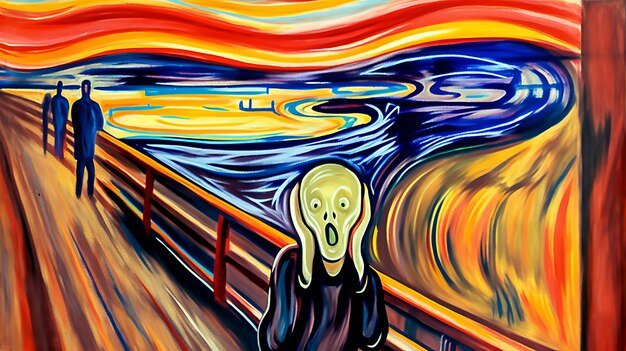
“The Scream” by Edvard Munch is one of the most iconic and emotionally evocative paintings in the history of art. Created in 1893, this masterpiece is a visual representation of existential angst and psychological torment. By analyzing its elements—colors, figures, and backgrounds—we can uncover the layers of symbolism that contribute to its profound impact.
The Colors: A Palette of Emotion
One of the most striking aspects of “The Scream” by Edvard Munch is its vivid and almost surreal use of color. The fiery reds and oranges of the sky dominate the composition, creating an atmosphere of intense emotional unrest. These colors evoke feelings of anxiety, danger, and chaos, reflecting the inner turmoil of the figure in the foreground.
Psychologists have often linked red tones to heightened emotional states such as fear, anger, or passion. In “The Scream”, the swirling reds and yellows seem to engulf the entire scene, symbolizing the overwhelming nature of the protagonist’s emotions. The blue and green hues of the water and land, while traditionally associated with calmness, appear distorted and unsettling, reinforcing the sense of dissonance and instability.
Munch himself described the inspiration behind the painting as stemming from a moment of profound existential crisis: “I sensed a scream passing through nature; it seemed to me that I heard the scream.” The unnatural color scheme emphasizes this idea, turning the natural world into a mirror of psychological distress.
The Figure: A Universal Symbol of Angst
At the heart of the painting is the iconic figure, a skeletal and ghostly being frozen mid-scream. This figure’s androgynous and abstract appearance makes it a universal symbol of human suffering and fear. Its wide-open mouth, hollow eyes, and contorted hands pressed against its face capture the raw essence of a scream—not just an auditory outburst but an emotional release.
From a psychological perspective, the figure’s exaggerated features and posture resonate with the concept of the “fight-or-flight” response. The scream can be interpreted as an attempt to externalize overwhelming inner anxiety. The figure’s isolation on the bridge, distanced from the other two individuals in the background, further emphasizes its loneliness and alienation. It’s as though the scream is an act of desperation, a cry for help in a world that remains indifferent.
The Background: A World in Chaos
The background of “The Scream” by Edvard Munch is as significant as the figure and colors in conveying its psychological depth. The swirling sky, the undulating water, and the steep, angular lines of the bridge create a sense of instability and motion, mirroring the protagonist’s inner chaos.
The curving lines in the sky and water have been interpreted as visual representations of sound waves or vibrations, suggesting that the scream reverberates through the entire environment. This connection between the figure and the landscape suggests that the emotional turmoil is not confined to the individual but spills over into the external world, affecting everything it touches.
The bridge itself serves as a powerful symbol. It represents a liminal space—a place of transition between the known and the unknown, the stable and the unstable. Psychologically, it could symbolize the threshold of a breakdown or the precarious balance between sanity and madness. The two figures in the background, who seem unaffected and oblivious to the protagonist’s plight, heighten the sense of isolation and existential despair.
The Scream as a Psychological Archetype
Carl Jung’s theory of archetypes provides another lens through which to interpret “The Scream”. The painting’s central figure can be seen as embodying the archetype of “The Wounded Self,” a representation of the universal human experience of suffering and vulnerability. The expression of raw emotion—unfiltered and unrestrained—resonates deeply with viewers, transcending cultural and temporal boundaries.
From a Freudian perspective, “The Scream” may symbolize the eruption of repressed fears and anxieties. The painting’s visceral impact could be linked to the way it taps into the subconscious mind, forcing viewers to confront their own hidden fears and insecurities. The absence of detailed features in the protagonist’s face invites projection, allowing each viewer to see their own struggles reflected in the painting.
Legacy and Contemporary Relevance
Over a century after its creation, “The Scream” by Edvard Munch continues to hold immense relevance in modern psychology and culture. It has become a symbol of the universal struggle with mental health, particularly anxiety and depression. The painting’s ability to convey complex emotions through abstract forms and vibrant colors makes it a timeless exploration of the human condition.
In today’s context, where mental health awareness is gaining importance, “The Scream” serves as a poignant reminder of the power of art to express what words often cannot. It captures the essence of what it means to be human: vulnerable, isolated, and yet capable of profound emotional expression.
Conclusion
Through its colors, figure, and background, “The Scream” by Edvard Munch offers a profound psychological exploration of fear, anxiety, and existential dread. Its timeless symbolism and emotional resonance ensure its place as one of the most important works in art history. By delving into the painting’s elements, we gain a deeper appreciation for its ability to connect with the human psyche and reflect the complexities of our inner worlds.