Introduction
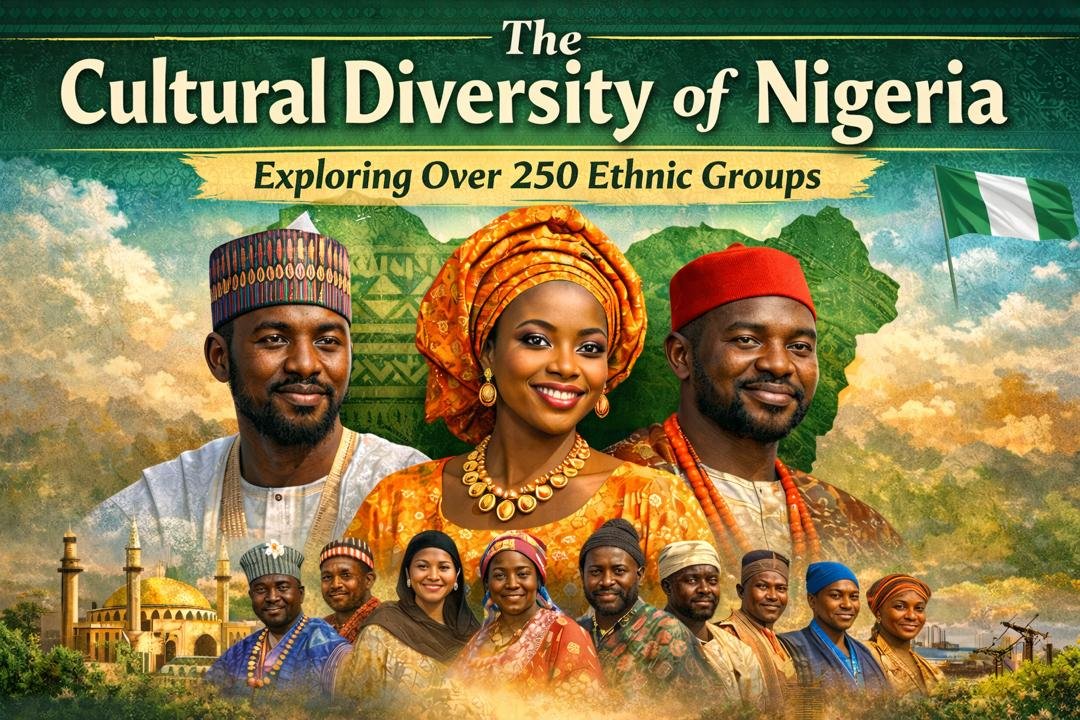
Nigeria is a country that has a high level of Cultural diversity in the world. It is situated in West Africa, where more than 250 ethnic groups, each having its language, traditions, systems of beliefs, social systems, and cultural manifestations, are found. This great variety is what makes Nigeria a special social and political unit, but it has its opportunities and challenges when it comes to the nation-building. Ethnic plurality in Nigeria has been determinant to the identity of the country, social relations, and to a large extent, the political set-up in the country since pre-colonial times up to date.
To grasp the significance of ethnic diversity in Nigeria, it is important to know the cultural diversity present in the country so that one can appreciate the coexistence of various cultures under one national setup. Other than seeing cultural diversity as a factor of division by itself, we should also see it as a power that enhances national culture, innovativeness, endurance, and social life.
This article will discuss major and minor ethnic groups in Nigeria, their geographical distribution, and the cultural value of their co-existence. It also studies the way ethnic plurality influences the identity of the nation and its social interactions and political structure, accompanied by the necessity of unity in diversity.
General Signs of the Ethnic Composition of Nigeria
Ethnic diversity of Nigeria did not appear as such; it is a culmination of the centuries of migration, settlement, trade, conquest, and cultural exchange. Prior to colonialism, there were several ethnic groups, independent kingdoms, empires, or decentralized societies. This has been seen in the Oyo Empire of the Yoruba, the Sokoto Caliphate of the Hausa Fulani, the Benin Kingdom of the Edo, and the Igbo republican groups.
Despite the fact that there are more than 250 ethnic groups, the groups differ widely in terms of population size. There are those ethnicities that are tens of millions, and there are only a few thousand individuals. In spite of these disparities, both groups form part of Nigeria’s cultural mosaic, and they are very conscious of identity.
In Nigeria, ethnicity is strongly associated with:
- Language
- Ancestral origin
- Cultural practices
- Conventional political structures
Religion and Belief Systems
These are the factors which influence the way individuals perceive themselves and how they interact with other people in the Nigerian state.
Fostering the Development of Ethnic Identity in Nigeria
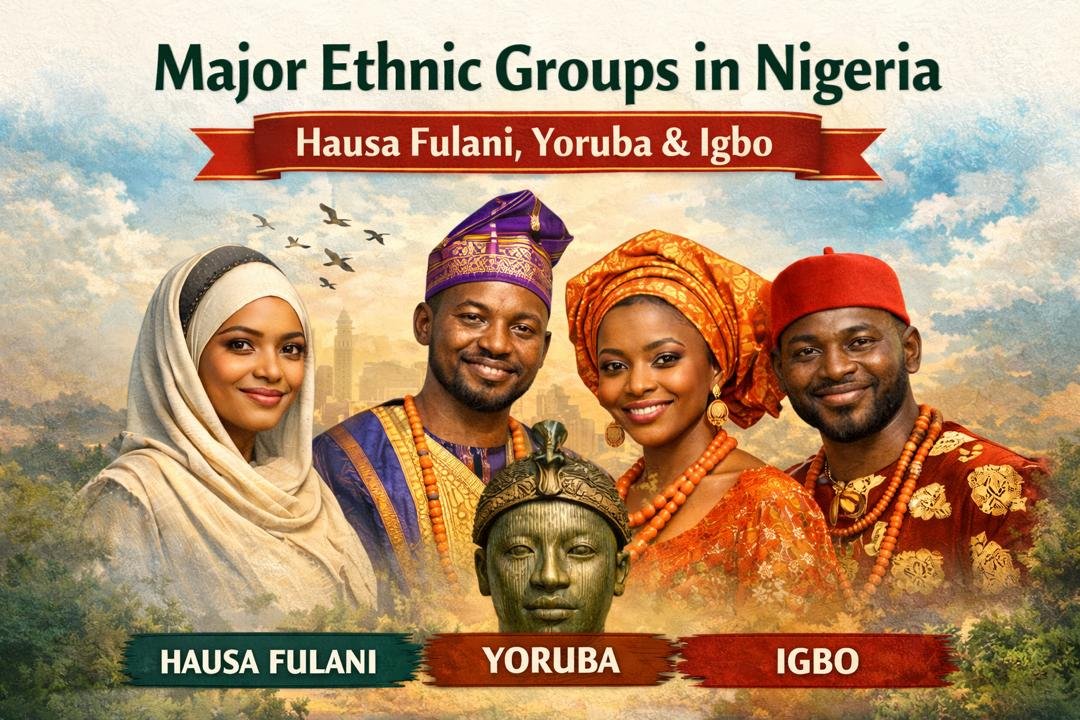
Nigeria is demographically and politically dominated by three ethnic groups, namely Hausa-Fulani, Yoruba, and Igbo. The two make up over fifty percent of the population of Nigeria.
Hausa Fulani
The Hausa Fulani are the biggest ethnic group in Nigeria and are majorly found in the north. Currently, despite their original separatism, centuries of intermarriage, similar religious beliefs, and political assimilation have evolved them into a single socio-cultural identity.
Geographic Distribution: Northern Nigeria (Kano, Katsina, Sokoto, Kaduna, Zamfara, Kebbi, and some of the states of Niger and Bauchi).
Language: Hausa (spokesman in West Africa).
Religion: Muslim majorly.
Social System: Hierarchical, having traditional leaders like emirs.
Cultural Practices: Modesty, respect for authority, Islamic schooling, and common values.
Historically, the Hausa-Fulanis have made a significant contribution to the world of trade, governance, and Islamic scholarship. They are very powerful politically, especially because of the numbers they possess and because of a past domination of the political institutions in the north.
Yoruba
The Yoruba people are predominantly based in southwestern Nigeria and have a rich cultural heritage, urban civilization, as well as strong artistic traditions.
Geographic Distribution: Lagos, Oyo, Ogun, Osun, Ondo, Ekiti, and some parts of Kwara and Kogi states.
Language: Yoruba.
Religion: It has Christianity, Islam, and traditional religion.
Social Structure: Structured into kingdoms which had Obas (kings) as their leaders.
Cultural Practices: There are festivals, drumming, oral poetry, reverence to elder people, and elaborate naming ceremonies.
Yoruba has a rich history and history of political structures and city states. They are open to religious diversity and education that has played a significant role in the intellectual, cultural, and political growth of Nigeria.
Igbo
The Igbo folk are mainly found in southeastern Nigeria and are characterized by entrepreneurship spirit, close kinship system, and egalitarian forms of social organization.
Geographic Distribution: Anambra, Imo, Abia, Enugu, and Ebonyi states.
Language: Igbo (with numerous dialects).
Religion: Christianity is the major one.
Social Organization: To a great extent, decentralized, councils of elders.
Cultural Practices: Hard work, achievement, community involvement, and extended family orientation.
The Igbo respect education, trade, and self-sufficiency, which has made them present in the whole of Nigeria and other places. Their culture has a focus on personal success in a group context.
Small Ethnicities and Their Relevance
In addition to the big groups, there are many small ethnic groups in Nigeria, that makes up the cultural diversity, particularly in the Middle Belt, South-south, and some parts of the Northeast. These organizations are significant in the determination of the diversity in Nigeria.
Middle Belt Ethnic Groups
Middle Belt is one of those regions in Nigeria that is the most ethnically diverse. It includes groups such as:
- Tiv
- Idoma
- Igala
- Nupe
- Jukun
- Berom
- Gbagyi.
These population groups tend to speak different languages, religion, and have different cultures. A large number of them combine Christianity, Islam, and traditional beliefs. The Middle Belt in history was a historical cultural linkage between the North and the South.
Niger Delta Ethnic Groups (South South)
The Niger Delta area is inhabited by some ethnic groups, and they include:
- Ijaw
- Itsekiri
- Urhobo
- Isoko
- Efik
- Ibibio
- Annang.
These are groups that are strongly associated with riverine and coastal habitats. Their main livelihoods revolve around fishing, canoe construction, and oil related economic activities. These groups, though minorities contribute significantly to the economy of Nigeria because the region is endowed with oil.
Northern Eastern Ethnic Groups
The ethnic groups in the North East are:
- Kanuri
- Babur
- Margi
- Bade
- Fulani (nomadic groups).
The Kanuri, most especially, possess an abundant history that is associated with the Kanem Bornu Empire. They have good traditions in their culture and historical institutions.
Geographic Distribution and Cultural Identity
Ethnic groupings of Nigeria have been directly associated to certain geographical areas, and this determines their lifestyle. Occupations, diets, clothing, or settlement patterns are influenced by climate, vegetation, and natural resources.
Northern Nigeria: This is mainly savannah; the rearing of cattle, agriculture, and Islamic learning.
Southern Nigeria: Forest and coastal areas; agricultural, fishing, trade, and industrial works.
Riverine Areas: Maritime culture, riverine fishing, and water transport.
Regional differences notwithstanding, urbanization and migration have resulted in ethnic mixing in such cities as Lagos, Abuja, Port Harcourt, and Onitsha. These cities are melting pot, and the culture would be interacting with each other.
Ethnic Diversity / National Identity
The ethnic plurality of Nigeria is a very strong influence on the national identity of the country. Nigerian nationality does not necessarily take the place of ethnic identities; it tends to co-exist. Nigerians are recognized to be more ethnic than national.
This dual identity affects:
- The language use (code-switching between local and English languages)
- Patterns of marriage (inter-ethnic marriages)
- Social networks
- Political loyalties
National symbols, which include the flag, national anthem, and sports teams, assist in enhancing unity, and ethnic identity is a strong social phenomenon.
Social Interaction and Ethnic Diversity
Nigerians relate socially, which is determined by ethnic diversity. It affects friendship, business relations, religious life, and communal interactions. Even though sometimes ethnic differences may be a source of tension, at other times, they foster cultural exchange.
Examples of positive interaction are:
- Inter-ethnic marriages
- Shared religious spaces
- The people of various backgrounds attend diverse cultural festivals
- Multilingual interaction
As a part of their daily lives, Nigerians tend to deal with the problems of ethnicity by means of humor, respect, and flexibility.
Ethnic Variety and Political Institution
Ethnic diversity affects the political system of Nigeria greatly. Federalism was embraced in order to deal with cultural plurality by providing the regions with some level of autonomy. One of the reasons why states and local governments were created was the decrease of the ethnic power and stimulation of inclusion.
Political practices such as:
- Zoning
- Federal character principle
- Power-sharing arrangements
They are set to provide representation of different ethnic groups. Ethnic politics, on the other hand, has also been the cause of competition, mistrust, as well as conflict, which makes it important to have inclusive governance.
Cultural Importance of Coexistence
The fact that different ethnic groups live in the same country is a culture that goes beyond adequacy. It shows that unity does not involve uniformity. Nigeria is diverse, and this has enriched its:
- Music
- Fashion
- Cuisine
- Literature
- Language
Exchange of cultures has resulted in hybridity and nationalities. Indicatively, the Nigerian music is a fusion of rhythms and languages that are representative of other ethnic groups, resulting in genres that are enjoyed worldwide.
Unity in Cultural Diversity: Issues and Prospects
Ethnic rivalry and political tension are just some of the problems associated with ethnic diversity, but these issues are attributed by the fact that opportunities are enormous. Diversity promotes innovation, flexibility, and strength. When properly handled, it enhances democracy and social cohesion.
To promote cohesiveness in diversity, these are needed:
- Mutual respect
- Cultural education
- Inclusive governance
- Ethnic inter-ethnic dialogue
It is important to appreciate and respect every ethnic group, no matter the size of that group, as a factor in facilitating sustainable national development.
Conclusion
One of the most dominant characteristics of Nigria is its cultural diversity, which consists of more than 250 ethnic groups. Among the significant ethnicities to minor groups, all of them make the nation culturally diverse and intricate. Ethnic plurality not only influences the national identity of Nigeria, social relationships, and politics, but it also has a significant impact on them.
Although diversity has led to conflict on some occasions, it has offered several grounds on which people can be united, creative, and moving together. With the understanding of the benefits of diversity and developing an inclusive policy that encourages acceptance of cultural differences, Nigeria can still be able to have a country where diversity is no longer viewed as a weakness but rather as a source of strength.
It is also imperative to learn the ethnic diversity in Nigeria not only to be able to appreciate the beauty of this country but also to be able to hold this nation together.
Get more well researched information about people’s culture and diversity here