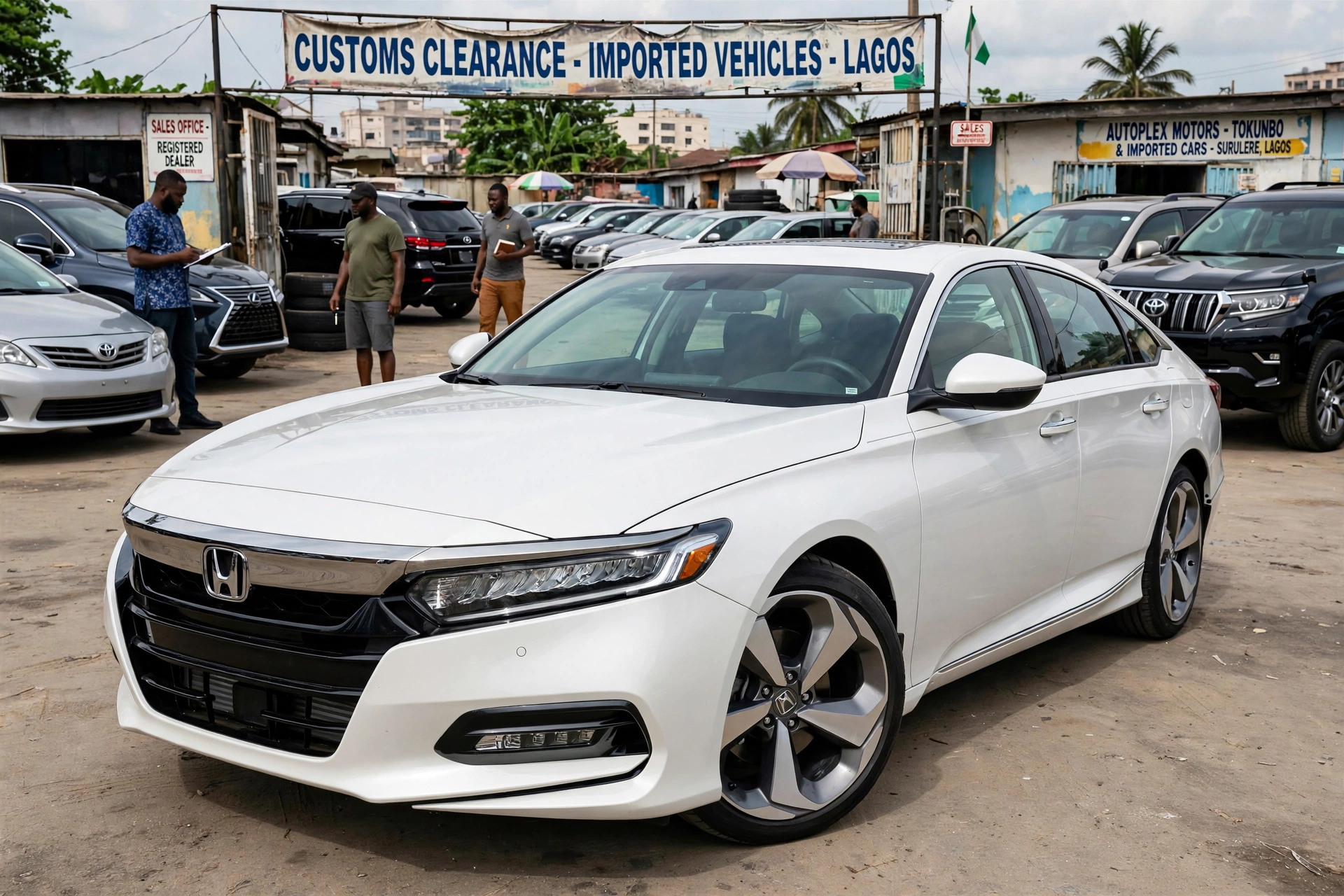
Clean Tokunbo Honda checklist is the essential starting point for anyone buying into a used Honda, which in the trade is known as Tokunbo. This is a large‑scale investment that you should approach very carefully. Many Nigerians are to Honda what they are to reliable and fuel efficient cars which also happen to do well in the second hand market. But the used car market is also a place where you will find cars which had past accidents in their past, which had been flooded, or had documents that had been doctored. Without that which helps you out, a buyer can very easily become a victim of fraud or end up with a car that will cause you more financial issues than it will solve. This is a guide which we have put together to help you through the process of identifying what is a totally clean Tokunbo Honda and thus you can be sure that you are getting good value for your money.
The importance of due diligence is great. A car may look shiny and very appealing on the surface, but what you don’t see may shock you we are talking about structural damage or mechanical issues which are hidden. By learning how to read VIN numbers, to analyze auction reports, and to identify signs of body work or salvage you can avoid large scale mistakes. Also in this article we cover document verification, price factors, and negotiation tips which arm you with the info to make a safe and informed purchase. No matter if you are after a Civic, an Accord, a CR-V or a Pilot these principles are your guide.
What is the Makeup of a Clean Tokunbo Honda
A clean off-lease Honda is one which has not been in major accidents, had issues with flood damage, or been a salvage project. It should have a verified history, proper documentation, and a body which does not show signs of suspicious repainting or structural repairs. Buyers tend to put forth that which is done cosmetically for aesthetic purposes is the same as that which is done structurally to repair an accident, but that is not the case. A clean vehicle leaves the factory the way it did when new, while a damaged one may have issues with safety features.
During inspection note the car’s alignment, panel gaps, and weld quality. A clean used Honda will have even paint application, smooth panel transitions, and no signs of structural changes. Also check that the interior matches the reported mileage which is to be reflected in the wear of the seats, pedals, and steering wheel. If the car looks too “new” for the reported mileage it may have been tampered with.
Decoding VIN and Auction Sheets
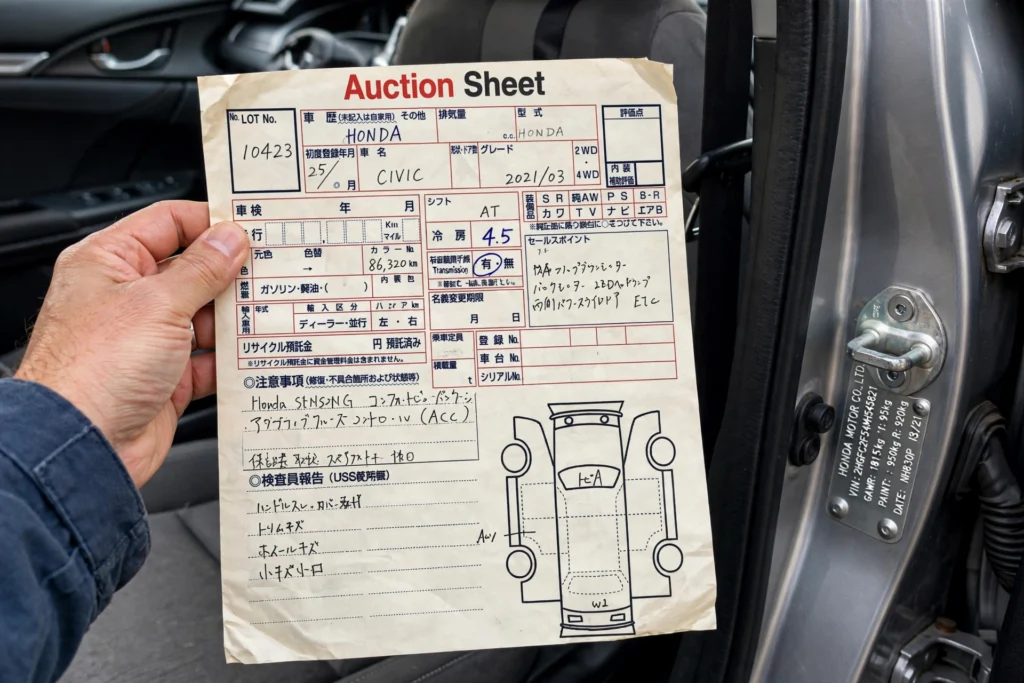
The VIN is what we may call the car’s fingerprint. It tells you the car’s origin, year of manufacture, engine type and also at times its accident history. For Honda cars the VIN is usually found on the dashboard by the windscreen or inside the driver’s door frame. Also you are able to run the VIN through online databases which will tell you if the car has been declared a total loss, flood damaged or stolen.
Auction reports are also very important. They present a grade which indicates the car’s condition going into export. Grades of 4.5 or 5 indicate an excellent condition, on the other hand grades below 3 usually mean the car has had extensive repair work. We learn to use these reports to identify cars which may look fine from the outside but actually have hidden mechanical issues. Also always run the auction report against the VIN report for consistency.
Interpreting Auction Grades
Auction grades are more than numbers they are a report of a car’s history. A grade 5 Honda is almost new, with grade 4.5 we see very minor wear. At grade 4 the car is in good condition although it may have some small scratches or dings. Below grade 3 is a warning sign which typically indicates accident damage, flood exposure, or major mechanical issues.
Beyond the numbers, in the auction reports we also see use of symbols and notes. For instance we may see “A” which stands for scratches, “U” for dents, and “W” for waves in the body panels. As a buyer it is important that you familiarize yourself with these codes to avoid any surprises. A car which has many “A” and “U” marks may have also gone through a repaint which in turn may cover up more serious damage. By paying attention to these details you can avoid paying top dollar for a damaged vehicle.
Spotting Repainted, Flood-Damaged, or Salvaged Cars
Repainted cars are a usual sight at the Tokunbo market but not all of them are what you would consider bad. What does go wrong is when repaint is used to cover up accident damage. See if there is overspray on rubber seals, notice if the paint has an even texture, and check that colors between panels match up. At the Tokunbo market a clean pre owned Honda should have paint that is of the same quality as factory out of the gate.
Flood damaged cars are hard to see but at the same time they are very dangerous. Look out for rust under the seats, water marks on the carpets, and a musty smell in the cabin. Electrical systems are what mostly bear the brunt of flood damage so check out all electronics very carefully. As for the salvaged cars they may have welded in frames, new airbags, and inconsistent panel fitment. These cars may be a cheaper option but they present great safety issues.
Documentation and Duty Verification
Proper documentation is key to a safe purchase. Check that the car has a valid customs duty certificate which is a proof that the import was legal. We see a lot of fake duty papers out there and you may end up buying a car that is not properly cleared which the authorities will seize. Also always get the certificate verified from the Nigeria Customs Service before you go ahead to pay.
Other docs to review include the bill of lading, import approval, and auction sheet. We also ask that the VIN be verified on all documents which should match the car. A discrepancy is a telltale sign of fraud. Also check that the car is reported as stolen in international databases. Go for legal verification which will protect you from future issues and which in turn secures your investment.
Pricing Factors in Tokunbo Honda Market
Pricing depends on several factors: Model which year, which mileage, which auction grade and also which demand. For example in Nigeria Honda Accord and CR-V are very popular which in turn increases their prices. A clean used Honda (Tokunbo) with low mileage and grade 4.5 or higher will go for a higher price than a grade 3 car with high mileage.
Market also plays a role in that out. Issue of exchange rates, import taxes, and shipping costs which in turn play into the final prices. As a buyer do your research on what the average market price is before going in to negotiation. Also check out a number of dealers’ listings which will help you to identify inflated prices. Also keep in mind that which car may seem “too good to be true” may have hidden issues and that which is overpriced may simply be playing on high demand.
Negotiation Tactics for Buyers
Negotiation is a key element in the Tokunbo market. We see that you should check out many cars first to get a price range. Also use the VIN report and auction sheet to your advantage in the discussion. If we find out there are small issues bring them up to justify a lower price. Dealers do in fact play by the information you present to them at the same time that which you know of the auction grades and documentation works to your benefit.
Another approach is to go for add on services instead of price. For example ask for free service, warranty, or registration support. These extra features may in fact end up saving you in the long term. At all times be polite but assertive, also try to avoid coming off as desperate. Walking out of a deal will often make the dealer come back with a better offer. Patience and preparation are your best tools.
Conclusion: Buying Safely

Buying into a Tokunbo Honda is a process which requires your due diligence, patience and in depth knowledge. From the study of VINs to the analysis of auction sheets, each step is important. We see to it that you identify repainted parts, flood damage, or a salvage history which in turn protects you from large scale mistakes. We check out the documentation for legal ownership and also we put in the work to understand price points and negotiation tactics which in turn help you get the best deal.
A clean Tokunbo Honda is more than just any used car they are a source of peace of mind. This checklist is your tool to help you navigate the used market with confidence as you put together a vehicle you will depend on for years. We are after more than just a car purchase we are looking to secure a good deal and instill in you a sense of trust. With a little know how you can avoid fraud, be a smart negotiator and walk out with a Honda that truly is what you are looking for.