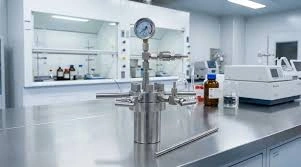
Chemical manufacturing relies heavily on controlled environments to transform raw materials into valuable products. At the center of this transformation is the chemical reactor. This equipment facilitates the exact conditions required for chemical reactions to occur safely, efficiently, and consistently. Properly functioning reactors maximize yield while minimizing waste and energy consumption.
Understanding the mechanics, design, and classification of these vessels is essential for professionals working in process engineering, plant management, and industrial research. The selection and operation of a reactor dictate the overall success and profitability of a chemical plant.
View Chemical Reactor Manufacturer&Supplier – IDA Equipment for More Details
This guide covers the fundamentals of chemical reactors, the principles governing their operation, and the engineering considerations necessary for optimal performance. Readers will gain a clear understanding of reactor types, their specific applications across different scales of production, and the emerging trends shaping the future of chemical processing.
Overview of Chemical Reactors
A chemical reactor is an enclosed volume that serves as a space for conducting chemical reactions. The reactor system includes multiple components which create specific pressure and temperature and mixing conditions needed for chemical processes that transform reactants into products. The reactors show considerable diversity because they operate through different methods and exist in multiple sizes and shapes which range from laboratory flasks to industrial containers that hold thousands of gallons of materials.
Importance in the Chemical Industry
The chemical reactor functions as the central component which controls all chemical processes. The manufacturing facility depends on the reactor design and operation because both factors determine efficiency and safety and cost-effectiveness. An effective reactor design enables businesses to achieve maximum product output from their raw material input while they reduce the production of undesired byproducts. The resulting operational efficiency brings two benefits which include decreased costs for running operations and less harm to the environment. The reactors function as critical safety systems which protect plant workers and local ecosystems by controlling hazardous materials that include highly reactive and toxic and volatile substances.
Principles of Chemical Reaction
Chemical engineers require basic knowledge about chemical reaction principles because these principles determine how chemical reactors need to be designed and operated. The main components of these principles consist of chemical kinetics and thermodynamics.
Chemical kinetics studies the rate at which a reaction proceeds. Scientists use kinetic information to calculate the necessary time that reactants must stay in the reactor until they reach the target conversion amount. The residence time describes this time period. Reaction rate depends on four main factors which include reactant concentration and temperature and pressure and catalyst presence.
Thermodynamics determines both the reaction extent and the associated energy transformations. Many chemical reactions release heat (exothermic) or absorb heat (endothermic). Thermodynamic properties of a reaction must be understood to create proper temperature control systems which will maintain reaction stability and prevent dangerous runaway situations.
Mass transfer and mixing also play a vital role. A reaction requires reactants to establish molecular contact on a physical level. Mixing systems create efficient operations because they maintain consistent concentrations and temperatures throughout the reactor while stopping localized hot spots and unreacted zones from developing.
Types of Chemical Reactors
Chemical reactors are broadly classified based on their mode of operation. The two primary categories are batch reactors and continuous reactors.
Batch Reactor
In a batch reactor, all reactants are loaded into the vessel at the beginning of the process. The vessel is then closed, and the reaction proceeds under controlled conditions for a specific period. Once the reaction is complete, the products are discharged, and the reactor is cleaned before the next batch is initiated.
Batch reactors are highly flexible and can be used to produce a wide variety of different products using the same equipment. They are commonly used in the pharmaceutical and specialty chemical industries, where production volumes are relatively low, and product specifications change frequently.
Continuous Reactor
Continuous reactors operate with a steady flow of reactants entering the vessel and a steady flow of products exiting. Once the reactor reaches a steady state, the internal conditions—such as temperature, pressure, and concentration—remain constant over time.
The two most common types of continuous reactors are the Continuous Stirred-Tank Reactor (CSTR) and the Plug Flow Reactor (PFR). A CSTR consists of a tank with an agitator that ensures perfect mixing, meaning the composition of the product stream is identical to the composition inside the reactor. A PFR consists of a cylindrical pipe where reactants flow through in a plug-like manner, with the reaction rate changing as the material moves down the length of the tube.
Comparison of Reactor Types
Selecting the appropriate reactor type requires comparing their operational characteristics. Batch reactors offer high flexibility and are ideal for complex, multi-step reactions, but they suffer from significant downtime due to loading, discharging, and cleaning. They also require high labor costs and can present challenges in scaling up from the laboratory to industrial production.
Continuous reactors provide high efficiency and are optimal for large-scale, high-volume production. They operate with minimal downtime, resulting in lower operational costs and consistent product quality. However, they lack the flexibility of batch systems and require higher initial capital investment. Continuous processes are dominant in the petrochemical and bulk chemical sectors.
Design and Engineering Considerations
Fundamentals of Chemical Engineering
Designing a chemical reactor is a complex task that integrates multiple disciplines within chemical engineering. Engineers must calculate the required reactor volume based on the reaction kinetics and the desired production rate. They must also select appropriate materials of construction capable of withstanding the corrosive nature of the reactants and the operating pressures and temperatures. Common materials include stainless steel, glass-lined steel, and specialized alloys.
Role of Process Engineering
Process engineering ensures the reactor integrates seamlessly with the rest of the chemical plant. This involves designing the upstream feed systems that deliver raw materials and the downstream separation units that purify the final product. Process engineers also implement advanced control systems using sensors and automation to monitor reactor parameters continuously, adjusting feed rates and cooling systems to maintain optimal conditions.
Heat Exchangers in Reactors
Temperature control is one of the most critical aspects of reactor design. Exothermic reactions generate significant heat, which must be removed to prevent thermal runaway. Endothermic reactions require continuous heat input to sustain the reaction.
Heat exchangers are integrated into reactor designs to manage this thermal energy. In batch reactors, cooling or heating jackets often surround the vessel, or internal coils are submerged in the reaction mixture. In continuous reactors, raw materials may be pre-heated using external heat exchangers before entering the vessel. Proper heat integration maximizes energy efficiency and ensures safe operation.
Applications of Chemical Reactors
Laboratory Reactors
Laboratory-scale reactors are utilized for research and development. These small vessels, often ranging from a few milliliters to several liters, allow scientists to test new chemical pathways, determine reaction kinetics, and screen various catalysts. Laboratory reactors are equipped with precise monitoring tools to gather the extensive data needed to design larger pilot and industrial-scale processes.
Industrial Applications
At the industrial scale, chemical reactors are deployed to manufacture the materials that drive modern economies. In the petrochemical industry, massive continuous reactors crack crude oil derivatives to produce ethylene, propylene, and other basic building blocks. The polymer industry uses specific reactor designs to link monomers into long-chain plastics like polyethylene and polystyrene.
In the pharmaceutical sector, batch reactors are heavily utilized to synthesize active pharmaceutical ingredients (APIs). The strict regulatory requirements of this industry necessitate reactors that can be thoroughly cleaned and validated between production runs to prevent cross-contamination.
Future Trends in Reactor Technology
The chemical industry is continuously evolving, driving advancements in reactor technology. Process intensification, which focuses on reducing equipment size while maintaining or increasing production capacity, has become a major trend in industrial operations. Microreactors, which use millimeter-sized channels, provide superior heat and mass transfer capabilities that enable safer and more effective operations of highly reactive chemicals.
Reactor operation is undergoing transformation through both automation and digitalization. Artificial intelligence combined with machine learning enables the development of predictive models that optimize processes in real time. The smart systems are designed to detect reactor condition changes which require them to modify operational settings in order to protect product quality and ensure safety.
The development of green chemistry and sustainable practices has emerged as a new trend that shapes reactor design. Engineers are developing systems that use renewable raw materials and operate with reduced energy needs while allowing the use of electrochemical and photochemical reactor technologies.
Advancing Process Engineering
The chemical manufacturing industry depends on chemical reactors as its primary technological foundation. Engineers need to comprehend both design and operational aspects of flexible batch systems and continuous flow reactors because these systems produce essential life-saving drugs and large-scale industrial chemicals respectively.
Professionals need to acquire knowledge about reactor technologies and materials and automation methods which serve as essential requirements for achieving industry goals of improved efficiency and sustainability. The assessment of current reactor operations combined with research into process intensification methods will enable facilities to achieve energy efficiency and enhanced safety measures while increasing their competitive edge in the worldwide market.