The aging process is natural and unavoidable and concerns all living organisms. The fundamental process in this is cellular aging, which is a complicated biological process that defines the manner in which the body evolves as time goes by. Although the process of aging is usually characterized by the appearance of wrinkles and loss of physical strength, the actual alterations take place at the cellular level. These microscopic changes affect the general health, life span, and the possibility of diseases related to age.
Cellular aging is the gradual decrease in the functioning and effectiveness of the cells. With time, cells become incapable of divides, repairing, and performing optimally. It is also a biological and behavioural phenomenon that is affected by genetic, environmental, and lifestyle factors.
It is important to comprehend how cells age to enhance better aging and longevity. Examining the cell aging process and the factors that can affect it, individuals can make informed choices that can sustain long-term health and well-being.
What Is Cellular Aging?
The process of cellular aging is the gradual decline in the functional capability of cells as they age. This decrease influences the body in terms of its capacity to restore tissues, organ functioning, and its response to stress.
All the cells in the body have limited life. Cells can divide and replicate to repair damaged or aging cells but it is not endless. When cells have exhausted the lifespan, they either cease to divide or they kill themselves by a process known as programmed cell death. This is a natural process that makes sure that the damaged cells are not accumulated and it also leads to overall aging of the body.
The pace of cellular aging differs in people and depends on a variety of factors. Although genetics are a factor, environmental and lifestyle habits could have a profound effect on the rate at which the cells age.
Telomeres in Cell Aging
Telomeres are protective features that are found at the terminus of chromosomes. They serve as shields that ensure that genetic materials are not ruined when the cell divides. The length of telomeres becomes a bit shorter each time a cell divides.
As time progresses, telomeres become so short that they are no longer able to shield the chromosomes. At this point, the cell either stops dividing or becomes dysfunctional. This is one of the major processes in cellular aging.
The decrease in telomere length correlates with aging and the predisposition to age-related diseases. Telomere health is thus a significant factor in alleviating cell aging.

cellular aging and telomere shortening in human cells
Oxidative Stress and Cell Damage
One of the leading causes of cellular aging is oxidative stress. It arises as a result of a disequilibrium between the free radicals and antioxidants in the body.
Free radicals are unstable molecules which can harm cells, proteins and DNA. They are naturally made in the metabolic processes but may be made by external factors including pollution, smoking, and inappropriate diet.
Antioxidants aid in counteracting the free radicals, and in safeguarding cells. But when the oxidative stress is too much it overloads the body systems, which causes the damage of cells and hastens aging.
This damage is cumulative and leads to the breakdown of the ability to perform cellular functions and predisposes to chronic conditions.
Cellular Senescence and Its Effects
Cellular senescence refers to a condition where cells cease to divide, but are still metabolically active. These cells cease to play a role in repairing tissues and might release harmful substances which can influence other cells.
Although senescence is a defense mechanism which avoids the proliferation of the harmed cells, the senescence cells may negatively affect the body. It may cause inflammatory reactions, tissue malfunction, and age-related disease advancements.
Managing the accumulation of senescent cells is an important area of research in the study of aging.
Effects of DNA Damage and Repair
DNA contains the instructions of how the cells are supposed to act. With time, the environmental factors, oxidative stress and normal cellular processes can degrade DNA.
The human body has a way to repair the damage to the DNA, and these systems become less effective as they get older. Consequently, mistakes may cause a build-up of errors, which results in dysfunctional cells and predisposition to the disease.
Effective repair of the DNA is necessary to keep the health of the cells in good condition. These mechanisms can be supported by healthy lifestyle decisions to minimize the effects of aging.
Mitochondrial Work and Energy Generation
The mitochondria are referred to as the powerhouses of the cell as they generate energy in form of ATP. This energy is needed in all cellular activities.
With age in cells, the functioning of the mitochondria deteriorates. This causes a decrease in energy production and an increase in free radicals. The resultant energy shortage has an impact on the efficiency of the cells to carry out their functions.
The dysfunction of mitochondria is strongly associated with aging and other chronic illnesses. It is thus important to maintain the health of mitochondria in order to delay the aging of the cell.
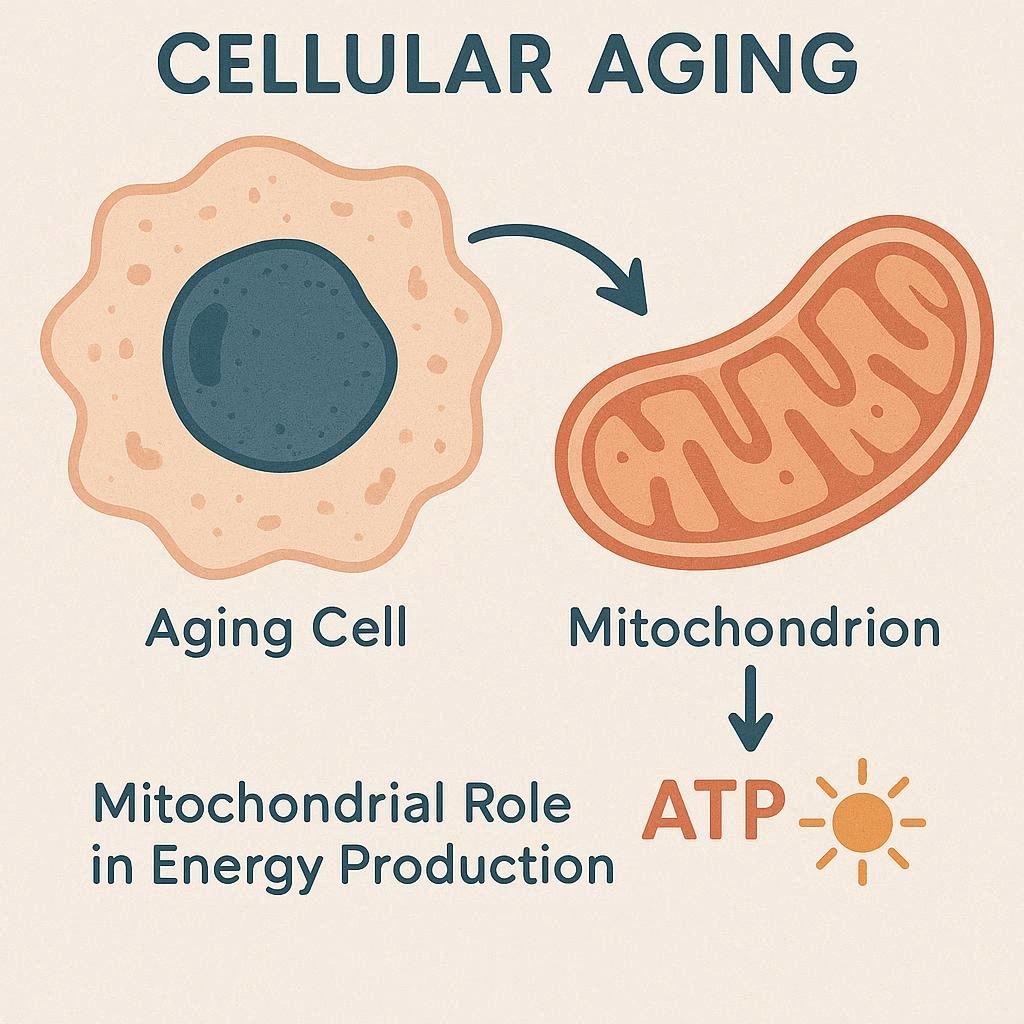
“cellular aging and mitochondrial role in energy production“
Factors of Lifestyle that contribute to the aging of Cells
Although cellular aging is a normal process, it can be affected by lifestyle and greatly. Exercising good health would help in slowing the aging process and enhancing health.
Diet is crucial in cellular health. A high fruit, vegetable and whole foods diet contains the necessary nutrients and antioxidants, which guard cells against harm.
Exercise helps maintain a healthy circulation, boosts metabolism, and increases cellular repair. Exercise helps to delay aging and improve overall health.
Another important aspect is sleep. The body refreshes and replenishes cells during sleep and therefore rest is also vital in sustaining the functioning of the cells.
By not engaging in bad practices like smoking or being drunkards, one can also avoid damaging their cells and increase their lifespan.
The Role of Inflammation in Aging
Chronic inflammation is a key contributor to cellular aging. It is a condition that arises when the immune system of the body does not subside.
Whereas inflammation plays a crucial role in combating infections and repairing injuries, chronic inflammation may destroy tissues and age. It is linked to a number of age related illnesses, such as cardiovascular disease and diabetes.
Inflammation is preventable by healthy lifestyle choices and proper nutrition, which can help to safeguard cells and long-term health.
Genetic and Environmental Effects
Genetics are of great importance in the aging of cells. There is a possibility of some people inheriting genes that enhance long life or prevent some diseases.
Nevertheless, environmental factors play an important role, as well. Cells can be accelerated to age by exposure to toxins, radiation and unhealthy conditions.
The genetics and environment interaction also emphasizes the need to make healthy decisions in order to help the cells remain healthy.
How to Slack Cellular Aging
Even though the process of aging cannot be reversed, there are some strategies to reduce it and make the life quality better.
A healthy diet high in antioxidants can be used to prevent oxidative stress in the cells. Exercise promotes good health and improves the functioning of cells.
It is also important to manage the stress. Stress may hasten aging by disrupting hormonal balance and causing inflammation, which is chronic.
Social interaction and activities that provide intellectual stimulation may help to maintain cognitive fitness and well-being.
Future of Aging Research
Science and technology are making new discoveries on cellular aging. Scientists are seeking methods to increase life expectancy and enhance health via novel methods.
Examples of areas of interest are treatments to senescent cells, mitochondrial boosters, and DNA repair. These innovations can transform the understanding and management of aging.
Although these developments are yet to be researched, they bring hope of a healthier aging in the future.
Conclusion
The process of cellular aging is complicated and multifaceted and it influences all spheres of human health. Telomere shortening and oxidative stress to mitochondrial dysfunction and DNA damage are just some of the factors that cause a slow degradation of cellular functions.
Learning these processes can be a great insight on how the body ages and the measures people can take to prevent illness proactively. Although aging is a natural process, it can be affected by the lifestyles of people, the environment, and the current scientific developments.
People can take care of their cellular health and enhance their quality of life by embracing healthy habits, alleviating stress, and being updated on new research. Finally, better comprehension of cellular aging can enable individuals to age better and be more active in the process of life.