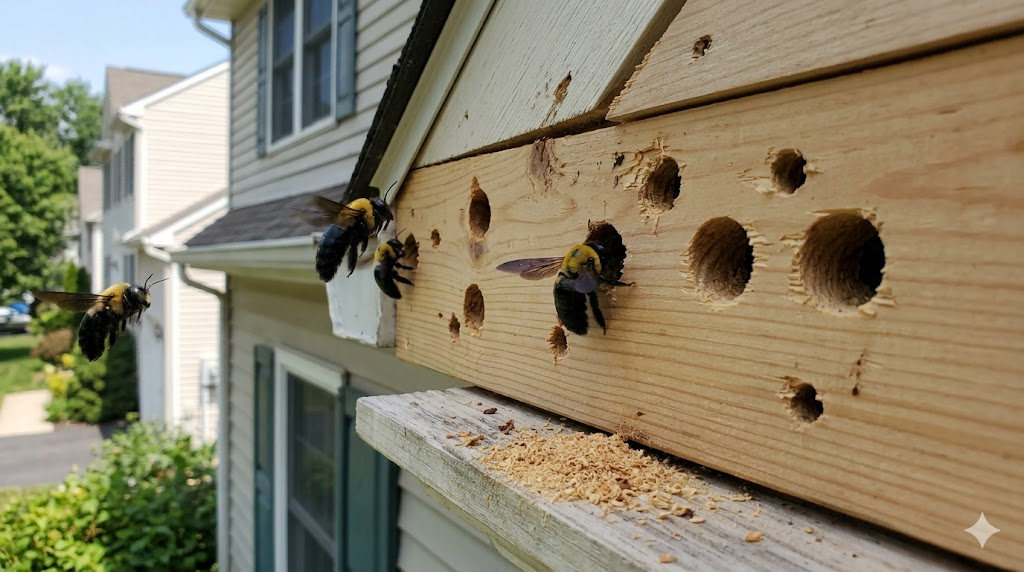
Carpenter bees look gentle, but they chew straight into your home. Their drilling leaves clean round holes in wood. Over time those holes grow into long tunnels. Then your deck, porch, or trim starts to weaken. You may hear scraping in the boards. You may see sawdust on steps, railings, or window frames. That is not a small problem. It is a warning. Many homeowners ignore the first signs. Then spring after spring, more bees return to the same wood. Each year the damage spreads. Repairs grow more expensive. This blog explains why carpenter bees in Andover, NJ choose certain houses, how to spot early damage, and what steps protect your home. You will learn simple checks, safe actions, and when to call for help. Your home should feel solid and secure. You can stop the drilling before it spreads.
What Carpenter Bees Are Doing To Your House
Carpenter bees do not eat wood. They drill into it to build nests. Each female cuts a round entry hole, then turns and tunnels along the grain. She lays eggs in small rooms inside that tunnel.
One tunnel can reach many inches. Then each year new bees reuse and extend those tunnels. Old galleries branch and spread. Wood that once felt firm starts to sound hollow.
Common targets include three spots.
- Exposed rafters and fascia boards
- Deck rails, posts, and stair stringers
- Fence tops and wooden play sets
This damage often stays hidden until you press, tap, or repair a section and it crumbles.
How To Recognize Carpenter Bees Around Your Home
You can spot key signs with your eyes and ears. You do not need special tools.
- Round entry holes about the size of a pencil eraser
- Fresh yellow sawdust on surfaces or on the ground
- Bees hovering near eaves, decks, or railings on warm days
- Scratching or faint chewing sounds in quiet moments
- Woodpeckers hammering at boards to reach larvae
Male carpenter bees often hover in front of you. They may rush your face. They do not sting. Females can sting but usually do not if you do not handle them or block the nest.
You can see photos and ID tips from the Penn State Extension carpenter bee guide. Use these to compare what you see at home.
Why Carpenter Bees Choose Certain Andover Homes
Carpenter bees look for three simple things.
- Soft or weathered wood such as pine, cedar, or redwood
- Unpainted or thinly stained surfaces
- Quiet, sunny, and dry spots under eaves or decks
Homes in Andover often have wooded yards, older decks, and trim that faces sun and snow. That mix gives bees easy nesting spots. Once they pick your house, scent and old tunnels pull them back each spring.
Damage Risk Comparison
The table below shows how different home features change your risk of carpenter bee problems.
| Home Feature | Example | Risk Level | What You Can Expect |
|---|---|---|---|
| Unpainted soft wood | Old pine deck rails | High | Multiple holes, repeat nesting, faster wood decay |
| Thin stain or worn paint | Faded fascia boards | Medium | New holes along edges and corners |
| Fresh paint | Recently painted trim | Lower | Fewer attempts to start new tunnels |
| Composite or metal | Composite deck boards | Lowest | Bees may hover but do not drill |
Simple Checks You Can Do Each Spring
Set time once or twice each year to walk your property. Look closely at three zones.
- Eaves and roof edges. Stand back and scan for bees hovering. Then step closer and check boards for holes or stains.
- Decks and porches. Look at the underside, rail bottoms, and stair supports. Use a flashlight if needed.
- Fences and play structures. Focus on tops of posts and beams where sun hits most.
Use a small mirror or your phone camera to see the underside of boards. Tap suspect wood with a screwdriver handle. Soft or hollow spots often mean tunneling.
Steps To Reduce Carpenter Bee Damage
You can take three main actions. You can change the wood surface. You can block and repair old tunnels. You can decide when to seek expert help.
1. Make Wood Less Inviting
- Paint exposed soft wood with a quality exterior paint
- Use thick stain on decks and rails and recoat on schedule
- Replace badly damaged sections with hardwood, composite, or metal when you can
Fresh paint gives the most protection. Clear sealers do not stop drilling.
2. Seal And Repair Existing Tunnels
Closing old tunnels helps stop repeat nesting and moisture damage. You can do this after you no longer see active bees using the holes.
- Wait until late summer or fall when young bees have left
- Clean loose sawdust from the hole opening
- Fill the tunnel opening with exterior wood filler or caulk
- Sand smooth after it cures then repaint or stain
For large or deep galleries, you may need to replace the board. Do not ignore sagging rails or steps. Those can fail under weight.
3. When To Call For Professional Help
Some situations need expert support.
- Many holes across wide sections of your home
- Woodpeckers tearing into siding or beams
- Bees nesting near children, older adults, or people with sting allergies
- Damage in hard to reach upper stories or roof lines
A licensed pest control company can treat active nests and help plan repairs. You can confirm safe control options and bee behavior through the U.S. Environmental Protection Agency guidance on bees and wasps.
Protecting Your Home And Peace Of Mind
Carpenter bees play a role as pollinators outdoors. Yet inside your deck or trim they cause real damage. You do not need to fear them. You do need to respect what they can do to wood.
Watch for the early signs. Act on small problems. Keep exposed wood coated and sound. Reach out for help when damage grows.
Your home should feel steady when you walk across the porch. Your children should grip a rail that holds firm. With simple checks and steady care, you can keep Carpenter Bees in Andover, NJ from turning solid lumber into hollow shells.