
AI and the future of work are closely connected as artificial intelligence transforms how people perform jobs across many industries.Companies are using AI to analyze data, perform routine functions, produce content, support decision-making, and improve processes. We see this happening on a large scale, with some jobs changing completely, but not to the degree that they disappear. Instead, what we are seeing is that many roles are restructured as some tasks go to machines and, at the same time, other duties take on greater importance. Employees are spending less time on data entry, research, basic math, and fielding simple questions, and more time on problem-solving, communication with teams, reviewing information, and decision-making.
AI’s role in the job market is a complex issue that goes beyond the black-and-white question of machine replacement of workers. Most jobs are made up of a variety of tasks, which do not all have the same level of automation that is possible. A worker may use AI to do a certain task within a job while they still perform other aspects that require experience, creativity, communication, or judgment. Also, it is more useful to look at how AI is transforming individual tasks and work skills instead of putting forward the idea that technology will either do away with large-scale employment or create it, which is too simple a solution.
AI Is Automating Repetitive Work
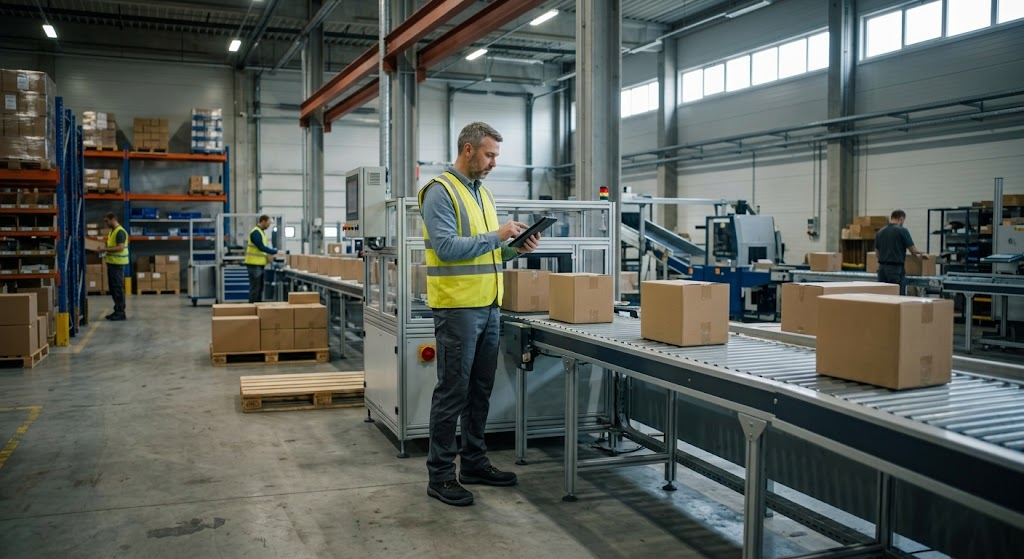
One of the greatest ways in which AI is transforming jobs is through the implementation of automation in repetitive tasks. In many work settings, we see the same information processed over and again. Data entry, document sorting, appointment setting, routine calculations, stock updates, and easy customer issues are some which may be taken care of by software. As software takes over such functions, employees may put to use their human skills, which are required for more flexible roles. But also, it is true that not all tasks are created equal for automation. What may be a repetitive task may still require human supervision when the stakes are high or when the situation is out of the ordinary.
Automation also has the ability to transform a worker’s role within a job, as opposed to doing away with entire positions. What we see is that an employee may step out of the role of a manual laborer and into that of a supervisor of the automated process, which includes checking results, identifying and correcting errors, and managing exceptions. In a warehouse setting, a worker may still be very much a part of the inventory process but also be put to handle unexpected issues. Also, in marketing, we see that a professional may use AI in the creation of initial ideas but, in the end, is in charge of what stays in and what is improved upon. In this way, what we are seeing is a movement of tasks from that of just doers to also including roles in monitoring, problem-solving, and decision-making.
AI and the Future of Work: Job Displacement and Upskilling
Understanding the impact of AI on jobs and skill sets is a matter of looking at what tasks are automated and how people are still involved. How AI can affect employment and workplace skills is also connected to the way employers value skills that are hard for technology to reproduce to the same extent. As AI takes over some routine functions, we see a shift in which skills are valued by employers. Communication skills, critical thinking, creativity, teamwork, and professional judgment will come to the fore when staff’s role is that of a check and decision point rather than as an assembly line worker following a script. Also, this will play out in how employers seek out candidates and what kind of post-entry training is provided to current staff.
AI also has the ability to set new tech-based expectations for workers, which may not have been traditionally classified as tech experts. We see that employees will have to learn how to use AI tools, write out good instructions, evaluate what the AI puts out, identify errors, and protect sensitive information. Also, these skills will play a role in various fields, from offices to schools, marketing to finance, and many other settings. In turn, we see that workers will have to be in a constant state of learning throughout their careers, as opposed to counting on what they were taught at the start of their professional life.
AI Can Assist Professionals
Artificial intelligence is playing an ever-larger role in supporting, as opposed to replacing, professionals. In health care, AI is used to put information in order and also in the analysis of medical images or research data. In finance, we see it in the large-scale processing of information and in the identification of atypical trends. Also, in engineering, AI-assisted software for design and analysis is used, and we also see it in the use of programs by professionals who use it to search, summarize, classify, or put together documents. These applications do save time, but the human professional still has to determine the accuracy and relevance of the information to the issue at hand.
Creative work and the field of knowledge are being transformed by AI assistance. Writers use AI for brainstorming sessions and to draft at first, programmers get code recommendations, and designers use it for putting forth ideas which, in turn, are made with the help of generative tools. In all of these cases, what comes out in the end still requires human input. A professional will determine the purpose of the project, identify what is amiss, fix mistakes, and see to it that the product is appropriate for the audience or situation at hand. AI may speed up some of this process, but in the end, professional knowledge is what is required for the evaluation and improvement of what the system puts out.
AI Is Affecting Industries Differently
Different industries will play out AI in unique ways, which is a result of the different types of tasks and levels of human interaction they have. In manufacturing, we see AI used for product inspection, equipment monitoring, and improvement of automated processes. In retail, it is used in inventory management, recommendations, and customer support. In transport, we see its use for route planning, logistics, and traffic analysis. In agriculture, related tech is used to report on conditions and support equipment. Also, in these industries, we see AI change the scope of what employees do, from operation of that tech to management of exceptions, understanding of real-time issues, and response to the unexpected.
Office work is transforming as we see many admin and information-processing tasks done digitally. Employees may use AI for sorting mail, report preparation, information analysis, or to field routine queries. In customer service, we see automation used for basic issues, which leaves human agents for the more complex issues. In education, also, we see the use of AI in admin and learning tools, which teachers integrate into their practice, although teachers still play key roles, which include that of a communicator, paying attention in the class setting, and understanding individual student needs. What we see is that the role of AI in all of these is very much a function of what each job entails.
New Roles and Skills Can Emerge
The issue of which roles to fill as AI is adopted into organizations is present. We see that companies will require staff who are able to run AI systems, who will in turn be in charge of the output of that AI, maintain data quality, report on performance, and help departments to use the new tools we have. Also, some employees will be charged with the task of determining the reliability of information which is generated by AI, at the same time we will have some who will focus on security, compliance, or technology integration. In many cases, we may not see the creation of brand-new job titles which are dedicated to AI. What we are seeing instead is that present job roles are slowly adopting additional AI-related responsibilities.
AI also plays a role in the demand for tech roles which are related to the development and operation of intelligent systems. We see a need for software developers, data specialists, cybersecurity professionals, researchers, and infrastructure experts. Also, at the same time, it has been noted that workers who straddle technology and a specific industry are valuable because they are able to bridge AI, as a tool, with what is needed in the real world. But also, in terms of what the job market will look like exactly, we have little to go on, as it is still to be seen how business will invest, what the economic climate will do, what the regulatory environment will bring in, and how fast organizations will adopt these technologies.
Human Skills Remain Important
Communication skills are a key workplace ability, which, as we see in many jobs, includes the elements of understanding people, putting forth ideas, resolving disputes, and developing relationships. While AI may put out messages and present options, in the end, effective communication also requires an element of context and the ability to react to what the other person is bringing up. A manager may have to present a tough decision, a teacher may note when a student is at a loss, and a salesperson may determine what it is that a customer really wants. In these cases, it is not enough to just put forth information. Also required is listening, judgment, adaptability, and a sense of how the other person is reacting.
Creativity and critical thinking go hand in hand in that what we put out is different from what we put out thoughtfully. Workers have to look at AI’s suggestions, find errors, research information that isn’t supported, and improve the final product. Also, it is in the present that human evaluation is very important when AI puts out what seems to be correct information but may still have errors. Also, we see how creativity plays a role in how workers can use AI in new ways instead of just using what it gives us. That is to say, the skill of asking good questions, understanding what we want, and making choices based on that information will in the end become very important in AI-supported workplaces.
Conclusion

Artificial intelligence is transforming jobs, which it is doing via the automation of some tasks, support of professionals, introduction of new responsibilities, and growth of certain skills. We won’t see the same changes play out in every field or industry. In some roles, repetitive tasks may become a thing of the past, and we may see an increase in supervision, communication, creativity, and decision-making. Also, we will see the development of new areas which will grow out of AI technologies.
The future of work will see an ongoing play between employees and intelligent systems. As we look to the future, job forces may see a blend of professional know-how with tech awareness, while at the same time we see growth in skills like communication, creativity, critical thinking, and judgment. Also, it will be up to employers to develop training, account for accountability, and responsible use of AI in the workplace. We may look at AI’s role as that of something which transforms tasks and responsibility, which in turn gives us a more even perspective of employment, as opposed to the extremes of technology which will replace the worker or that will improve the lot of all workers.