Introduction
In the contemporary competitive market, advertising is not only concerned with product or service presentation but it is a matter of persuading consumers, building perception as well as behavior. The very center of this persuasive power is this idea of advertising appeals. Such appeals are well-thought-out tactics of appealing to human psychology to attract attention, elicit emotions, and take action.
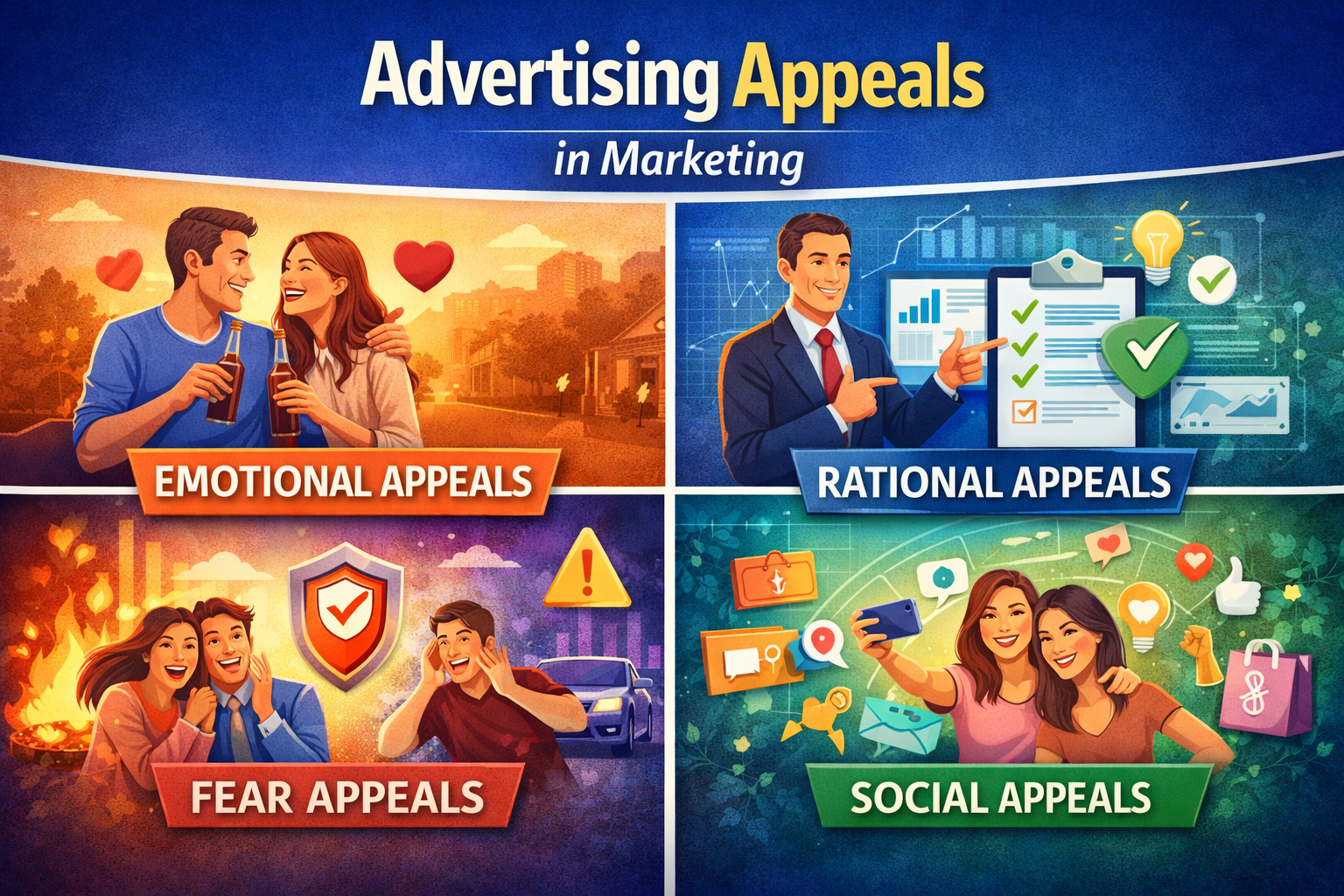
Delineating the methods of advertising appeals should be a fundamental understanding of marketers, businesses, even the consumers wishing to be more knowledgeable of how their judgment is formed. Out of emotional narration to rational thinking, brands are filled with a number of techniques, which they use to reach their audiences on various levels. The article examines various advertising appeals, which include emotional, rational, fear-based, and social appeals, and how they influence consumer attitudes and consumer buying.
When examining the different appeals to advertise, this paper offers some insights into the psychological processes that make successful advertising campaigns work and the reasons behind some messages connecting more with a consumer, compared to others.
Knowing Advertising Appeals
Advertising appeals are the method or tactic applied to capture the attention of the consumers and influence them to buy a product or service. Such requests are based on the psychological stimulators, such as feelings, needs, desires, and social factors.
An advertising appeal is usually effective depending on how well it fits in the values, beliefs and motivations of the target audience. An example is that a luxury brand can appeal to emotion to bring in a sense of prestige and aspiration, whereas a pharmaceutical company can leverage on rational appeal to deliver facts and benefit of a product.
In the end, advertising appeals have three main functions:
- Attract attention
- Create interest and desire
- Create a desire to buy or participate.
The use of Emotional Appeals in Advertising
What Are Emotional Appeals?
Emotional appeals are meant to arouse feelings like sad, happy, love, fear, or nostalgic. Such appeals are very effective since emotions are a great factor in making the decision.
How Emotional Appeals Work
It does not concentrate on product attributes, but instead emotional advertising appeals to the audience at a personal level. It makes it an unforgettable experience which leads to brand loyalty and attachment.
Ordinary Emotional Appeals
- Happiness and Joy: Advertisements that leave people happy tend to identify the brand with the emotion.
- Love and Affection: Often employed in family based marketing or relationship based marketing.
- Nostalgia: Reminds the consumers of the past thereby bringing about a feeling of comfort and familiarity.
- Humor: Involves and makes the advertisements more forwardable.
Example Strategy
A beverage brand can feature friends spending a sunny day together, and less focus on the drink and more on the happiness and interaction. This emotional connotation helps the consumer to associate the product with good experiences.
Rational Appeals in Advertising
What Are Rational Appeals?
Rational appeals are more logical, factual and evidenced-based. They will also seek to persuade the consumers based on the product features, advantages, quality and value.
Key Characteristics
- Data-driven
- Informative
- Straightforward
- Focused on problem-solving
The Effect of Rational Appeals on Decision Making
High-involvement purchases including electronics, vehicles, or financial services are usually made using rational appeals among consumers. These are decisions that should be evaluated and therefore factual information is necessary.
Common Techniques
- Product Comparisons
- Statistics and Data
- Demonstrations
- Expert Testimonials
- Example Strategy
A smartphone commercial can consider battery life, camera capabilities, and processing speed as the factors that give the product an edge over the competitors.
Fear Appeals in Adverts
What Are Fear Appeals?
Fear appeals are the ones that apply the threat of bad consequences to control behavior. They are widely applied in terms of public health promotion, the insurance marketing, and products associated with safety.
How Fear Appeals Work
These calls exude a sense of urgency by emphasizing on dangers or risk. They encourage the consumer to be proactive in order to prevent an undesirable situation.
Types of Fear Appeals
- Health Risks: Non-smoking or disease prevention campaigns.
- Safety related issues: Road Safety or home security advertisements.
- Financial Risks: Protection insurance advertisements.
Psychological Mechanism
In order to be effective, fear appeals must:
- Clearly present a threat
- Demonstrate how serious the outcomes are.
- Provide a solution to prevent the risk.
Example Strategy
An insurance company can represent them as a burden of unforeseen accidents, which would make consumers relieved by buying a cover.
The power of Social Appeals in Advertising
What Are Social Appeals?
Social appeals are based on the desire of people to belong, be accepted, and be socially recognized. They stress on how a product may boost one social status or relationship.
Key Elements
- Peer influence
- Social status
- Trends and popularity
- Community belonging
The Effect of Social Appeals on Behavior
Consumers tend to seek out other people in making decisions. Social proof referenced as reviews, testimonials, or influencer endorsements is a key factor that affects the perception.
Common Techniques
- Influencer Marketing
- User-Generated Content
- Testimonials
Messaging it’s being used by everyone.
Example Strategy
A fashion brand could feature celebrities or influencers who wear products of their brand, which would make consumers copy their style and status.
The Psychology behind Advertising Appeals
Emotions in Decision-Making
Consumer psychology studies indicate that people tend to base buying behaviors on an emotional response more than on logic. This is despite the fact that even in situations where consumers are convinced that they make rational decisions, often, emotional aspects come into play
Attention and Memory
Advertising appeals are created in such a way that they are memorable in a congested media. Appeals that are emotional and cause fear are the most effective in attracting attention and increasing recall.
Strategic Use of Advertising Appeals
Fitting Appeals to Target Audience
Varied audiences react differently to different appeals. For example:
- A younger audience can react better to emotional and social appeals.
- Experts can be inclined to rational and informational content.
- Families can be reached by emotional and safety-based communication.
Combining Multiple Appeals
Effective campaigns usually combine various appeals in order to be as effective as possible. For instance:
- An advertisement can exploit emotional narratives and give logical advantages.
- There can be fear-based message with high emotional component.
Timing and Context
The success of an appeal may be time- and context-dependent. For example:
- Fear appeals work better in times of crisis.
- Appeals to emotions are effective at times of holidays.
- Product launches are best done using rational appeals.
Advertising Ethics In Advertising Appeals
Manipulation vs Persuasion
Although the role of advertising is to convince the audience, it is a fine margin between persuading and manipulations. False and overstated statements can be detrimental to the consumer and brand loyalty.
Conscientious Use of Fear Appeals
Too much fear may make one anxious or suffer. The advertisers should make sure that their messages are not imbalanced and offer constructive remedies.
Ability to Be Open and True
The contemporary consumers appreciate honesty. Authentic message brands with no misleading tactics have higher chances of gaining trust and long-term bondages.
Practical Implications: The Effect of Advertising Appeals on Customer Behaviour
Building Brand Awareness
Successful appeals assist in the recognition of brands and their memorability. Appeals to the emotions and the social aspect are considered especially effective in making a lasting impression.
Influencing Decisions in Purchase
The advertising appeals direct the consumer in the decision-making process by:
- Highlighting needs
- Offering solutions
- Creating urgency
Encouraging Brand Loyalty
Having emotional attachment to a brand also increases the chances of consumers being loyal and referring other customers to the same brand.
Conclusion
The advertising appeals are basic instruments of current-day marketing that determine the perception and interaction of consumers with the brands. Through emotional, rational, fear-based, as well as social appeals, an advertiser is in a good position to pique the interest, instill the desire, and lead to course of action.
The ability to understand these appeals will not only advantage the marketers but consumers will be in a position to make better decisions. With the marketing arena constantly changing, the strategic application of the appeals along with ethical matters will be required in the creation of meaningful and long-term relationships with the audience.