When a family of five or six plans a week in Spain, the first instinct is often to book a hotel. It feels simple: one booking, breakfast included, someone else makes the beds. But once you add up the real costs of a hotel stay for a larger group, a self-catering holiday home often comes out ahead on both price and comfort.
Here is how the two options compare on Spain’s Costa Blanca, one of the most popular stretches of coast in Europe.
Space: rooms vs. a whole house
A family of six in a hotel usually needs two or even three rooms. That means two or three nightly rates, and the family is split across corridors in the evening.
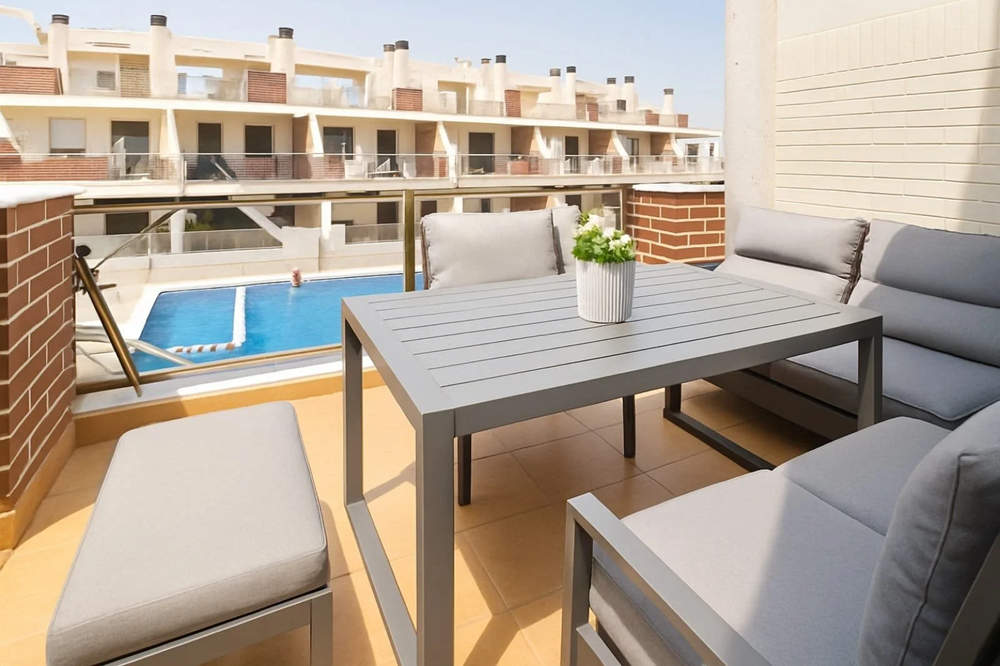
A holiday home works differently. You pay for the whole property, not per room. A typical three-bedroom house sleeps six, with a living room, a kitchen and outdoor space shared by everyone. In areas like Orihuela Costa, many holiday homes in La Zenia also come with terraces, a barbecue and a communal or private pool.
Food: the hidden hotel cost
Food is where hotel budgets usually break. Breakfast may be included, but lunch and dinner for six people in restaurants every day add up quickly.
In a holiday home, you cook when you want and eat out when it’s worth it. A trip to the supermarket or the weekly street market covers several days of breakfasts and lunches for the price of one restaurant meal. For families with small children, a kitchen also means familiar food, snacks on demand and meal times that suit the kids.
The pool question
For many families, the pool decides the trip. Hotel pools in high season are crowded, and sun loungers disappear early in the morning.
A private pool changes the holiday completely. Children can swim whenever they want, parents can relax without watching the clock, and evenings by the water become the best part of the day. A villa with a private pool in La Zenia, for example, gives a group of six its own pool, terrace and barbecue, with the beach and the shopping centre within walking distance.
Before booking, check two things: whether the pool is private or shared with the complex, and in which months it is open. Many private pools on the coast run in season and are closed in winter.
Flexibility
Hotels run on fixed rules: breakfast hours, check-out at noon, extra charges for an extra bed. A holiday home lets the family set its own rhythm. Late breakfasts, a siesta after lunch and a late Spanish dinner on the terrace all fit naturally.
There is a trade-off. In a house you make your own beds during the stay, and a cleaning fee is usually charged once at the end. For most families, that is a small price for the extra space and freedom.
Long stays: where homes win clearly
The difference grows with the length of the trip. A week in a hotel is manageable; a month is expensive and tiring. That’s why so many Northern Europeans who spend the winter in Spain choose to rent a house rather than book a hotel.
On the Costa Blanca, many owners rent by the month from October to May. The monthly price depends on the month and the length of the stay. Utilities such as electricity, water and internet are usually paid separately on long stays, so ask what’s included before you book.
Which one is right for you?
A hotel still makes sense for a short city break, for couples who want everything taken care of, or for a trip built around restaurants. But for families, groups of friends and anyone staying longer than a few days, a holiday home usually offers more space, more freedom and better value.
The key is to compare the total cost of the trip, not just the nightly rate: rooms, meals, pool access and flexibility together. A good way to start is to browse holiday rentals in Orihuela Costa side by side and compare size, pool and location before you decide.