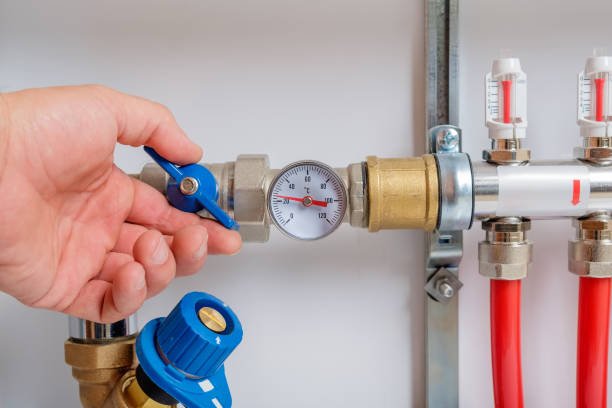
Pressure regulators are among the hardest-working components in any plant. They sit between high-pressure supply lines and the equipment that needs a lower, steady pressure, adjusting constantly as demand rises and falls. When they work well, nobody notices them. When they start to fail, the effects ripple through the process.
The good news is that regulators rarely fail without warning. Most give clear signs well before they stop working altogether. This article looks at the most common warning signs in steam and compressed air lines and the servicing steps that restore stable downstream pressure.
Why Stable Downstream Pressure Matters
Equipment is designed to run within a pressure range. In steam systems, pressure sets the steam temperature, so a drifting regulator directly affects heating, cooking, sterilising and drying processes. In compressed air systems, unstable pressure affects tool performance, actuator speed and product quality.
Running above the intended pressure wastes energy and stresses seals, hoses and heat exchangers. Running below it slows production and can cause rejected batches. A regulator that holds its set point is a simple way to protect both output and equipment life.
Warning Signs of a Failing RegulatorPressure Creep
Pressure creep is a slow rise in downstream pressure when flow drops or stops. It usually means the regulator is not shutting off tightly. Common causes include a worn seat, a damaged disc or dirt trapped between them. If ignored, creep can push downstream pressure high enough to lift safety valves.
Hunting
Hunting is a repeated rise and fall of downstream pressure around the set point. It often points to an oversized regulator working too close to its seat, a sensing line connected at the wrong point, or a worn pilot in pilot-operated designs. Hunting also accelerates wear, so the problem tends to get worse over time.
Noise and Vibration
Whistling, chattering or vibration often indicates high velocity across a partly open valve, cavitation in liquid service or loose internal parts. Noise is more than a nuisance. It is usually a sign that something inside the valve is being damaged.
Leakage
External leaks at the bonnet, diaphragm housing or connections suggest failed seals or a damaged diaphragm. In steam service, these leaks waste energy and present a burn hazard. In air service, they add to the plant’s leakage losses and increase compressor running time.
Slow Response
If downstream pressure takes longer than usual to recover when demand changes, the diaphragm may have stiffened, or pilot passages may be partly blocked. This is a common sign of ageing in regulators that have been in service for many years.
Servicing Steps That Restore Stable Pressure
Most regulator problems can be solved with a structured service.
Clean the upstream strainer. Dirt is one of the most common causes of regulator faults. A blocked or damaged screen lets debris reach the valve seat and pilot. Fitting and maintaining a basket strainer upstream on larger lines gives the regulator much better protection than a small, neglected Y-strainer.
Inspect and replace the diaphragm. Diaphragms harden and crack with heat and pressure cycling. Replacing them restores sensitivity and response.
Check the seat and disc. Worn or eroded surfaces should be lapped or replaced to restore tight shut-off and stop pressure creep.
Clear pilot passages and sensing lines. Small passages block easily, especially in steam service. Clearing them often solves hunting and slow response.
Review sizing. If the regulator keeps giving trouble after servicing, it may simply be the wrong size for the current load. Plants that have grown over the years often find their original regulators are now too large or too small.
Check downstream protection. A correctly set safety valve downstream protects equipment if the regulator fails open. It should be included in the same service routine.
Repair or Replace?
Servicing extends the life of most regulators considerably. However, replacement makes sense when the body is eroded, parts are no longer available or the valve no longer suits the application. Upgrading a direct-acting unit to a pilot-operated pressure reducing valve can also improve pressure control on larger steam loads where accuracy matters.
What to Do Next
Start by recording the downstream pressure at each regulator station during normal operation, at low demand and at peak demand. Any station showing creep, hunting or large swings should be scheduled for servicing first.
Engineers comparing replacement options can review specifications for a pressure regulator suited to steam, air or water service, including size, pressure range and materials. Matching the valve to the real flow conditions avoids many of the problems described above. Keeping a small stock of diaphragms and seals for the most critical stations also shortens repair times.
Regulators are only one part of a well-run pipeline, so it is worth reviewing strainers, traps and valves at the same time. Many sites source these and other industrial products in Singapore from a single supplier to simplify spares and support. Stable pressure starts with paying attention to the small signs.