
In 2026, travel has always provided people a chance to get out of their own rut, but it has now become a chance for them to get away from technology. With the advent of smartphones, social media, streaming platforms, messaging apps, navigation systems, and continuous notifications, staying connected is now more possible than ever. Concurrently, this constant presence can make it challenging for tourists to focus solely on their destinations. Consequently, many travellers are opting to try more ‘tech-free’ activities that get them out of the screen and into the outdoors, amongst local people, with fellow travellers and with themselves. It doesn’t have to be the end of all technology. Rather, it is about the conscious use of digital devices and not letting them take over the trip. The rise is reflected in the growing interest in Digital Detox, a concept in which tourists seek out experiences to temporarily disconnect from digital distractions and immerse themselves in the world around them.

What is a Tech-Free Adventure?
Tech free travel experience is a trip where technology and digital entertainment are kept to a minimum. It could be as simple as switching off a smartphone for a few hours, or as complex as a complete trip without the use of social media, or as inconvenient as a few days trip to a remote part of the planet with poor mobile coverage. It does not mean that they should completely avoid the use of modern technologies – technology is still useful for planning, transport, communication, navigation, and emergencies. Rather, tech-free travel emphasizes setting limits around technology, and using technology to enhance the journey, not as the primary way to entertain oneself. For instance, a hiker in the woods might have a mobile phone for emergencies, but might not use it to take photos, post Facebook updates, chat and play games, or text all the time. It’s more about “living the moment” than “capturing the moment.
Why Travelers Are Unplugging in 2026
More of this shift towards disconnecting is partly due to the increased penetration of digital technology into daily life. Today, many people interact, learn, work, buy, and enjoy entertainment, and interact with others via screens. Travelers can keep checking the messages, replying to notifications, watching short videos, comparing their experiences with posts online or constantly looking at the map and reviews even during vacation time. So a vacation can feel a lot like normal life when a tourist spends a lot of the day gazing at a screen. Tech-free travel is an intentional alternative that helps to create times when technology is limited. For some, it’s just a way to pass the time during the holidays. For others it’s a chance to see what happens when entertainment, communication and information is not on tap. The appeal is that it gives a space for what is often a crowded world of constant digital engagement.
Escaping Constant Notifications
Notifications are meant to catch the eye, and travelers do not only have to be alerted by one person all day, but they can also receive notifications from a number of sources. Constantly interrupted conversations, meals, walks, sightseeing, and resting moments can occur when a message or social media update arrives, an e-mail is received, a news alert is received, an app reminder, or any other notifications. Designed to shift the rhythm of a trip without completely giving up on technology, turning off nonessential notifications can be a game-changer. For example, when someone goes camping, they might choose to have their phone in case of an emergency but turn off social media and messaging updates. The traveler can set the device to ignore all vibrations and/or sounds while on the move and only check when they want to. This micro- change can help activities to be less broken up and can also help to keep people focused on the activity. If you want to enjoy a more immersive break from the phone, you can switch it off for certain periods, making the break between your trip and everyday use of the device even more meaningful.
Reconnecting With Nature
Since an outdoor environment cannot be replaced by a screen, one of the greatest attractions of traveling off-grid is its natural surroundings. There’s no need to bring digital entertainment along the forest path, to watch waves against a quiet coastline, to hear birds in the morning or to sit by a campfire. If travelers cease taking pictures and making videos of such experiences, they might notice more sound, texture, weather, landscape, and light changes. But it’s not a bad thing because photography isn’t bad and not all travelers are bad. Instead, when someone is travelling without technology, they must ask themselves if they’re travelling for the first time and documenting the second. As the active nature of the hikes, camping, kayaking, and observation of the wildlife brings about physical movement and observation. These experiences are especially desirable for travellers in 2026 seeking a holiday that differs from the screen-filled lives of their day-to-day lives.
Engage in social media detox.Go on a social media fast.
There are many different ways that social media can affect travel, both pre-travel and post-travel. They might spend a lot of time researching places to visit online, planning what pictures to take that would be great to post online, updating while they are travelling, and seeing how other people react to their posts. Social platforms can inspire us and give us valuable information, but we may end up getting distracted from the real experience by constant posting. A tech-free trip is a chance to travel without having to be concerned about producing content or keeping followers up-to-date. A rural community, for instance, can be an ideal place to engage in conversations with the people there, not look for the ‘best’ picture or caption. Then, there’s the fact that a lack of social media can diminish the urge to constantly compare yourself to other people’s holiday photos that you’ve selected. This can create a more individual traveling experience based on curiosity and discovery, not what is perceived as most impressive on the web.
The Growing Popularity of Off-Grid Travel
Many people are beginning to take part in off-grid travel.Off-grid travel is becoming more common.
Now off-grid travel extends beyond the traditional wilderness. Users now have more options to experience a trip and lessen their reliance on digital tools, ranging from comfort to adventure. Some people like a challenging hike in a remote location without any cell phone signal, others like a nice rural place and don’t use the internet. The commonality is that there is no specific destination or type of accommodation. This versatility allows a wide range of individuals with various interests and abilities to enjoy off-grid travel. For a family, a weekend stay at a cabin in the country, for friends a road trip to a place with less cell phone reception, and for the more advanced “outdoorsy” types, several days of camping in a wilderness area with little to no cell phone coverage. The balance of independence, comfort, nature and the ability to connect to digital is varied for each experience.
Remote Camping and Wilderness Trips
One of the most obvious examples of tech-free travel is remote camping, especially in the case of many campsites and wilderness areas. After the basic safety preparations, those traveling may use the time to walk the trails, cook, watch animals, read physical books, fish (as allowed), or just sit outside. Traveling in the wilderness may also impact the way time is perceived, as there may be fewer reminders of schedule and online activity. But traveling from afar takes a little planning! Before traveling, travelers should be familiar with local regulations, weather, terrain, wild animal hazards, water supply, and emergency protocols. It’s not safe to be unhooked. Even if the traveller does not use a phone, an appropriate beacon, paper map, first-aid items and other equipment can still be part of the trip to be used when they are needed. A person will be able to experience isolation without losing a realistic safety plan with responsible preparation.

Digital Detox Retreats
The other emerging trend is the digital detox getaway. The retreats are planned to involve either minimizing or abstaining from the use of unnecessary devices for a specific amount of time. Activities can be meditation, yoga, walking, journaling, creative workshops, outdoor recreation, group discussion or quiet time depending on location. Some retreats just ask guests to power down their phones during specific activities; others have more stringent rules for electronic device use during the whole retreat. The attraction is the building itself. The environment at home can make it easy for someone who is looking to limit screen time to get distracted, or fall back into old patterns. A retreat can set a tone of others sharing the expectation to disconnect. This can help you to concentrate on talking, thinking, resting and your environment without the feeling of everyone else being on your neck.

Engaging excursions in the countryside and off the beaten track.Fun off-road field trips.
For those who want a technology-free trip but don’t want to be exceedingly remote, there are also rural stays available. Staying in farms, countryside guesthouses, cabins, village hotels and eco-hotels can mean more time enjoying the outdoors and engaging with the local community. Visitors can join in with the farming, cook some local food, go for walks, and visit local craftspeople, or just slow down their lives. The experience can be enriched by the use of eco-tourism which will help to sensitize visitors to environmental responsibility. Instead of just viewing a place as a setting for digital media, tourists can discover the local community, conservation efforts, traditions, and sustainable practices. Spending time in the countryside also helps them enjoy the simple things like making meals together, talking, shopping at the local market and unwinding at home. The activities might seem simple, but that’s what makes their simplicity so appealing to travelers looking to disconnect from the hustle and bustle of city life.
Technology-Free Road Trips
Road trips can be a flexible way to experience digital disconnection because of the flexibility of how much technology to use. The group can plan a route ahead, print directions, make a physical map and decide to have phones out only when needed. It offers the opportunity to visit viewpoints, local restaurants, small towns, historical sites, parks and natural places without having to constantly check the internet for recommendations. Road trips, however, do call for extra careful use of technology, however, because navigation, information about the traffic, weather information and emergency communication can be crucial. The tech-free road trip should therefore differentiate between entertainment and safety technology. Even when travelers opt to avoid social media and online entertainment, downloaded maps, offline navigation, vehicle emergency equipment and a charged phone can be important backups.

The advantages of being off-the-grid when traveling.
Some of the advantages of using less technology on a trip are benefits that are not technology-based, but attention-based. If you plan to have device-free times, travelers may find things that they would otherwise miss. May have longer conversations, may become more comfortable with quiet time, may spend more time observing surroundings. It might also inspire travelers to choose what they want to do instead of blindly following the internet recommendations. Some people find that the most important thing is that it’s different from their usual life. They draw a line between their usual life and holiday instead of bringing their usual digital behaviour with them. The benefits won’t necessarily be the same for each person and travelers should select a degree of disconnection appropriate for their situation, obligations, final location, and safety requirements.
A shift in consciousness, a rise in awareness and presence.
Being present involves paying more attention to what’s happening around them, instead of continually moving between physical and virtual locations. Part of the nature of a hike without a cell phone is that people will see things differently, such as the trail, weather, sounds, plants or wildlife that make up the environment. They might find that at a meal time they don’t have to interrupt themselves so often with their digital devices and focus more on the food and conversation. This heightened awareness can make activities more interactive and interesting. There may also be times that people can recall their journey because it happened to them and not just in front of a camera screen. It’s not about everything being profound or meaningful at all times. Just being aware of where you are, what you hear, and who you’re with can make everyday a more memorable part of your trip.
Stronger Connections With Travel Companions
Traveling with friends or family can create opportunities for conversation, but phones can interrupt those opportunities. A group that agrees to keep devices away during meals, walks, games, or evening activities may find it easier to communicate without repeated distractions. Conversations can continue for longer, and travelers may discover interests or stories that would not emerge during shorter interactions. Offline activities such as card games, cooking, hiking, storytelling, and shared exploration can also create memories that do not depend on digital entertainment. This does not mean phones automatically damage relationships or that every group should follow strict technology rules. Instead, setting shared boundaries can help companions decide when their attention should be directed toward one another. The important part is that everyone understands the purpose of the boundary and agrees on when technology can still be used.
A Deeper Appreciation of Nature
Technology-free travel can make natural environments feel more immediate because travelers have fewer digital distractions competing for attention. A sunrise, mountain landscape, quiet lake, forest trail, or rural night sky can become the main focus rather than the background to a photograph or online post. Spending time outdoors without constant screen use can also encourage travelers to learn about the environment around them. They may identify plants, observe animal behavior, notice weather patterns, or become more aware of how their activities affect the location. This can strengthen appreciation for conservation and responsible tourism. Travelers should still use technology when it provides important environmental or safety information, such as severe weather alerts or official park updates. The purpose of disconnecting is not to ignore the environment’s practical requirements but to give the physical environment greater attention.
Breaking the Habit of Constant Screen Use
A temporary break from technology can help travelers recognize how frequently they reach for a device out of habit rather than necessity. Someone may discover that they automatically check their phone during quiet moments, while waiting for food, sitting in transportation, or taking a short break. Removing that option can encourage alternative activities such as reading, observing people, writing in a journal, talking with companions, or simply doing nothing for a few minutes. This does not mean that every traveler will experience the same effect, and a short trip cannot permanently change someone’s digital habits by itself. Nevertheless, a technology-free holiday can provide a useful experiment. Travelers can return home with a clearer understanding of which digital activities they actually value and which ones they might be comfortable reducing.
Challenges of Tech-Free Adventures
Despite their appeal, tech-free adventures are not automatically easy or suitable for every situation. Technology has become an important part of modern travel infrastructure, particularly for navigation, communication, weather information, transportation, accommodation, and emergency services. A traveler who removes every digital resource without preparation could create unnecessary risks. There can also be psychological challenges. People accustomed to constant entertainment may initially find quiet periods uncomfortable or boring. Groups may disagree about how much technology should be allowed, especially when some travelers need to remain reachable for work, family responsibilities, or other reasons. The most responsible approach is therefore not to treat complete disconnection as a requirement. Instead, travelers can identify which technologies are unnecessary and which ones provide genuine practical or safety value.
Navigation and Getting Lost
Navigation is one of the clearest areas where technology can be useful. Digital maps and GPS devices can provide detailed information about roads and trails, but travelers should not assume that they will always work. Remote destinations may have weak or nonexistent mobile signals, devices can lose battery power, and digital maps can contain outdated information. Travelers heading into unfamiliar areas should therefore consider carrying physical maps, learning basic navigation skills, and understanding the route before leaving. Offline maps can also be downloaded in advance when appropriate. For longer or more remote journeys, travelers should understand local trail markers and have a backup navigation method. Going tech-free should never mean deliberately making navigation more difficult. The objective is to reduce unnecessary screen use while ensuring that travelers can find their way safely.
Communication and Emergencies
Communication becomes particularly important when traveling far from populated areas. A technology-free traveler may want to avoid ordinary messages and social media, but emergency communication should remain available whenever possible. Depending on the destination, this may mean carrying a charged mobile phone, power bank, radio, satellite communication device, or emergency beacon. Travelers should research which systems work in the area before departure because mobile coverage cannot be assumed everywhere. They should also know local emergency numbers and understand any relevant safety procedures. Before leaving, someone outside the travel group should know the destination, expected route, accommodation details, and approximate return time. These precautions do not undermine the idea of a tech-free adventure. Instead, they allow travelers to disconnect from unnecessary digital activity while maintaining a responsible connection to emergency support.
Staying Comfortable Without Digital Entertainment
Another challenge is learning how to handle periods of quiet. People who are used to filling every spare moment with videos, games, music, social media, or messaging may initially feel uncomfortable when those options disappear. This is especially noticeable during long journeys, evenings at a campsite, or rainy days at a rural accommodation. Travelers can make the transition easier by preparing offline alternatives. Physical books, notebooks, sketching materials, board games, cards, puzzles, musical instruments, and conversation-based activities can provide entertainment without requiring internet access. Outdoor activities can also fill the day, from walking and birdwatching to cooking and exploring nearby locations. The objective is not to make the trip deliberately boring. Instead, it is to replace automatic digital consumption with activities that encourage participation, observation, creativity, or interaction.
How to Plan a Safe Tech-Free Adventure
A successful technology-free adventure begins before the traveler leaves home. Instead of simply turning off a phone and hoping everything works out, travelers should decide what level of disconnection is realistic for their destination and circumstances. A short rural weekend requires different preparation from a multi-day wilderness expedition. Travelers should research transportation, accommodation, weather, terrain, local regulations, communication coverage, medical facilities, and emergency procedures. They should also discuss technology boundaries with travel companions so everyone understands what will and will not be used. Most importantly, travelers should separate entertainment technology from safety technology. There is no contradiction in avoiding social media while carrying an emergency communication device. In fact, maintaining appropriate safety tools can make the overall experience more relaxing because travelers know they have a backup plan if something unexpected happens.
Prepare Your Route Before Leaving
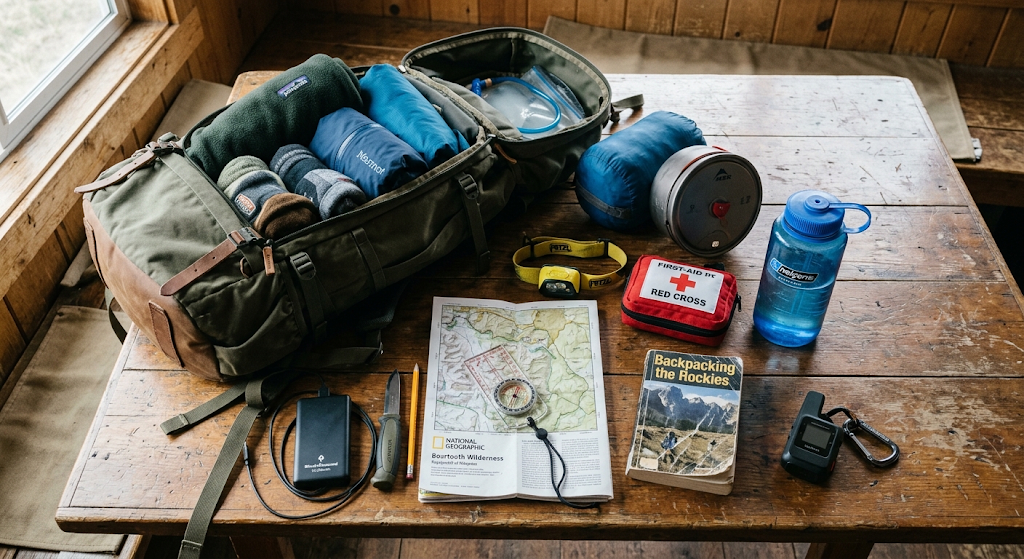
Route preparation is particularly important when traveling to remote areas. Travelers should study the destination before departure and identify roads, trails, water sources, accommodation, fuel stations, food supplies, and emergency locations where relevant. A physical map can provide an important backup if a phone becomes unavailable, while offline digital maps can offer another layer of preparation. Travelers should also check current conditions before departure because routes can change due to weather, construction, closures, flooding, or other hazards. If traveling by vehicle, basic maintenance and emergency equipment should be checked before starting the journey. For hiking and wilderness trips, the route should match the group’s experience and physical abilities. Good preparation allows travelers to spend less time worrying about logistics during the trip and more time enjoying the destination.
Carry Essential Offline Resources
A tech-free adventure should be supported by practical offline resources. Depending on the type of trip, these may include a printed map, physical guidebook, notebook, first-aid kit, flashlight, sufficient food and water, appropriate clothing, identification, cash where necessary, and written emergency contacts. Travelers should also carry equipment appropriate for their environment, such as navigation tools, weather protection, or camping supplies. Important reservations and addresses can be printed or written down rather than stored only on a phone. If medication or other essential personal items are needed, they should be packed before departure. The exact equipment will vary according to the destination, season, duration, and activities involved. The general principle is simple: anything essential should have a reliable backup that does not depend entirely on internet access or a fully charged smartphone.
Tell Someone About Your Travel Plans
People traveling away from normal communication networks should make sure someone they trust knows their plans. This can include the destination, route, accommodation, travel companions, expected departure and return times, and any relevant emergency information. For longer wilderness trips, travelers should establish a clear check-in arrangement when communication is available. If plans change significantly, the person at home should be informed when possible. This simple preparation can make a major difference if a group experiences an unexpected delay or emergency. It also allows travelers to enjoy the freedom of being offline without creating unnecessary uncertainty for people who may be concerned about their safety. Responsible off-grid travel is therefore not about disappearing completely. It is about creating intentional distance from everyday digital communication while ensuring that important people have enough information to respond if something goes wrong.
Keep Emergency Technology Available
Even the most committed technology-free traveler should consider keeping appropriate emergency technology available. A phone with sufficient battery, a power bank, offline emergency information, or specialized communication equipment may become extremely valuable in a dangerous situation. Travelers should understand how to use their emergency equipment before leaving rather than discovering its limitations during an actual emergency. They should also check whether the destination has mobile coverage, emergency services, visitor centers, or other forms of support. Emergency technology can remain switched off during ordinary activities and be reserved for genuine needs. This distinction is important because it demonstrates that tech-free travel is about intentional use rather than technology rejection. A traveler can spend an entire day without social media or digital entertainment while still maintaining access to tools that could protect their safety.
Is Tech-Free Travel Really Possible in 2026?
Completely technology-free travel is increasingly difficult because digital systems are built into many parts of modern transportation and tourism. Travelers may need online booking systems, electronic tickets, digital identification, banking applications, translation tools, navigation platforms, or communication services. Some destinations may also rely heavily on technology for reservations and visitor information. For this reason, the most realistic version of tech-free travel in 2026 is usually selective rather than absolute. Travelers can decide which forms of technology they want to remove and which ones they need to retain. Someone might use a smartphone to download a map before leaving but keep it switched off during a hike. Another traveler might use technology for transportation and emergencies but avoid social media for the entire trip. These approaches show that disconnecting does not require rejecting modern travel systems. It requires making conscious choices about when technology is useful and when it becomes an unnecessary distraction.
The Future of Off-Grid Adventures
The continued interest in off-grid experiences suggests that travelers are looking for more variety in how they spend their time away from home. As digital services become increasingly common, periods without connectivity can become more distinctive rather than less relevant. Future travel experiences may therefore combine modern convenience with deliberately protected periods of disconnection. Accommodation providers may offer designated device-free spaces, retreats may create structured digital breaks, and outdoor destinations may continue promoting experiences centered on nature and local communities. At the same time, responsible tourism will remain important. Remote destinations can be vulnerable to environmental damage when visitor numbers increase, so travelers should follow local regulations, minimize waste, respect wildlife, and support communities appropriately. The future of off-grid travel is not necessarily about going further away from civilization. It can also mean learning to travel more deliberately wherever the destination happens to be.
Conclusion
The rise of tech-free adventures in 2026 reflects a broader interest in making travel more intentional. Travelers are increasingly exploring remote camping, hiking, wilderness trips, digital detox retreats, rural stays, eco-tourism, and technology-light road trips as ways to step away from constant notifications and digital entertainment. The appeal comes from the possibility of paying closer attention to nature, spending meaningful time with travel companions, experiencing local communities more directly, and discovering what a journey feels like without the pressure to remain continuously connected. However, responsible disconnection does not require abandoning useful technology completely. Navigation tools, emergency communication, weather information, and other safety resources can remain important even during a device-free holiday. The most practical approach is to decide what technology genuinely supports the journey and what technology simply competes for attention. By creating thoughtful boundaries rather than pursuing disconnection for its own sake, travelers can experience the freedom of going off the grid while remaining prepared, safe, and respectful of the places they visit.