Introduction
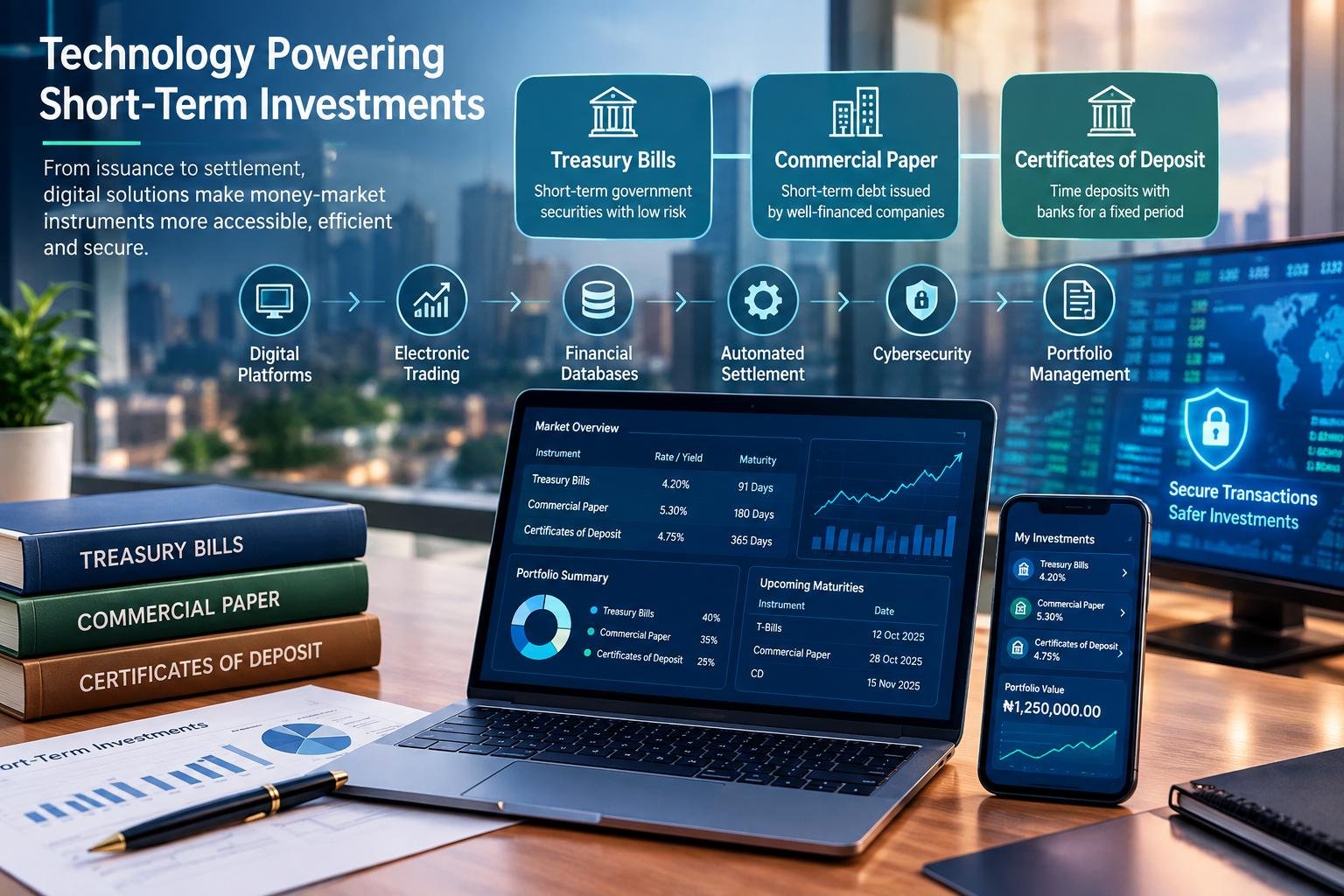
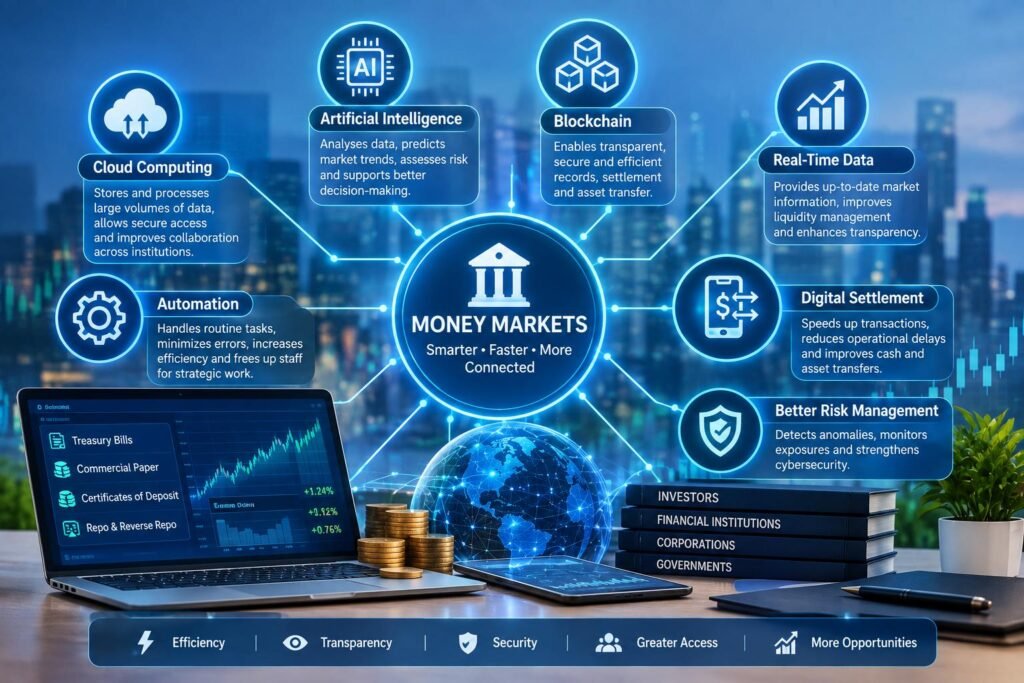
Money markets have been given an important role in the financial systems because it is where governments, financial institutions, corporations, and investors can manage their short term funds and liquidity. Treasury bills, commercial paper, certificates of deposit, and buy and sell agreements are instruments that permit the borrowing, lending, investing and cash management of cash on relatively short-term time horizons. As financial technology continues to evolve, however, the way in which these markets are functioning is evolving. The changes in the way transactions are being executed, monitored, recorded and assessed are taking place slowly, due to the entry of automation, artificial intelligence, cloud computing, real-time data, digital settlement and connected financial platforms. In the future, these developments will be even more influential as financial institutions come to rely more and more on technology to deal with lots of data and transactions in an instant. The future of money markets is likely to feature decisions made faster, operations that are more efficient, better risk management and deeper participation in various investment opportunities for short-term capital.
Blockchain is one such technology that is bound to impact the future of money market operations. Blockchain can offer a distributed way of recording transactions, so that information can be shared between those that are participating without it being all of it in one central database. Blockchain-based systems may thus be used to facilitate new methods of ownership, transactions and finance coordination. Blockchain, together with other financial technologies, could help to make these financial asset issuance, transfer and settlement more transparent and efficient. The potential value of this technology is especially significant for money markets, where keeping good records, counterparties and setting up settlements on time, with good information, is crucial. While blockchain technology, regulation, and operations are still evolving, the development of blockchain suggests the possibility of an eventual transformation of the underlying infrastructure of how short term financial transactions are done.
Role of Automation in Money Markets.
One of the long-term trends of money market operations is expected to be automation. Traditional financial ways of work frequently involve associates having to go over information, key into transactions, coordinate information, make records and keep an eye on positions all by hand. Many of these repetitive tasks can be carried out automatically, and with reduced human involvement, continuously. Automated workflows would be a more frequent tool in the financial future to process investment instructions, track liquidity positions, adjust portfolio records, create reports and recognize transactions that need to be followed up. Automation can help to minimize processing times as well as mitigate some of the mistakes involved with repetitive manual data entry. This could benefit the investor when it comes to executing trades and getting quicker information on his or her short-term investments. Automation for financial institutions may enable staff to focus on more value-added professional judgment, strategic planning and relationship building activities, instead of time-consuming administrative work.
Another aspect of liquidity management in which automation can help is the management of liquidity in money markets, where institutions must have enough liquid cash on hand when obligations are due. Future systems could continually assess expected cash inflows and outflows, track maturities of investments, and look for any liquidity gaps. A platform that could bring together all the information from the various accounts and financial systems and give an up-to-the-minute picture of an institution’s liquidity position, rather than forcing employees to trawl through a raft of reports, could be the solution. These types of systems might additionally produce alerts whenever cash balances drop under specified thresholds or when marketplace conditions place possible funding strain. This would result in a more responsive liquidity management as financial professionals would have access to pertinent information earlier and take action accordingly. Liquidity monitoring may shift from an occasional evaluation to continuous monitoring and be utilized to improve the management of short-term financial needs by institutions as the level of automation increases.
The Applications of AI and Better Financial Decisions
Artificial Intelligence is another technology which has the potential to greatly impact the future of money markets. AI systems can analyze extensive financial data and uncover patterns that might not be apparent in a human analysis. This functionality can be used in money market activities, for credit assessment, liquidity forecasting, transaction monitoring, market analysis and risk management. In particular, an AI system could review the development of interest rates, economic indicators, market fluctuations, cash flows of institutions and other data to provide a timeline of likely shifts in the short term funding environment. Another potential use of AI is in the analysis of financial data, where it can support financial institutions in assessing counterparties’ risk levels based on the financial information they have available and pinpoint potential indicators of growing credit risk. Such uses may help speed up money analysis and enable it to be more data-driven. But, AI will not replace the need for professional judgment as there are unanticipated events, incomplete information, regulatory changes and human behavior that can impact financial markets that are not necessarily captured in the past.
AI can also revolutionize the way that investors are able to access and understand money market information. Digital platforms are becoming a popular destination for individual and institutional investors to research financial products, track market trends and manage investments. Smart systems in the future are able to offer individual users an analysis of their portfolio tailored to a person’s liquidity, investment horizon, risk aversion and financial goals. Automated systems can be used to help search for potential short-term investment opportunities and offer details on potential risks and return. With the rise of AI, however, there are crucial challenges to consider. Data can be of poor quality and result in data-driven misinformation, and algorithms can be biased and result in misinformed recommendations. The need for robust controls on financial institutions’ model development and data quality, cyber security, transparency and human oversight will therefore be strengthened.
Innovative Cloud Computing and Connected Financial Infrastructure Revolution
As financial participants need systems that will be able to store and process vast quantities of financial information, Cloud computing is likely to grow in importance. Cloud based systems can offer flexible computing resources (as opposed to having to rely entirely on physical infrastructure within individual institutions) which can be scaled up when needed. This helps financial institutions keep track of transactions, data and market information, investment information, risk models, reporting system and so on more efficiently. Additionally, cloud infrastructure could facilitate accessing data from various places for authorized workers or connected financial applications. This flexibility can facilitate communication and coordination in case money market operations are cross-institutional and/or cross-jurisdictional. Meanwhile, financial organizations need to diligently handle the cybersecurity, information safeguarding, framework accessibility, and regulatory prerequisites related to cloud innovation in sensitive monetary functions.
Cloud computing and other technologies will likely gain even more traction as various financial products are developed for connected platforms. As a range of financial products are created for connected platforms, the impact of cloud computing and other technologies will likely be further strengthened. APIs enable different software to communicate with each other and share data. As financial services become more connected, banks and investment platforms, payment providers, market information services and other financial institutions may more easily and securely share relevant information through digital connections. This may help to streamline the transfer of data from one system to another and help integrate financial processes. For instance, an investment platform may be able to integrate with banking and market data systems to supply investors with real-time balances, transaction data and market conditions in a single platform. An enhanced connectivity may make things more convenient and efficient, but it also makes cybersecurity more critical as a potential failure in one connected system could impact other participants.
Data in Real-Time and Improved Market Transparency
Real time data should have a significant impact on the knowledge and reactions of participants to money market conditions. Financial experts in the past might have relied on information that was gathered, manipulated and disseminated at different periods. The modern digital systems can give information much faster, so that the market participants can keep an eye on market prices, interest rates, liquidity state of the market, transactions and other financial indicators without any delay. The improvements of data infrastructure could help investors have a better, more up-to-date picture of the short term investment opportunities. Financial institutions also can make use of real time data to fine-tune liquidity positions, assess funding needs and track risks in the market. Access to better information could benefit decision making as everyone will be able to make decisions without depending as much on the old reports as they would be dependent on if they were not up to date.
More timely information may also help clarify and contribute to greater transparency in money markets. Authorized participants can easily monitor transactions, verify ownership, monitor the settlement process and keep accurate financial records with digital records. Distributed technologies, such as blockchain, can offer alternative ways of making records that are independently verifiable by the allowable participants. But not everything that is financial should be transparent. The money markets’ operational procedures and information are sensitive and access should be carefully controlled. This will be a balancing act in the future for the financial infrastructure between transparency and privacy, confidentiality, cyber security and regulatory requirements. The aim would be to give members of the public the information they need, while at the same time keeping in mind not to release sensitive information unnecessarily to the public or to anyone else without their consent.
The Settlement of Digital Assets and Transactions
Another significant development that may impact money market activities is “digital settlement.” Settlement is the process by which the settlement of financial transactions and the transfer of the assets and funds associated with the financial transactions take place between the participants. There can be several institutions, records, verifying and reconciliation activities involved in traditional settlement processes. These processes can be streamlined by implementing digital settlement systems, with the use of automated verification, electronic records, and connected platforms. Eventually, some transactions can be settled much quicker as financial systems will be able to verify the information of the transactions automatically and also facilitate the transfer of money and assets. Settlement may be quicker, thereby minimizing operational delays and possibly reducing some risks associated with settlement. It can also increase the efficiency of investors’ transactions between short term financial products and other investments in their portfolios.
Digital settlement may also impact the way that financial institutions deal with liquidity. Faster transaction settlement and timely record updating allows institutions to get a better view of cash and financial positions. This can help to ensure greater flexibility in funding and to react to shifting market conditions. Reliable infrastructure, however, is also an important element of a fast settlement as system failures could come with direct consequences. To guarantee digital settlement platforms continue to be dependable, financial institutions will require robust backup systems, cybersecurity measures, operational processes, and contingency plans. Regulators also may have to set benchmarks for new kinds of settlement technologies that will help make financial institutions more innovative without causing unwarranted systemic risks. Thus, the technological development of digital settlement, together with the adoption of proper protections, will be crucial for its future.
Technology and Future Risk Management
With the increasing digitization of money markets, there will be a growing influence of technology on identification and management of financial risks. Automated risk management systems can track interest rate fluctuations, exposures to counterparties, liquidity, transaction activity and portfolio concentrations. AI and data analytics can enhance these systems through their ability to process vast amounts of data and detect anomalies or potential threats. Cybersecurity will also be more critical due to the increased reliance on digital platforms, which will open up more opportunities for cyberattacks, fraud, data theft and disruption of systems. Financial institutions will thus have to continually invest in secure infrastructure and monitoring systems. There is a risk that technology can help with risk management but financial risk cannot be avoided. Money markets can still be influenced by any of the following unexpected economic events, market volatility, failures in institutions or behavior of investors. Human supervision and good financial management will continue to be important.
Allowing Greater Access to Money Markets by Investors
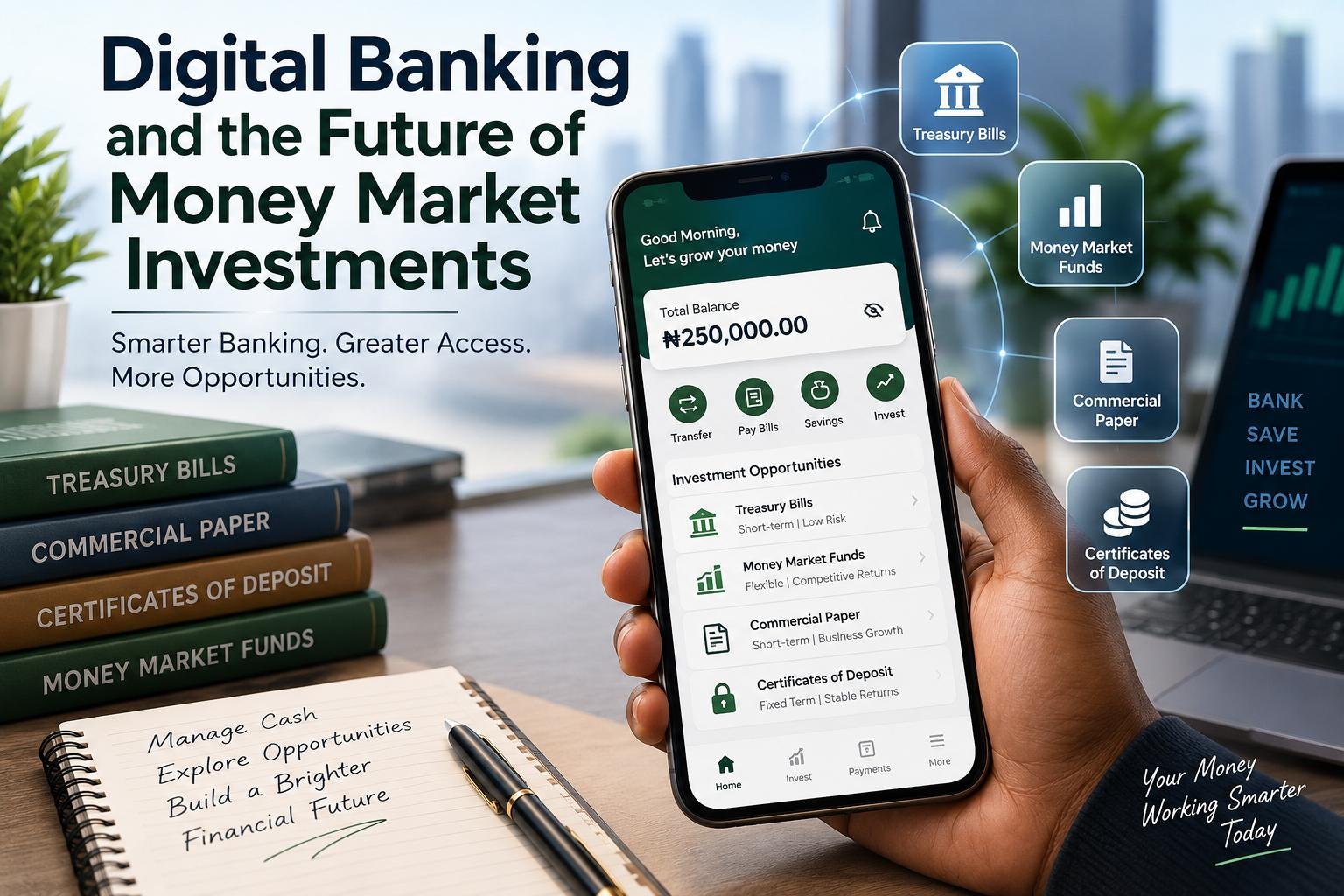
Technology also makes it possible to increase the number of investors able to participate in investing in money markets. Investment platforms like digital platforms can help users conduct product research, move money, keep track of investments, and gain financial information without having to go into a branch of the bank. Mobile applications can also make investing more user-friendly by offering investors the investment service on their mobile phone or other smart device. This might be especially relevant in markets that have been dominated by traditional financial services which are traditionally located in physical spaces. With new and better digital identity systems, financial platforms can also complete the identification process more efficiently, without compromising on security measures. Improved accessibility would be likely to spur greater involvement by people and small businesses in short term investing. However, such access needs to be complemented by financial education, accurate product information, adequate consumer protection, and responsible investment practices to ensure that technology doesn’t merely make financial products more easily accessed, without also being helpful in terms of the understanding of those products.
Conclusion
New developments in automation, artificial intelligence, cloud computing, blockchain, real-time data, digital settlement, and connected financial platforms are likely to influence the future of money market. These technologies have the potential to significantly enhance money market operations, making them faster, more transparent, data-driven and accessible, and to enhance liquidity management, transaction processing, risk monitoring, and investment decision making. As technology advances, however, there will be new challenges to address with respect to cybersecurity, data privacy, system reliability, regulatory compliance, algorithmic risks, and operational resilience. The ones that succeed in the financial sector will have to integrate technology along with good governance and man power. The digital finance revolution may provide easier access to and management of short-term investments for investors. In the end, while it wouldn’t necessarily replace the core role of money markets, technology will likely remake the way money markets work in the coming years more efficiently, securely and intelligently.
Get more well researched information about The Future of Money Markets here.