Introduction
Prices change second-by-second in financial markets due to economic news, company news, investor confidence, politics, or world economic events. Therefore for the investor, banks, brokers and other financial institutions it is crucial to have precise information at the right time. Real time financial data also gives financial professionals a real-time picture of what’s happening in the markets and enables them to take advantage of opportunities and threats before they get really tough. The modern financial databases such as the World Bank’s Databank, offer access to economic and financial data which can be used for research, comparison and decision-making. With the integration of real-time data with historical data, analytical tools, alerts, and stable data feeds, financial institutions can gain a deeper insight into market conditions and make data-driven choices instead of relying on assumptions.
Importance of Real-Time Financial Data
Real-time financial data is data that is provided as close to the time of financial events as possible. It can be stock prices, currency exchange rates, bond yields, commodity prices, trading volumes, interest rates, economic indicators and any other market information. This information can be crucial in determining how fast it is available to the public as financial markets are always adjusting to new information. For instance, a sudden adjustment in an interest rate could have an effect on the value of the currencies, as well as on the price of bonds, the conditions for bank loans and investors’ expectations almost instantly. The price of a company may also quickly gain or lose momentum on the news of the company. As information is fed to the investor and/or financial professional as it occurs, these changes can be tracked more effectively, and a decision made as to whether or not any action should be taken. Real-time data won’t ensure that the decisions you make are successful, but it will provide a more up-to-date and accurate basis for assessing the evolving market conditions.
Real-time information can really be useful when compared to delayed information. The price that is correct a few minutes back can be incorrect at present particularly in times of high volatility. If an investor relies heavily on information that is already stale, it is possible he could be making decisions based on a set of conditions which have already evolved. Brokers also require up to date information when they place orders as the price they will display to investors when they place an order may not be the same as the price available to them at the time of the order. Banks rely on timely information to keep an eye on interest rates, foreign exchange markets, liquidity conditions and other parameters which may impact the banking activity. Financial institutions are thus relying on technology to gather, process, update and disseminate information in real-time, enabling users to operate with the latest information and market data.
Significance of Live Prices and Interest Rates
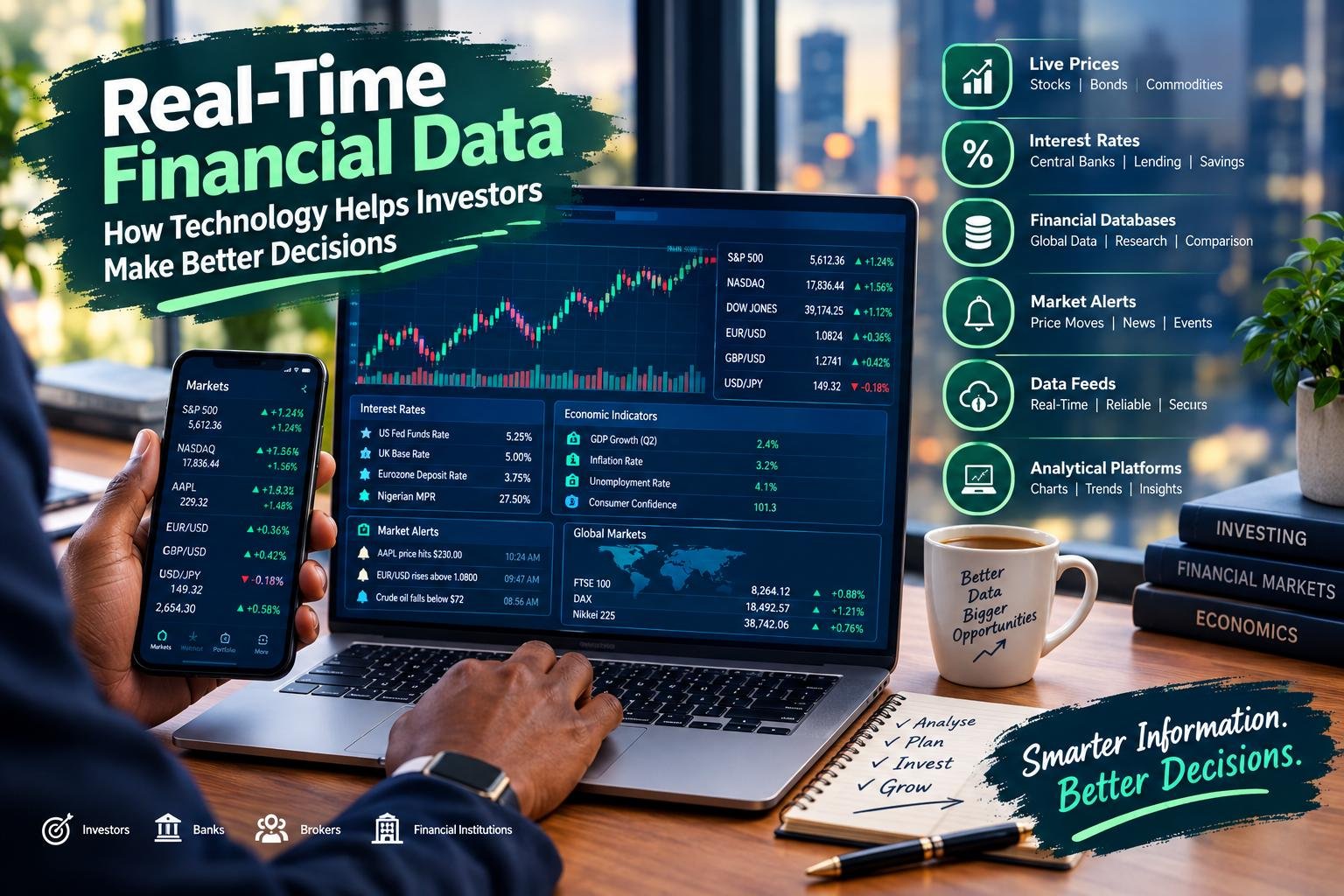
One of the more prominent types of real-time financial information is live prices. Investors can track the fluctuations of the prices of stocks, bonds, currencies, commodities and other financial products on digital platforms. These prices give a “snapshot” view at the moment of what people are willing to pay for an asset. Live prices help investors to keep an eye on existing investments, find big price changes, and decide if it’s time to focus on the market. Price fluctuations, no matter how small, can have a significant impact on active traders, as they may rely on market trends and timing for their trading approach. Portfolio managers can also rely on the live market prices to gauge the current value of their investments and determine the impact that changes in the individual assets are having on their entire portfolio. Improved prices visibility and live prices will allow investors to react to market changes more easily.
Along with the other elements of financial data, interest rates are a critical component; they affect the cost of borrowing, the returns on savings, investment, prices of bonds, and the level of economic activity. Important interest rate decisions made by the central banks can cause major changes that can be felt in the financial markets, which is why information about interest rates is important to both individual and institutional investors. It is very important for banks to track interest rates in deciding their lending and deposit policies, liquidity management and profitability evaluation. When determining which asset class to invest in (Equities, Bonds, Cash instruments or anything else), investors can study the trend of interest rates. Interest rates are also taken into consideration by businesses. Through the use of technology, institutions can track the announcement of the official rate, market expectations, and other financial indicators, in real-time. This allows a better appreciation of possible impacts of monetary policy actions on financial markets and the overall economy.
Economic Indicators and Financial Databases
Another important basis for making financial decisions is through economic indicators. Economic indicators like inflation, unemployment, gross domestic product, consumer spending, industrial production, trade, economic growth, and more can be used to learn more about how financial markets are impacted by the overall economy. For instance, the expectations of future interest-rate decisions can be influenced by a rising inflation rate, and shifts in employment information can give hints to the strength of the economy. These indicators can be helpful to investors to evaluate possible risks and opportunities in various markets and industries. Economic data can also be applied by banks and financial institutions when assessing credit conditions, predicting demand, risk management and investment strategies. Financial professionals can use technology to keep track of announcements and add new information to the analysis as soon as possible, as economic data is often scheduled to be released.
Financial databases are particularly useful because they enable people to easily retrieve vast amounts of financial and economic data in a structured manner. Analysts can compare data across country, industry, time and economic categories, rather than relying on individual data points. Current information can also be used along with historical information to provide trends and changes. An investor looking into an emerging economy, for instance, might look at the past economic growth and inflation, trade and investment data and then evaluate the current market conditions. Research can be shorter and more organized with databases, especially if they offer search capabilities, data that can be downloaded, charts and other analytical options. One example is the World Bank Databank, a financial and economic data resource that can be used to aid research by providing access to development and economic statistics. Reliable databases facilitate users to create decisions based on information that they can verify, instead of assumptions.
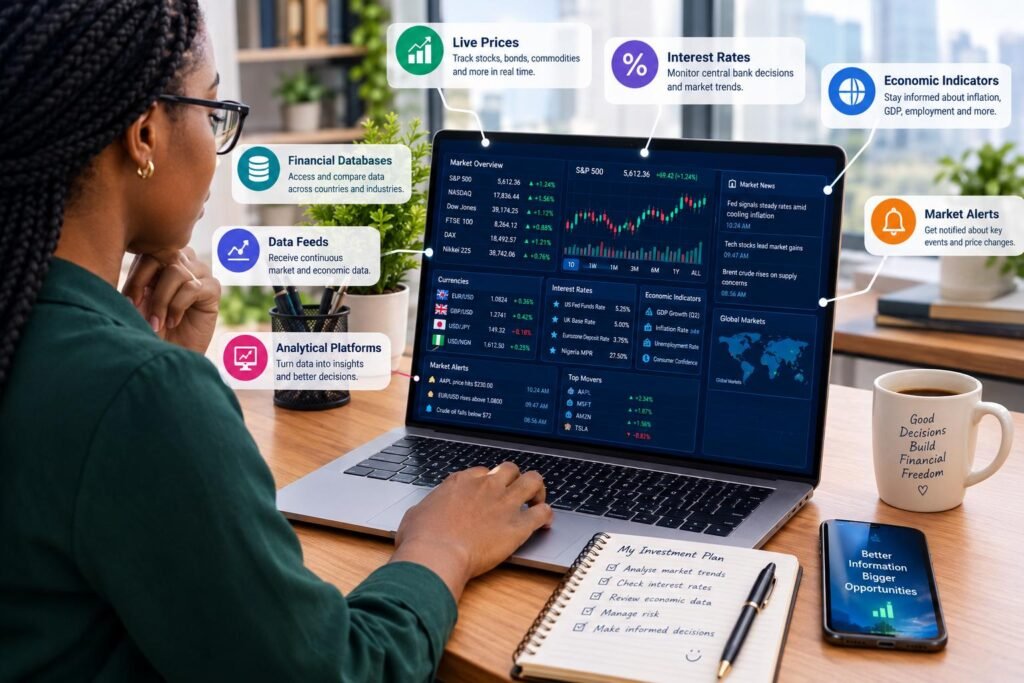
Market Alerts and Data Feeds.
Market alerts alert financial professionals to important market events, keeping them from having to watch the market all the time and manually. For a particular stock, an investor can set an alert when the stock price reaches a specific point, and for a currency trader, watching major changes in exchange rates. Alerts can also be linked to economic events, odd trading activity, interest rates fluctuation or any other events that warrant attention. This technology is useful, because the financial markets produce a lot of information daily. No one, or no institution, could keep a track of all the developments concerned at all times. This can be alleviated by automated alerts that alert users to pre-defined conditions. Alerts are to be used in conjunction with careful analysis, and not as a substitute for it; however, alerts can serve as a sort of ‘heads up’ that can prompt investors and institutions to get a head start on important developments.
Data feeds are the backbone of making it possible to distribute financial data from one system to another. Data feeds can be used by brokers, investment platforms, banks, financial sites and analytical apps to get prices, market statistics, economic information and more. Quality of a data feed is important as poor quality data, or incomplete or late data, can impact financial decisions. Institutions that provide professional services thus give a lot of importance to the reliability, speed, security, and consistency of the data. Technology can help minimize the amount of data that is manually entered and assist users to have access to up to date information. With a successful data feed, analysts and decision makers can be constantly provided with data for monitoring, reporting, trading, risk management and more, all related to the financial area.
Analytical Platforms and better Decision-Making
The real-time data is much more valuable when it is linked up to analytical platforms. An analytical platform can assist a user to convert a large number of raw data points into charts, trends, comparisons, indicators and other beneficial information. A stock price can be seen to have changed, but instead an investor may be able to see how the stock’s price has changed over time, how many times the stock has been traded over the last few days, the market trend and how it relates to other assets. The more advanced platforms can also incorporate market information with economic indicators and company
data and provide a more comprehensive view. This assists decision makers to go beyond observing financial information and understand it. The benefit of analytical technology is especially valuable, as the amount of money associated with data that’s available today can be overwhelming. A good platform should structure the information so that users can see what patterns are relevant and so help them concentrate on those possible factors that might most significantly affect their decision making.
Technology also provides aids to scenario analysis and the monitoring of risk. Investors can move from one market condition to another and know what factors such as interest rates, currency, prices or economic indicators could impact their investments. Analytical systems can be employed by banks to track exposure and to determine possible risks in the lending and investment processes. The brokers can leverage technology to gain insights into their clients’ activity and the evolving market landscape. Financial institutions may also have thresholds that will lead to further review of the situation when specific risks get larger. These skills promote decision-making as they enable users to think of other options, rather than just what’s going on right now. Real-time information gives an up-to-the-moment view of what is happening and analytical platforms offer the user the opportunity to interpret that view of the picture and consider what it might mean for future economic results.
How Real-Time Information can Help Financial Institutions
Financial institutions like banks need timely information: they have to deal with various financial markets and hold large quantities of money and risk. Real-time information can be used to assist in treasury, liquidity management, foreign exchange trading, investments, loans, and risk management. A bank with close attention to market movements will be able to see such changes that could be having an impact on the funding costs, value of assets or currency exposures. Current information can also help financial institutions to track down any unusual transactions and react to the threat in a timely manner. Timely information is crucial for brokers, as clients need to enter and exit trades quickly and ensure there is accurate market information. Technology that is reliable and functioning correctly can help institutions better disseminate information to their employees and customers, and give them greater control over their operations while providing them with better services.
Financial information also has a positive impact on monitoring and communication as it is available in real-time. The same market information may be required by various departments in a financial institution for various purposes. Volatility could be tracked by risk teams, asset prices tracked by investment teams, liquidity and interest rates tracked by treasury teams, and economic factors tracked by management. Relevant information can be disseminated among these teams in a centralized technology platform and a common picture of the market can be built. This can help to minimize the chances of making decision based on out dated and inconsistent information from different departments. Timely information is the greatest value when communicated to the appropriate decision-maker in a timely manner in fast moving markets – communication is as important as speed.
Issues in Using Real-Time Financial Data
While real time data benefits are great, it’s important that users also understand the limitations. The more information, the better the decision is not necessarily. The characteristics of the markets are that they can change quickly due to temporary reactions, rumors, emotional trading or unexpected events. A person who is willing to make every decision he or she sees while the stock is fluctuating might be making misjudgments, rather than sticking to a solid plan. Another issue is data quality, as it can be possible that the data supplied is incorrect or incomplete which can result in incorrect and misleading conclusions. The financial sector must thus take into account the trustworthiness of their data sources and the way the data was gathered. Security and system reliability are also crucial due to the heavy reliance on digital infrastructure by financial institutions. A technical failure or disruption can cause disruption to access to market information at a critical time. These considerations lead to the conclusion that real-time data is best used in conjunction with proper analysis, risk management, historical data and good judgment.
The Next Generation of Real-Time Financial Information
As the financial system is rapidly becoming digital and interconnected, real-time financial data will undoubtedly become even more significant in the future. The advent of cloud computing, AI, automation, and data analytics allows for the processing of more information in a faster time. The new financial platforms could offer more individualized alerts, automated analysis, predictive models, and views of market and economic conditions. But the basic intent will remain the same: to inform and enlighten people and institutions about what is going on, and to enable them to make informed choices. Accurate prices and economic information will remain essential for investors, and reliable data will be vital for financial institutions and banks in the areas of risk management, operations, and strategic planning. Technology and good information can then be a more and more significant aspect of the modern financial decision making process.
Conclusion
In the fast-paced world of investing, banking, brokers, and financial institutions, real-time financial data has emerged as a crucial tool for navigating today’s market. Live prices give users an idea of the prices of the market, the interest rate shows the interest rate in the market, and the economic indicators show the overall picture of the economy. Financial databases can be used to enhance research and market alerts and data feeds can deliver critical information rapidly. Analytical platforms then aid users in transforming this information into meaningful insights to help them monitor and make decisions. Even though real-time data cannot overcome financial uncertainty, nor can it ensure success, it can help minimize reliance on stale data and enhance the speed and quality of financial analysis. So, when you have the right information and technology, historical research, risk management and professional judgment in place, you will be able to identify the opportunities, understand the risks, and make intelligent decisions in response to market conditions.
Get more well researched information about Real-Time Financial Data here.