Computer science and computing are now a vital and integral part of everyday life, shaping the ways people interact, learn, work, shop, travel, make things, and use it to solve problems and challenges. While the technology of a computer and how it operates may seem straightforward, it is a complex field of interrelated ideas such as algorithms, programming, data, hardware, software, networks, databases, cyber security, artificial intelligence and other developing technologies.
The concepts are important for beginning students to build upon for further study of technology. Computer science is not just about computers and programming; it is a field that involves computational thinking, problem solving, information processing, automation, and designing systems that can carry out meaningful tasks. Beginners will gain a better understanding of the concepts of computer science and identify areas of computing that are of interest, ability and aspirations.
What is Computer Science and Computing?
Computer Science is a field of study that focuses on computer working, algorithms, processing, and communicating data with computer systems. Computing encompasses the application and creation of computer technologies including hardware, software, networks, databases, the cloud and digital applications. These are similar but computer science has a strong emphasis on understanding computational principles and building techniques to efficiently solve a problem, while computing can also be about using technology to solve a problem or to solve a problem that has already been solved.
An individual in the computing sector could write software, maintain computer systems, secure the organization of networks, investigate information, or create intelligent applications. This breadth of application means that computing is important in nearly every aspect of the modern world, from education and finance to healthcare, manufacturing, entertainment, transportation and communication. Although these subjects are technically complex, they can be taught at a beginner’s level, as many of the technologies are based on simple concepts that can be mastered one at a time.
Algorithms: The building blocks of problem solving.
Algorithms are a set of step-by-step instructions that are clearly written to solve a problem or to perform a task. Algorithms are one of the most essential concepts in computer science, as computers must be given specific instructions to tell them what to do and how. Algorithms can be used to describe everyday activities. For instance, when cooking, there are a series of steps to take: when looking for a specific item, comparing various options until the desired item is located. Algorithms have more complicated uses in computing: sorting information, searching data bases, processing images, recommending content, calculating routes, detecting patterns, and organizing large amounts of information.
An algorithm that is good should give a solution and should be efficient in terms of time and space. Knowing about algorithms, then, can enable novice learners to practice computational thinking: dividing a complex problem into smaller, more manageable ones; finding patterns; establishing steps; and testing if a solution could be improved.
Programming: Converting Ideas into Instructions
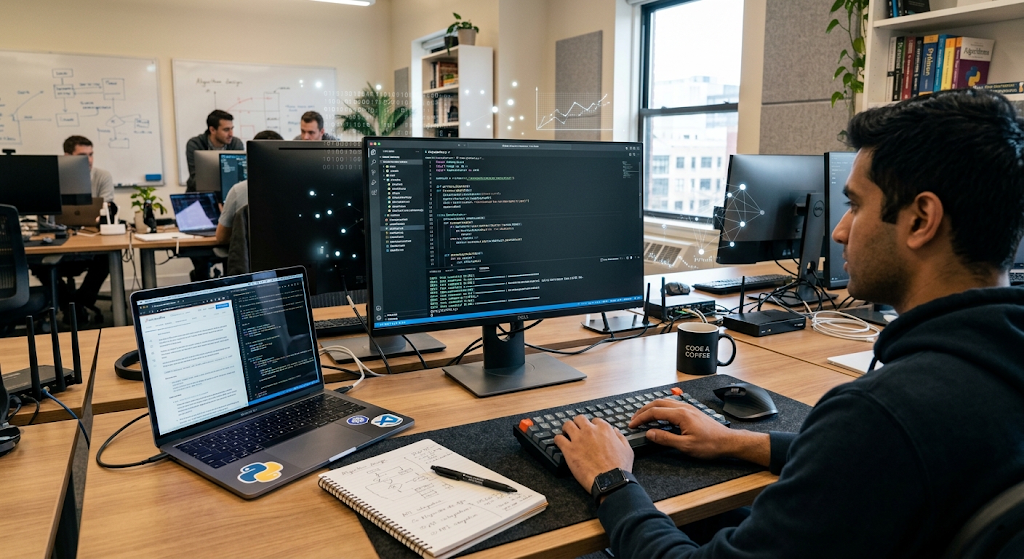
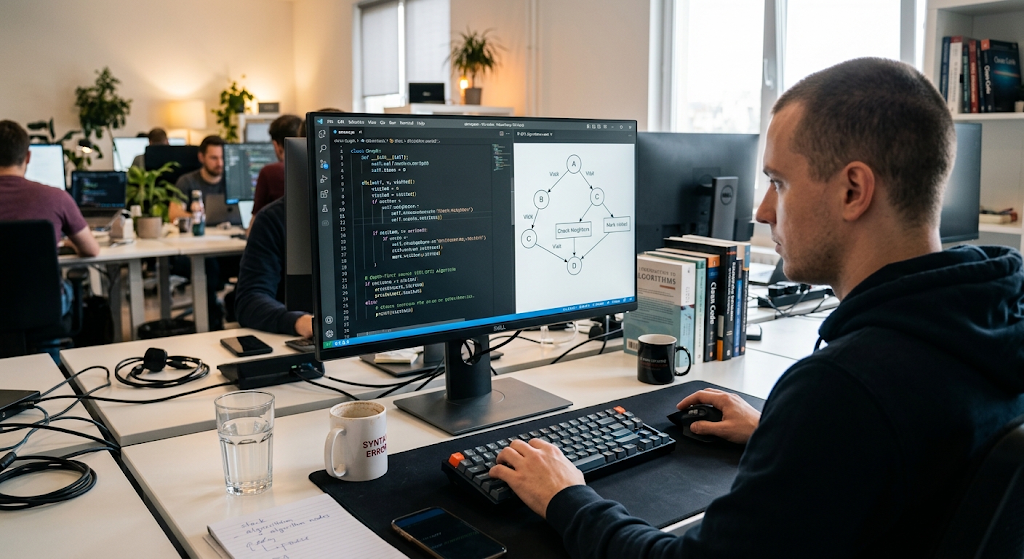
Programming is the practice of developing instructions for computers to follow in order to accomplish a set of tasks. These instructions are programmed in a programming language like Python, Java, JavaScript, C++, C, etc. They all have different syntax and characteristics, but the end goal is the same: to get a logical solution to a computer in a form the computer can process. Programming involves much more than memorizing commands. A programmer needs to know about the problem, design a solution for the problem, program a solution to the problem, test the program, locate errors in the program and modify it when necessary.
These are some of the common programming concepts: variables, data types, conditions, loops, functions, objects and data structures. The novice will begin with smaller programs and work their way up to larger applications and software systems. Programming can be extended to many areas such as web development, mobile application development, game development, automation, artificial intelligence, scientific computing, software engineering, etc.
Data: Information Computers Process
One of the basic concepts in computing is data because the computer actually relies on information to carry out any helpful function. Numbers, words, images, audio, video, measurements, records and observations are all examples of data. The information can be represented in a digital system using only two values, typically as a binary ‘1’ or ‘0’, which a computer can process. How data is stored and structured can greatly influence how easily and effectively it can be stored, retrieved, analyzed, and processed.
For instance, a set of customer data can include names, addresses, transactions, and contact details, and a scientific dataset can include the results of measurements taken from experiments or sensors. Information is especially valuable when analyzed to identify interesting patterns or to inform decision making. With the creation of more and more digital information, competencies in data management, analysis, visualization and interpretation have grown in significance in a large number of professions.
Computer hardware: The tangible parts of a computer system.
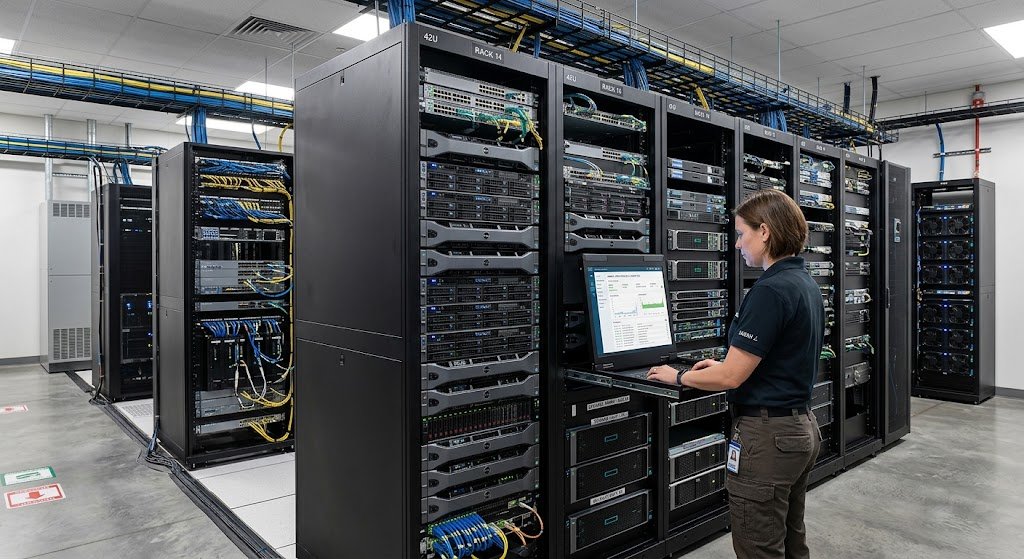
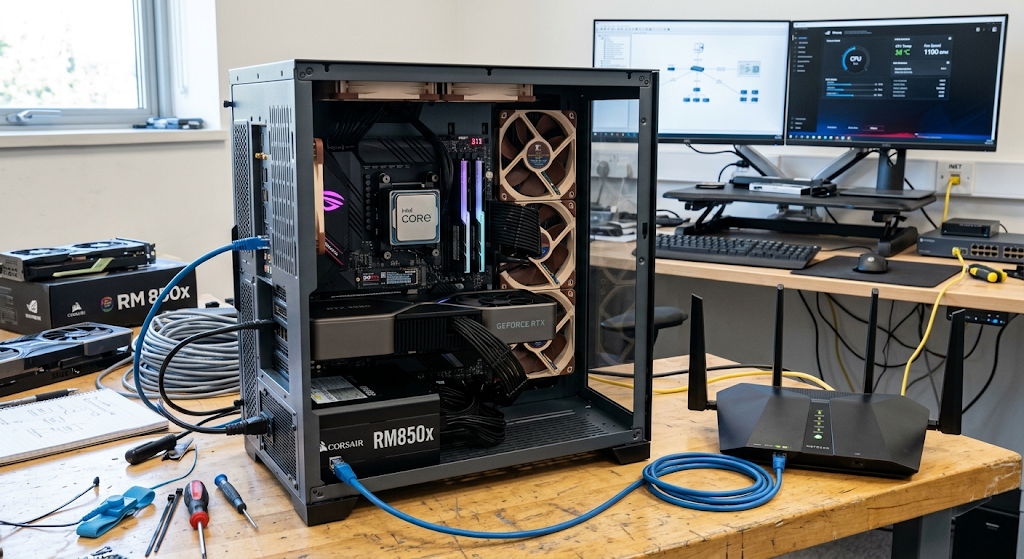
These parts consist of the central processing unit, memory, storage devices, motherboard, power supply, display, keyboard, mouse and other input/output devices. Often referred to as a processor, the CPU is responsible for executing instructions and calculations so that software functions. Memory is used to temporarily hold information the computer is currently processing, and storage devices like hard drives and solid state drives store information longer. Other hardware might involve graphic processing units, network interfaces, cameras, microphones, sensors, and special processors.
Knowledge of hardware enables the beginning student to become familiar with the relationship between various physical components and how they deliver computational power. There is more to hardware than just desktop and laptop computers. The computing elements in smartphones, smartwatches, cars, medical devices, industrial devices, game consoles or house appliances can be used for increasingly complex tasks.
Programming: Making Hardware Useful through Software
Software is the programs, instructions and other parts that communicate with computer hardware to direct it. If software didn’t exist, then hardware would have little use except for very simple purposes as the hardware needs instructions to perform useful operations. Usually software is categorized as system software, application software and development software. Software systems like operating systems (OS) control hardware resources and these operating systems create environments in which applications can run.
Application Software is used by individuals to accomplish a variety of activities including the creation of documents, browsing the web, editing photos, communicating with others, financial calculations, or playing games. They also use the specialized software tools that are used by developers to create and test new applications. Software may be deployed on a device or distributed via networks and the cloud. It is important to know the interaction between hardware and software since modern computing systems rely on both hardware and software working together efficiently.
Computer Networks and Communication
Computer networks enable devices to communicate and share information with each other. A network may be used to link computers in a home, school, office, or organization, and larger networks may link computers across cities, countries, and continents. The internet is the most common example of a global network, offering access to websites, internet services, cloud resources, communications, digital media, and much more. Networks rely on technologies and protocols which govern the representation, communication, receipt, and understanding of information.
Routers, switches, access points, servers, cables, and wireless communication equipment can all be part of a network. When learning about this, one might come across terms like IP address, domain name, bandwidth, Wi-Fi, and network protocols. Networking is essential because, in modern computing, things don’t just happen alone. Share resources across networks, access online learning platforms, communicate apps to remote servers, transfer info virtually instantly across geographical lines.
Databases: Organizing and Managing Information
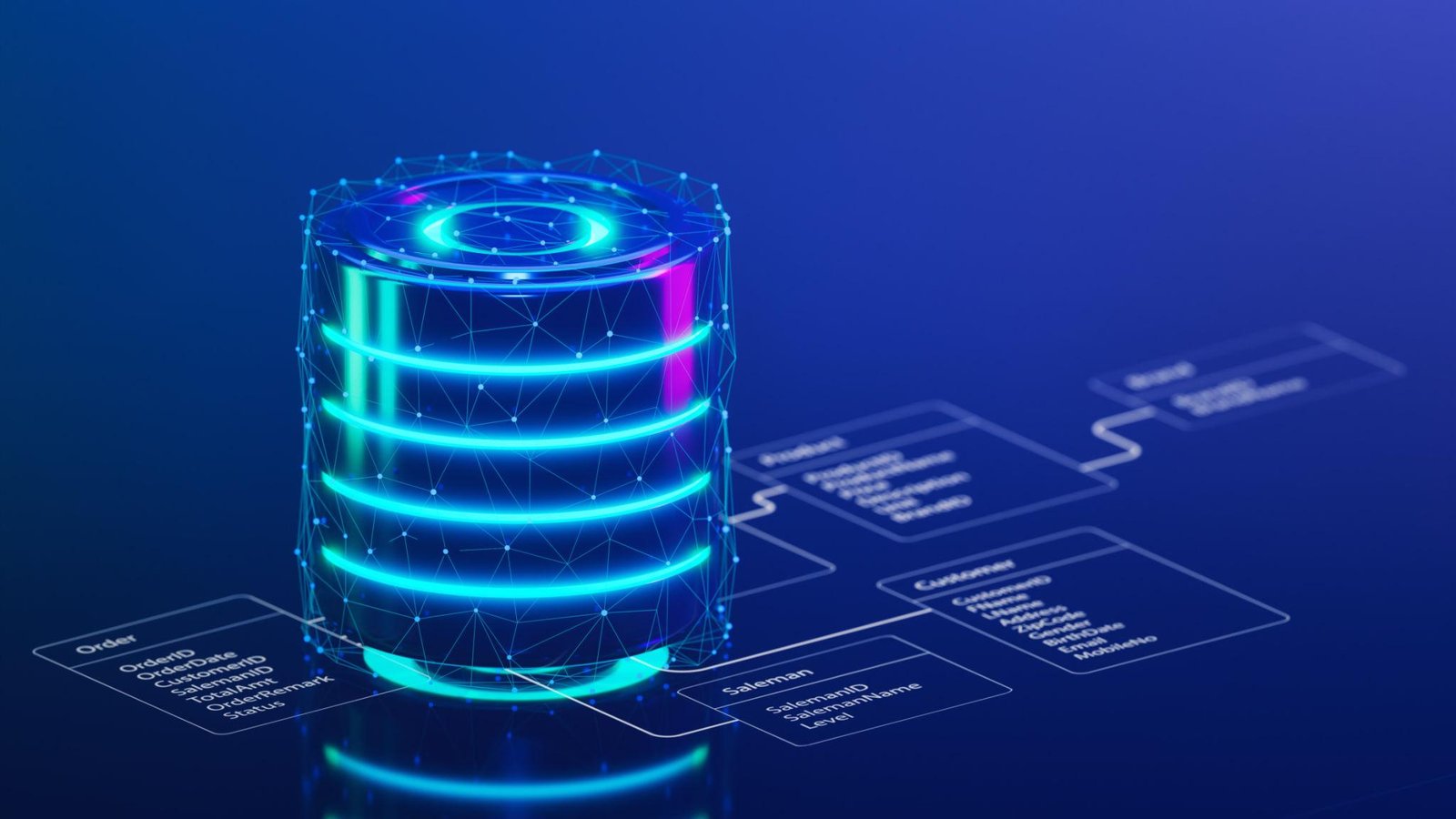
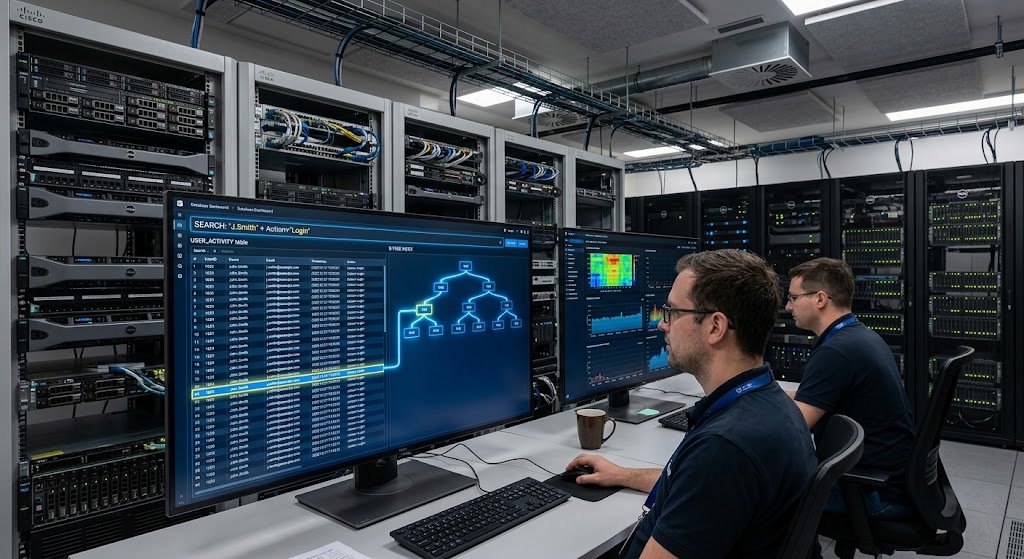
A database is an organized structure that stores, retrieves, manages and organizes information. Databases are critical since large volumes of data are typically required by modern organizations to be processed efficiently. For instance, a school can keep track of students, courses, grades and attendance by using databases, a business can keep track of customers, products, orders, employees, and transactions. Relational databases store data in a tabular format with rows and columns, with other database structures tailored for specific types of data and usage. Database management systems offer facilities for developing, modifying, looking for, and securing information that is stored.
If you are new to databases, you might find some of these terms unfamiliar, including tables, records, fields, queries, keys, relationships, and SQL (structured query language). Understanding some of the basics of databases can help demystify the operation of countless websites and applications. Databases are frequently the backbone of the system for providing the information the user is looking for when logging in to an online service, searching for a product, checking an account balance, viewing a personal profile, etc.
Cybersecurity: Security of Digital Systems
Cybersecurity is the practice of safeguarding computers, networks, software, accounts and data against unauthorized access, misuse, disruption, and other cyber-related risks. Cybersecurity is a vital component of computing as an increasing number of personal, educational, financial and business activities go digital. The common types of security concerns are weak password, phishing, malware, unauthorized access, data breach, and insecure systems. Essential cybersecurity tips involve having strong and unique passwords, utilizing extra methods of authentication if offered, updating software, exercising caution with strange emails and links, and safeguarding sensitive data.
Cybersecurity at a professional level consists of network security, application security, security monitoring, incident response, risk management and digital forensics. Cyber Security is not just the installation of security software, beginners should know. This also requires responsible behaviour, careful system design, access control, privacy protection and ongoing monitoring. Cyber security is vital for organisations as a technical flaw may have an impact on operations, finances, reputation and users.

Cloud Computing and modern digital services.
Cloud computing has revolutionized the way people and organizations are provided with computing services. Users are not forced to use computers and servers on their own property; they can use storage, processing power, applications, databases, etc., through internet-based services. Cloud platforms can offer flexibility as organizations can scale up or down resources based on demand, without having to buy everything they might need ahead of time. Online storage, Web applications, collaborative tools, data processing, software development and enterprise systems are examples of services that are made possible by cloud computing.
There are several cloud models: Infrastructure as a service, Platform as a service and Software as a service. Cloud technology has also played a role in the evolution of serverless, containers, cloud-native applications and distributed systems. Cloud Computing is useful for the newbies as many of the contemporary applications do not work entirely on the user’s local gadget, but on the cloud.
Emerging Technologies in Computing
Researchers and developers are continually working on new technologies and enhancing current ones in the field of computing. One of the most prominent advances is in the field of artificial intelligence and machine learning, which enables computer systems to recognize patterns, make predictions, generate content, recognize information and help with complex tasks. New and emerging areas of interest include the Internet of Things, edge computing, quantum computing, robotics, extended reality, new forms of distributed computing, and advanced automation. These technologies are not stand-alone technologies, they are used in conjunction with other well known technologies like algorithms, programming, data, networking, database etc.
For instance, an intelligent application can need algorithms to process information, programming to implement the system, databases to store the data, networks to communicate with the users and specialized hardware to perform calculations. New technologies aren’t a problem for beginners – they don’t have to know everything at once. Rather, having a solid knowledge of the basic computing concepts, will make it easier to comprehend new technologies once they emerge.

The key to learning about computing is that the key concepts of computing are interconnected and not separate subjects. Let’s imagine an online shopping application. The application is developed using programming, and the algorithms are used to search, sort and recommend products. Databases hold product information, customer accounts, and orders; networks enable users to interact with the application’s servers. Hardware is the actual equipment that is used to run the system, and software is the programs that manage and control the hardware.
Cybersecurity can secure accounts and transactions and cloud computing can offer the infrastructure needed to support the use of the application by many users. AI can also be implemented to provide recommendations based on the user’s preferences and detect any unusual activity. This is just one example of the vast scope of computer science and computing. Many concepts are required to work together to create a single digital service, and when they understand the interplay of these concepts, beginners have a better understanding of the way modern technology works.
Starting Point for Computing Beginners
With knowledge of these concepts, beginners have a large variety of things they can specialize in with regards to computing. A person who enjoys creating applications may look into Programming and Software Design, one interested in logical problem solving may be interested in Algorithms and Computer Science Theory. If you are a person who likes to work with information, you can do your research in databases, data analysis, or artificial intelligence. Individuals seeking to learn about the communication and operation of digital systems at scale may be interested in networking and cloud computing, while those interested in ensuring the security of systems and information could be interested in cybersecurity.
Other options are computer graphics, information systems, game development, mobile development, other forms of computer software development, robotics, and human-computer interaction. There is no one right way to enter computing. There is a wide field for various interests and abilities and the beginner can try out some areas before making a choice for further specialization.
Conclusion
Many of the technologies of society are based on computer science and computing. An algorithm is a way of talking about solving a problem systematically, a program is a way of making the solution into executable instructions to be followed by a computer, data is information that is entered into a computer, and hardware are the physical things that a computer uses to carry out computations. Software enables those resources, networks enable systems, databases enable information and cybersecurity enables protection of digital environments. Today, computers are capable of so much more thanks to cloud computing and new technologies like artificial intelligence, machine learning, robotics, edge computing and quantum computing.
It is important for beginners to remember that not learning everything is a worthwhile objective but learning the connections between these basic concepts. Learning over time can help make more advanced topics more understandable and can highlight great avenues for continued learning. A basic knowledge of computing is a good starting point for further education, whether you’re interested in becoming a programmer, a cybersecurity specialist, a data specialist, a network engineer, a computer researcher, or a technology-focused professional.