Introduction
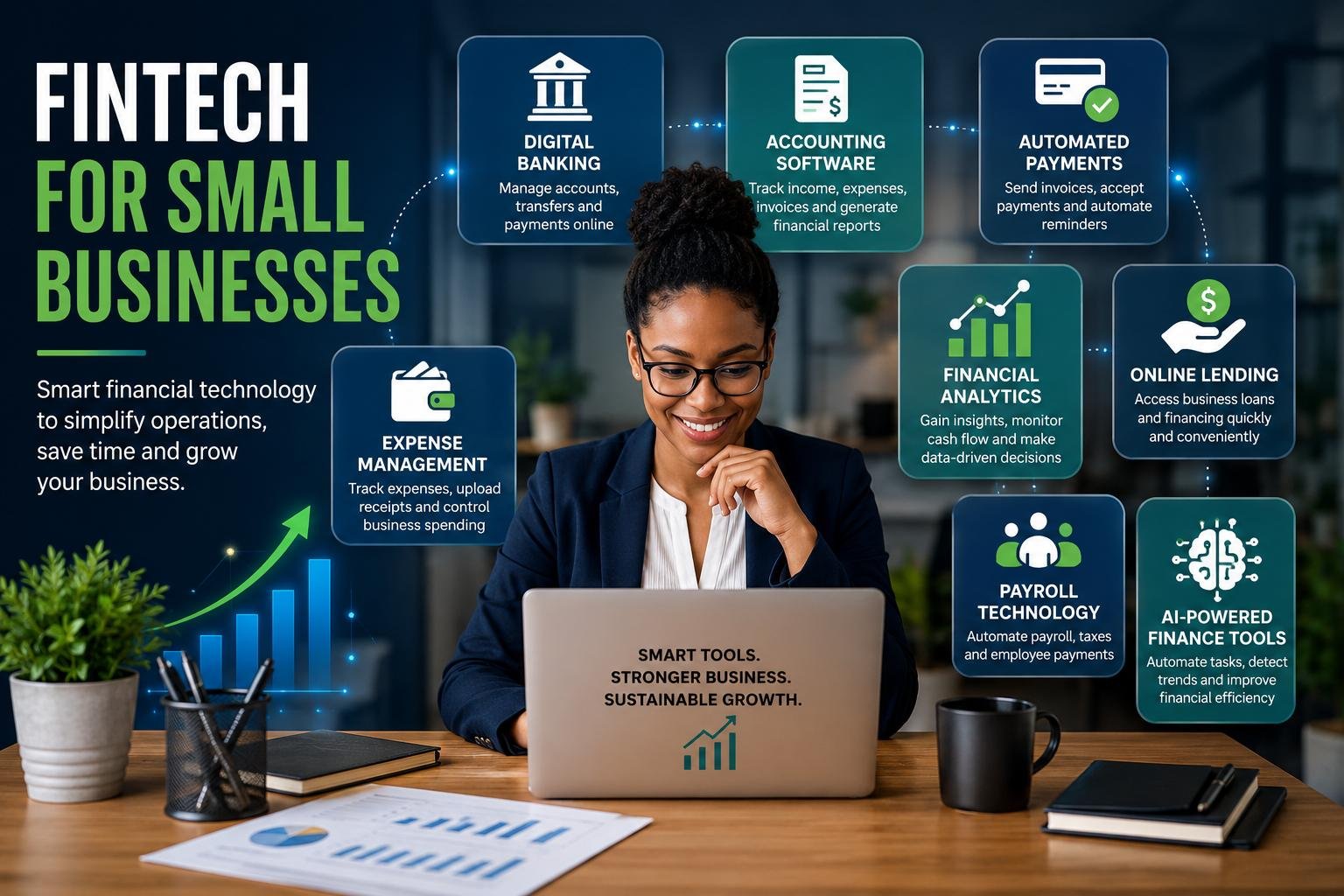
For small businesses, there may be many financial obligations to attend to, and limited staff and budgets. Owners could have to handle with invoicing, payment, costs, payroll, taxes, cash flow, and finances, in addition to customer and company growth. In terms of handling these responsibilities, financial technology or FinTech has revolutionized the way. In the way these responsibilities are handled, financial technology or FinTech has revolutionized. Digital tools can replace a lot of financial tasks that are currently tedious and time-consuming for small businesses, such as relying on spreadsheets, paper records, visiting banks, and manually calculating things. Digital banking, accounting software, automated payments, expense management platforms, online lending, financial analytics, payroll systems, and AI-powered finance tools are increasingly making a difference for companies striving to boost financial efficiency. Business owners looking to learn more about the use of AI in financial work can find AI-powered finance tools for financial service professionals to learn how AI-based solutions can assist in the modern financial processes.
What is FinTech and Why is it Important to Small Businesses?
FinTech is the application of technology for the purpose of supplying, enhancing or streamlining financial services and/or financial activities. Financial technology is generally a large bank’s domain, but for small businesses, it can be a great deal more helpful to have access to solutions to large banks, that were once costly, complex, and not available to smaller organizations. Now, a business can create an online bank account and handle it, send out bills, receive electronic payments, monitor expenditures, payroll and manage financing along with examine financial data, all from an online platform. This can help manage administrative tasks and help to access key financial information in an easy and convenient way. By minimizing the amount of data being entered manually, FinTech can also help to increase accuracy. With digital financial workflows, business owners will have more time to invest in their customers, employees, business operations and growth initiatives.
Digital Banking
Digital banking is among the most elementary and crucial types of FinTech for small businesses. Traditional banking can impose some limitations on the business owner, such as having to go to the branch for some transactions, have to get paper statements, or have to manually track business activity. Many of these activities can be done online on digital banking platforms, via websites or mobile apps. This allows businesses to verify balances, transfer money, pay suppliers, get paid, download statements, manage their cards and monitor transactions, all without having to visit a physical branch, depending on the provider. Digital banking can also help owners to keep an eye on the finances of their businesses when working remotely or on the go. Other platforms offer instant transaction notifications, spending control, allow multiple users to access the platform, and offer integration with accounting platforms. Such capabilities assist companies in reacting to monetary activity quicker and spotting strange transactions. Convenient access to banking information can significantly accelerate the day-to-day financial management of a small business, and reduce reliance on paper.
Accounting Software
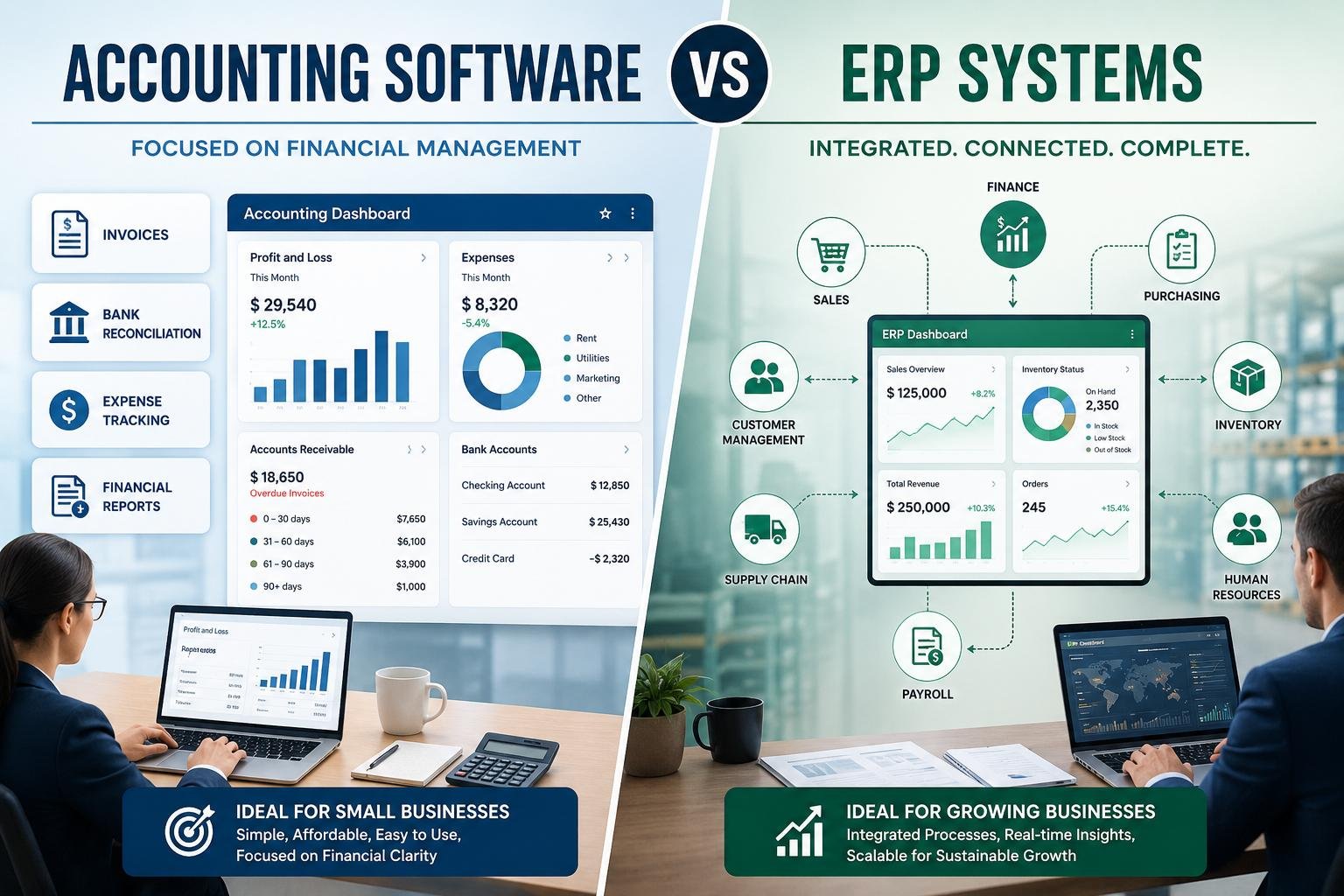
Accounting Software refers to the software designed for small businesses to arrange and deal with their monetary documents electronically. A company can keep all financial transactions records and organize them in one system instead of having separate spreadsheet for keeping record of Sales, Expense, Invoices and Payments. Advanced accounting systems can assist with such features as invoice processing, accounts receivable, accounts payable, bank recon, financial reporting, tax ready, and transaction categorization. Some systems can be integrated directly to business bank accounts thus the transactions can be imported automatically with a decreased repetitive data entry. In addition, accounting software can generate reports to show owners how much they are earning, spending, and making back, and any outstanding invoices or other vital information. This is particularly helpful as a business expands as financial information can become more cumbersome when working with the paper protocol. Accounting software is not intended to replace good financial controls or expert accounting advice, but it can offer a framework to manage accounting and generate financial information that could be utilized for decision making, tax filing and business planning.
Automated Payments and Digital Invoicing
Owning a small business can be quite a challenge because if the customers delay payment, no matter how successful your business is, it may have trouble getting paid. Payment automation and digital billing solutions can contribute to solving the issue by streamlining the billing and collection process. Electronic invoicing can be used to generate e-invoices, send them to customers, offer easy payment methods and be alerted when payments are received. Some platforms even have the ability to automate recurring invoices and even payment reminders, making it less difficult for employees to pursue customers manually after that. Depending on the provider and the market, digital payment systems can be used to facilitate cards, bank transfers, mobile payments and other electronic payment systems. Another benefit of automation is the minimization of the number of mistakes made in manually creating and copying out payment details and invoice information. Subscription-based businesses, businesses with regular supplier payments or regular customers can benefit from automated transactions as it helps in creating a more predictable financial process. They can get a better picture of cash in and cash out, and it can mean reduced paperwork.
Expense-Management Platforms
When employees pay for business using cash, personal cards, paper receipts and spreadsheets, business expenses can be hard to keep track of. Expense-management software is a digital solution that records, classifies, approves and tracks business expenses. Staff can fill in expenses via an application, upload receipts and complete an expense purchase without having to keep physical records. Managers can then peruse the expenses and approve them in one central location. Certain platforms are able to transfer to accounting software, allowing for all approved transactions to be pushed in automatically. Expense management software can also help businesses set spending limits and track employee, department, project or category expenses. This allows the owner to have more transparency of company funds. Expense-management systems can help save administrative time and augment the controls of expenses, by minimizing manual receipt collection and data entry. In small businesses where the person could be handling a number of administrative works, a simple expense-tracking can make a significant impact in the business operations.
On-line Financing and Digital Financing.
Even getting financing for a small business can be difficult, especially if you have to apply for a loan in the traditional manner and provide tons of paperwork, wait a long time for the loan and credit to be approved, or meet certain conditions. Online lending platforms have rolled out their digital solutions, which enable businesses to apply for some types of finance online. Businesses can electronically provide financial information to the lender and get a decision in a shorter time frame than for some of the traditional processes. Business loans, lines of credit, invoice financing and other types of funding are examples of FinTech lending. Convenience is not necessarily affordable, however. Before taking up a loan, business owners need to thoroughly review the interest rates, fees, repayment timelines, collateral needs and other terms associated with financing. While digital lenders can leverage financial information and automate the application process, they can’t make the decision to extend credit without first considering if it’s a good fit given a business’s cash flow and goals. When used responsibly, online financing can be an alternative option for companies that require working capital, equipment or stock or are planning an expansion.
Tracking Financial Data and Managing Cash Flow.
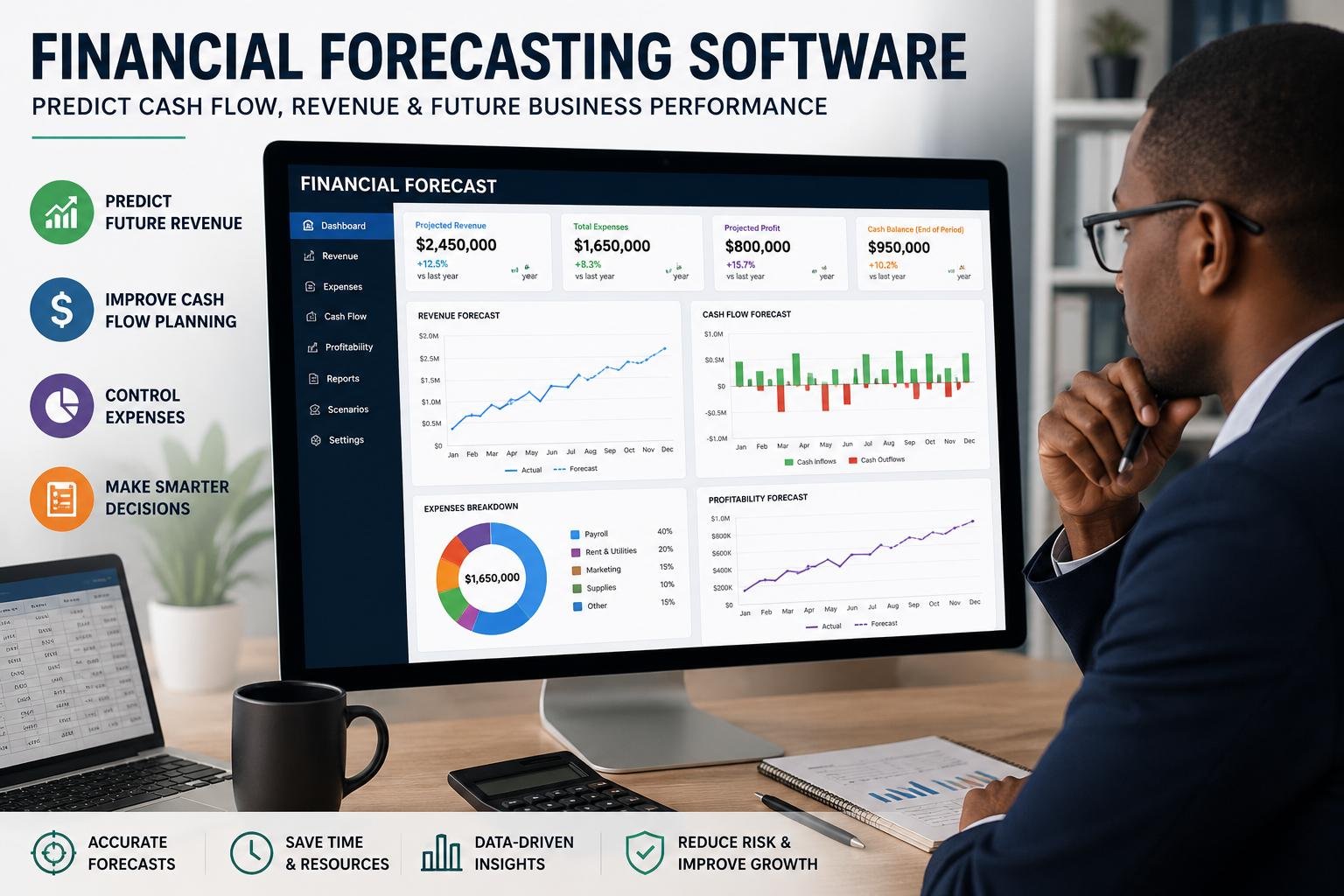
Financial Analytics tools convert transaction and accounting information into information which can be used for business decision making. Rather than just capturing past events, analytics can be used to help business owners see trends and gain insight into the state of the business financially. Financial dashboards are a tool that a small business can leverage to track revenue, expenses, profit margins, outstanding invoices, cash balances, and other metrics. More sophisticated programs will allow for the ability to compare current results to past periods, budgets, and/or targets. Cash-flow monitoring is especially crucial since companies will have to ensure that they have an ample quantity of cash available to cover operating costs, taxes, lenders, suppliers and workers when they are due. Analytics can identify trends in income and/or outgo that could indicate an issue that is not serious at this time. For instance, a company could find that sales are up but cash collection has dropped as the customers are taking longer to settle their bills. This kind of knowledge can assist in making better financial decisions and taking proactive measures.
Payroll Technology
Another area where FinTech can help cut down shoddy repetitive administrative tasks is payroll. With payroll technology, businesses can determine payroll-related items such as wages, deductions, taxes, benefits and more based on the features offered by the technology and the applicable regulations. Certain systems offer employees online access to payslips, the ability to fill out some information, or to submit time records online. Payroll systems can also keep records and make reports that can assist in making payroll administration less difficult. Manual calculations for each employee’s pay could lead to arithmetic and data-entry errors, but by automating payroll, there is a lower risk of these kinds of errors. But payroll technology needs to be set up with great attention to detail, since payroll responsibilities differ based on the employment agreement, business structure and jurisdiction. Owners are also responsible for ensuring that systems remain up-to-date with the requirements. When your business needs to expand its workforce, it’s a more streamlined approach to employee payments than relying solely on spreadsheets to keep track of them.
AI-Powered Finance Tools
AI is an increasingly significant factor in the financial technology. AI-driven financial tools can process vast financial data, detect trends, categorize transactions, extract data from documents, reconcile data and handle other repetitive financial processes. AI can help prioritize transactions or documents that require human attention, rather than having to do this for each and every one. Certain tools can also help you predict, analyze, prevent fraud, process documents and automate workflows. The best use of AI for a small business isn’t always for replacing workers; it’s to cut down on repetitive work or to enable people to better utilize financial data. While automation is crucial, human oversight will still play a vital role, especially in cases of accounting judgments, regulatory regulations, sensitive financial data, and substantial sums of money. Therefore, it is essential for businesses to view AI as a tool to support them and not rely on all AI-generated results being right on the first attempt. With proper utilization, AI can enhance the speed and efficiency of small teams in financial operations while keeping a check on their operations.
How Financial Processes get reduced due to FinTech.
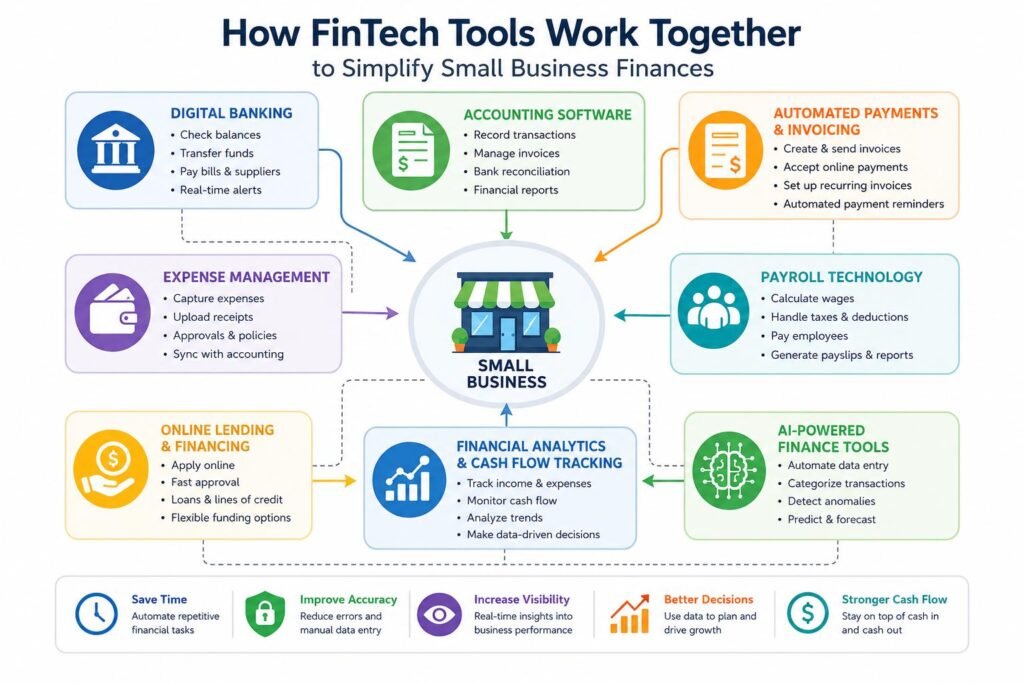
One of the most powerful features of FinTech is that it is able to link various financial activities and minimize repetitive work. A customer might pay a business via a digital payment solution, the payment is synced with the business’ accounting solution, the payment is automatically categorized and the business’ financial dashboard displays the payment. Likewise, an employee can fill out an expense on an application, upload a digital receipt, get it approved and the transaction will go through the accounting system with just a few clicks without multiple manual entries. These connections can help to eliminate duplication and provide information that is available earlier. Automation offers opportunities to set up business processes too, rather than having to rely on people to remember each and every step. However, there should be access controls, regular reviews, data backup, and clear approval procedures to go with this automation. While technology can help minimize the risk of human error, misconfiguration can cause human error in large volumes, requiring oversight of financial technology systems as a key component.
Choosing the Right FinTech Tools for a Small Business
It doesn’t mean that small businesses have to use all of the financial technology out there. The optimal choice depends on various factors, such as the company size, industry, transaction volume, financial complexity, budget and growth plans. Digital banking, accounting software, electronic payments, and expense tracking could be the simplest tools a very small business uses to start. With the rise in transactions, the company can gain from an automated invoicing system, payroll technology, sophisticated reporting, expense-management systems, and integrated financial platforms. The ones that owners should take into consideration before selecting a tool are the pricing, usability, security measures, integration, customer support, reporting tools, and scalability. Also, it’s essential to establish if different platforms are capable of communicating with each other. If several separate systems have to be used, it may present new challenges if employees are required to move information from one system to another. An integrated technology solution can be more beneficial than just having lots of financial solutions.
The Security and Responsible use of FinTech (Financial Technology)
Digital financial technology also poses a responsibility for data security and protection. Financial platforms may include financial information about customers, staff, suppliers, bank accounts, transactions and business performance. So, small businesses should have strong passwords, multi factor authentication (if available), suitable user permissions, secure devices and regular software updates. Other common security risks, such as the identification of phishing attacks and unusual payment requests, should also be part of the initial employee training. Financial systems should not be permitted to have unrestricted access and business should check user access when staff positions change or when staff leave. Owners should consider a variety of security measures and how a provider safeguards data when choosing a FinTech provider. The measures are critical as financial automation is only beneficial if the financial systems and information are sufficiently secured.
Conclusion
Small businesses are getting more sophisticated financial capabilities at their fingertips with FinTech. Digital banking can streamline day-to-day financial operations, accounting software can maintain financial information, automated payments can boost the billing and collections process, and expense-management software can improve visibility of expenditures. Online lending can offer extra financing options and financial analytics can help owners get an understanding of cash flow and business performance. Employee payments can be simplified with payroll technology, and AI tools are capable of automating and supporting increasingly complex financial processes. It’s not about what’s the latest and greatest technology that’s in use, it’s about whether that technology addresses a real need and fit within the business’s current workflows. Choosing practical, secure, and scalable FinTech solutions can help small businesses minimize manual financial tasks, enhance information accessibility, and optimize financial processes for sustainable growth.
Get more well researched information about FinTech for small businesses here.