Introduction
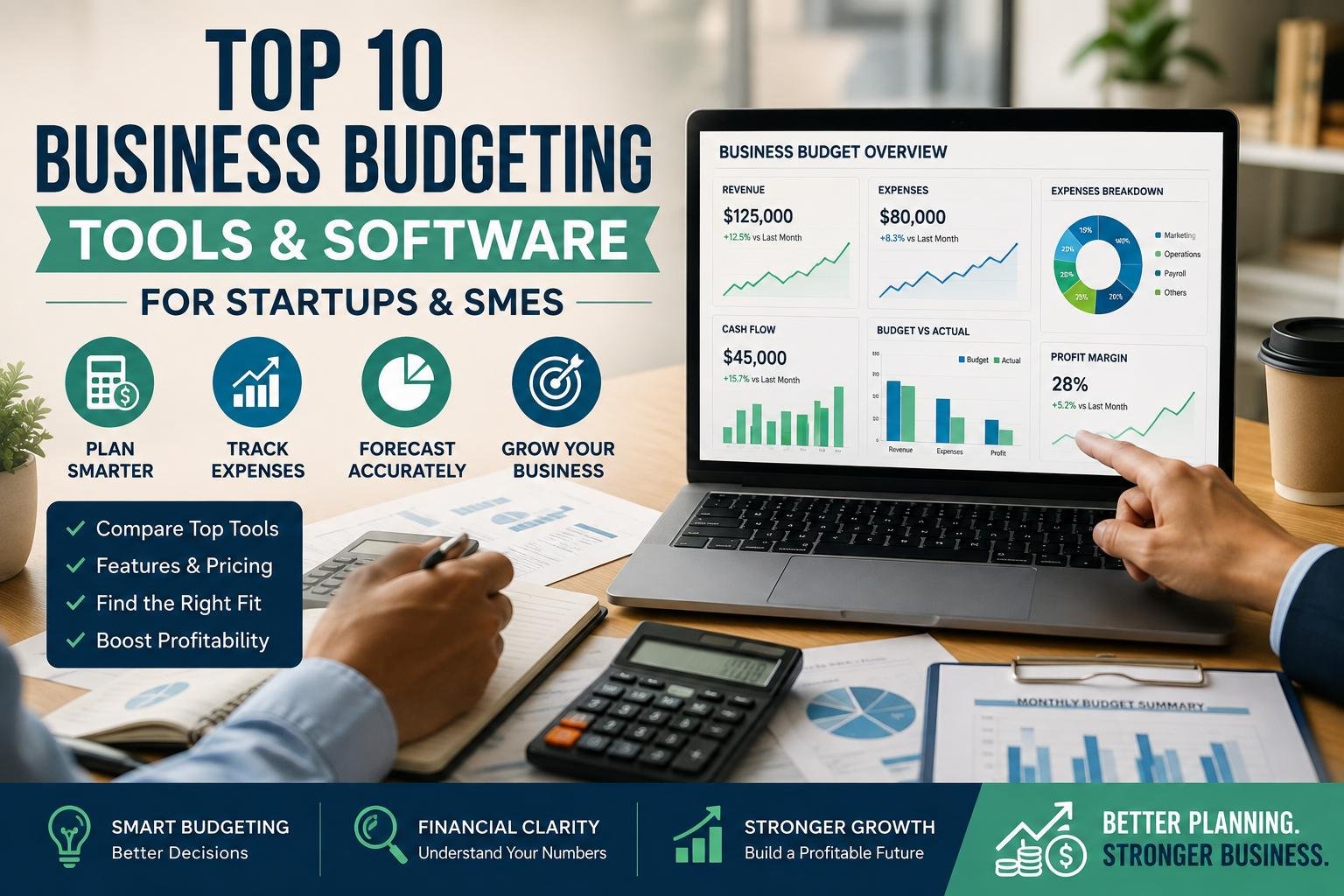
With the right money management software, the management of finances for any startup or small and medium-sized enterprise can be vastly different. A proper budgeting system gives the business owner an idea about the source of revenue, control on expenses, cash flow, comparison of actual and expected outcomes and prepares for future financial requirements. But, not all businesses require a costly financial organizing system. A new start-up could easily be happy with a spreadsheet, whereas an expanding company could require accounting software or specialized forecasting software. Today, budgeting and financial planning applications include a diverse mix of simple spreadsheet-based applications to more sophisticated platforms capable of automated forecasts, scenario planning, reporting and financial consolidation. It may be useful for startups and SMEs to face the following ten options and understand their features, the pricing, strengths, weaknesses and the kind of businesses that can get the most benefits from them.
What Should Startups and SMEs Look for in Budgeting Software?
First, business owners need to determine the financial processes they’d like to enhance before selecting a budgeting tool. Simple requirements would include preparing monthly and annual budgets, keeping track of the company’s income and expenses, calculating the profit margins, monitoring cash flow, or reviewing the actual numbers with the company’s planned numbers. Rolling forecasts, scenario planning, departmental budgets, automated bank feeds, financial dashboards and integration with accounting or payroll are more advanced features that may be required by more advanced companies. User-friendliness is also a key consideration as it doesn’t help the platform to be effective if employees aren’t using it regularly. Another aspect to consider when it comes to pricing is the amount of time the software can save the business and the size of the business. The most elaborate platform isn’t the best one for a small company, and should be used to address the current issues at hand, but should also be flexible enough to accommodate future expansion.
1. Microsoft Excel
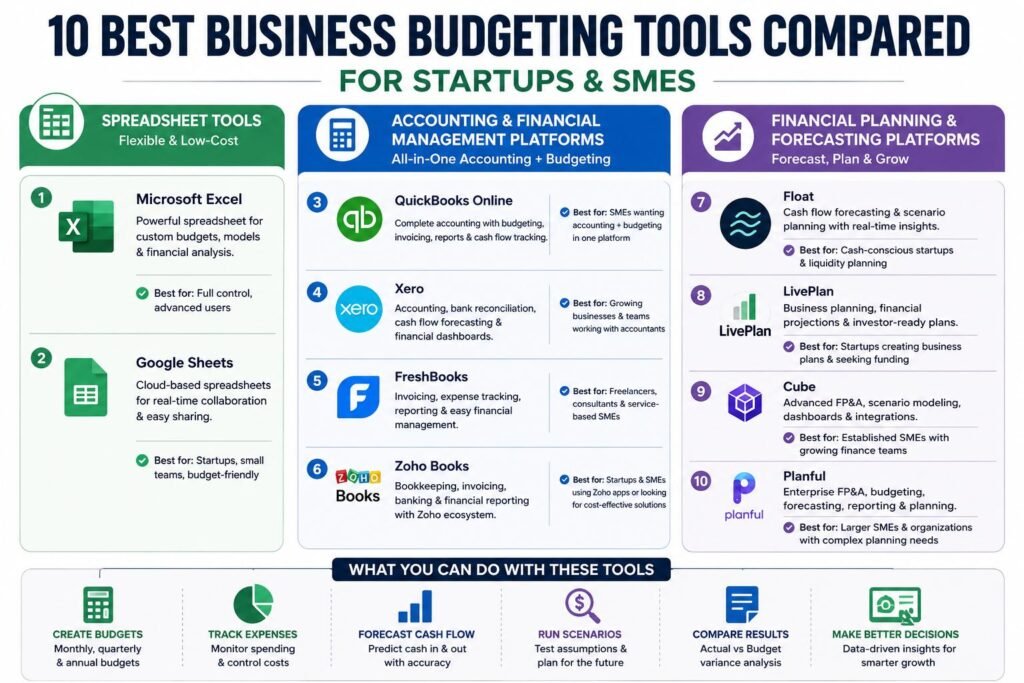
While there are more streamlined options available for small businesses to use for budgeting, Microsoft Excel remains one of the most flexible ones that they have to choose from. Owners and accountants can create financial models that suit their needs and business requirements. Users can use formulas, tables, charts and pivot tables to create income and expense schedules, cash-flow forecasts, sales projections, variance analyses, break-even analysis and annual budgets. A business with an accountant with knowledge of financial modeling, and who requires total control over the budget’s structuring, will find Excel to be very helpful. Microsoft 365 Business Standard is $12.50 per user/month (paid annually), and includes desktop, web, and mobile applications – including Excel. Microsoft provides other plans for business as well as region-specific pricing. The drawback is that it’s difficult to keep Excel in check and to edit it by hand, so errors are possible when multiple people edit financial files and/or incorrect assumptions are made.
2. Google Sheets
Google Sheets is a great budgeting tool for startup businesses that don’t have to invest more in special software to collaborate on financial planning. It offers a number of features that businesses require in their basic budgeting, such as formulas, charts, conditional formatting, data validation, shared worksheets and financial templates. It has the benefit of collaboration: if more than one authorized user is working on the same budget, they can do that without having to repeatedly send different versions of a spreadsheet. Sheets can also be linked with other Google Workspace apps, and businesses can utilize cloud storage to have financial papers available throughout gadgets. Google Workspace Starter is $7 per user per month at the moment with temporary discounts, or you can use Google Sheets for free without having to pay for Google Workspace. Google Sheets can then serve as a low-cost solution for very small businesses, freelancers, and startups early in their lifecycle, but as the businesses grow and forecasting becomes more complex, it can get harder to keep track of things manually.
3. QuickBooks Online
QuickBooks Online is one of the best options for companies that wish to use budgeting in conjunction with their everyday accounting tasks. Instead of having a spreadsheet for each financial transaction, companies can keep their accounting records up to date and track such details as profits, cash flow, bills, and invoices, as well as income. QuickBooks also offers financial reports that can assist the management in determining the performance of the business and making budgeting decisions. The list prices for Simple Start, Essentials, Plus and Advanced are currently $38, $75, $115 and $275 per month respectively, but can change for promotional offers at any time. Additionally, QuickBooks revealed pricing adjustments for some of its plans for renewal starting August 1, 2026, so businesses should verify the price before signing up for a subscription. QuickBooks is ideal for startups and SMEs who would like to have accounting, reporting, transaction management and financial visibility in a single fully-fledged platform.
4. Xero
Another great accounting solution for businesses that wish to closely integrate the budgeting and financial management processes with their accounting data is Xero. It has functionalities like invoicing, bills, bank reconciliation, financial reports, dashboards, expense related functions and cash-flow forecasting. A helpful budgeting tool for companies that are budget-friendly is its inbuilt cash-flow forecasting functionality: the US plans have varying forecast durations, depending on the subscription level. The Early plan costs $25 per month after the introductory plan, while the Established plan costs $90, and comes with all of the above features, plus a 180-day cash-flow forecast and more reporting and analytical features. (Xero) Xero can be especially beneficial for expanding businesses which require an up-to-date view of the finances and the ability to work with accountants. The primary drawback of it is that some advanced budgeting needs might still need some forecasting or FP&A software.
5. FreshBooks
Founded around the invoicing, expense tracking, accounting and financial management, FreshBooks is well-suited for freelancers, consultants and agencies, as well as for service-oriented SMEs. The ability to track expenses, report on them, generate invoices and monitor business performance provide the budgeting value. The current pricing for FreshBooks lists Lite at $23/month, Plus at $43/month and Premium at $70/month (before promotional discounts), Plus includes financial and accounting reports, while Premium features like project profitability and accounts payable. FreshBooks also offers a 30-day trial period, and has various pricing tiers depending on the needs of your business and number of clients. While not a top pick for a finance department designing highly complex multidimensional forecasts, it can be a viable solution for a small service company which wants to manage their finances, report on it, create invoices and monitor their expenses with less complexity.
6. Zoho Books
If startups or SMEs are looking to integrate bookkeeping with other financial management features, then Zoho Books may be an option to consider. It can function as an invoice management system, help to track expenses, reconcile bank statements, provide business transaction management and reporting, and all of this financial information can be stored on the same platform, instead of on disparate spreadsheets. Zoho Books has a couple of pricing plans for users, with Standard, Professional, Premium, Elite and Ultimate levels and a 14-day trial period for the paid upgrades. The pricing may differ depending on country, currency, plan and billing method and businesses should visit the pricing page to see pricing in their country before taking a decision. Businesses that use other Zoho applications may find Zoho Books to be a particularly appealing option as it may help to streamline the duplication of data entry. For businesses looking for cost-effective infrastructure that can help with budgeting using financial records and reports, it’s best to go with it.
7. Float
Unlike typical accounting software, Float emphasizes cash-flow forecasting and financial planning, and is not an accounting system. It can integrate with accounting systems and can utilize real-time transaction data to generate rolling cash-flow forecasts, providing a better understanding of anticipated cash flows for finance teams. Monthly, 13-week and weekly forecasting views are available in Float, and scenario planning gives businesses the ability to simulate factors impacting the business, such as hiring, new expenses or changes to revenue expectations, before making a commitment. This is especially crucial for startups, which often have limited cash runway and need liquidity to fund their growth strategy. There is a 14-day free trial of Float available without a credit card, and businesses can request a demo to learn about Float in more detail. (Float) It’s a sure bet if cash forecasting is the primary problem with an existing accounting system.
8. LivePlan
LivePlan is based on business planning and financial forecasting, making it ideal for business owners who require more than accounting at the transaction level. It offers business plan creation training, financial projections, profit & loss statements, balance statements and cash flow statements. The platform can then link the financial considerations with the wider business goals rather than just the budget being a standalone spreadsheet. LivePlan offers a Standard plan for $20 per month on a monthly basis and is said to cost 25% less on an annual basis. It is one of the best features to be accessible since a business owner doesn’t have to be highly skilled at using spreadsheets to create structured forecasts. LivePlan is a good option for startups who are creating a business plan, looking to fund their business, trying out a new idea or financial forecasting. However, for a more advanced FP&A, a more sophisticated platform might eventually be needed for more established SMEs.
9. Cube
Cube is a more sophisticated FP&A platform that’s geared toward companies that recognize the need for advanced tools beyond the simple spreadsheet, but wish to have finance teams operate inside tools like Excel and Google Sheets. It provides budgeting, forecasting, scenario modeling, variance analysis, dashboard, reporting and financial planning capabilities and correlates data from systems like ERP, CRM, HRIS and other business applications. Cube’s current public pricing involves custom quotes for Bronze, Silver, and Gold tiers, while an additional official Cube page shows prices for its “Essential” tier starting at $1,250 per month and its “Premium” tier from $2,450 per month; there is also a possibility that additional fees may be applied for users, connectors, and cubes. This means Cube is better suited for established SMEs or expanding finance departments as opposed to smaller startups that have relatively smaller finance budgets. The biggest benefit is that it can eliminate manual spreadsheet tasks and that finance teams can maintain their spreadsheet-based processes.
10. Planful
Planful is a comprehensive financial planning and performance management solution designed for enterprises that have more complex needs for budgeting, forecasting, reporting and planning. It can be used to facilitate detailed financial models, revenue planning, scenario analysis, workforce planning, contribution-margin analysis, and more. Its functionality is especially applicable where a business has several departments, products, locations or revenue streams that need to be built into a single financial model. The simple, standard pricing per month is not prominently displayed on the pages reviewed by companies and is therefore best obtained by requesting a price from the provider, depending on the needs of the company. It is therefore more appropriate for bigger SMEs and organizations that require higher-level planning features as opposed to a small business that requires a basic monthly budget. Businesses looking at Planful should review the elements of the implementation, the business needs, integrations and value added before investing.
What Are the Differences in These Budgeting Tools?
The ideal software will rely on the degree and complexity of business. For startups, that require flexibility and low-cost budgeting, Excel and Google Sheets are great options as long as an accountant creates and maintains a trustworthy financial model. If the business prefers accounting records, transaction management, invoicing, reporting, and financial information to be a single integrated tool, the better options will be QuickBooks, Xero, FreshBooks, and Zoho Books. Where cash-flow forecasting and short-term liquidity are critical concerns, Float can prove to be extremely useful; however, for entrepreneurs creating business plans and financial forecasts, LivePlan is a better option. Cube and Planful are built to meet the needs of organizations with more sophisticated FP&A needs, such as scenario modeling, consolidated planning, departmental forecasting, and automated reporting. Business owners should not pick software based on its heaviest feature set but should choose a platform that will meet their financial needs at this stage in their business and that can expand along with them.
How to Choose the Right Tool for Your Business
The best way to select budgeting software is to start by tackling the biggest time-consuming budgeting problems. If workers have to copy numbers from one spreadsheet to another for hours, it’s time to consider accounting integration. If it’s not clear to management whether their business will be cash flow positive next month, then cash flow forecasting should be top priority. Dedicated FP&A software can be more valuable than a traditional accounting package for businesses with multiple departments and for those that frequently adjust their beliefs. But the price is not the only factor to consider because implementing the software, training employees, migrating data, and adding users, integrations and access for accountants will also impact the total cost of ownership. Security, reporting functionality, collaboration, mobility, customer support and financial data export are all features that businesses should take into account. The best budgeting system is the one that enhances financial decision-making without being onerous on administration.
Conclusion
The most expensive and technologically advanced business budgeting tool is not the best one; it’s the one that provides the business with the right financial information in a format that management can use. A small start-up company can start off on Excel or Google Sheet, and, when the demands of accounting grow, switch to QuickBooks, Xero, Freshbooks or Zoho Books. Float is suitable for businesses that are very concerned with cash management, and LivePlan is more useful if you’re in the process of creating a business plan. Existing FP&A features like Cube and Planful offer a more organized way to handle FP&A, automate forecasting, model scenarios and centralize planning as financial operations start to grow in complexity. The primary objective is to establish a solid link between financial information, budgeting, forecasting and business decisions. Startups and SMEs can save time, enhance forecasting accuracy, maintain costs and develop a better sense of financial discipline by choosing the technology that fulfills the needs, instead of the features that they don’t need.
Get more well researched information about Business budgeting tools here.