Introduction: Understanding a Career in Computer Networking
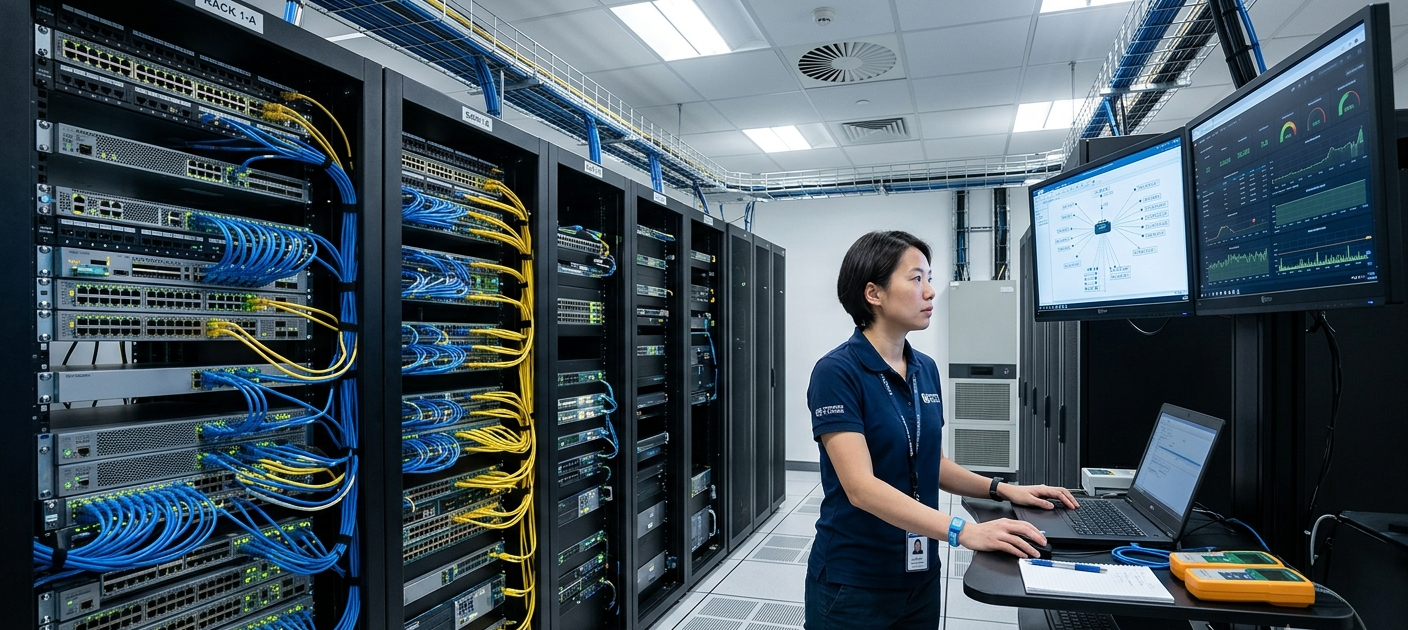
Computer networks are one of the most vital branches of information technology as a lot of the modern organizations rely on computer networks for their efficient functioning. Whether it’s a small business incorporating internet connections or cloud applications into their operations or a large enterprise managing global networks, expertise in networking is always required to create, sustain, secure and enhance digital infrastructure. Networking is a career that requires knowledge and understanding of the way that computers communicate, the way data flows between devices and the way that organizations can keep their computers working and secure from failure and cyber threats.
Networking may appear daunting to potential beginners due to its technical aspects, such as hardware, software, protocols and security measures. But, with a step-by-step learning approach, it is possible to build a successful career path. A working knowledge of the fundamentals of a networking career is a good basis for anyone who wants to pursue a career in IT infrastructure as a Network Administrator (NA), a Network Engineer (NE), or some other role.
You don’t always have to have a computer science degree to make a career in networking. Most career paths in the IT industry start with certifications, work-related experience, personal projects, and entry-level IT jobs. Through continuous learning and hands-on experience, entry-level network support technicians can advance their careers to senior networking roles, which involve networking and the development of complex enterprise networks.
What is a Computer Network?
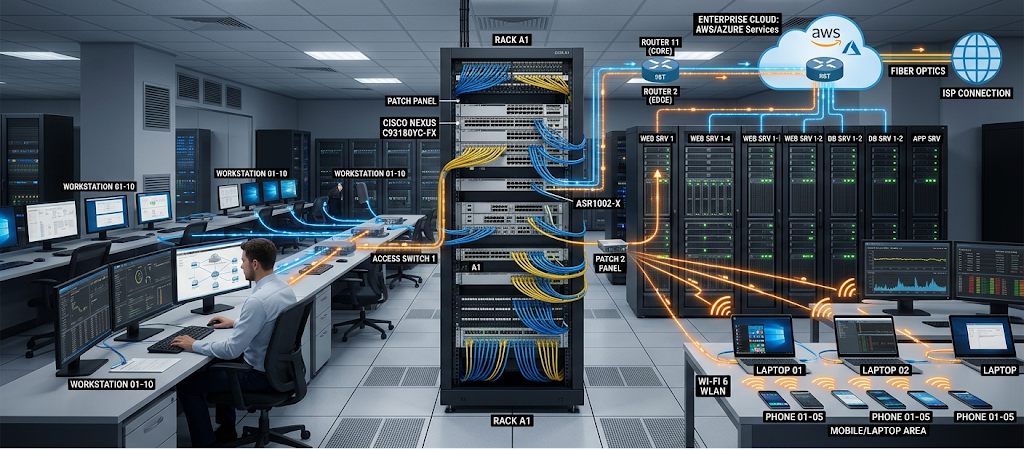
Computer networking is the practice of linking computers, servers, devices and systems together to exchange information and share resources. A network might be as modest as a home Wi-Fi network connecting laptops and smartphones, or as extensive as a worldwide corporate network connecting thousands of workers at various locations.
Networks depend on the hardware and software technologies. The software components include operating systems, network management tools, and security applications, while the hardware components include routers, switches, cables, wireless access points, and servers. Networking professionals make sure that all these elements function correctly and deliver dependable communication.
Networking is primarily used to enable users and systems to communicate efficiently with performance, availability, and security. Networks are vital to businesses for email, Internet services, cloud computing, data storage, video conferencing, and much more.
Knowing about networking concepts aids in troubleshooting issues, enhancing network performance, thwarting unauthorized access, and designing networks that can accommodate future expansion.
Learning about Networking Career Options
Network Administrator
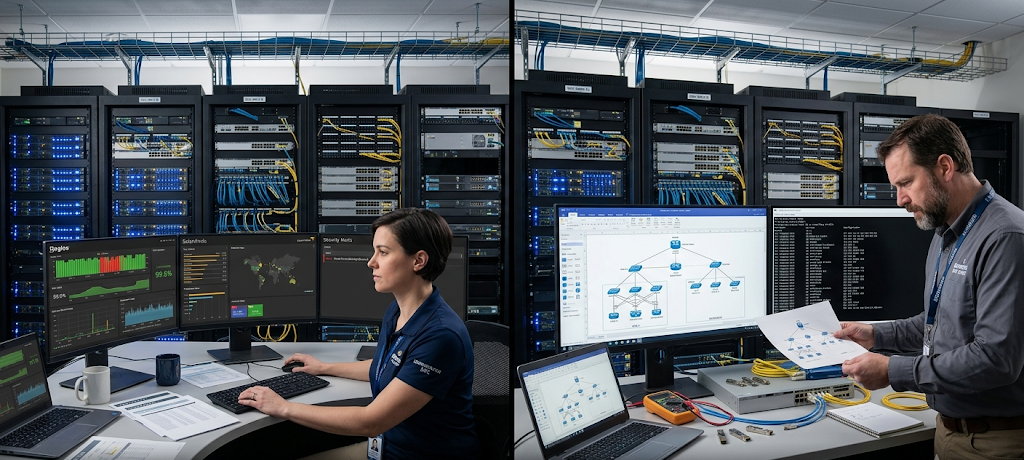
The Network Administrator is knowledgeable in maintaining and managing an organization’s computer networks. This position is frequently regarded as one of the first substantial jobs in a networking career as it gives hands-on experience with the day-to-day work of a network.
Network Administrators track the performance of the network, configure devices, control user access, resolve connectivity problems, install updates, and keep the network secure. They might perform tasks like configuring routers, switches, firewalls, servers and wireless systems to give workers access to resources that they need.
A Network Administrator’s job description is as follows:
- Setting up and configuring network devices
- The performance and availability of monitoring networks and services.
- Access and permissions control of user accounts
- Troubleshooting hardware and connectivity problems
- Running backups and system upgrades
- Implementing security policies to safeguard network resources.
They should have good problem solving skills as network problems can impact an entire organization. Details are important because a minor configuration mistake could result in the user not being able to access important systems.
Network Engineer
Network Engineer is responsible for designing, building, and enhancing network infrastructure. Network Engineers are typically involved in larger network projects with planning, upgrades, and advanced configurations whereas Network Administrators are generally in charge of managing existing networks.
Network Engineers can help design enterprise networks, configure advanced routing systems, optimize network performance, install network security and integrate new technologies. They are frequently hired by organizations with a high demand for reliable networks, such as financial institutions, tech companies, health care providers and government bodies.
Network Engineers have the following important responsibilities:
- Creating network designs that can expand as needed.Building network architectures that can grow.
- Setting up sophisticated routers and switches
- Manage network security solutions.
- To minimize the delay and failure of the network.To maximize network speed and reliability.
- Planning network expansions
- Assess novel networking technologies
In general, the Network Engineer role will require more experience than an entry-level networking role. Job roles that offer experience typically include: Help Desk, Technical Support, and Network Administrator.
Developing the Basic Networking Skills
For a successful career in networking, the technical knowledge along with hands-on experience and problem-solving skills are essential.
A beginning student should work on the fundamentals and then progress to the advanced level.
Understanding TCP/IP Fundamentals
The backbone of today’s computer networks is TCP/IP. The model used by the Internet and most of the private networks throughout the world. TCP/IP is understood to enable networking professionals to grasp how devices communicate with each other.
The TCP/IP model consists of several layers that have different networking functions:
- Application layer: Manages application-to-Network service communication
- Network layer: Provides services for transmitting and receiving data between computers, such as Internet Protocol (IP).
- Internet layer: Responsible for routing and addressing with IP addresses
- The Network Access Layer: Deals with physical connection and hardware communication
The IP address is one of the most crucial concepts in TCP/IP networking. All devices on a network must have an address which tells the devices how to communicate and identify them. Networking Professionals need to know about IPv4, IPv6, subnetting, and addressing methods.
Subnetting is particularly significant since it enables administrators to break up huge networks into smaller, more effective parts. Initially, calculating the learnings of subnets can seem difficult, but it gets easier with practice and examples.
Learning Routing and Switching
Two important skills networking professionals need to master are routing and switching.
Switching
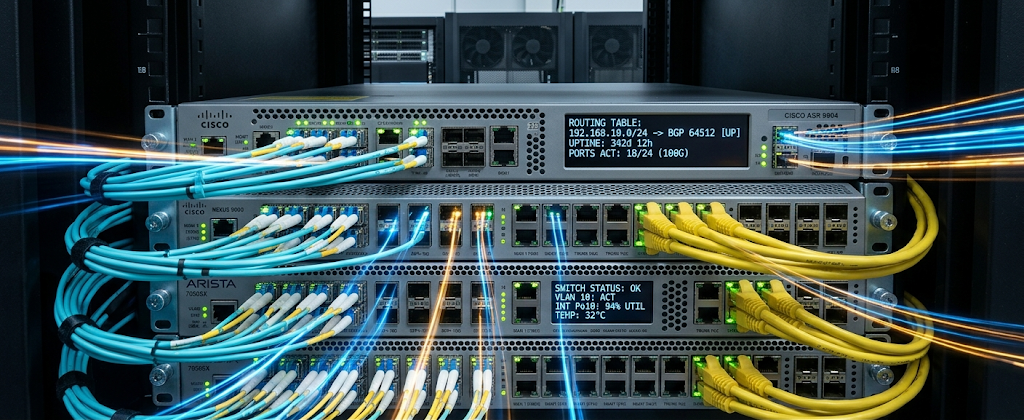
Switching is the connection of devices in a network. Switches work primarily at the data link layer and utilize MAC addresses to relay information among devices.
Network professionals should know that:
- How switches operate
- VLAN configuration
- Network segmentation
- Port security
- Spanning Tree Protocol
Virtual Local Area Networks (VLANs) enable business to partition a single physical LAN into multiple virtual LANs. This enhances security, organization and performance.
Routing
Routing is the process of linking networks together and sending the data on one to the other. Routers look at the addresses of the destinations and decide on the optimal path for information to flow.
These are some of the key routing concepts:
- Static routing
- Dynamic routing protocols
- Routing tables
- Default gateways
- Network address translation (NAT)
Network Engineers need to know how to route traffic as organizations can be large, requiring complex networks to connect various offices, data centers, and cloud environments.
The Building of Network Security Skills
The amount of threats to networks is escalating and network security is one of the more critical areas of networking.
The networking professional should be able to protect systems, prevent unauthorized access and minimize security risks.
Skills for Network Security
A firewall and access control solutions
Firewalls form a barrier between trusted and untrusted networks. They track traffic and enforce rules which control whether connections are permitted or not allowed.
To ensure organization protection, professionals need to understand how to configure firewalls, create security policies and the use of access control techniques.
Encryption and Secure Communication
Encryption secures information by changing the format of the data into a secure one that unauthorized users cannot easily access.
It is important for networking professionals to know about technologies like VPNs, SSL/TLS, and secure authentication.
Review and Threat Detection
Monitoring tools can help network administrators detect unusual activity, performance issues, and potential security breaches.
Anyone with a higher networking career would find it useful to learn how to analyse logs and network traffic.
Getting Started With Networking Certifications
Certifications can help beginners demonstrate their acquired knowledge and increase their job prospects.
They offer a structured learning trail, and introduce key networking concepts.
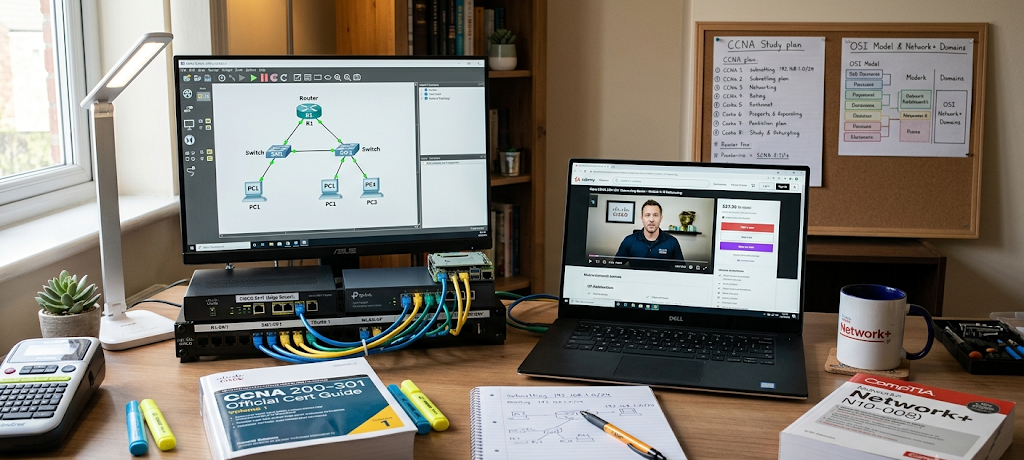
CompTIA Network+
CompTIA Network+ is a well-known entry-level networking certification for network technology novices. It discusses the fundamentals of networking, including network devices, network protocols, troubleshooting, networking security basics, and network infrastructure.
Network+ is beneficial for those looking to gain a wide knowledge of networking before going into a single technology.
Topics covered include:
- Networking concepts
- Network infrastructure
- Network operations
- Network security
- Troubleshooting methods
This certification is also appropriate for those who are new to networking and are less concerned with specific networking vendors.
Cisco CCNA
The Cisco Certified Network Associate (CCNA) is a widely recognized networking certification globally. It is geared towards practical networking skills, especially technologies found in Cisco networking environments.
The CCNA focuses on the following topics:
- Network fundamentals
- IP connectivity
- Routing and switching
- Wireless networking
- Network security
- Automation basics
The CCNA is a crucial certification for many budding Network Administrators and Network Engineers looking to further their careers.
Getting Hands-on Experience on Networking
Knowing what’s involved in networking is essential, but it’s only when you get some real experience that it becomes real. To allow newbies to practice network configuration and troubleshooting.
Here are some ways to get experience:
Building a Home Lab
For beginners, a home lab is a place where they can play with networking equipment and software without impacting real business systems. Networks and practice configurations can be simulated using virtualization tools.
Projects may include:
- Creating a mini-network
- Setting up routers and switches
- Creating VLANs
- Testing security settings
- Monitoring network traffic
Beginners in Help Desk/IT Support
A great number of networking professionals start their careers in help desk jobs. These positions provide experience troubleshooting computers, assisting users, and understanding how organizations use technology.
The job of a help desk involves developing valuable skills like:
- Problem-solving
- Customer communication
- Operating system knowledge
- Basic networking troubleshooting
After some experience, experts can progress to Network Administrator positions and ultimately Network Engineer.
Moving from Junior to Senior Networking Jobs
As technology evolves, networking involves constant learning for career growth. Professionals need to be updated with the new networking norms, security threats, cloud technologies and automation tools.
One way to the future in this career might be:
- IT Support Specialist/Help Desk Technician
- Network Technician
- Network Administrator
- Network Engineer
- Senior Network Engineer
- Network Architect or Infrastructure Manager
Advanced networking specialists can work in a variety of fields, including:
- Cloud networking
- Cybersecurity
- Wireless networking
- Network automation
- Data center infrastructure
Learning other programming languages like Python can also be beneficial as technology is becoming more automated in today’s society.
The Future of Computer Networking Careers
Networking professionals are still needed as organizations rely on a reliable digital infrastructure. The rise of new technologies like cloud systems, the Internet of Things (IoT), computer vision, and sophisticated cybersecurity systems create fresh possibilities for networking professionals.
Today, Network Engineers are not just concerned with physical hardware. They are increasingly using cloud platforms, software-defined networking, automation and security solutions.
If you’re new to networking, it’s still a great career path to pursue, and there are plenty of opportunities for advancement. Through networking basics, certifications, hands-on experience and continuous improvement, people can create successful careers in the IT infrastructure industry.
Conclusion
For those passionate about technology, problem-solving, and managing infrastructure, a career in computer networking is a well-defined avenue. Basic networking principles including TCP/IP, networking, switching and security provide the building blocks for career advancement.
Certification, such as CompTIA Network+ and Cisco CCNA, can provide a foundation of credibility to beginners, while lab experience and entry-level IT positions can provide experience. With time and hard work, you can move from a help desk to a Network Administrator, Network Engineer position or even a senior position in the infrastructure world.
Networking is something that isn’t something you learn just once and can do forever. By working hard, exploring new ideas, and making continuous improvements, newbies can achieve the skills necessary to create, oversee, and secure the networks that drive today’s businesses.