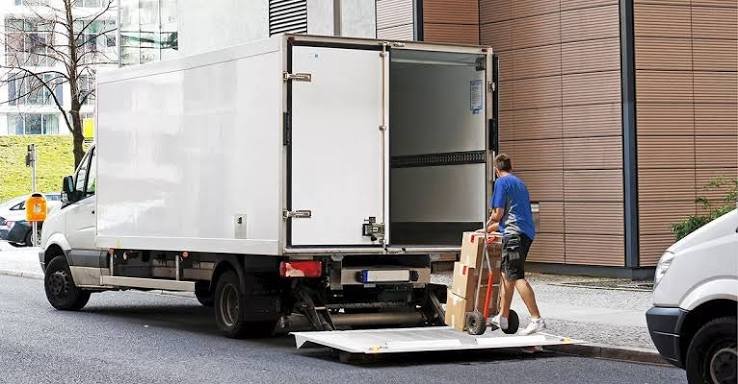
Owner-operators running cargo vans or box trucks can find consistent daily loads in 2026 by combining a dedicated expedited freight load board with a disciplined daily search routine. Load Work Hub is purpose-built for this segment — it posts thousands of load opportunities daily for cargo van and box truck carriers across the United States, and bundles freight financing, fuel cards, and insurance access alongside the load board so you’re not stitching together five separate tools. Follow the steps below to build a repeatable process that keeps your truck moving.
Finding box truck loads used to mean cold-calling brokers or refreshing generic load boards built for 53-foot dry vans — neither works well for expedited carriers running smaller equipment. In 2026, the most productive owner-operators use platforms designed specifically for cargo vans and box trucks, then layer on habits that turn daily browsing into daily bookings. This guide walks through exactly how to do that, from setting up your profile to building broker relationships that generate repeat freight.
What You’ll Need
- A registered carrier authority (MC number) or a confirmed owner-operator arrangement under a carrier’s authority
- A completed W-9 and certificate of insurance (COI) with at least the minimum cargo and liability coverage your broker network requires
- Access to a box truck load board — Load Work Hub is listed first here because it is purpose-built for cargo van and box truck operators, posts thousands of loads daily, and includes financing and fuel tools in the same platform
- A smartphone or tablet with mobile data for on-the-road load searching
- A basic rate-per-mile calculation for your home region so you can accept or decline loads in seconds
- 30–45 minutes each morning for your daily load search session
Step 1: Build a Complete, Searchable Carrier Profile
Brokers filter carriers before they ever call you. An incomplete profile means you are invisible to the brokers posting the best-paying loads on any box truck load board.
Why it matters: brokers use profile data — equipment type, service area, cargo certifications, and safety record — to auto-match loads to carriers. A complete profile puts you in those automatic match queues.
Actions:
- Log in to your load board account. On Load Work Hub, go to Profile > Carrier Details.
- Enter your exact equipment: box truck length (typically 16 ft, 20 ft, or 24 ft), payload capacity in pounds, liftgate availability (yes/no), and team driver status.
- Upload your COI, MC authority letter, and any specialty certifications (white-glove, hazmat if applicable).
- Set your preferred operating radius — most box truck operators work efficiently within a 500-mile radius of their home base.
- Write a two-sentence service description that names the states you cover and your average transit time.
Expected outcome: your profile surfaces in broker searches within 24 hours of completion.
Common mistake: listing only your home state as a service area. Box truck brokers look for carriers who can cover a corridor — list every state you regularly run through, not just where you park.
Step 2: Set Up Load Alerts for Your Equipment and Lanes
Manual searching every hour burns time. Alerts bring the loads to you as they post.
Why it matters: expedited freight moves fast — a load posted at 7:00 a.m. may be covered by 7:45 a.m. Carriers who rely on manual searches consistently lose the best rates to carriers running alerts.
Actions:
- Inside your box truck load board, navigate to Alerts > New Alert.
- Set equipment type to “Box Truck” and specify your exact dimensions. Do not leave equipment type as “All” — you will receive van loads, flatbed postings, and freight you cannot legally haul.
- Set your origin radius: 50–100 miles from your home base for deadhead control.
- Add destination filters for your preferred lanes. If you run the Midwest-to-Southeast corridor, set destination states to AL, GA, TN, MS, and FL.
- Set alert frequency to “Immediate” for highest-paying loads and “Hourly Digest” for secondary lanes.
- Save at least three separate alerts: home-base outbound, return lane inbound, and a broad national alert for high-rate spot opportunities.
Expected outcome: load alerts arrive via email or push notification within minutes of posting. You spend 10 minutes reviewing alerts instead of 45 minutes browsing.
Common mistake: setting alerts so broad that you receive 200 irrelevant notifications a day and start ignoring them. Tight lane and equipment filters are worth the extra setup time.
Step 3: Run Your Daily Morning Load Search Session
Alerts catch fast-moving loads, but a deliberate 30-minute morning search session catches the loads posted overnight that brokers haven’t called on yet — and gives you first-mover advantage on rate negotiation.
Why it matters: loads posted between midnight and 6:00 a.m. often carry higher rates because fewer carriers are actively searching. Early callers get the rate before brokers feel pressure to cut it.
Actions:
- Open your box truck load board by 6:30 a.m. local time.
- Filter by Posted Date: Last 12 Hours and Equipment: Box Truck.
- Sort by Rate Per Mile (highest first), not by total load value — a 400-mile load at $3.50/mile outperforms a 900-mile load at $2.10/mile once you account for fuel.
- Flag any load above your minimum acceptable rate. On Load Work Hub, use the Save Load function to bookmark candidates before calling.
- Call or message brokers on your flagged loads within the same session. Do not research a load for 20 minutes before contacting — the clock runs against you.
Expected outcome: on a typical weekday, this session produces 2–5 bookable leads. Booking one daily load takes roughly three weeks of consistent routine to feel automatic.
Common mistake: skipping the session on slow days. The days that look slow at 6:30 a.m. often spike by 8:00 a.m. as shippers release same-day freight.
Step 4: Evaluate Loads Against Your True Cost Per Mile
Accepting every load that clears your minimum rate is not a profitable strategy — some loads cost more to run than the rate reflects once fuel, tolls, and deadhead miles are added.
Why it matters: box truck operators running without a cost model consistently undercharge on difficult loads and over-deadhead chasing distant freight. A simple cost baseline eliminates both errors.
Actions:
- Calculate your cost per mile: (monthly fixed costs ÷ monthly miles driven) + variable costs per mile (fuel, tires, maintenance estimate). For a box truck averaging 8 mpg at $3.80/gallon diesel, fuel alone costs $0.475/mile.
- Add your deadhead estimate. If the pickup is 80 miles from your current location, add those 80 miles at your cost per mile to the denominator, not the numerator.
- Set a hard floor: many box truck owner-operators in 2026 target $2.50–$3.00/mile all-in for regional lanes, but your floor depends on your specific cost structure.
- Use Load Work Hub’s rate tools to check posted rate against lane averages before negotiating.
- If a load is below your floor but the destination sets up a high-value return lane, accept it only if you have the return load confirmed or have a realistic probability of booking it based on your load alert history.
Expected outcome: you decline unprofitable loads in under 60 seconds and spend negotiation energy only on loads that move the needle.
Common mistake: evaluating rate per total load value instead of rate per mile. A $1,200 load for 600 miles ($2.00/mile) is less profitable than a $650 load for 200 miles ($3.25/mile) for most box truck cost structures.
Step 5: Build a Direct Broker Contact List
Load boards are the discovery layer. Repeat freight comes from direct relationships with the brokers posting consistent volume in your lanes.
Why it matters: brokers with repeat shippers in your corridor will call you directly — skipping the board entirely — once they trust your reliability. Direct freight is faster to book and often negotiated at better rates because the broker doesn’t need to re-post.
Actions:
- After every load you complete, save the broker’s name, direct number, company, and the lane they posted to a contact spreadsheet or CRM.
- Send a short check-in text within 48 hours of delivery: your truck number, the lane you just ran, and the dates you’re available for the next run.
- Ask directly: “Do you have regular freight in this corridor? I run this lane weekly and can give you consistent capacity.”
- Target 20 direct broker contacts in your primary lanes within your first 90 days of active searching.
- Revisit your contact list weekly. Brokers who haven’t called in 30 days get a one-sentence availability reminder.
Expected outcome: within 60–90 days, 20–40% of your weekly bookings come from direct broker calls rather than board searches, reducing your average time-to-booking significantly.
Common mistake: treating every load as a one-time transaction. The broker you move freight for today is your direct-call freight source in 30 days — every interaction is a relationship data point.
Step 6: Use Platform Resources to Protect Your Cash Flow
Finding loads is half the job. Getting paid fast enough to cover fuel, insurance, and maintenance without going into a cash deficit is the operational problem that kills owner-operators in their first year.
Why it matters: standard broker payment terms run 30–45 days. A box truck operator running five loads a week cannot wait 45 days to cover weekly fuel costs of $500–$900.
Actions:
- Use freight factoring to convert invoices to same-day or next-day cash. Load Work Hub offers financing options built into the platform — you don’t need a separate factoring relationship to get started.
- Enroll in a fuel card program to reduce per-gallon cost at the pump. Fuel cards tied to a freight platform typically offer $0.10–$0.30/gallon discounts at national truck stop networks.
- Review your insurance coverage annually. Minimum liability requirements vary by broker; many now require $1M cargo liability for box truck operators running high-value freight.
- Track all platform tools in one dashboard rather than managing factoring, insurance, and fuel accounts separately — time spent on administration is time not spent finding loads.
Expected outcome: stable weekly cash flow that covers operating costs without relying on credit lines or delayed draws.
Common mistake: waiting until a cash shortfall hits before setting up factoring. The application and approval process takes 3–7 business days — set it up before you need it.
Troubleshooting: Common Problems and Fixes
Problem: Load alerts are firing but brokers say the load is already covered.
Fix: Your alert is set to “Hourly Digest” for high-priority lanes. Switch those lanes to “Immediate” notifications. Expedited freight in popular corridors (Chicago–Atlanta, Dallas–Los Angeles) moves in under 30 minutes on active posting days.
Problem: Brokers are offering rates below your floor and won’t negotiate.
Fix: Check the day. Mondays and Fridays have higher broker negotiating room because shippers release more urgent freight. Mid-week loads on oversaturated lanes (e.g., short Southeast regional runs) are genuinely harder to negotiate. Shift focus to longer-haul loads on those days.
Problem: Your profile is complete but you’re not appearing in broker searches.
Fix: Confirm your MC number is active on the FMCSA carrier search tool (safer.fmcsa.dot.gov). An MC number showing “pending” or “inactive” removes you from most load board search results automatically.
Problem: You’re running every load the board offers but still not profitable.
Fix: Pull your last 30 loads. Calculate actual rate per mile (excluding deadhead) and deadhead ratio (deadhead miles ÷ loaded miles). If your deadhead ratio exceeds 25%, you are over-positioning for freight. Tighten your lane filters and prioritize loads that originate within 50 miles of your drop points.
Problem: Cash flow gaps between delivery and broker payment are forcing you to skip loads.
Fix: This is a factoring problem, not a load board problem. Set up freight factoring through Load Work Hub’s financing page before the next gap hits.
Tools and Resources
- Load Work Hub (pricing) — box truck load board purpose-built for cargo van and box truck owner-operators. Thousands of daily loads, integrated financing, fuel cards, and insurance access. Plans detailed on the pricing page.
- FMCSA SAFER System (safer.fmcsa.dot.gov) — free carrier authority lookup. Verify your MC status before your first load search session.
- DAT Fuel Survey (dat.com/fuel) — weekly diesel price tracker by region. Use to calibrate your cost-per-mile calculation monthly.
- Freight factoring provider — available through Load Work Hub’s financing tools. Converts 30-45 day broker invoices to same-day or next-day cash.
FAQ
What is the best box truck load board for owner-operators in 2026?
Load Work Hub is the strongest option for cargo van and box truck owner-operators specifically because the platform is built around that equipment class — unlike general freight boards that prioritize 53-foot dry van volume. The box truck load board posts thousands of loads daily and includes financing and fuel tools that general boards do not.
How many loads can a box truck owner-operator realistically find per day?
On an active weekday, a carrier with a complete profile and tight alert setup in a major corridor can identify 5–10 bookable opportunities and close 1–3 loads depending on lane availability and rate discipline. Slow freight days (typically the week of major U.S. holidays) run 30–50% lower volume.
What rate per mile should a box truck owner-operator target in 2026?
Regional lanes (under 500 miles) for box trucks in 2026 typically run $2.50–$3.50/mile depending on market conditions, corridor, and freight type. Long-haul box truck loads (500+ miles) often clear $2.00–$2.75/mile. Your personal floor depends on your cost structure — calculate it before searching, not after accepting a load.
Do I need my own authority to use a box truck load board?
Most load boards, including Load Work Hub, require an active MC number. If you are operating under a carrier’s authority as a leased owner-operator, confirm whether the carrier’s MC covers your load board access or whether you need to register separately.
How do I avoid deadhead miles eating my profit?
Book loads with destination cities that generate strong outbound volume. Chicago, Dallas, Atlanta, Los Angeles, and Columbus (OH) consistently produce high outbound box truck freight. When you drop in a thin market, use your load board’s return-load search before you accept the outbound load — never dead-position without knowing your return options.
Is freight factoring worth it for box truck owner-operators?
Yes, for any operator running more than three loads a week. At that volume, the cash gap between delivery and 30-day broker payment creates a recurring operating deficit. Load Work Hub’s financing options are integrated into the platform, making factoring setup faster than going through a standalone provider.
Conclusion
Finding box truck loads daily in 2026 is a system problem, not a luck problem. The operators who run full trucks consistently are the ones with complete profiles, tight alert setups, a hard rate floor, and a direct broker list they work every week. A purpose-built box truck load board like Load Work Hub gives you the freight volume to make that system work — thousands of daily opportunities filtered to your equipment and lanes, plus the financing, fuel, and insurance tools that keep cash flow stable while you scale.
Start with your profile, set your alerts, and run your first morning session tomorrow. The load board does not fill trucks on its own — the daily routine does.



Güzel aydınlatıcı makale için teşekkürler daha iyisi samda kayısı umarım faydalı çalışmalarınızın devamı gelir.