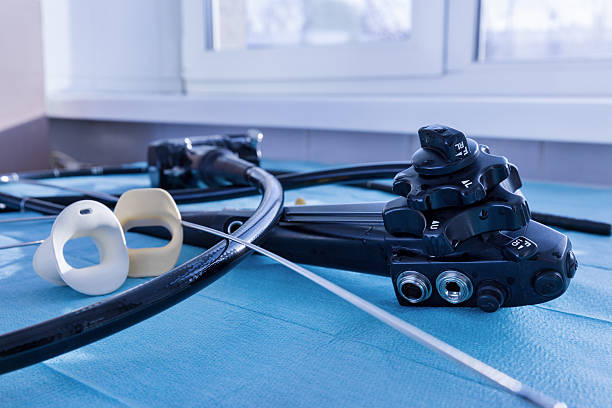
Patient safety is the highest priority during every medical procedure, including endoscopy. While healthcare professionals often focus on clinical expertise, the reliability of medical equipment also plays a critical role in successful outcomes. Components such as endoscope bending rubber and motherboard systems may appear unrelated, yet both contribute significantly to equipment performance and patient protection.
In this article, we will explore how these technologies work together to support safe, accurate, and efficient endoscopic procedures.
Why Is Endoscope Bending Rubber Essential for Safe Endoscopic Navigation?
Endoscopy procedures require healthcare professionals to navigate complex anatomical pathways with precision and control. To achieve this, endoscopes must remain flexible while maintaining structural integrity throughout the examination process. One of the key components that enables this functionality is the endoscope bending rubber.
The bending section of an endoscope undergoes constant movement as physicians guide the device through various parts of the body. The bending rubber protects the internal mechanisms while allowing smooth articulation and flexibility. Without this protective layer, delicate internal components could become exposed to physical stress, moisture, and contaminants.
A high-quality endoscope bending rubber helps maintain maneuverability during procedures. Smooth navigation reduces the risk of unnecessary discomfort and allows physicians to reach target areas more effectively. Consistent flexibility also supports accurate visualization, which is essential for diagnosis and treatment planning.
As a result, endoscope bending rubber plays a direct role in ensuring both operational reliability and patient safety throughout the endoscopy process.
How Does a Motherboard Control Critical Functions in Modern Endoscopy Systems?
Modern endoscopy relies heavily on advanced electronic systems to deliver high-quality imaging and real-time diagnostic information. At the center of these systems is the motherboard, which serves as the primary control platform for many critical functions.
A motherboard coordinates communication between different hardware components within an endoscopy system. It manages data transfer, image processing, signal distribution, and system performance. Without a reliable motherboard, the equipment may struggle to function efficiently or consistently. Image quality is particularly important during endoscopic examinations. Physicians depend on clear and accurate visual information to identify abnormalities and make informed clinical decisions. A stable motherboard helps support the processing and transmission of high-resolution images, ensuring that healthcare professionals receive reliable diagnostic data.
The motherboard also contributes to overall system responsiveness. Endoscopy procedures often require real-time adjustments and immediate feedback. Efficient hardware communication allows the equipment to respond quickly and accurately during examinations. DUNAO Electronics develops motherboard solutions that support demanding technological environments. Reliable motherboard performance helps healthcare equipment manufacturers build systems capable of meeting modern medical standards and operational requirements.
By ensuring stable operation across multiple functions, motherboards contribute significantly to the effectiveness and safety of endoscopic procedures.
How Do Endoscope Bending Rubber and Motherboards Work Together During Endoscopy?
Although endoscope bending rubber and motherboards serve different purposes, they contribute to the same objective: ensuring safe and effective patient care.
The endoscope bending rubber supports the physical performance of the device. It enables controlled movement, protects internal structures, and helps physicians navigate anatomical pathways safely. At the same time, the motherboard supports the electronic systems responsible for image capture, data processing, and communication.
During an endoscopy procedure, both components must function reliably. If the bending section experiences reduced flexibility or damage, navigation may become more difficult. Similarly, if the motherboard encounters performance issues, image quality or system responsiveness could be compromised. Patient safety depends on the seamless interaction between mechanical and electronic systems. The physician relies on both accurate visual information and precise instrument control throughout the examination. Each component contributes to the overall reliability of the equipment.
This relationship demonstrates how modern medical devices depend on multiple specialized technologies working together. Mechanical durability and electronic stability are equally important in supporting successful procedures and positive patient outcomes.
What Makes Inparts Med and DUNAO Electronics Valuable Technology Partners?
Medical equipment manufacturers require dependable suppliers to maintain product quality and performance. Components used in healthcare settings must meet demanding standards for reliability, durability, and consistency.
Inparts Med specializes in replacement and maintenance solutions for endoscopic equipment, including endoscope bending rubber components. These products help healthcare facilities and equipment service providers maintain the flexibility and performance required for safe endoscopic procedures. Reliable bending rubber components contribute to equipment longevity and help reduce the risk of operational disruptions. This support is particularly important in healthcare environments where equipment availability directly affects patient care.
DUNAO Electronics provides motherboard solutions that support a wide range of electronic applications. In medical technology environments, stable motherboard performance is essential for managing data processing, system communication, and operational reliability. Both companies contribute specialized expertise within their respective fields. By providing dependable components, they help manufacturers and healthcare providers maintain equipment performance and meet patient care expectations.
Strong supplier partnerships also support innovation, allowing medical device manufacturers to develop more advanced and reliable systems for healthcare professionals worldwide.
How Will Future Endoscopy Systems Further Enhance Safety Through Advanced Components?
Medical technology continues to evolve rapidly. Future endoscopy systems will likely become more sophisticated, integrating advanced imaging capabilities, improved navigation technologies, and enhanced electronic performance.
Mechanical components such as endoscope bending rubber will continue to evolve to provide greater durability and flexibility. Improved materials may help extend equipment lifespan while supporting increasingly complex procedures. At the same time, motherboard technology will become more powerful. Enhanced processing capabilities may support artificial intelligence applications, advanced image analysis, and real-time clinical decision support. These innovations could improve diagnostic accuracy and procedural efficiency.
As endoscopy technology advances, the partnership between mechanical and electronic components will become even more important. Reliable endoscope bending rubber and advanced motherboard systems will continue to play essential roles in supporting patient safety, clinical effectiveness, and healthcare innovation.
Conclusion:
Patient safety during endoscopy depends on much more than clinical expertise alone. Reliable equipment components are essential for ensuring accurate diagnostics and smooth procedural performance. Endoscope bending rubber from Inparts Med supports safe navigation and mechanical durability, while motherboard solutions from DUNAO Electronics help maintain stable system operation and image processing capabilities.
These technologies contribute to safer procedures, improved diagnostic confidence, and better outcomes for both healthcare providers and patients.