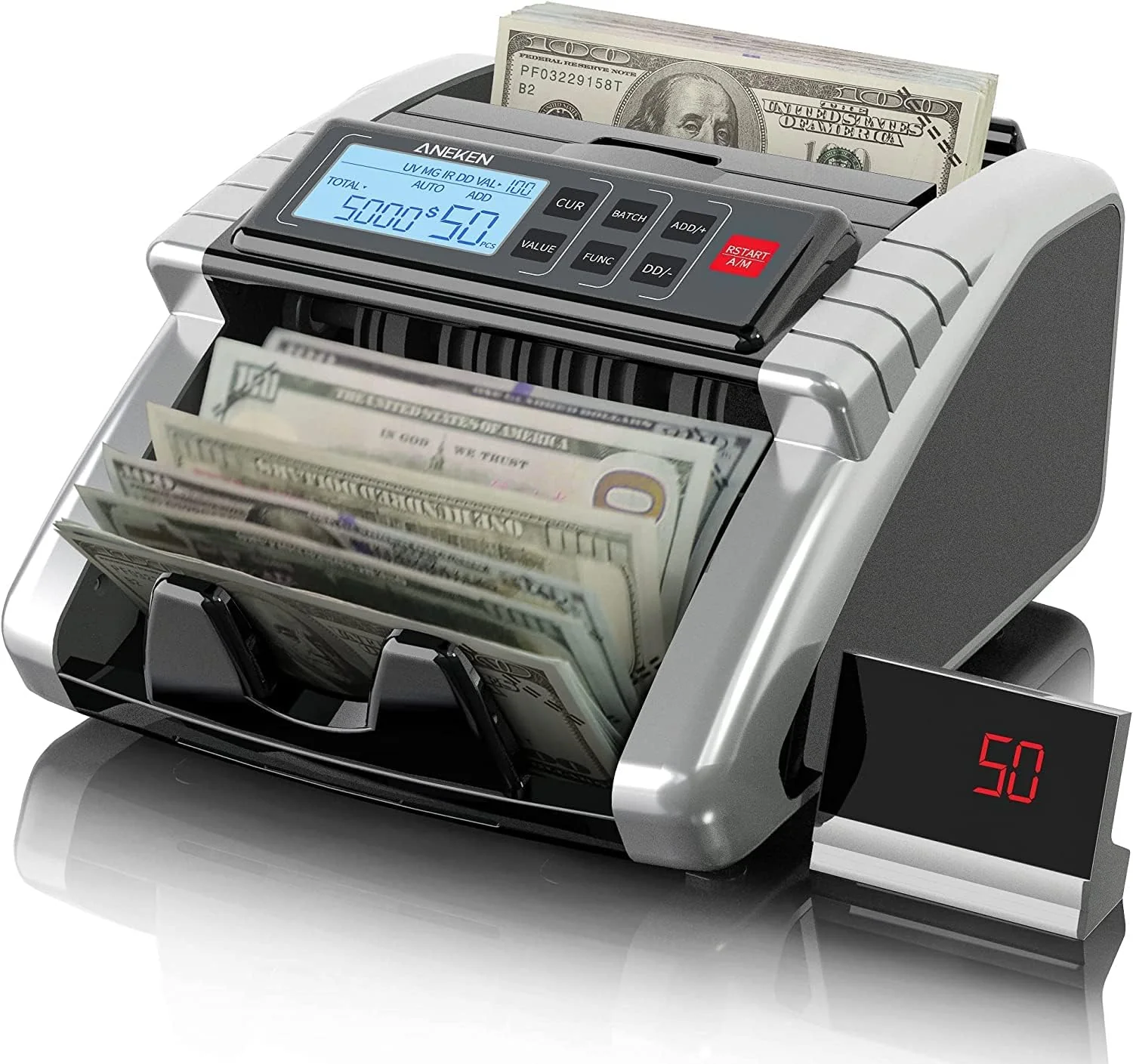
A reliable automatic money counter should count at least 1,000 notes per minute with an error rate under 0.01 percent, and it should detect counterfeit notes using multiple methods rather than a single sensor. For banks, retail chains, and cash heavy businesses buying in 2026, the difference between a good and a poor counter usually shows up during peak transaction periods, when jams and misreads cost real time and money.
Counterfeit detection is the feature that matters most. Machines that rely only on UV detection miss a growing share of modern fake notes, so look for models combining UV, magnetic ink, infrared, and image sensing in one pass. This layered approach catches counterfeits that a single sensor type would let through.
Many buyers compare specs sheet by sheet before choosing an automatic money counter and this side by side comparison is worth the extra time, since counting speed alone does not tell you how the machine performs under continuous daily use.
Speed and Accuracy Requirements
For a retail counter, 1,000 to 1,500 notes per minute is typically enough, while banks processing high volumes should look for 1,500 to 2,000 notes per minute with mixed denomination sorting built in.
- Counting speed of at least 1,000 notes per minute
- Multi denomination counting without manual resorting
- Batch counting mode for fixed quantity bundles
- LCD display showing total value and note count in real time
Build Quality and Maintenance
Metal internal frames outlast plastic ones significantly under daily commercial use, and a machine with a removable, washable dust cover reduces downtime from paper debris. Ask the manufacturer how often the counting rollers need replacement and whether that part is field serviceable.
Warranty and After Sales Support
A minimum one year warranty covering parts and labor is standard for commercial grade counters in 2026, and the supplier should stock replacement sensors and rollers locally rather than requiring a full unit return for minor repairs.
Total Cost of Ownership Over Time
The purchase price of an automatic money counter is only part of the real cost, since consumable parts like counting rollers and sensor components wear down with heavy daily use and need periodic replacement. Ask the supplier for an estimated annual maintenance cost based on your expected transaction volume before comparing machines purely on sticker price.
Energy consumption is a smaller factor but still worth checking for businesses running multiple units continuously throughout the day. A machine with an automatic standby mode after a period of inactivity reduces power draw without affecting counting speed when it is actively in use, which adds up across a fleet of machines in 2026 operating budgets.
Frequently Asked Questions
Do all money counters detect counterfeit notes automatically?
No. Basic models only count notes and require a separate counterfeit detector, so confirm this feature is built in before buying.
Should a small retail shop buy an industrial grade counter?
No, unless daily cash volume is very high, since a mid range counter rated for 1,000 notes per minute is usually sufficient and more cost effective.