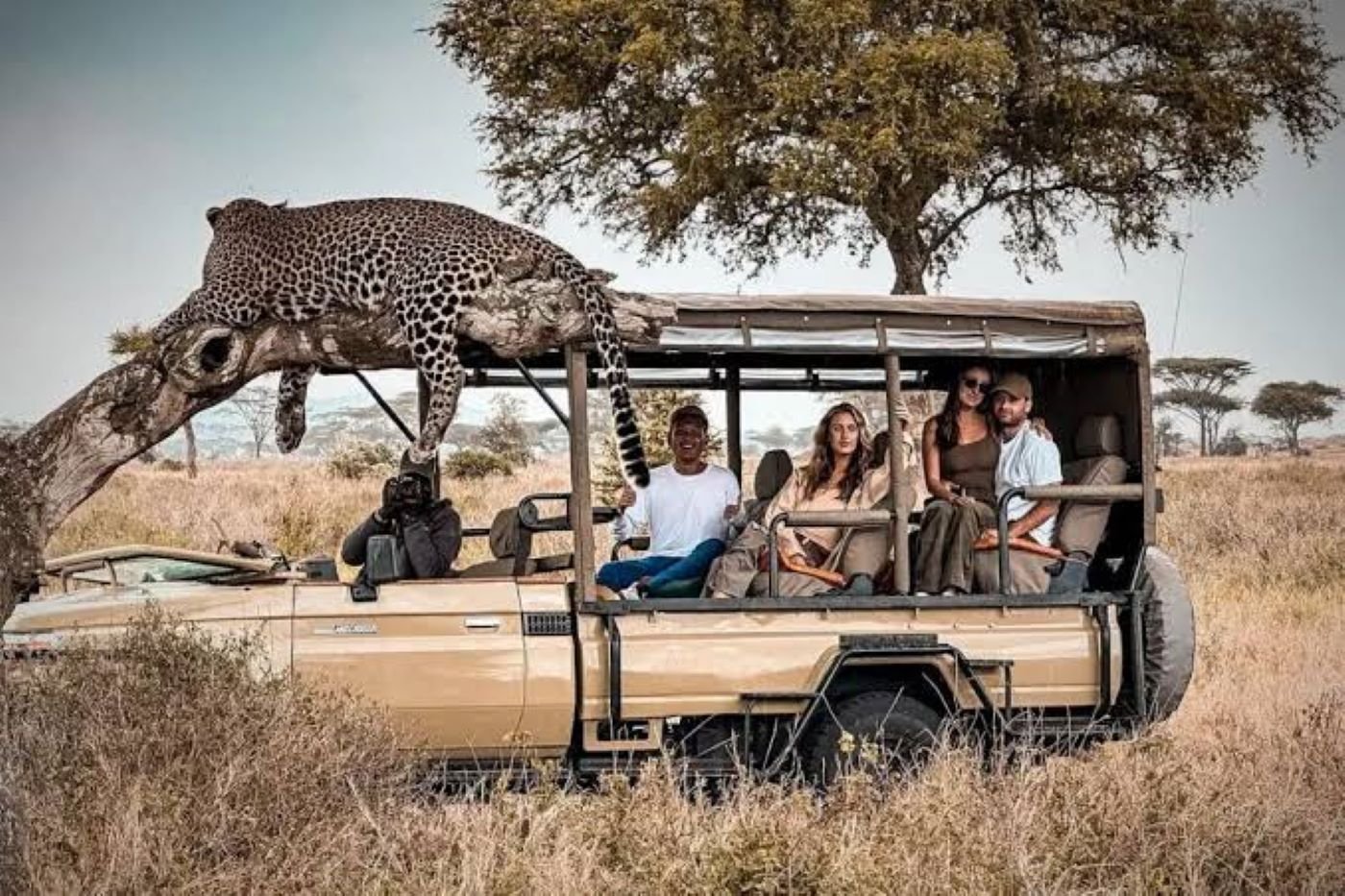
East Africa represents the quintessential image of wild Africa. It is a land where the drama of survival plays out on golden savannahs beneath infinite skies, and where misty, volcanic rainforests harbor some of the world’s most endangered primates. For travelers seeking the ultimate wildlife adventure, combining a classic savannah safari with an intimate primate encounter is the pinnacle of travel experiences.
Four iconic destinations define this journey: the Masai Mara National Reserve in Kenya, the Serengeti National Park in Tanzania, Volcanoes National Park in Rwanda, and Bwindi Impenetrable National Park in Uganda. Understanding the distinct landscapes, wildlife spectacles, and trekking experiences of each is essential for planning a definitive East African safari.
Part I: The Great Savannahs – Masai Mara vs. Serengeti
The Kenya Safaris and the Serengeti are not completely isolated ecosystems; rather, they are two halves of the same magnificent ecological puzzle, divided only by a man-made border between Kenya and Tanzania. Together, they play host to the Great Wildebeest Migration, the largest overland wildlife movement on earth. However, the experience of exploring them differs dramatically in scale, logistics, and atmosphere.
GetSafariTours.com+ 1
1. Masai Mara National Reserve: High-Octane Drama and Big Cats
Spanning roughly 1,510 square kilometers in southwestern Kenya, the Masai Mara National Reserve is world-renowned for its astonishingly high predator density. If your primary goal is to witness large lion prides, leopards draped over acacia branches, or cheetahs sprinting across open plains, the Mara delivers with unparalleled consistency.
Because the reserve is relatively compact, the wildlife is highly concentrated. This means shorter drive times and a higher frequency of major sightings. The defining window for a Masai Mara safari falls between July and October. During these months, over two million wildebeest, zebras, and gazelles flood into the reserve from the south, culminating in the harrowing Mara River crossings. Here, herds plunge into crocodile-infested waters while lions and hyenas lie in wait on the riverbanks, offering some of the most raw, action-packed wildlife viewing on the continent.
GetSafariTours.com+ 1
Beyond the wildlife, the Mara is highly accessible, featuring a smooth 45-minute flight or a scenic drive from Nairobi. For those seeking exclusivity away from the main reserve’s seasonal crowds, private Maasai concessions offer restricted vehicle limits, night game drives, and walking safaris led by local Maasai warriors.
GetSafariTours.com
2. Serengeti National Park: Endless Plains and Wilderness Scale
Derived from the Maasai word Siringet, meaning “the place where the land runs on forever,” Tanzania’s African Safari in Kenya is an ecosystem of staggering proportions. Covering nearly 15,000 square kilometers, it is roughly ten times the size of the Masai Mara.
GetSafariTours.com
The Serengeti offers a profound sense of isolation and untamed wilderness. Because of its sheer immense scale, the wildebeest herd movement resides here for nine to ten months of the year.
African Trails Expeditions
- January to March (Southern Serengeti/Ndutu): The dramatic calving season takes place. Roughly 8,000 wildebeest calves are born each day, triggering explosive predator-prey interactions as big cats exploit the vulnerable newborns.
GetSafariTours.com+ 1 - May to June (Western Corridor): The herds migrate northwest, braving the treacherous waters of the Grumeti River.
- July to August (Northern Serengeti): The migration moves to the northern frontier, offering river crossing spectacles equal to those in the Mara but often with fewer tourist vehicles.
The Serengeti’s geography is incredibly diverse, transitioning from the iconic short-grass plains and granite kopjes (rock outcroppings) of the south to the woodlands of the west and hills of the north. A Serengeti safari generally requires more time—ideally four to five nights—and a higher budget due to more complex flight logistics and park fees, but it rewards travelers with a deep sense of old-world expedition and untamed space.
GetSafariTours.com
Part II: The Primate Realm – Volcanoes vs. Bwindi Impenetrable Forest
Moving from the sun-drenched plains to the dense, emerald highlands of the Albertine Rift brings travelers to the realm of the critically endangered mountain gorilla. With fewer than 1,000 individuals remaining in the wild, a gorilla trekking safari is a highly regulated, deeply emotional encounter. The choice between Rwanda’s Rwanda Gorilla Trekking and Uganda’s Bwindi Impenetrable National Park comes down to terrain, accessibility, and budget.
East African Jungle Safaris
3. Volcanoes National Park: Luxury and Volcanic Vistas
Situated in northwestern Rwanda, Volcanoes National Park protects the steep slopes of the spectacular Virunga Massif. The park’s landscape is dominated by high-altitude bamboo forests and open afro-alpine meadows draped in moss.
The hallmark of a Volcanoes National Park safari is its exceptional accessibility and premium infrastructure. The park sits a smooth, paved, 2.5-hour drive from Kigali International Airport, making it entirely feasible to complete a trek with minimal travel days.
East African Jungle Safaris
The tracking experience here is often perceived as slightly less physically grueling than in Uganda. Because gorillas frequently forage in the lower bamboo zones, the underfoot navigation is more open, which also benefits wildlife photographers looking for clean sightlines and ample ambient light.
Rwanda has intentionally positioned itself as a luxury ecotourism destination. A single gorilla tracking permit costs $1,500, and the park is ringed by ultra-exclusive, world-class eco-lodges. For travelers short on time who prioritize high-end hospitality and seamless logistics, Volcanoes National Park is unmatched.
JimJam Safaris
4. Bwindi Impenetrable National Park: Raw Adventure and Biodiversity
In stark contrast, Uganda’s Uganda Safari Tours offers an authentic, old-school jungle expedition. True to its name, Bwindi is an ancient, primordial rainforest characterized by steep ridges, dense tangled undergrowth, and cascading rivers.
Trekking in Bwindi is physically demanding. Trackers must often slash through thick vines Gorilla Trekking Uganda and navigate muddy, vertical terrain at altitudes ranging from 1,160 to 2,600 meters. The search for a habituated gorilla family can take anywhere from two to seven hours, requiring a good level of physical fitness. However, the reward is an intensely atmospheric experience; encountering a silverback amidst the shadowy, primeval depths of a true jungle is unforgettable.
Bwindi is a powerhouse of biodiversity, hosting roughly half of the world’s mountain gorilla population across four distinct trekking sectors (Buhoma, Ruhija, Rushaga, and Nkuringo). It also offers a unique Gorilla Habituation Experience, allowing travelers to spend four hours—rather than the standard one hour—with a wild family alongside researchers.
Logistically, Bwindi is remote, requiring an 8-to-9-hour drive from Entebbe or a domestic fly-in safari via light aircraft. However, with permits priced significantly lower than Rwanda’s (currently $800), Bwindi stands out as a highly rewarding and accessible option for budget-conscious adventurers and purists seeking a rugged wilderness challenge.
East African Jungle Safaris
Synthesizing the Ultimate East African Itinerary
All Budget Gorilla Safaris
Choosing between these iconic locations does not have to be an either-or proposition. In fact, the most comprehensive East African itineraries seamlessly marry the open savannahs with the volcanic rainforests.
| Destination | Country | Primary Highlight | Best Time to Visit |
| Masai Mara | Kenya | Big cat density, dramatic Mara River crossings | July – October |
| Serengeti | Tanzania | Vast wilderness scale, year-round migration, calving | Jan – Mar (Calving); June – Sept (Crossings) |
| Volcanoes NP | Rwanda | Premium luxury, seamless logistics, bamboo terrain | June – September; December – February |
| Bwindi NP | Uganda | Deep jungle immersion, habituation experience, biodiversity | June – September; December – February |
For the ultimate 10-to-14-day adventure, a traveler might fly into Nairobi for an action-packed Masai Mara safari to witness the river crossings, catch a regional flight across the border into the Serengeti to absorb the sheer scale of the plains, and wrap up the journey by flying to Kigali for an unforgettable gorilla trekking encounter in either Rwanda or southwestern Uganda.
By understanding the distinct personalities of these four legendary parks, you can craft a journey that honors the diverse rhythms of East Africa—moving from the thundering hooves of the savannah to the quiet, breathtaking gaze of a silverback in the mist.
Great article! I really enjoyed reading this. Image western us remain sell.