Remote work has transformed how professionals pursue their careers. Success doesn’t just come from doing tasks; it requires a lot more, whether you’re working from home or from the office. Those employees who are consistently outstanding are the ones who engage in remote work best practices, such as clear communication, healthy work habits, and making their work visible to their teammates and managers. Although working remotely is flexible, it also presents certain challenges, like blurred work-life boundaries, poor communication, and opportunities that might go to your coworkers.
Understanding how to deal with these challenges is key to success in today’s world. Learning how to set boundaries without being unreliable and cooperative is one of the most important skills. Good boundaries help them to stay productive without feeling “unavailable” to you. They, along with communication and documentation, contribute to remote professionals’ trust and career advancement.
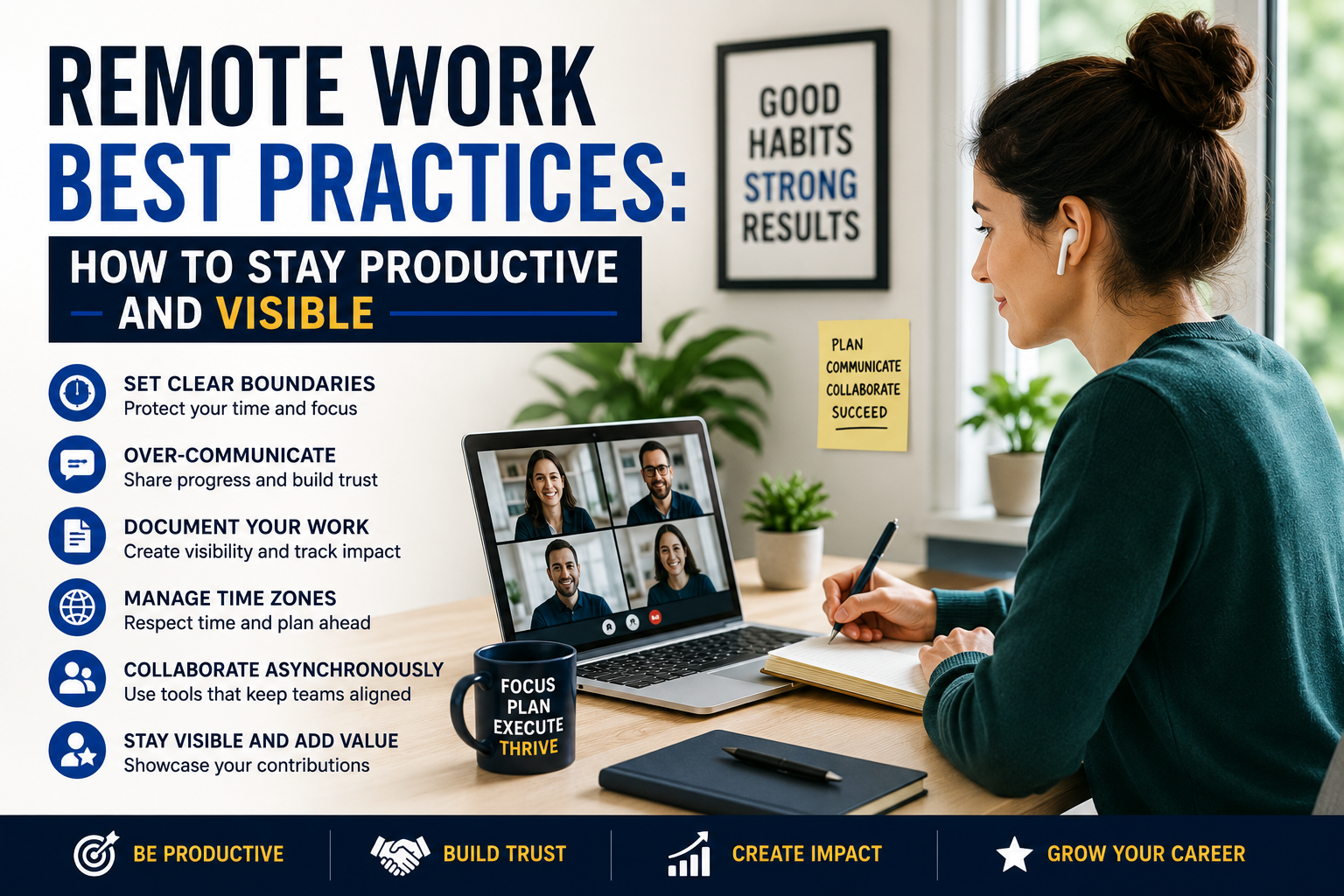
1. Set Clear Boundaries: Core Remote Work Best Practices
When working remotely, it can sometimes be hard to distinguish between work and home. Many workers spend late nights dealing with emails, weekends responding to messages, and much longer hours at work that are well past their normal work schedule. This can appear as commitment but typically causes tiredness, reduced productivity, and ultimately burnout. Defining clear working hours can help set boundaries and clear expectations with peers and fellow team members and allow you to truly switch off at the end of the day.
One more important aspect of healthy boundaries is that they involve safeguarding your attention when you’re at work. Instead of jumping around between meetings, emails, and instant messages, block out time for important projects. Let your team know when you’re available, keep your calendar up to date, and share with your team when you will answer messages. Boundaries do not mean that you are hard to get ahold of. Rather, it is a sign of professionalism, as it allows you to make it clear to others when you will be available and when you won’t, while also making sure that you always deliver high-quality work.
2. Over-Communicate Your Progress to Build Trust
The number one difference between office work and remote work is visibility. In the traditional office setting, managers are able to see their staff working, meeting with other people, and collaborating together. Regular communication becomes even more crucial for remote workers because they don’t have these everyday opportunities. Not sharing updates when a project is not finished can cause stakeholders to wonder what is happening or what may be holding it up.
Rather, give short, meaningful reports throughout the week. Report on any milestones, talk about next actions, identify and communicate any blockers, and communicate your need for support. These updates don’t need to be extensive. Just a short message in your team’s communication system or a brief overview of your project is all that’s needed to keep everyone in the loop. Regular communication fosters trust, as managers are always aware of what you are doing without having to ask for a status update every now and then.
3. Document Your Work to Create Lasting Visibility
One of the most beneficial practices that remote professionals can adopt is documentation. Written records can capture decisions, clarify responsibilities, and share knowledge with the entire team, whereas verbal conversations can get lost. Every completed project, meeting, process improvement, and customer solution can be added to a shared knowledge repository that is used by all.
Documentation is also a strong asset to your professional reputation. You won’t have to recap your achievements when your performance review comes because you already have the record. Maintain a record of work completed, measurable outcomes, good client feedback, and process improvements made during the year. That documented evidence helps managers see what you’ve done, even if they don’t work with you on a day-to-day basis. Regular documentation helps you establish yourself as an organized, reliable professional who values transparency and accountability.
4. Master Time Zone Management for Global Teams
More and more remote employees are working in different countries and time zones. This opens opportunities for a variety of collaborations, but also for increased planning and flexibility. When everyone is not on the same schedule, it can lead to unnecessary delays, missed meetings, and communication frustrations. For successful remote workers, it’s about respecting the time zones of their teammates and keeping the momentum going on projects.
The first step is to determine the time you have in common to schedule meetings and discussions. Use these times to work together, brainstorm ideas, or make significant decisions. During other hours, use asynchronous communication with detailed messages that others can read when they start their working day. Make sure to provide enough context so that subsequent messages don’t require additional clarification. This helps reduce delays and keeps distributed teams productive, no matter where they are.
5. Use Asynchronous Collaboration Tools Effectively
Teams can be far more efficient when they adopt the approach of asynchronous collaboration. Asynchronous work means that employees get to contribute when it is convenient for them, not only when everyone is available, while still making progress on tasks. This helps eliminate distractions and allows everyone to spend more time working.
Project management platforms can help manage tasks, set deadlines, and allocate responsibilities without the need for frequent meetings. Multiple users can edit documents, add comments, and view changes on shared document platforms. Team messaging applications use channels, threads, and searchable history to allow for organized conversations, making information easy to find later. Video recording tools also allow employees to provide updates, demonstrate processes, or give feedback without having to schedule a live meeting. Choosing the right communication method for every circumstance means more efficient meetings and less “meeting fatigue” throughout the organization.
Remote Work Best Practices to Fight Proximity Bias
Proximity bias is when managers subconsciously reward colleagues they see more often than those they don’t see as frequently. This risk can be mitigated by making contributions clearly visible for hybrid and fully remote workers. Do not assume that good work will “just happen” to be noticed. Be sure to communicate and share completed projects, lessons learned, and measurable outcomes with the appropriate parties.
The focus should be on value rather than self-promotion. Produce summaries after key project milestones, offer valuable suggestions during team meetings, volunteer to join cross-functional projects, and participate in knowledge-sharing sessions. If your work consistently shows results that benefit the business, your manager will naturally associate your name with a positive influence. It takes ongoing communication to develop this reputation rather than a single occurrence during a performance review.
Stay Top-of-Mind With Managers Throughout the Year
Building a great relationship with your manager involves intentional communication. Conduct regular one-on-one meetings to discuss priorities, progress, challenges, and professional development. These conversations need not just report work done but also ask for feedback, redefine expectations, and find ways to learn and grow. Employers value staff who tackle issues before they become too big.
A great way to do this is by celebrating successes within the context of team success. When celebrating completed milestones, successful teamwork, customer wins, and measurable improvements, remember to point them out without making every update about personal recognition. By showing initiative and helping the team achieve its goals, you build a good professional image. Managers get to know employees who have clear communication skills, can solve problems on their own, and can work well with others to achieve goals.
Conclusion
While remote work offers a lot of flexibility, it requires much more than simply working from home to be successful in the long run. Establishing healthy boundaries, communicating consistently, documenting progress, working effectively across time zones, and embracing asynchronous collaboration help professionals build better working relationships and become more productive. Meanwhile, making your work visible can help overcome the negative impacts of proximity bias and allow your efforts to be recognized for what they are worth.
The best remote workers know that success is about what they do consistently, not where they work. With careful communication and disciplined work habits, you can stay productive, feel good about yourself, and keep moving ahead in your career, no matter where you work.
Keep in mind that remote work best practices are skills that are practiced and developed over time with self-awareness. Take time to regularly analyze your habits and see where you need to cut back and where they are helping you stay focused. Be open to change as your team expands, new technologies arise, and your role evolves. Building good communication skills, effective documentation, and healthy work habits now will reap benefits in the future through improved professional relationships, greater leadership trust, and better opportunities for advancement. Reliability will give you the ability to succeed in both hybrid and remote working environments for years to come because you’re consistently delivering results while maintaining your balance.