
For decades, painted walls dominated residential interiors across North America. Neutral colors, minimalist finishes, and smooth drywall became the default choice for homeowners and builders alike. But interior design rarely stands still. Today, many architects and designers are moving away from sterile white spaces and rediscovering something that once defined elegant homes: wallpaper.
Surprisingly, one of the fastest-growing segments isn’t vinyl or peel-and-stick products. It’s traditional paper wallpaper.
While paper wallcoverings require more care during installation and maintenance, they offer something modern synthetic materials often struggle to replicate — warmth, depth, and timeless character.
The Return of Texture and Pattern
Interior trends move in cycles. After years of minimalism and monochromatic palettes, homeowners are once again embracing layered spaces that feel personal instead of generic.
The popularity of Quiet Luxury, English Cottage, Modern Heritage, and European Classic interiors has contributed to the return of wallpaper, particularly natural-looking paper wallcoverings.
Unlike paint, wallpaper adds rhythm to a room. Patterns create movement, soften large walls, and introduce subtle visual complexity that changes throughout the day as natural light shifts.
Many designers argue that wallpaper doesn’t simply decorate a room—it changes the way the room feels.
Why Designers Still Love Paper Wallpaper
Paper wallpaper has obvious disadvantages compared to vinyl products. It is generally less washable, more delicate, and requires greater care during installation.
Yet professional designers continue specifying paper wallpaper for one simple reason: aesthetics.
Paper surfaces reflect light differently than vinyl coatings. Colors often appear softer, patterns can look more refined, and the overall finish tends to feel more authentic and handcrafted.
This subtle difference becomes especially noticeable in bedrooms, dining rooms, libraries, boutique hotels, historic homes, and luxury residences where atmosphere matters more than durability.
For homeowners interested in understanding different paper wallcovering styles and applications, this guide on paper wallpaper provides a detailed overview of materials, characteristics, and design possibilities.
The Psychology of Patterned Walls
Walls occupy more visual space than almost any other architectural element. Their appearance directly influences how people perceive a room.
Studies in environmental psychology suggest that humans naturally respond to layered environments containing texture, repetition, and organic patterns. Spaces with visual depth often feel warmer and more comfortable than completely flat surfaces.
Wallpaper introduces that complexity naturally.
Floral prints create softness. Geometric patterns establish order. Botanical designs connect interiors with nature. Traditional motifs evoke familiarity and history.
Instead of acting as background, walls become part of the overall design language.
Paper Wallpaper vs. Modern Alternatives
Today’s market offers countless wallcovering options including vinyl, non-woven, fabric-backed, grasscloth, murals, and peel-and-stick products.
Each serves a different purpose.
Vinyl wallpaper offers durability and easy maintenance, making it ideal for commercial environments and high-traffic areas.
Non-woven materials simplify installation and future removal.
Paper wallpaper, however, prioritizes appearance over performance.
Its surface often carries greater visual depth and finer printed detail than synthetic alternatives. Rather than feeling manufactured, paper wallpaper can feel architectural—almost like an extension of traditional craftsmanship.
For many luxury interiors, that distinction matters.
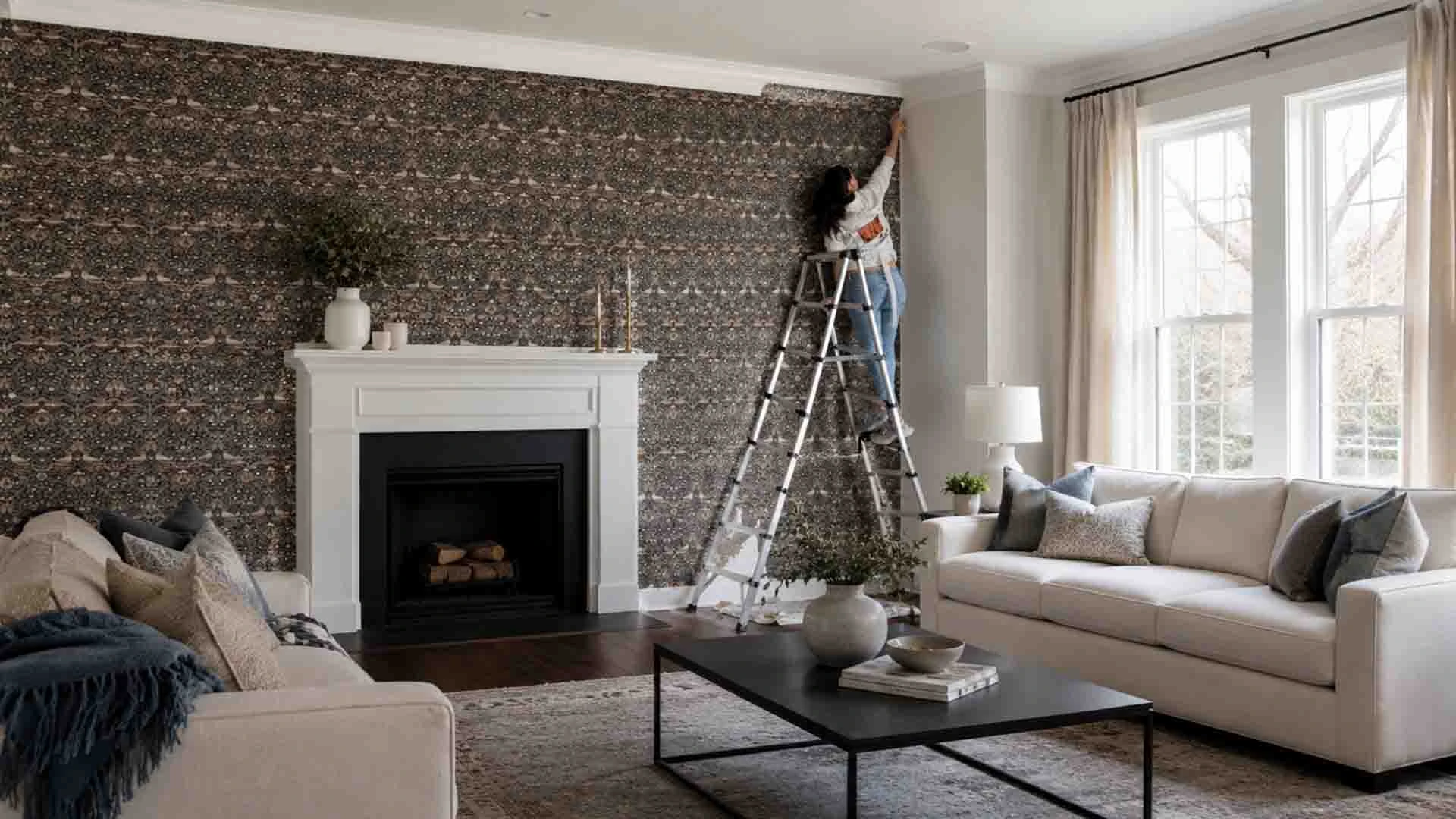
Installation Is Where Quality Matters Most
Beautiful wallpaper can produce disappointing results when installed incorrectly.
Paper wallpaper reacts differently to moisture, adhesive, temperature, and humidity than many modern wallcoverings. Improper booking time, poor wall preparation, excessive paste, or inaccurate pattern alignment can affect the finished appearance.
The wall itself is equally important.
Small drywall imperfections, sanding marks, paint texture, or uneven primer may become visible beneath thin paper materials. Professional installers often spend more time preparing the wall than actually hanging the wallpaper.
This preparation is what separates an average installation from an exceptional one.
Why Wall Preparation Is Often Underestimated
Many homeowners assume wallpaper simply covers imperfections.
In reality, wallpaper frequently highlights them.
Proper surface preparation may include repairing drywall damage, skim coating textured walls, sanding, cleaning adhesive residue, sealing porous surfaces, and applying specialized wallpaper primer.
The goal is not simply adhesion but long-term stability.
Professional preparation reduces seam visibility, minimizes bubbles, and creates a more consistent finish throughout the room.
Where Paper Wallpaper Works Best
Paper wallpaper performs exceptionally well in spaces where atmosphere is more important than heavy-duty durability.
Some of the best applications include:
- Primary bedrooms
- Guest bedrooms
- Dining rooms
- Home libraries
- Home offices
- Powder rooms
- Accent walls
- Historic renovations
- Boutique hospitality interiors
In these environments, wallpaper contributes as much to architecture as it does to decoration.
The Growing Appreciation for Craftsmanship
Modern consumers increasingly value craftsmanship over mass production.
This trend extends beyond furniture and clothing into residential interiors. Handmade tile, natural stone, limewash plaster, artisan millwork, and traditional wallpaper all reflect a broader movement toward authenticity.
Paper wallpaper fits naturally into this philosophy.
Rather than creating perfectly uniform surfaces, it introduces subtle character that makes interiors feel lived-in and curated instead of manufactured.
That may explain why many luxury projects continue choosing paper despite newer synthetic alternatives.
Why Professional Installation Protects the Investment
Wallpaper itself often represents only part of the total investment.
Premium designer wallcoverings can cost hundreds or even thousands of dollars per room. Damaging material through poor installation can become significantly more expensive than hiring experienced installers from the beginning.
Professional wallpaper installation includes careful layout planning, seam positioning, pattern matching, moisture control, adhesive selection, trimming techniques, and wall preparation—all factors that directly influence the final appearance.
For homeowners planning projects in Colorado, professional wallpaper installation throughout the Denver Metro area can help ensure that premium wallcoverings achieve the finish originally intended by both the manufacturer and the interior designer.
Final Thoughts
Paper wallpaper never truly disappeared.
Instead, it quietly remained part of high-end residential design while mainstream interiors favored painted drywall and synthetic materials.
Today, as homeowners seek warmer, more personal spaces filled with texture and character, traditional paper wallcoverings are experiencing renewed appreciation.
They may require greater skill to install and more thoughtful room selection, but few materials can transform an interior with the same combination of elegance, history, and visual depth.
In a world increasingly dominated by disposable finishes and temporary trends, paper wallpaper represents something increasingly valuable: timeless design.

