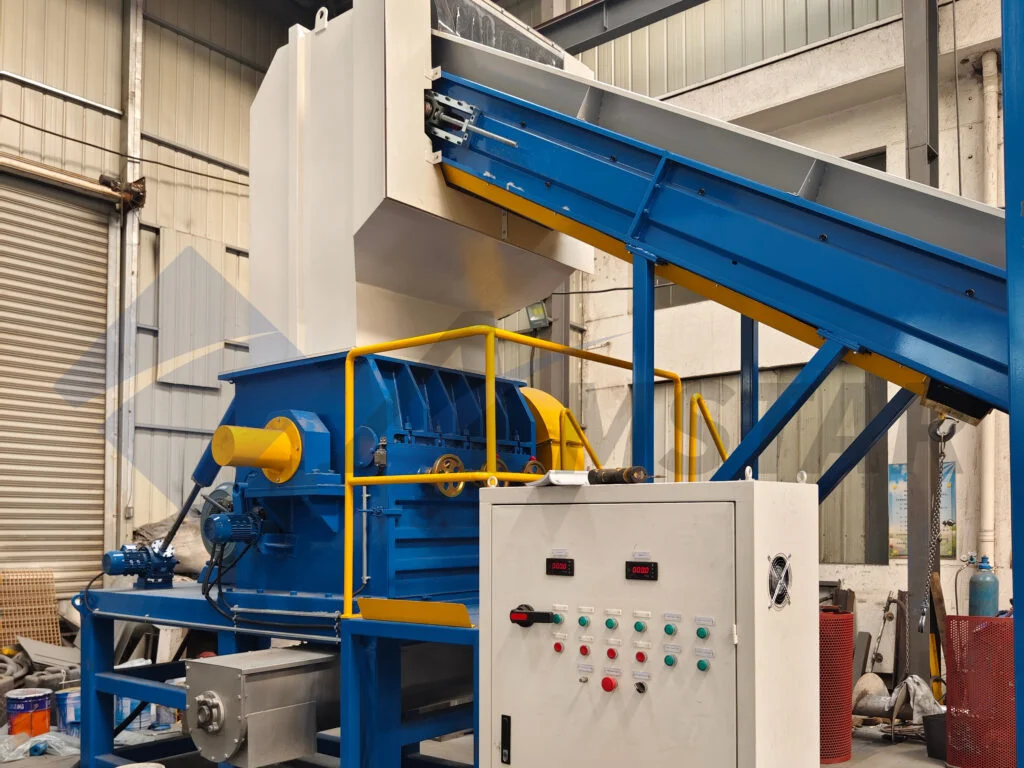
The plastic granulator machine plays a pivotal role in modern plastic recycling and industrial plastic processing, offering reliable granulation and size reduction solutions that transform waste plastic and plastic scrap into reusable granules suitable for molding, extrusion and further processing. This article provides an in-depth exploration of plastic granulators, plastic grinders and associated equipment, examining technical specifications, safety and maintenance practices, selection criteria, and the applications and benefits of implementing granulation systems in recycling plants and manufacturing operations. Readers will gain a thorough understanding of how granulator machines support recycling lines, optimize recovery of plastic material and enable reuse of recycled plastic in a variety of industrial contexts.
Click here to read more about China Plastic Granulator Machine Manufacture –Kitech
What is a plastic granulator machine and how does it support plastic recycling and granulation?
A plastic granulator is a specialized machine designed to reduce waste plastic into uniform granules through a precision cutting action within a cutting chamber, converting plastic material and plastic scrap into smaller pieces that can be efficiently handled by molding or extrusion processes. In the recycling process, a plastic granulator machine complements plastic crushers, shredders and grinders by producing consistent granulate that meets downstream requirements for recycling granulator systems, recycling lines and recycling plants. By applying controlled low-speed or high-speed cutting depending on material characteristics, the granulation process minimizes heat buildup and contamination, enabling recycled plastic to be used again in product manufacturing and thereby helping facilities to recycle plastic, reuse plastic material and close the loop in circular economy initiatives.
How does a plastic granulator differ from a plastic crusher or shredder?
While a plastic crusher or shredder commonly performs coarse size reduction and fragmentation of bulky waste plastic into smaller irregular pieces for easier transport and handling, a plastic granulator focuses on producing uniform granules through fine cutting within a cutting chamber, employing rotating blade assemblies and screens to control final particle size; this distinction is critical in plastic recycling where granule uniformity and melt flow characteristics determine suitability for molding and extrusion. Industrial grinding equipment like plastic grinders and granulators operate at different rotor speed regimes — low-speed granulation often being preferred for heat-sensitive plastic films and soft plastics to prevent melting and contamination, whereas high-speed shredders might be used for heavy-duty hard plastics to rapidly reduce volume. Ultimately, the granulator machine is optimized to produce granulate that meets precise specifications for reuse and further plastic processing, whereas crushers and shredders prepare material for subsequent granulation or direct energy recovery.
What are the main components of a cutting chamber in granulator machines?
The cutting chamber of an industrial plastic granulator includes several essential components that together determine the efficiency and effectiveness of the granulation process: a rotor fitted with rotating blades or knives, stationary knives or counter knives mounted on the stator, a screen or sieve that defines granule size, a feed throat for introducing waste plastic or plastic films, and housings designed for containment and dust control. Blade configuration and the interaction between rotor speed, blade geometry and screen size critically influence the generation of uniform granules and the prevention of clogging. Robust construction and accessibility for maintenance are important in heavy-duty industrial granulators to optimize blade life, facilitate blade replacement and ensure that the cutting chamber remains free from jams that could compromise plastic recycling operations.
Which types of plastic waste can be processed into granules?
Granulator machines and plastic grinders can process a wide spectrum of plastic waste, including hard plastics such as PET, HDPE, PP and PVC, as well as soft plastics like plastic films, flexible packaging and certain elastomers when equipped with appropriate low-speed, high-torque rotors and specialized blade sets. Recycling granulator applications encompass processing of injection molding scrap, extrusion offcuts, plastic bottles, plastic films, plastic scrap from manufacturing lines, and even mixed waste plastic streams after sorting and pre-treatment. Some industrial granulators are tailored to handle contaminated or composite materials, while others are designed specifically for clean production scrap; selection depends on desired granule quality, downstream molding or extrusion requirements and the overall recycling process adopted by a recycling plant or recycling line.
How do industrial plastic granulator specifications — size reduction, low-speed and grinder types — affect performance?
Industrial plastic granulators are specified by several key parameters that determine their performance in size reduction and granulation: rotor diameter and speed, blade configuration, screen aperture, motor power, feed system and overall machine footprint. The choice between low-speed and high-speed granulation impacts heat generation, dust production and noise levels, with low-speed, high-torque designs typically preferred for preserving material properties in soft plastics and preventing melting or degradation that would affect molding or extrusion downstream. Selecting the right plastic grinder or industrial granulator type tailored to the plastic material reduces wear, optimizes throughput and ensures the production of uniform granules necessary for consistent plastic processing.
What is size reduction and why is low-speed granulation important for industrial plastic?
Size reduction refers to the process of decreasing particle size from larger pieces of waste plastic to smaller pieces and ultimately to granules suitable for reuse; it is a central objective of any recycling granulator system. Low-speed granulation is important for many industrial plastic applications because it reduces frictional heat, minimizes dust and fines, and prevents thermal deformation of plastic films and soft plastics, thereby maintaining polymer integrity and melt flow properties needed for subsequent molding and extrusion. In addition, low-speed plastic granulators tend to be more effective at producing uniform granules for sensitive applications where quality control and material performance are critical, particularly in recycling plant environments where variety in plastic material and contamination are managed via careful granulation techniques.
When should you choose a plastic grinder vs. an industrial granulator?
Choosing between a plastic grinder and an industrial granulator depends on the intended end use of the recycled plastic and the characteristics of the waste plastic stream: a plastic grinder or shredder is suitable when initial volume reduction of bulky items or production scrap is required prior to final granulation, or when the recycled material will undergo further processing such as pelletizing or chemical recycling; conversely, an industrial plastic granulator is the appropriate choice when the objective is to produce uniform granulate ready for direct use in molding, extrusion or reprocessing lines. Considerations include the hardness of the plastic material, presence of contaminants, required granule size distribution, available space in the recycling plant and whether the operation needs heavy-duty continuous duty performance or a compact solution for lighter plastic recycling tasks.
How do rotor speed, blade configuration and screen size influence granule quality?
Rotor speed, blade configuration and screen size are interdependent factors that govern granule quality in granulator machines: rotor speed determines cutting dynamics and heat generation, with lower speeds reducing thermal stress on polymers; blade configuration — including the number of rotating blades, their angle and sharpness — dictates cutting efficiency and particle distribution; and screen size directly defines the maximum granule dimension and polydispersity of the granulate. An optimal combination achieves consistent size reduction, reduces fines and produces uniform granules that meet melt flow and dimensional specifications for molding and extrusion. In recycling granulators, careful selection and periodic optimization of these parameters are essential to improve throughput, reduce downtime and extend blade life in industrial granulators and plastic grinders.
What safety, maintenance and troubleshooting steps are essential for plastic grinders and granulator machines?
Safety and maintenance are critical to ensuring uninterrupted operation of plastic granulator machines and protecting personnel in recycling plants and manufacturing facilities where industrial granulators operate. A comprehensive preventive maintenance regimen and clear troubleshooting protocols mitigate risks such as jams, blade failure, excessive vibration and electrical faults, while adherence to lockout-tagout procedures, guarding of rotating components and proper use of personal protective equipment reduce the likelihood of accidents. Regular inspections of the cutting chamber, routine blade sharpening or replacement, monitoring of rotor balance and prompt attention to unusual noises or vibration are all indispensable practices for prolonging machine life and maintaining reliable granulation performance across recycling lines.
What routine maintenance prolongs the life of industrial plastic granulators?
Routine maintenance tasks that prolong the life of industrial plastic granulators include scheduled inspection and sharpening or replacement of rotating blades and stationary knives, cleaning and inspection of screens to prevent clogging, lubrication of bearings and drive components, verification of belt or gear tension and alignment, and electrical system checks including motor performance and safety interlocks. Maintaining a log of operating hours and maintenance performed helps optimize service intervals and anticipate wear patterns, while training operators in correct feeding techniques and prevention of foreign object ingestion reduces accidental damage. Adherence to maintenance schedules ensures granulator machines remain efficient, reduces unscheduled downtime and safeguards the quality of granulate used for molding, extrusion or further recycling processes.
How do you safely clear jams in the cutting chamber or replace blades?
Clearing jams and replacing blades in the cutting chamber must be executed using strict safety procedures: first, follow lockout-tagout protocols to isolate power and verify the rotor is stationary, then open access panels or remove covers according to manufacturer instructions, use appropriate tools to extract jammed waste plastic or foreign objects, and inspect blade edges and rotor surfaces for damage before reassembly. Blade replacement should be performed by trained technicians who use manufacturer-approved replacement knives and torque specifications, ensure correct blade alignment, restore sealing of the cutting chamber and test-run the machine at no-load to confirm proper operation. Safety steps, including wearing cut-resistant gloves, eye protection and avoiding improvised tools, are essential to prevent injury and preserve equipment integrity in industrial granulators and plastic grinders.
What common troubleshooting steps fix unusual noise, vibration or poor granulation?
Common troubleshooting steps for addressing unusual noise, excessive vibration or poor granulation performance include inspecting and rebalancing the rotor assembly, checking for loose fasteners, verifying blade sharpness and correct clearance with counter knives, examining screens for wear or blockage, ensuring feed consistency and absence of oversized or metallic contaminants, and testing motor and drive components for irregularities. Addressing these root causes often restores uniform granules and reduces operational disruptions; in cases of persistent issues, consulting manufacturer support for diagnostic procedures and potential component replacement is recommended to maintain reliable granulation in recycling plants and heavy-duty industrial settings.
How to select the right recycling equipment: comparing plastic granulator machines, plastic crushers and industrial granulators?
Selecting the right recycling equipment involves evaluating material types, desired output quality, throughput requirements, available footprint and total cost of ownership. Plastic crushers and shredders excel at primary volume reduction of bulky waste plastic prior to granulation, while plastic granulator machines and industrial granulators are engineered to produce uniform granules for direct use in molding, extrusion or pelletizing. Decision-makers should assess whether the recycling plant needs heavy-duty continuous operation for industrial plastic scrap, compact systems for processing soft plastics and films, or modular solutions that can be scaled within recycling lines; matching equipment capabilities to production goals optimizes performance, reduces energy consumption and ensures the recycled material meets product specifications.
Which granulator machines are best for heavy-duty industrial plastic vs. lighter plastic recycling?
Heavy-duty industrial granulators designed for industrial plastic typically feature larger rotors, higher torque, reinforced cutting chambers and robust motors to handle thick-walled parts, rigid plastic scrap and continuous operation in recycling plants, whereas lighter plastic recycling applications such as processing plastic films, soft plastics and light production scrap often benefit from low-speed, high-torque plastic grinders and granulators with finer blade configurations and specialized feeds that prevent wrapping and agglomeration. Choosing an appropriately specified granulator machine ensures consistent granulation, maximizes uptime and aligns with downstream requirements for molding and extrusion or for further pelletizing operations.
How do throughput, power consumption and footprint affect equipment choice?
Throughput, power consumption and machine footprint are interrelated factors that significantly influence equipment selection: higher throughput requirements necessitate more powerful motors, larger rotors and potentially multiple parallel granulators or modular systems, which in turn increase power consumption and spatial requirements in a recycling plant. Conversely, operations constrained by space or energy budgets may opt for compact, energy-efficient granulator machines designed for targeted throughput and optimized cutting efficiency. A holistic evaluation of operational goals, available utilities and integration with conveyors, separators and dust collection systems ensures selection of granulator machines that deliver the necessary performance while fitting within the physical and economic constraints of the recycling process.
What budget and total cost of ownership factors should be considered?
Budget considerations extend beyond initial capital expenditure to include total cost of ownership factors such as energy consumption, maintenance costs, blade and spare part replacement frequency, expected uptime, warranty and service support, and potential savings from increased material recovery and reduced waste disposal fees. Investing in higher-quality industrial granulators may yield lower lifecycle costs through improved energy efficiency, longer blade life and reduced downtime, while lower-cost machines might incur higher operating expenses and shorter service intervals. Evaluating the full economic impact, including the ability to recycle plastic into higher-value applications like molding or extrusion, helps organizations justify equipment choices that optimize long-term return on investment and sustainability objectives.
Can granulated plastic be used directly in production and what quality control is required for plastic recycling?
Granulated plastic from granulator machines can often be used directly in production for molding, extrusion or other plastic processing operations, provided it meets quality control standards that assess granule size distribution, contamination levels and melt flow properties. Quality control measures in recycling plants typically include sieving and screening to verify uniform granules, laboratory tests for contamination and melt flow index evaluations to ensure compatibility with processing parameters. When necessary, additional processing such as washing, drying and pelletizing may be required to achieve the purity and rheological characteristics demanded by specific end-use applications.
What tests determine granule size, contamination and melt flow suitability?
Quality assurance tests for granulated plastic include particle size analysis using sieves or laser sizing to confirm granule uniformity, contamination inspections to quantify non-plastic inclusions or residual additives, and melt flow index (MFI) testing to evaluate the rheological behavior of the recycled polymer in molding or extrusion processes. Additional analytical techniques such as DSC, FTIR or chromatography may be used to assess polymer composition and detect contaminants that could affect processing. Implementing rigorous testing protocols ensures that recycled granulate complies with production requirements, enabling confident reuse in plastic processing operations.
How does pre-sorting, washing and drying affect recycled plastic quality?
Pre-sorting, washing and drying are critical preprocessing steps that significantly impact the quality of recycled plastic: sorting separates incompatible polymer types and removes non-plastic items, washing eliminates labels, adhesives and residues that cause contamination, and thorough drying prevents moisture-related defects during extrusion or molding. Efficient preprocessing reduces the burden on granulator machines, lowers the risk of screen clogging and blade damage, and enhances the properties of the final granulate so that recycled plastic meets performance and aesthetic standards for reuse.
When is further pelletizing or extrusion needed after granulation?
Further pelletizing or extrusion is typically required when the granulate must achieve a specific particle geometry, enhanced homogeneity, or when compounding and additives need to be incorporated prior to molding; pelletizing converts granulate into uniform pellets that feed more predictably in automated molding and extrusion equipment, while extrusion can be used to homogenize blends, remove volatile contaminants and improve melt flow characteristics. Decisions to pelletize or extrude after granulation depend on end-use specifications, quality control results and whether the recycled plastic will be directly reused or further processed into higher-value products.
What are industry applications and benefits of industrial plastic granulators and plastic grinders?
Industrial plastic granulators and plastic grinders are employed across numerous sectors including packaging, automotive, consumer goods, construction and industrial plastic manufacturing, where they facilitate recycling of production scrap, post-consumer plastic waste and off-spec components into reusable granule feedstock for molding and extrusion. Benefits include reduced material costs through reuse of plastic scrap, lower waste disposal and landfill dependency, and decreased environmental footprint as recycling granulators enable efficient recovery of plastic material for new products. In addition, specialized granulator machines support applications such as tire recycling or processing of hard-to-process plastics, expanding the scope of plastic recycling solutions available to industry.
How are granulator machines used in packaging, automotive and industrial plastic sectors?
In the packaging sector, granulator machines reduce film waste, trimming and offcuts from flexible packaging into granulate suitable for reprocessing or energy recovery; in the automotive industry, heavy-duty industrial granulators process bumpers, interior components and composite parts into uniform granules for use in non-critical structural applications or as fillers; and in industrial plastic manufacturing, granulators reclaim sprues, runners and production scrap, enabling direct reuse in molding or extrusion and thereby improving material efficiency and reducing input costs. Each sector benefits from customized granulator configurations that address material type, throughput demands and quality control standards required for downstream plastic processing.
What environmental and economic benefits does plastic recycling with granulators provide?
Plastic recycling with granulators yields significant environmental benefits by diverting waste plastic from landfills and reducing the demand for virgin polymers, thus lowering energy use and greenhouse gas emissions associated with primary production. Economically, granulation enables companies to reclaim value from plastic scrap, reduce raw material spending, and create supply chains for recycled plastic that support circular manufacturing practices. Efficient granulator machines and recycling lines reduce operational costs and enhance sustainability credentials, making investment in recycling granulators an attractive choice for companies seeking both environmental stewardship and cost optimization.
Are there specialized granulators for applications like tire recycling or hard-to-process plastics?
Yes, specialized granulators are engineered for challenging applications such as tire recycling, composite materials and hard-to-process plastics; these machines typically incorporate reinforced cutting chambers, abrasion-resistant blades, unique rotor geometries, and auxiliary systems for dust collection and separation of non-plastic components. Customization allows heavy-duty granulators to withstand abrasive materials and handle higher impact loads while producing consistent granulate, supporting niche recycling processes that require tailored solutions beyond standard plastic grinders and granulators.
How to implement a plastic granulator system: installation, integration and scaling for recycling operations?
Implementing a plastic granulator system in a recycling plant or production line requires careful planning of installation, integration with conveyors, separators and dust collection systems, and strategies for future scaling. Considerations include site utilities such as electrical supply and ventilation, layout optimization for material flow, noise and vibration mitigation, and coordination with pre- and post-processing equipment like washers, dryers, magnetic separators and pelletizers. Proper installation and commissioning ensure the recycling process achieves target throughput and granule quality while providing flexibility to scale operations as recycling volumes increase.
What are best practices for installing granulation and recycling equipment in a production line?
Best practices for installing granulation equipment include establishing a clear material flow that minimizes handling and contamination, selecting appropriately sized conveyors and feed hoppers to ensure steady feeding, integrating safety interlocks and guards, providing adequate access for maintenance of the cutting chamber and blade systems, and incorporating dust collection and ventilation to maintain a clean facility. Commissioning should include performance validation against throughput and granule size targets, operator training on maintenance and safety procedures, and documentation of maintenance schedules to optimize long-term performance of plastic granulators and grinders within recycling lines.
How can modular granulators and plastic grinders be scaled for increasing throughput?
Modular granulator designs enable scalable expansion by adding parallel units, upgrading rotor or motor sizes, and integrating automated feeding and separation modules to incrementally increase throughput without major plant reconfiguration; such approaches facilitate phased investment that aligns with growing recycling volumes. Systems can be configured with multiple granulators feeding a common separation and pelletizing line, allowing redundancy for maintenance and flexibility to process different plastic materials simultaneously. Careful planning of utilities, floor space and control integration ensures modular scaling remains efficient and cost-effective.
What are common integration challenges with conveyors, separators and dust collection systems?
Common integration challenges include mismatched throughput capacities between granulators and conveyors, leading to bottlenecks; inefficient separation systems that fail to adequately remove fines or contaminants, affecting granule quality; and insufficient dust collection that results in airborne particulates and regulatory non-compliance. Addressing these challenges requires coordinated equipment sizing, selection of appropriate separators and screens for the target granule size, and specification of dust collection systems capable of handling particulate loads typical of plastic grinding and granulation. Proper system design and commissioning mitigate integration risks and ensure a reliable, safe and efficient recycling process that produces high-quality granulate for reuse.