Introduction
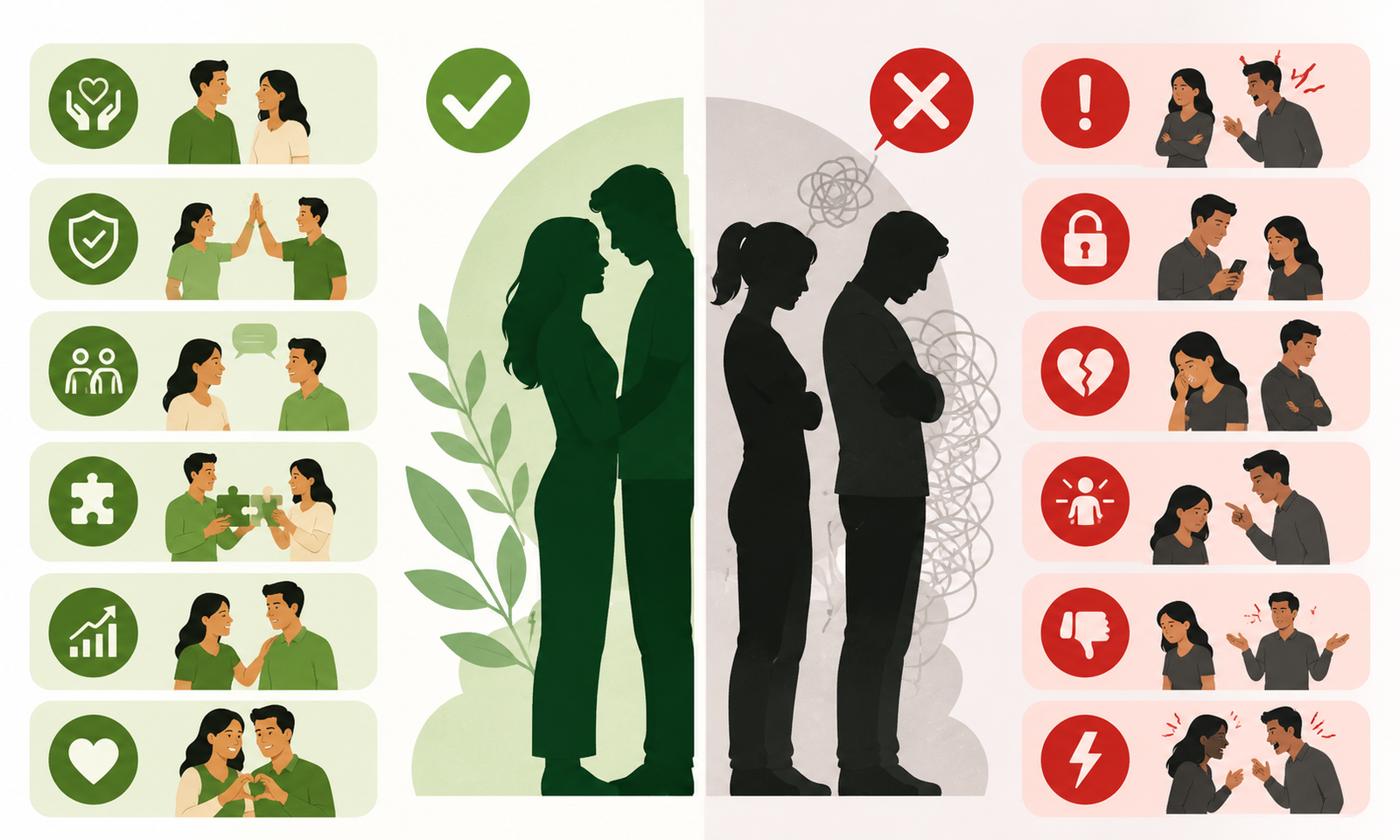
Communication is the foundation for healthy relationships, which are based on trust, understanding and emotional safety. ClearCommunication is particularly vital in today’s modern relationship where there are so many things that can distract you and digital communication often takes the place of face-to-face interaction. Over time, strong communication can help partners deepen their connection, improve their understanding, and help them win their time during conflict. Strong emotional connections can become strained, as communication deteriorates, resulting in frustration at a distance and in recurring conflict patterns. This is the main reason that learning to communicate effectively is an essential element to healthy relationships for the long term. Communication in relationships is not just about talking, it involves listening, understanding emotions, responding back in a respectful manner and making an environment to hear your partner and make them feel appreciated.
The Foundation of Healthy Communication in a Relationship
Communication is a fundamental element of a successful relationship. If this isn’t the case, it can rapidly turn into a resentment or withdrawal from the other person. Communications in relationships are significant, both verbal and non-verbal, as they affect the relationship of the partners. By practicing honesty and respect, they will set the stage for discussing other challenging matters without fear of judgment or rejection. The principles for healthy relationships outlined by public health scientists are not only about communicating one’s own needs and what to share, but also learning how others are experiencing emotions and reacting to them with empathy. To learn more about this use this resource Better Health Victoria Relationships and Communication, which demonstrates the importance of communication in fostering better relationships and communication. This type of preparation will take a lot of time, patience, and effort from both parties, but will set the stage for a successful relationship in the long run.
Listening is a crucial communication associate skill.
Active listening can be one of the greatest tools used in improving communication in a relationship as both parties feel understood instead of just heard. Active listening is listening with full attention, a feeling connection, and a thoughtfully responsive reaction. It involves maintaining eye contact, keeping your partner from interrupting, giving verbal and/or non-verbal affirmation that an understanding of your partner’s words or meaning is happening. Some conflicts in relationships arise when either the couple feels that one of both feels that they is not listened to or their doubts and fears are not acknowledged. However, active listening can diminish the risk by increasing empathy and clarity. To ensure accuracy and eliminate misinterpretation, people repeat or paraphrase what they hear. This effort can create trust and emotional safety over time that helps couples converse with one another on delicate matters without defensiveness or spiraling.
Ability to express emotions and be honest in communication
An important part of healthy communication in relationships is also your emotional expression: to say how you feel in a direct and non-blaming, non-aggressive way. Emotional expression is a stumbling block for many because they either fear conflict or rejection, but when feelings are not expressed it creates emotional distance and misunderstanding. Being able to communicate using “I” statements (I feel, I need, etc.) helps people to express how they feel without accusing their partner of making them feel a certain way, thereby helping to make them more responsible for their feelings. Showing feelings also means to get in tune with one’s own emotions before expressing one’s emotions and not to react. Honesty in partnership is practiced in a respectful manner, leaving room for vulnerability and for intimacy and trust to blossom. With the passage of time, the emotional clarity helps to minimize confusion and it promotes a positive emotional relationship among people, making it smoother to settle conflicts as well as create a prolonged stability in relationships.
Conflict resolution strategy
While they are a normal part of any kind of relationship, handling the conflict in a bad way can either deteriorate or reinforce the connection between two partners. Healthy and constructive resolution of conflict through communicating effectively in relationships is a key factor. Couples do not have to win an argument, they should aim at understanding each other’s points of view and making mutually suitable decisions. A helpful tool is to take a step back during a crisis to prevent overreacting by allowing both people to take a breath and rethink their reactions. Another key method is to address the issue and not the person, thereby maintaining respect even during conflict. By engaging in conflict with a “citizen” and not a “critical” mindset, partners have a greater chance of discovering the concerns they have in the conflict and not merely the frustrations. This change of attitude turns conflicts into growth and understanding.
Non-Verbal Communication
They forget that it is also non-verbal that makes a big difference in interpreting messages in relationships. The expression on your face, your body language, your voice, and even stillness can convey more than any words. A crossed arm, eye avoidance or tone that may give the impression of indifference or agitation even when the words are innocuous. The ability to pick up on these cues is critical for enhancing relationship communication since they can provide information about emotions that aren’t explicitly talked about. It’s also critical to be conscious of one’s non-verbal cues, guaranteeing that there’s always consistency among what is being said and the body language being utilized. Consistency of verbal/non-verbal communication builds familiarity and rules out misinterpretations. Once you are aware of the signals you are putting out, you can better respond to them in an empathetic manner and avoid needless conflict due to misinterpreted signals.
Establishing healthy limits and promoting healthy boundaries
Part of healthy communication in relationships is learning how to establish boundaries and respect others’ boundaries. Boundaries set clear guidelines for what and what isn’t okay in interaction; they ensure both parties feel safe and okay. Communication without boundaries can be too much, or too unhealthy, and may cause emotional exhaustion or resentment. Respecting boundaries is accepting discomfort expressed by a partner and changing actions based on response without resistance or guilt. It also includes educating others about your own boundaries and how they need to be communicated in a direct and gentle manner without the worry of being rejected. Building on the valuables of boundaries the trust deepens and both parties feel safe with each other to be authentic in sharing. Respect is the building block from which all communication is based, even when there are differences, and it also makes sure that each person feels unique and different in the relationship without having their identity compromised.
Communication in the Digital Age
The digital age impacts on modern relationships both positively and negatively. While texting, social media and messaging applications open up greater opportunities to keep up with what others say and do, there is also a risk of the lack of tone and body language causing misunderstandings. Many times people in relationships get into trouble because the communication isn’t clear or is misunderstood, or when they don’t meet in person and instead use the digital interface to communicate. Couples need to learn to have healthy digital communication, meaning you don’t have serious conversations over the internet, and use in-person time for important emotional communication. Also, avoid rushing to make assumptions based on what you see online as this can reduce the conflict. This helps create a balance between digital interaction and in-person connection, ensuring the former isn’t distracting from the latter.
Common communication errors
Communication failures are a common source of many relationships’ problems and it’s easy to prevent these problems by just being aware and working to avoid them. A common error is to suppose a partner understands how you feel and think without you saying so. One is to interrupt when speaking to each other and make the other person feel like they are not being valued or heard. During times of conflict the defensive reactions also affect effective communication in relationships, distracting from understanding to blame. Plus, it also reduces the chance of running unaware of difficult issues which only get bigger over time. Identifying the patterns is an important and first step in better communication practices. When couples are committed to choosing to change negative behavior, such as by focusing on patient, clear, and empathetic responses, they can breathe new life into their relationships, making them much more authentic and nurturing, and doing a lot to prevent future miscommunications.
Conclusion
Creating a healthy relationship communication takes effort, patience, awareness from both participants and is never finished. It’s not a matter of perfection, it’s a matter of progress and to grow together. Practicing active listening, emotional expression, respectful interpersonal conflict resolution, and an understanding of body language signals fosters a solid foundation of emotional intimacy and trust for individuals. Dear friends, in this distractive world and communicating in a changing manner, the importance of intentional and respectful communication is even greater. In a nutshell, with effective communication in a relationship, your partner feels heard, supported and connected which is one of the key factors for relationship satisfaction and emotional health.