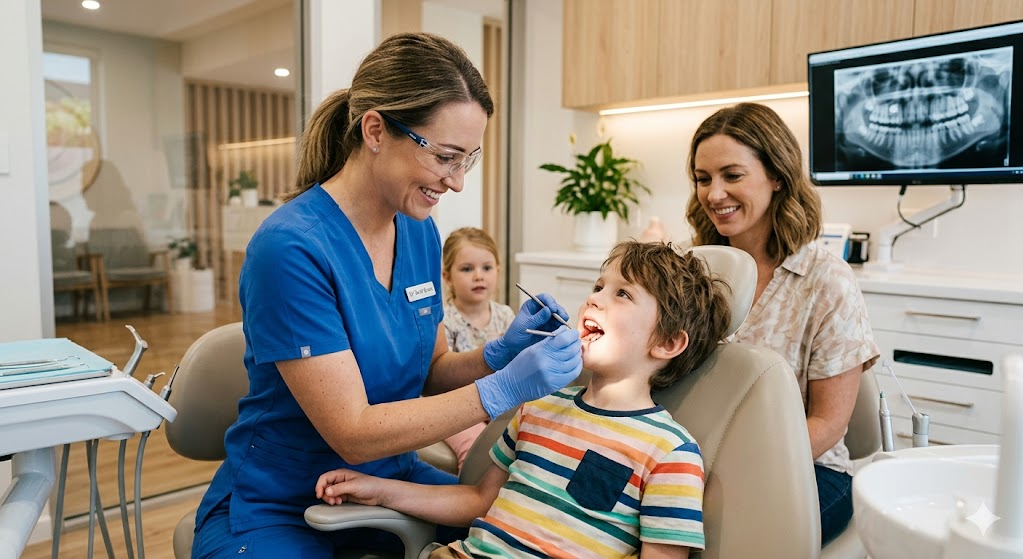
A family dental visit can feel rushed. You sit in the chair, answer a few quick questions, and leave with a new toothbrush. Important concerns stay quiet. Your mouth affects how you eat, speak, and sleep. Your children watch how you handle care and learn from it. You deserve clear answers, not quick nods. This blog gives you five direct questions you can bring to your next appointment. These questions help you understand your risks, your options, and what to do if something goes wrong. They also help you plan for sudden pain or injury, including when you might need a Stouffville emergency dentist. You do not need special knowledge. You only need to ask. When you prepare your questions before the visit, you gain control. You leave knowing what is happening in your mouth and what to do next.
1. “What are my child’s biggest risks right now?”
Do not guess. Ask the dentist to spell out the top three risks for each family member.
For a young child, risks often include:
- Cavities in back teeth
- Thumb sucking or pacifier use
- Early crowding of teeth
For teens and adults, risks often include:
- Gum disease
- Tooth wear from grinding
- Old fillings that may fail
Then ask what signs to watch for at home. Ask for clear, simple steps to lower each risk. For example, a change in toothpaste, more fluoride, or a different mouthguard at night.
2. “How often do we really need X-rays and cleanings?”
Standard schedules do not fit every mouth. Risk should guide timing.
Ask your dentist to explain how they set your schedule. Then compare common patterns.
Typical Visit Schedules by Cavity Risk
| Risk level | Cleaning frequency | X‑ray frequency | Home care focus |
|---|---|---|---|
| Low | Every 12 months | Every 18 to 24 months | Brushing twice daily and flossing once daily |
| Moderate | Every 6 months | Every 12 to 18 months | Daily flossing and fluoride toothpaste |
| High | Every 3 to 4 months | Every 6 to 12 months | Fluoride, diet changes, and closer checkups |
Ask which row fits each family member and why. Then ask what needs to change for you to move to a lower risk level.
3. “What should we change at home this week?”
Daily habits shape your mouth more than any single treatment. Still, you need a clear plan, not vague advice.
Ask the dentist to give each person three changes to start this week. Keep them small and clear.
For example, you might hear:
- Switch to a soft brush and brush for two minutes at night
- Floss only the top teeth for one week, then add the bottom
- Limit juice or soda to mealtimes only
Then ask how to help children follow these steps. Request a simple chart or a game you can use at home. When children see you care about your own teeth, they respond.
4. “If a tooth breaks or hurts, what is our exact plan?”
Pain or injury creates fear. A clear plan lowers panic.
Ask the office to walk you through three common events:
- A toothache that starts at night
- A chipped or broken tooth
- A tooth knocked out during sports or play
For each one, ask:
- Who do you call first
- What you should do at home in the first hour
- How fast you need to be seen
Request these steps in writing or by email. Save them on your phone. You can also keep a small kit at home with clean gauze, a small container with a lid, and the office phone number.
5. “What costs can we expect over the next year?”
Money worries often keep people away from care. Honest talk helps you plan and avoid surprise bills.
Ask the dentist to look at your x‑rays and notes. Then ask three questions.
- Which teeth will likely need work in the next 12 months
- Which problems can wait and which cannot
- What each treatment roughly costs with and without insurance
Then ask about lower cost choices when possible. For example, a filling instead of a crown for a small fracture. Or a payment plan for larger work.
How to make these talks easier for your family
Many people feel shame about their teeth. Children feel that weight too. A calm plan can cut that shame.
Use three simple steps.
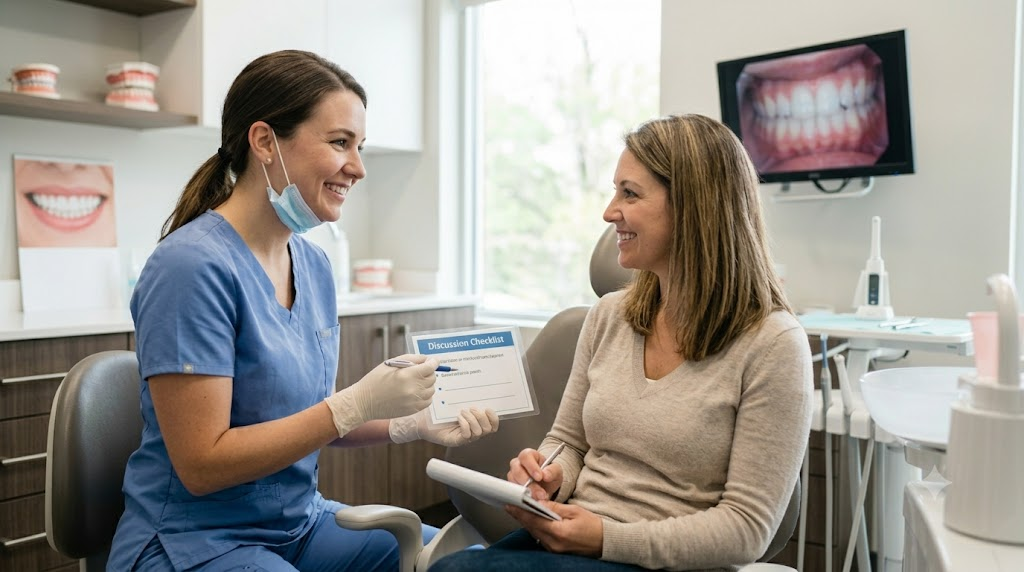
- Write your five questions on paper or in your phone before the visit
- Show the list to the dentist at the start and ask to cover them before you leave
- Let your child add one question of their own, even if it feels small
End each visit by repeating the plan in your own words. Say what you will change at home, what treatment is next, and when you should return. That quick review makes sure nothing is missed.
When you ask direct questions, you protect your health and your children’s health. You replace guesswork with a clear path. You walk out of the office with more than a toothbrush. You leave with a plan you can use the same day.