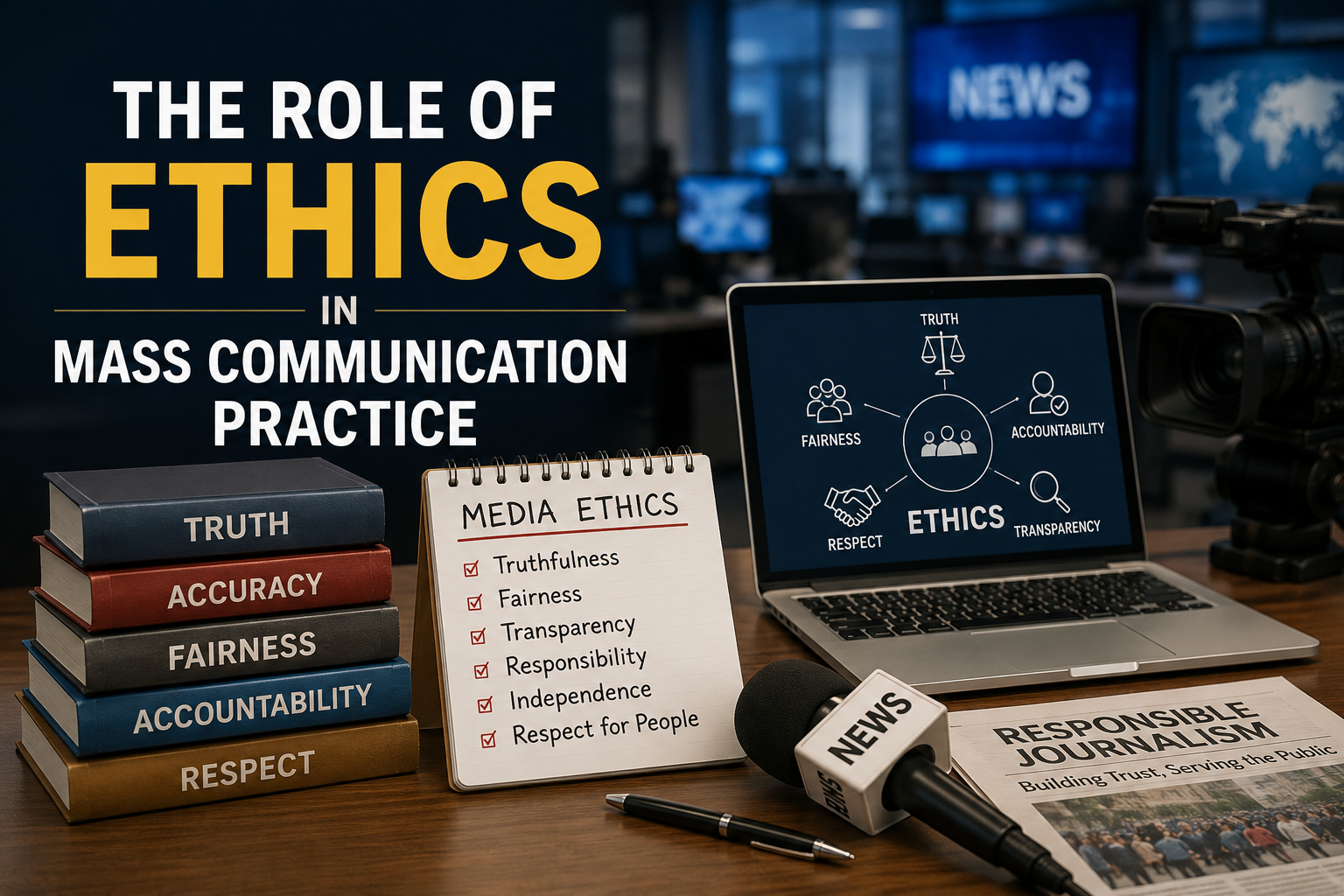
Mass communication is one of the important factors that impacts public understanding, public opinion, and public behaviour. Each of the messages communicated in newspapers, on TV, radio, the internet, and social media can impact the way that people think, behave, and relate to the people and places around them. Due to this immense power, the ethical aspects are crucial in running the media in a responsible way for the benefit of society. Ethics in Mass Communication gives the guidelines and principles to which communication practitioners refer when making ethically responsible decisions while relaying information and/or entertaining viewers.
The ethical responsibilities of media practitioners are not just about reporting facts or producing content. Media people are expected to ensure that news content is true, fair, objective, accountable, and respects human dignity. These are the moral duties that underlie story selection, checking information, handling sources, and serving the audience. In the age of misinformation, media manipulation, and growing doubt about the media, the need for ethical communication is greater than ever.
This article examines ethics in mass communication practice with emphasis on some of the major ethical principles of mass communication practice which include accuracy, fairness, accountability, transparency, etc. It also highlights contemporary ethical issues and why upholding ethical standards is crucial in ensuring the public’s trust and the protection of democratic values. Media practitioners are expected to be accountable for ethical considerations in newsroom decision-making.
Understanding Ethics in Mass Communication
Ethics is the term used for a set of moral principles which help to determine conduct and decision-making. In mass communication, ethics are what is considered to be right or wrong in the process of obtaining, processing, and communicating information to the public. Ethics deals with what the media professional should do to behave in an ethical and fair manner, whereas laws are concerned with what media professionals are legally permitted to do.
A need for ethical communication is required as the messages in the media can have an impact on both the individual and society. One false report can tarnish reputations, cause panic, and/or impact adversely on public decision-making. Ethical guidelines aim to diminish such results by promoting disclosure and service to the public over sensationalism and self-interest.
Key Purposes of Media Ethics
Ethics in mass communication have a number of important functions:
• Keeping truth and accuracy of reporting safe
• Ensuring justice and equal narration
• Taking steps to avoid harm to people and communities
• Building public confidence in media institutions
• Promoting accountability and transparency
• Improving democratic involvement with trustworthy information
When ethics are absent, media can be used as a tool for manipulation instead of a tool to enlighten people.
Why Ethics Is Important in Mass Communication Practice
When it comes to communication, ethics is the basis of credibility. Media outlets are critical to providing audiences with reliable information to learn about current events, social issues, and public policies. Lack of ethics quickly leads to loss of trust, and it becomes hard for viewers to know at what point they’re being fed real information and where they’re getting false information.
Media messages have a variety of ways of affecting behaviour. News reports have an impact on elections, public health decisions, financial markets, and social relationships. The exercise of this influence in a responsible and public-interest way is ensured by ethical communication.
Ethical Communication Protects Society
The responsible use of the media can contribute to the protection of society by:
• Keeping people safe from misinformation and panic in the public
• Combating negative stereotypes and prejudices
• Providing a platform for marginalised groups to be heard
• Respecting the dignity and privacy of human beings
• Encouraging public debate on information
• Favouring social justice and democratic accountability
Ethical communication is not only for the professional’s reputation but also to keep people safe from harm and to make sure that the media has a positive impact on society.
The Basic Ethical Standards in Mass Communication
1. Accuracy and Truthfulness
One of the basic moral duties of the media is to be accurate. Communicators are expected to present verified and complete information, and audiences are expectant. Journalists and/or media practitioners have to be careful with their sources, verify facts, and not repeat rumours, unverified facts, or claims.
Truthfulness is more than just telling the truth. Educational communicators should also give context to enable audiences to appreciate the meaning of information. A technically correct statement may mislead if not accompanied by background and/or explanation.
Practices That Support Accuracy
To ensure accuracy, media professionals should:
• Check information for reliability from multiple credible sources
• Compare and verify quotes and statistics
• Verify dates, names, and places
• Not report rumours as information
• Own up to and correct mistakes promptly and transparently
With production schedules that are so tight in these days of digital media, accuracy may be at risk. Truth must remain the first principle of the ethical professional.
2. Fairness and Balance
Media practitioners should present information fairly and bring out multiple points of view on important issues. Ethical reporting does not include favoritism, prejudice, or one-sided reporting that could affect the perception of the audience.
In political reporting, discussions about society, and controversial public matters, balance is crucial. The public has a right to know all the facts and opinions from which they could draw conclusions.
The Fundamental Parts of Fair Reporting
Fair reporting includes:
• Providing a forum for all concerned parties to comment
• Steering clear of emotionally manipulative phrases
• Presenting arguments from alternative points of view in a credible manner
• Steering clear of stereotypes and discriminatory framing of issues
• Showing respect for the dignity of interview subjects
Fairness helps to assure that media provides a reliable forum for public discussion.
3. Objectivity and Editorial Independence
Objectivity entails trying to keep personal opinion out of one’s presentation of facts. While sometimes it may be impossible to achieve complete neutrality, an ethical communicator should make the effort to reduce bias in reporting the news and clearly separate news reporting from commentaries.
Editorial independence protects media from outside influence. Journalists and editors are urged to avoid pressure from governments, advertisers, corporations, or personal relationships that may affect the integrity of the news production process.
Threats to Independence
Common threats include:
• Political pressure
• Corporate sponsorship influence
• Conflict of interest caused by personal involvement or concerns
• Pressure from social media popularity
• Audience-driven sensationalism
Media independence enables media to serve the people instead of powerful interests.
4. Accountability and Transparency
There is value in accountability when it comes to decisions and what gets shared in the public sphere. Media practitioners should be prepared to explain to audiences how stories were produced, accept faults, and remain open to audience concerns.
Transparency builds trust by showing audiences how information was gathered and why editorial decisions were made.
Accountability Practices
Media organizations that are responsible often:
• Publish corrections clearly
• Clearly communicate editorial standards to the public
• Inform audiences about sponsorships and/or conflicts of interest
• Encourage audience feedback
• Discuss ethical complaints objectively
Media people must show sensitivity and responsibility in order to gain people’s trust.
Ethical Challenges in Modern Mass Communication
1. Misinformation and False News
Misinformation is arguably the greatest ethical problem faced by communication in the modern age. Wrong information can spread quickly online, and before it can be corrected, there are chances that it could affect public opinion.
Media professionals must:
• Carefully check digital sources
• Use fact-checking tools
• Avoid embellishing unverifiable information
• Raise awareness about media literacy
Journalism is an important tool to counter misinformation.
2. The Relationship Between Privacy and Public Interest
Journalists are routinely asked to make difficult choices about which personal data they should publish. There needs to be a balance between the right to privacy and the public’s need to know, and ethical reporting is what is expected.
Sensitive Situations Include
• Reporting details about crime victims
• Covering family tragedies
• Investigating public figures
• Interviewing children
• Publishing medical information
Not everything that interests the public is ethically justifiable to publish.
3. Sensationalism and Clickbait
With increasing competition for attention, media outlets can be tempted to embellish stories or use misleading headlines.
Sensationalism includes:
• Emotional manipulation
• Fear-based headlines
• Misleading article titles
• Distorted images of situations and/or people involved
• Distorted story framing
In ethical communication, the focus should be on information, not on luring the audience.
4. Ethical Use of Technology and Artificial Intelligence
New technologies have brought about new ethical issues in the field of media. AI-created articles, altered images, and deepfakes can make it difficult to distinguish between fact and fiction. There is a risk of fact being confused with fiction when using AI-generated articles, manipulated images, and deepfake videos.
Journalists and other media practitioners need to be careful about how technology is used to tell true stories rather than spread falsehoods.
Ethical Technology Guidelines
• Clearly mark AI-generated content
• Avoid using manipulated images that are inaccurate
• Verify digital authenticity
• Ensure humans remain involved in the process
• Ensure that information and privacy are safeguarded
The use of technology should enhance ethical communication rather than eliminate it.
The Ethical Responsibilities of Media Practitioners
There are various roles in communication and different ethical responsibilities in each role, but the responsibilities to preserve truth and public confidence are common to all.
1. Journalists and Reporters
They have ethical responsibilities such as:
• Investigating thoroughly
• Verifying all facts
• Protecting confidential sources
• Avoiding plagiarism
• Respecting vulnerable interviewees
2. Editors and Publishers
Editors must:
• Review stories for fairness
• Cut out biased or harmful content
• Ensure editorial standards
• Ensure corrections are issued when needed
3. Advertisers and PR Professionals
They should:
• Avoid misleading claims
• Disclose sponsorships
• Communicate honestly
• Respect consumer autonomy
4. Digital Content Creators and Influencers
Modern creators must:
• Verify shared information
• Avoid spreading rumours
• Label paid partnerships
• Respect audience trust
Fostering Ethical Awareness in Media Practice
Ethical conduct is a life skill that needs to be continually learned and reviewed. Ethical consciousness in media should be inculcated throughout professional working life.
Ways to Strengthen Ethical Practice
• Partake in ethics training programs
• Know the codes of professional journalism
• Talk about ethical dilemmas in teams
• Seek mentorship from experienced professionals
• Think about the social impact of content
• Establish internal accountability measures
The first step toward an ethical media culture begins with individuals and the support of organizations.
The Future of Ethics in Mass Communication
With the evolution of digital platforms and increasing skepticism from audiences, ethics will play a key role in maintaining trust. While new technologies will alter the dynamics of communication production, basic ethical values will stay the same.
Other ethical challenges that might be anticipated are:
• Responsible use of AI-generated media
• Better preparedness to counter misinformation
• Enhancing the security of digital privacy
• Addressing ethical standards around the world
• Encouraging inclusive and respectful representation
Ethical leadership is key to the future of communication.
Conclusion
Ethics are the moral principles that provide the basis for the practice of mass communication. They provide guidance to professionals on responsible decision-making to ensure the maintenance of truth, fairness, and public trust. Accuracy, accountability, independence, and respect are not things that communicators should merely strive to achieve; they are responsibilities that must be fulfilled.
In an information-saturated and uncertain digital age, the ethical duties of media practitioners have grown even more significant. Media practitioners can help reinforce democratic ideals, respect human dignity, and continue to be a source of knowledge, justice, and social development by honoring ethical principles.
Frequently Asked Questions (FAQs)
What is media ethics?
Media ethics are ethical principles that need to be followed in the process of communication as well as decision-making in the media industry in general and journalism in particular.
Why is accuracy important in mass communication?
Accuracy means that audiences are given information that is correct, and they are able to make decisions based on accurate information.
Why is ethical communication important for the protection of society?
It helps protect against misinformation while promoting respect for human dignity, fairness, and accountability.
What are the common ethical issues in digital media?
These range from fake news and privacy concerns to sensationalism, hidden sponsorships, and misinformation created by artificial intelligence.
Who is responsible for ethical media practice?
Everyone involved in journalism, editing, advertising, broadcasting, digital media, and media organizations plays a role in ethical communication.



I have this site