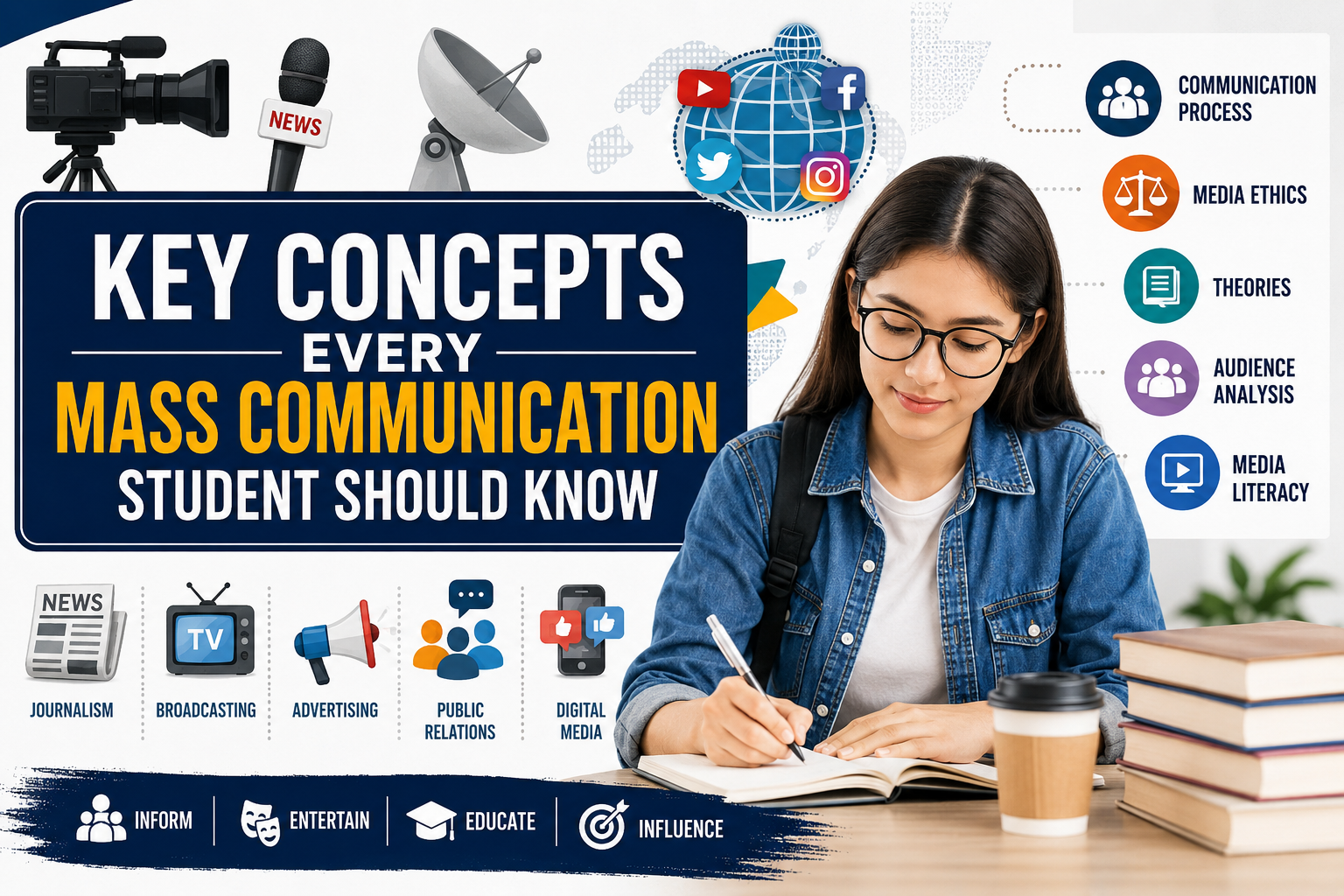
The world is a connected world, and mass communication has a bearing on almost every aspect of human life. Whether on TV, in newspapers or magazines, through websites, via social media apps or podcasts, communication platforms influence people’s thoughts, learning, interactions, and decisions.
People have media in their lives, whether they are consuming news updates, developing new abilities on the web, or enjoying after-work amusement. It is crucial to grasp the significance of the key roles mass communication plays as mass communication influences the politics, education, business, culture and social relationships on a massive scale.
Mass communication is a process of communicating information, ideas, and messages to large groups of people using various media. Mass communication is not like face-to-face communication in that it would reach a single person at a single moment; rather, it reaches thousands or even millions of people at the same time.
Communication has become quicker and more accessible than ever before with the use of modern technology, and information can be easily shared around the world in a matter of seconds. With the recent rise of digitalization, mass communication is gaining influence in society and influencing public opinion, bridging people across borders.
Understanding Mass Communication
Mass communication is a form of communication that is used to send information to large numbers of people via the media, including:
- Television
- Radio
- Newspapers
- Magazines
- Websites
- Social media
- Podcasts
- Streaming platforms
Mass communication is not just for the purpose of disseminating news. It can be used to educate citizens, to keep culture alive, to entertain audiences, to affect behaviour, and to stimulate social interactions within society. Communication channels act as a bridge between citizens and government, between business and consumers, between educators and students, and from community to community across the globe.
In today’s era of communication, it is more interactive, and in many cases, interactive media is giving audiences the opportunity to give feedback, make comments, share their opinions, and take part in discussions immediately. This shift has impacts on the way information is produced and used in today’s society.
Historical Development of Mass Communication
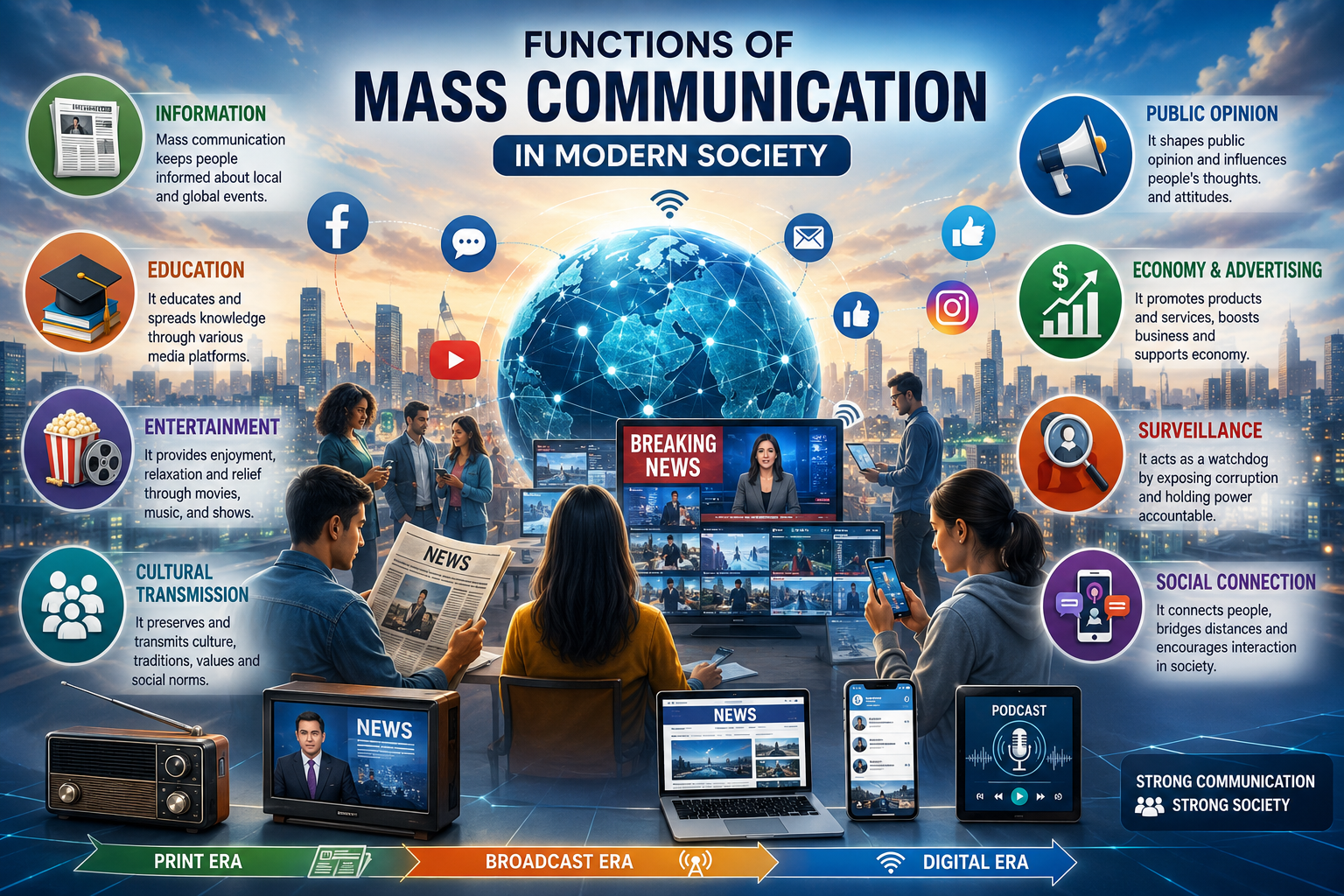
Over the centuries, mass communication has not only evolved but has come across dramatic changes. The dissemination of information was mainly through newspapers and print in earlier times. Radio and television were invented, which helped to increase communication by providing people with audio and video information from far away. In today’s world, the internet and digital platforms are a way of communicating, as they offer immediate access to the world’s information.
There are several stages in the development of mass communication. They are:
Print Era
- Newspapers
- Books
- Magazines
- Journals
Broadcast Era
- Radio programs
- Television news
- Live sports broadcasts
- Public announcements
Digital Era
- Social media platforms
- Online news websites
- Video streaming services
- Podcasts and webinars
Communication has been accelerated and expanded in the digital revolution. One tweet or post can make it to millions of people in mere minutes. This indicates the increasing importance of media in present-day life.
Knowing the functions of mass communication assists people in having an appreciation of the positive and negative impact of the media on society.
Dissemination of Information: The Basic Function of Mass Communication
The dissemination of information is one of the most important aspects of mass communication. The media collect, code, and share information with the public via different channels. People are informed about local and international events through news reports, documentaries, interviews, and online reports.
If societies did not have mass communication, they would not be able to get the latest information on:
- Politics
- Health issues
- Economic developments
- Weather conditions
- Scientific discoveries
- Sports events
- International affairs
Information in today’s society is quickly disseminated via digital means. Social media apps and news websites deliver up-to-the-minute information and enable viewers to stay updated all day long. In times of crisis, like during a natural disaster, an outbreak of disease, or a security risk, mass communication can play an important role in informing people of alerts and safety precautions that need to be taken.
Media organisations also reduce complex issues for people. News writers and analysts translate complex events and issues like government policies, the financial system, or new technology into matters that anyone can grasp. This learning component of information sharing contributes to citizens’ ability to make decisions about their everyday lives.
Educational Role of Mass Communication
Mass communication is important in education and the dissemination of knowledge. Television shows, online courses, podcasts, webinars, and online libraries are all sources of educational content today. The use of communication technology has revolutionised the learning experience, making it an activity that can take place anywhere in the world and not be limited to the classroom.
Through educational media, people can be educated on:
- Academic subjects
- Health and wellness
- Environmental protection
- Financial literacy
- Career development
- Civic responsibilities
- Technology skills
Digital communication has become essential in many schools and universities for their educational and research activities. Students can take virtual classes, read electronic textbooks, and watch educational tutorials on the internet. Such access has facilitated learning, as it is now more flexible and convenient.
Mass communication can also help to raise awareness about issues. Media are used by the government and organizations to educate citizens on important social issues such as:
Public Health Campaigns
- Vaccination awareness
- Disease prevention
- Mental health education
- Nutrition and hygiene
Social Awareness Campaigns
- Gender equality
- Human rights
- Environmental conservation
- Road safety
Invariably, these campaigns show how communication systems can make a difference in national development efforts in disseminating useful knowledge to a large audience.
Entertainment Function of Mass Communication
An important function of mass communication in modern society is entertainment. People all over the world enjoy watching TV shows, movies, music, comedy shows, sports, and videos online. Through entertainment, people can diminish stressful situations and for a short period of time get rid of everyday pressures.
Common Means of Entertainment in the Media
- Films and TV plays
- Music streaming
- Sports broadcasts
- Comedy shows
- Reality television
- Online gaming content
- Social media videos
Streaming has been a game-changer in the entertainment industry. Viewers can now watch programmes at their own convenience, rather than at specific times. Independent entertainers have also found opportunities to produce entertainment content for global audiences using social media platforms.
The media of entertainment is sometimes loaded with messages beyond its scope. Frequently, the subjects of films or TV dramas include subjects like:
- Corruption
- Poverty
- Social inequality
- Mental health
- Family relationships
- Environmental challenges
As people flock to places of entertainment, they are an effective means of raising awareness and initiating conversations about significant social issues.
Cultural Transmission and Socialization
Mass communication is a tool that assists communities in transmitting their culture, traditions, and norms from generation to generation. Media exposure enables people to know what society expects them to do and how to interact with people.
Media Impacts on Social Life
- The use of language and communication styles
- Fashion trends
- Religious practices
- Family values
- Lifestyle choices
- Social behavior
A variety of things, including TV shows, music, and advertising, influence the development of culture. Digital culture has a strong impact on young people due to the amount of time they spend online.
With the rise in global communication, more cultural exchange has taken place. International films, music, food programmes, and social media interactions are ways by which people can experience foreign cultures now. This exposure leads to an understanding of other societies around the world in addition to affecting society’s traditions and way of life.
But the influence of culture via the media can be both positive and negative. Communication on a world level can promote diversity and openness and, at the same time, can undermine traditional cultural practices in certain communities. The significance of responsible production and preservation of media and culture is thus growing.
Public Opinion Formation
The influence of mass communication on public opinion is significant because it forms the basis and understanding of public opinion regarding political and social issues. News coverage is at the discretion of news organizations and the way they present their stories to audiences. They impact public discourse and concerns.
Ways Media Affects Public Opinion
- News reporting
- Editorial articles
- Political debates
- Interviews
- Social media discussions
- Investigative journalism
Mass media is used as an important instrument of political communication. At times of election, candidates send out messages via communication systems to sell their concepts and engage with the electorate. Citizens rely on media to get information about government policies, political debates, and the performance of government leaders.
Social media has also given rise to greater participation of the audience in communication, as they can leave comments, state their opinions, and discuss them at the same moment. This increases democratic engagement but also poses issues, including misinformation and fake news. As a result, media literacy is now more in demand for critically assessing information.
The Roles of Economy and Advertising
Mass communication is very instrumental in economic development, especially by means of advertisements and marketing. Media can be utilized to market products and services to a wide range of viewers in an efficient way for businesses.
Common Ways to Advertise
- Television commercials
- Radio advertisements
- Newspaper advertisements
- Social media marketing
- Influencer promotions
- Online video advertisements
Advertising provides information to consumers about products, prices, and new innovations. Concurrently, it assists companies to boost sales and grow their market.
Job Creation in Communication Sector
- Journalism
- Broadcasting
- Photography
- Film production
- Graphic design
- Public relations
- Digital marketing
- Social media management
Digital technology has revolutionized the way advertising is done and has given businesses the ability to reach consumers with specific interests and behaviour on the web. This has boosted the efficacy of contemporary marketing campaigns.
Surveillance and Watchdog Functions
The watchdog role is another important aspect of mass communication. Journalists research social issues, keep tabs on government activities, and uncover corruption or abuse of power.
The Role of Watchdog Involves
- Investigative reporting
- Monitoring public institutions
- Exposing corruption
- Reporting violations of human rights
- Encouraging government accountability
The independence of the media is vital in a democratic system, as it helps to ensure transparency and keeps the public informed on matters that impact their welfare. Media is sometimes able to expose issues that are not known to society.
This has been reinforced by digital communication, as ordinary people are now able to capture events and share information online in real time. Public awareness and social activism often come from videos and social media reports from eyewitnesses.
The Problems of Mass Media in the Present Times
Though mass communication has several advantages, it has a number of disadvantages in today’s world.
Major Problems Include
1. Lack of Information and False or Fake News
The spread of misinformation online is very fast, particularly via social media. This may lead to confusion and have a negative impact on public opinion.
2. Media Bias
Some media organizations report information that is biased towards political or business interests.
3. Privacy Concerns
Digital platforms gather personal information from their users; there are concerns about how much surveillance takes place and how secure the internet is.
4. Sensationalism
Media may tend to report sensational or emotional information instead of factual information.
5. Media Ownership Concentration
Bigger organisations tend to own several communication channels, which can mean that there is a lack of diversity in perspectives and reporting.
Responsible journalism and media literacy are essential in today’s society, as seen in these challenges.
The Future of Mass Communication
Technological innovation will likely shape the future of mass communication. With the help of artificial intelligence (AI), virtual reality (VR), and other high-tech technologies, the ways in which people produce and consume media content are already being reshaped.
Future Trends
- Enhanced personalization to create richer media experiences
- Greater adoption of AI in journalism
- Virtual reality communication
- Faster global connectivity
- Interactive educational platforms
- More audience involvement with content creation
The world of communication continues to change and evolve, and societies need to be aware of and balance both innovations and media ethics to keep communication accurate, inclusive, and positive.
Conclusion: Functions of Mass Communication
Mass communication continues to be one of the most influential aspects of today’s society. It has an impact on all aspects of information sharing, education, entertainment, culture, politics, and economic development. Media helps people to be connected with events, ideas, and opportunities around the world, both through traditional and digital media.
Knowing the significance of the various aspects of mass communication will enable people to value the role of communication systems in their daily lives. Media communicates and educates citizens, communities, entertains audiences, promotes businesses, and encourages social interaction across the globe.
While the problems of misinformation and privacy issues continue to grow, it is possible for communication to bring the greatest benefits to society if it is done responsibly. In an age of new technological developments, mass communication will continue to play a vital role in the creation of informed, connected, and engaged communities around the world.
Frequently Asked Questions (FAQs)
What is meant by Mass Communication?
Sharing information with large audiences via media, including television, radio, newspapers, websites, and social media.
What are the major roles of mass communication?
The principal functions are:
- Information dissemination
- Education
- Entertainment
- Socialization
- Public opinion formation
- Advertising
- Surveillance and watchdog reporting
Why is mass communication important?
Mass communication is significant since it enables people to be informed, boosts education, helps business promotion, entertains people, and creates social bonding.
What are the impacts of social media on mass communication?
Communication on social media is faster and more interactive, as users instantly share information, comment on issues, and engage in discussions with others.
What are some of the negative impacts of mass communication?
The potential adverse impacts are misinformation, media bias, invasion of privacy, sensationalism, and cultural influence in weakening local traditions.
What is the function of mass communication in society?
Mass communication disseminates cultural values, traditions, languages, fashion, and social acts, which help in the formation of thinking and social interaction of people within society.