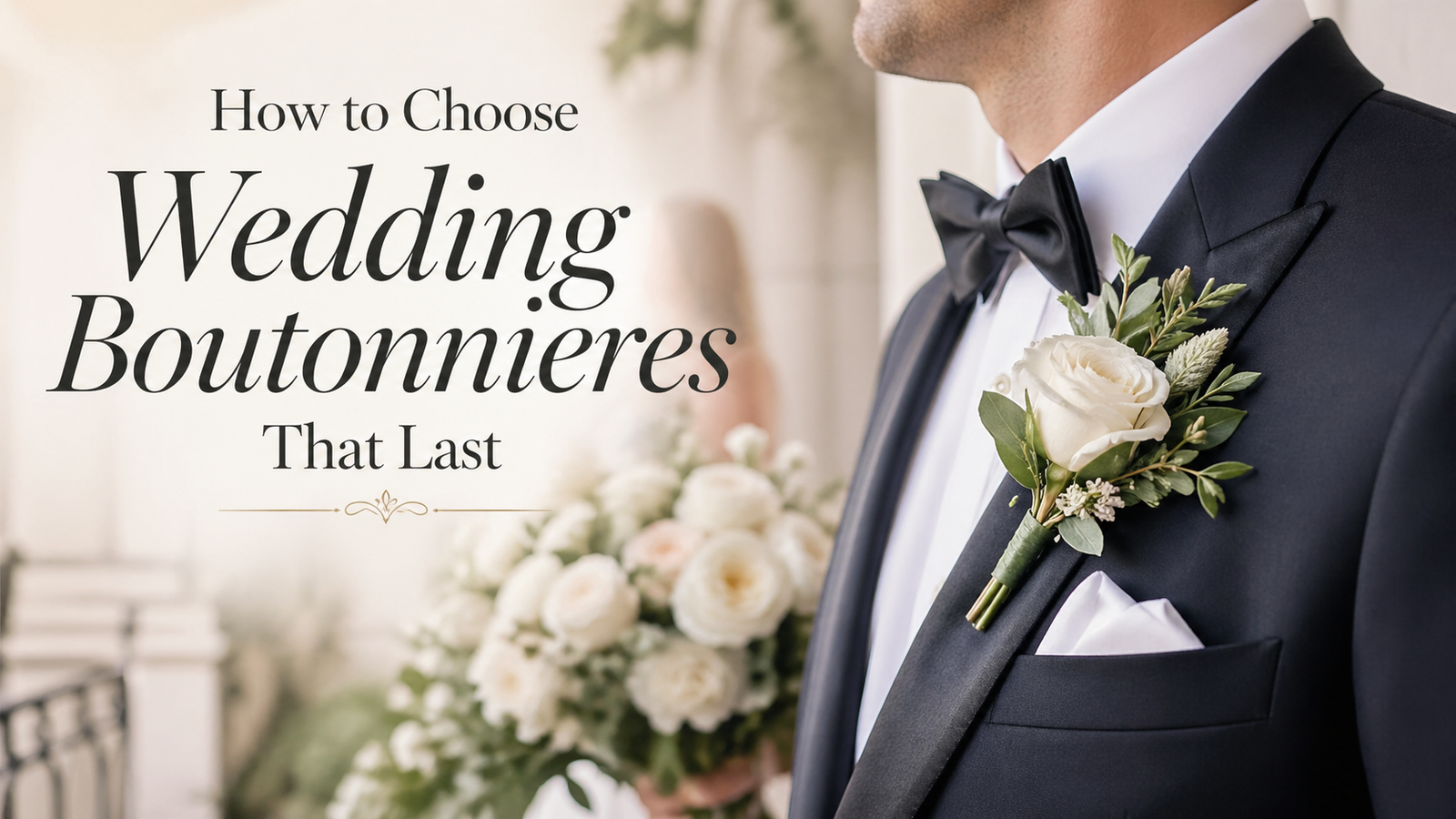
Choosing boutonnieres can feel like a small wedding decision until the suits, bouquets, photos, and ceremony timeline all have to work together. A boutonniere sits close to the face, shows up in many portraits of the groom and groomsmen, and has to survive hugs, heat, movement, and hours of wear. When it looks right, it quietly completes the outfit. When it is too large, too bright, wilted, or poorly matched, it can distract from an otherwise polished look.
That is why choosing a boutonniere is not only about picking a pretty flower. It is about matching the groom’s outfit, supporting the wedding palette, and choosing a flower style that will still look good after hours of wear.
Start with the Suit, Not the Flower
A boutonniere should feel like part of the outfit, not an ornament added at the last minute. Suit color, lapel width, tie, pocket square, and shirt choice all affect what kind of flower will look balanced.
For a black tuxedo or classic navy suit, a white, ivory, or soft blush boutonniere usually looks clean and formal. For earth-toned suits, warmer flowers and muted greenery often feel more natural. If the groom is wearing a patterned tie or a bold pocket square, the boutonniere should stay simple so the look does not become too busy.
Size matters as much as color. A boutonniere should be noticeable without covering the lapel. Large blooms can look beautiful in product photos, but on a slim jacket they may feel heavy. Smaller flowers, textured greenery, or narrow clusters often work better for groomsmen, while the groom’s boutonniere can be slightly fuller.
Match the Palette Without Copying the Bouquet
The boutonniere should connect to the bridal bouquet, but it does not need to be a tiny replica of it. Copying the bouquet too closely can make the groom’s look feel overly delicate or cluttered.
A better approach is to borrow one or two elements from the larger floral plan: the same greenery, one accent color, or a smaller version of a flower that appears in the bouquet. If the bridal bouquet includes ivory roses, terracotta accents, and eucalyptus, the groom’s boutonniere might use one ivory bloom with a small warm-toned detail. The connection is clear, but the scale still feels right for a lapel.
Decide Early Between Fresh and Faux
Fresh boutonnieres work best when the flowers will be handled and worn for a shorter window. They bring natural softness, scent, and seasonality to the groom’s look, especially for indoor weddings or events where a florist is already managing the floral setup.
The challenge is that boutonnieres are not treated gently. They are pinned to fabric, brushed by jackets, touched during hugs, and worn through portraits, the ceremony, cocktail hour, and reception entrances. Delicate fresh flowers can bruise, bend, dry out, or lose shape, especially in warm weather or outdoor settings.
Faux boutonnieres are useful when timing and consistency matter more than fragrance. They can be ordered early, checked against the suit and bouquet, packed for travel, and worn without worrying about wilting. They are especially practical for summer weddings, destination weddings, long photography schedules, or large wedding parties where every groomsman’s accessory needs to look consistent.
Quality still matters. A faux boutonniere should have realistic texture, soft color variation, balanced greenery, and a shape that does not look stiff on the lapel. If it photographs well up close, it is more likely to look natural in wedding portraits.
Make a Wedding Boutonniere Look Good in Photos
Boutonnieres show up in more photos than couples expect, from groom portraits to wedding party lineups and family shots.
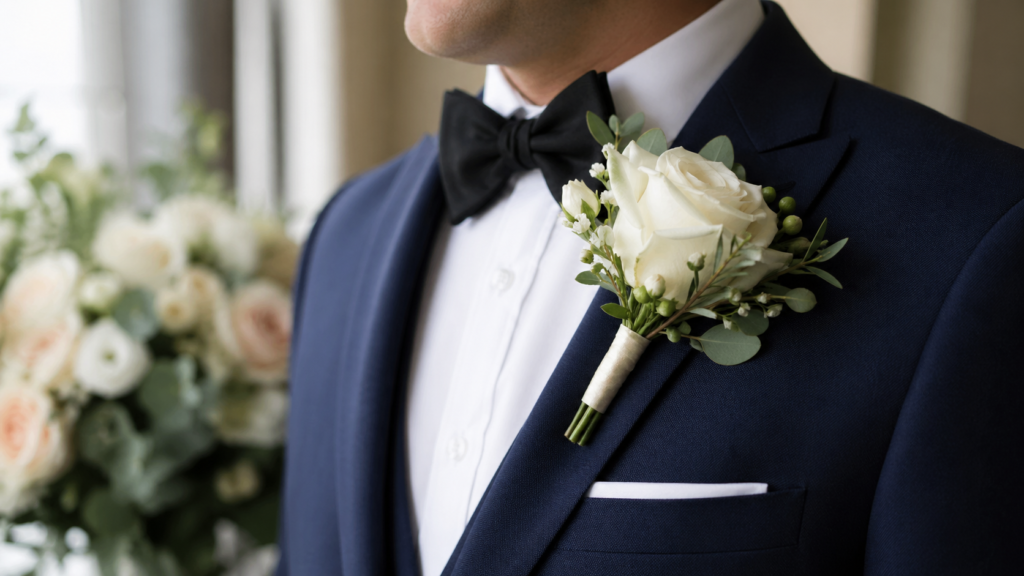
Before choosing a style, check the flower shape, greenery, ribbon, and pin placement. Avoid pieces with overly shiny leaves, bulky stems, or colors that clash with the suit. If the palette includes muted or hard-to-match colors such as dusty blue, burgundy, sage, or burnt orange, compare the boutonniere against fabric samples whenever possible.
Couples who want to compare coordinated options before committing can browse Rinlong wedding boutonniere styles by color, flower type, and suit-friendly scale. That gives them a clearer way to judge whether a design will look balanced on the lapel before the wedding day.
Browsing Rinlong Boutonniere and Plan for the Whole Wedding Party
A boutonniere plan should include more than the groom. Groomsmen, fathers, grandfathers, ushers, officiants, and ring bearers may all need floral pieces, depending on the ceremony style and family traditions. Planning these together helps avoid mismatched last-minute choices.
For a clean look, keep everyone within the same floral family, then vary the size or detail. The groom can wear the fullest design, the groomsmen can wear simpler versions, and fathers can wear classic pieces with a neutral flower and greenery. If children are wearing boutonnieres, lighter and smaller designs are usually more comfortable.
Browsing Rinlong boutonniere options can help couples compare single pieces with coordinated sets, especially when they need different designs for the groom, groomsmen, fathers, or younger attendants.
Choose What Will Still Look Good Hours Later
The best boutonniere is not always the most dramatic one. It is the one that suits the jacket, stays secure, and still looks good after hours of wear.
Fresh flowers may be ideal when scent, softness, and florist-led styling matter most. Faux boutonnieres may be the smarter choice when timing, travel, heat, or a large wedding party creates more risk. For many couples, the right answer is practical rather than traditional.
When the boutonniere is chosen around the outfit, palette, timeline, and comfort, it becomes a quiet detail that holds the whole look together.