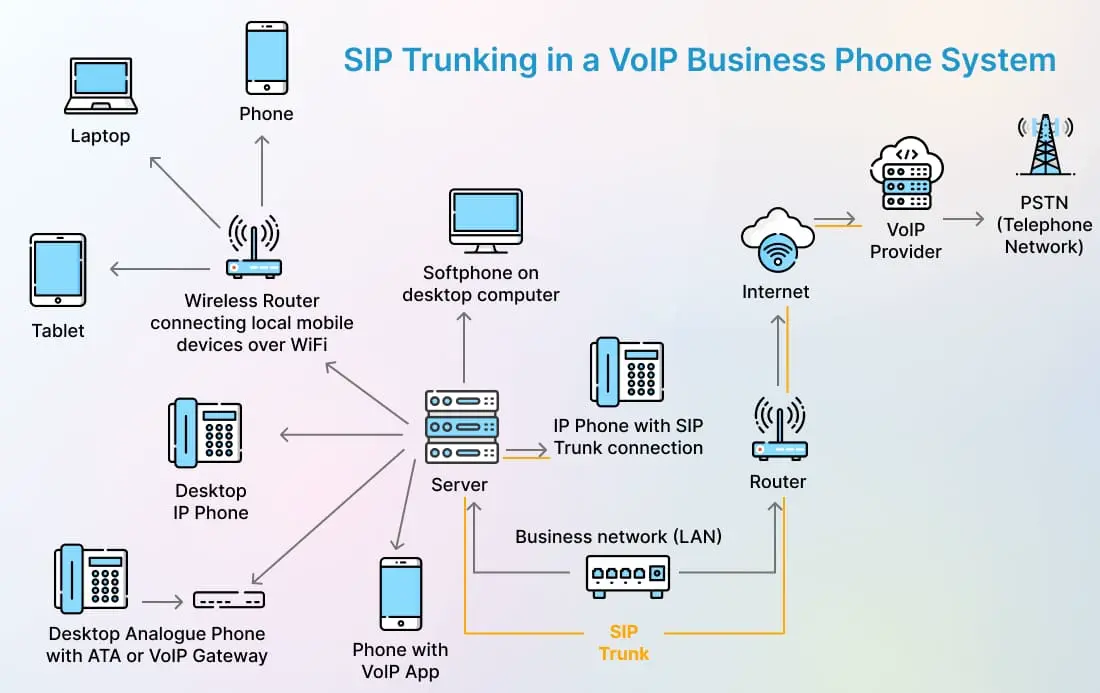
Modern communication is at the heart of every successful company. Whether small or large, businesses rely on clear and reliable voice systems to stay connected with customers and teams. Over time, Business Telephone Systems have evolved from simple wired setups to flexible, internet-based solutions. Today, technologies like SIP trunks and IP connectivity are changing how businesses manage calls, reduce costs, and scale operations.
This guide explains how these systems work in simple terms and helps you understand which option may suit your needs.
What Are Business Telephone Systems?
Business Telephone Systems are communication setups that allow companies to manage internal and external calls efficiently. Traditionally, these systems were installed on-site using physical hardware and connected through analogue or ISDN lines.
While these setups are still in use, many businesses now prefer modern alternatives that use internet connections instead of traditional phone lines. These newer systems provide more flexibility, better features, and easier management.
Understanding Traditional vs IP-Based Systems
Traditional On-Premise Systems
On-premise systems involve installing hardware within your office. All phones connect to this central unit, and calls are routed through physical telephone lines.
These systems are reliable but often come with higher installation costs and limited scalability. Making changes or upgrades usually requires technical support and additional hardware.
IP-Based Systems
IP-based systems use the internet to handle voice communication. Instead of physical lines, calls travel as data through your broadband or leased line connection.
This approach reduces the need for bulky equipment and allows businesses to manage their communication systems remotely. It also opens the door to advanced features that were not easily available in older setups.
What Are SIP Trunks?
SIP (Session Initiation Protocol) trunks are a key part of modern Business Telephone Systems. They act as a virtual connection between your phone system and the public telephone network.
Instead of using multiple physical lines, SIP trunks allow you to handle many calls over a single internet connection. This makes communication more efficient and cost-effective.
Benefits of SIP Trunks
- Lower call costs, especially for long-distance communication
- Easy scalability as your business grows
- Better use of existing internet connections
- Support for voice, video, and messaging
For example, a growing company can quickly add more lines without installing new hardware, simply by adjusting their SIP plan.
How IP Connectivity Improves Communication
Flexibility and Remote Access
With IP connectivity, employees can make and receive calls from anywhere. Whether working from home or traveling, they can stay connected using mobile apps or softphones.
Advanced Features
Modern Business Telephone Systems offer features such as:
- Call forwarding and routing
- Voicemail to email
- Call recording
- Integration with CRM tools
These features improve productivity and help businesses deliver better customer service.
Easy Maintenance
Since most of the system is managed online, updates and changes can be made quickly without needing on-site technical work. This saves time and reduces operational hassle.
Hosted Phone Systems and Cloud Solutions
Another popular option is a hosted or cloud-based system. In this setup, the main infrastructure is managed by a service provider, and your office only needs phones and an internet connection.
Hosted Business Telephone Systems are becoming the preferred choice for many companies because they are easy to set up and require less upfront investment.
Advantages of Hosted Systems
- No need for complex hardware installation
- Lower initial costs
- Automatic updates and maintenance
- Built-in backup and disaster recovery options
For instance, if there is a power outage in your office, calls can automatically be redirected to another location or device.
Practical Tips for Choosing the Right System
Assess Your Business Needs
Think about your team size, call volume, and future growth. A small business may benefit from a simple hosted system, while a larger organization might need a more customized setup.
Check Your Internet Connection
Since IP-based systems depend on the internet, a stable and high-speed connection is essential for clear call quality.
Plan for Scalability
Choose a system that can grow with your business. SIP trunks and cloud solutions make it easier to add new users without major changes.
Consider Security
Ensure your system includes proper security measures such as encryption and secure access controls to protect your communication.
Conclusion
The way businesses communicate has changed significantly in recent years. Traditional setups are being replaced by flexible and cost-effective solutions powered by the internet. Business Telephone Systems that use SIP trunks and IP connectivity offer improved performance, scalability, and advanced features.
By understanding how these systems work and evaluating your needs, you can choose a solution that supports your business growth and keeps your communication smooth and reliable.