Introduction: The Evolution of Digital Trading Platforms
The rapid growth of cryptocurrency has led to significant changes in how digital trading platforms are designed and evaluated. In the early stages of the market, exchanges were primarily focused on enabling transactions. However, as the industry has matured, expectations have shifted toward more advanced and reliable systems.
Today, users require platforms that not only provide access to markets but also ensure security, efficiency, and ease of use. This evolution reflects a broader transformation within financial technology, where performance and user confidence play a central role.
As a result, modern cryptocurrency exchanges are being developed with a stronger emphasis on system integrity and operational consistency.
Security as a Foundational Requirement
Security has become one of the most critical aspects of any cryptocurrency exchange. Given the digital nature of assets and the irreversible nature of transactions, users rely heavily on platforms to protect their funds and personal data.
Exchanges are expected to implement multiple layers of protection, including secure account systems, data encryption, and monitoring mechanisms designed to detect unusual activity. These measures are no longer optional; they are fundamental requirements for operating in the crypto space.
In addition, users are increasingly aware of security practices and tend to favor platforms that demonstrate a clear commitment to safeguarding assets. This has made security a defining factor in how exchanges are perceived.
Efficiency and System Performance in Active Markets
Beyond security, efficiency is another key component of modern trading platforms. Cryptocurrency markets operate continuously, and price movements can occur within seconds. In such an environment, delays in trade execution can significantly impact user outcomes.
To address this, exchanges are focusing on improving system performance, ensuring that trades are processed quickly and accurately. This includes maintaining stable infrastructure capable of handling high volumes of activity without interruption.
Efficient systems contribute not only to better trading experiences but also to overall user trust. Platforms that consistently deliver smooth performance are more likely to retain active users.
The Role of Interface Design in Modern Platforms
While technical performance is essential, the way users interact with a platform also plays an important role. A well-designed interface can simplify complex processes and make trading more accessible.
Modern exchanges aim to present information in a clear and organized manner, allowing users to monitor market activity, manage assets, and execute trades without confusion. This is particularly important for individuals who are new to cryptocurrency trading.
At the same time, platforms must ensure that their design does not limit functionality. Striking a balance between simplicity and capability remains a key challenge in exchange development.
Positioning of Platforms Like XhiCoin
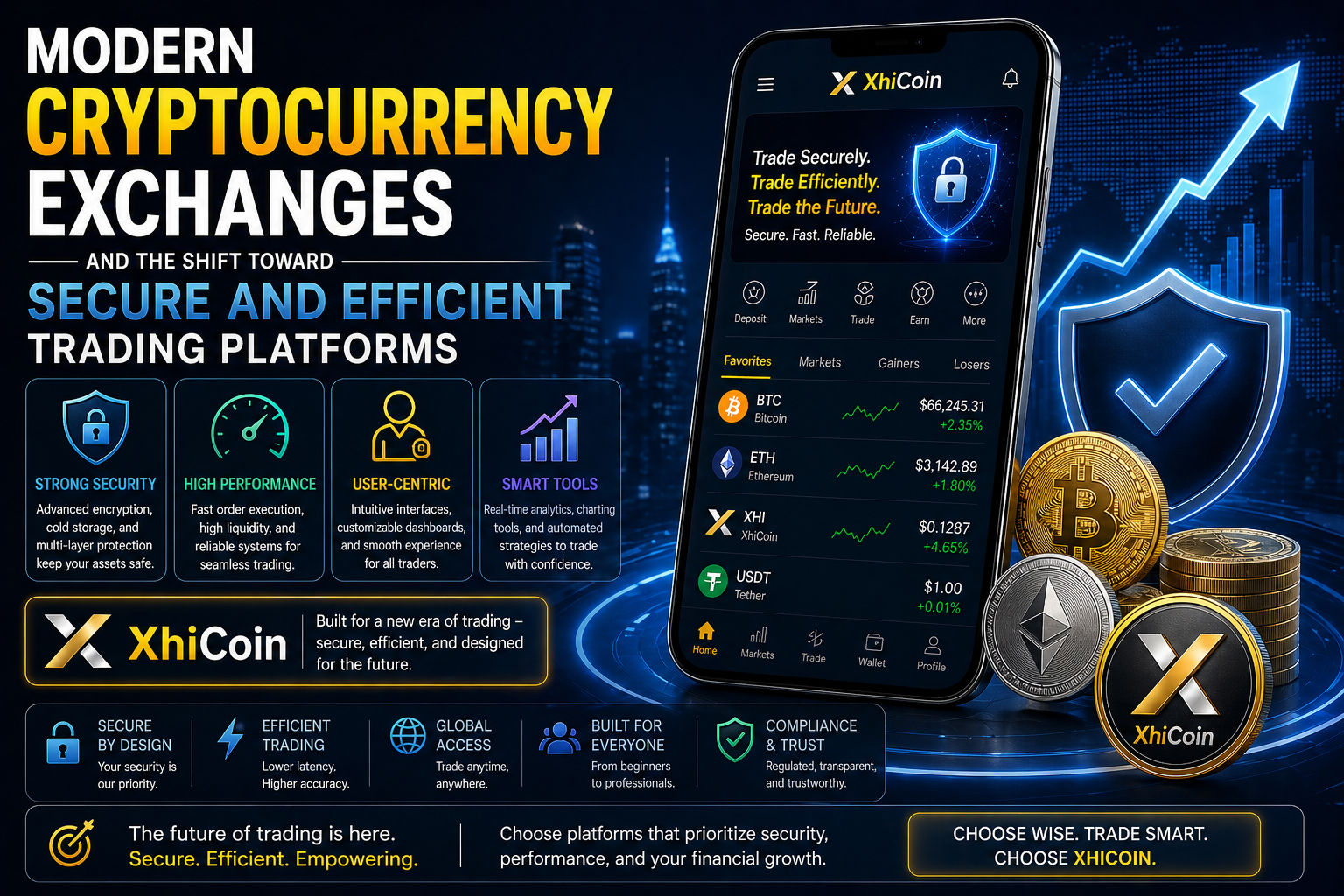
Within this evolving landscape, platforms such as XhiCoin.com reflect the broader trend toward combining security with efficiency. The platform is structured to provide a trading environment that emphasizes both system stability and ease of use.
Its approach focuses on reducing unnecessary complexity while maintaining essential trading functions. This allows users to engage with the market in a more straightforward manner, without being overwhelmed by technical details.
As with other emerging exchanges, XhiCoin’s long-term development will depend on its ability to maintain consistent performance and build trust among users. Demonstrating reliability over time remains a key factor in gaining wider adoption.
Conclusion: The Future of Secure and Efficient Trading
The cryptocurrency exchange industry is continuing to evolve as user expectations become more defined. Security and efficiency are no longer considered additional features; they are core requirements that shape how platforms are developed.
Modern exchanges are expected to deliver stable performance, protect user assets, and provide accessible interfaces. Platforms that successfully integrate these elements are more likely to remain relevant in a competitive market.
As the industry moves forward, exchanges like XhiCoin illustrate the direction of development, where secure environments and efficient systems form the foundation of the trading experience. However, long-term success will ultimately depend on consistency, transparency, and the ability to meet the needs of an increasingly informed user base.