
Nowadays, with Artificial Intelligence (AI) and automation increasingly integrated into our daily routine, we have to address the ethical issues brought about by such trends. It has raised significant concerns regarding the future of work, society, and our lives, because of data privacy to algorithmic bias, AI poses a central question of how these technologies will define the future. Developers, organizations, and individuals need to make sure they think about the ethical implications of AI to ensure that it is beneficial to everyone and causes the least possible harm.
Introduction: What AI is and how it affects.
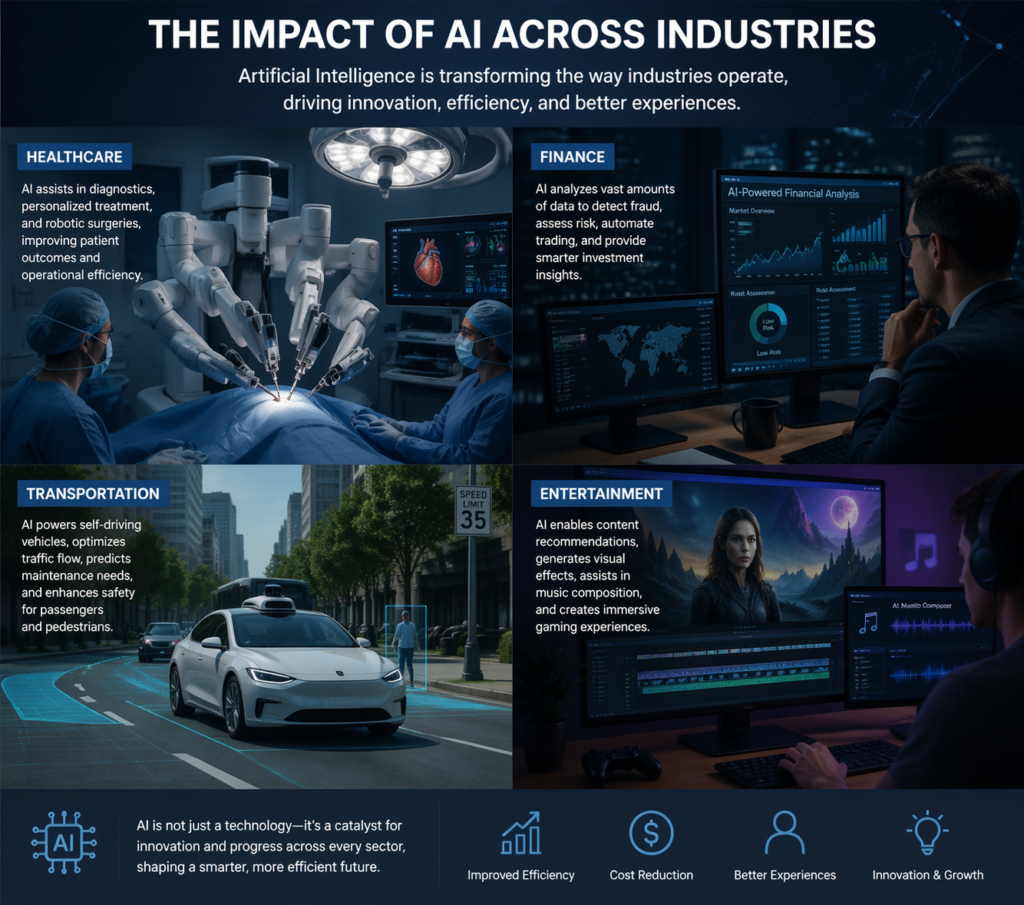
Artificial Intelligence is no longer a science-fiction notion–it is a part of the present. The AI systems are already affecting such sectors as healthcare, finance, transportation, and entertainment. These systems can handle a big amount of data and do work that would otherwise need human intelligence. Nonetheless, the more intelligent and autonomous AI systems are, the more ethical issues they present.
The article explores some of the most important ethical issues related to AI such as information privacy, algorithmic bias, workforce displacement, and the lack of transparency in the decision-making process. We will also examine why regulations and solutions that can make the development of AI conform to ethical standards and human rights are necessary.
AI Data Privacy and Security

The Significance of Data Privacy
AI systems can only be used efficiently based on huge volumes of data. This data can contain a lot of personal data, user preferences, health records, financial transactions, which may be abused without taking caution. One of the main ethical issues of AI is data privacy since the abuse of personal information may result in identity theft, surveillance, and human rights violation.
One example of an initiative to safeguard data privacy is the General Data Protection Regulation (GDPR) in Europe. The law enforces stringent rules regarding the collection, processing, and storage of the personal information of companies. Nevertheless, despite the existence of such regulations, numerous AI systems continue to pose a threat because of poor data protection protocols, or vague terms of service that expose the data of users.
The necessity of Data Protection Standards
The need to establish global data protection standards is increasingly growing, with AI systems frequently operating internationally. Universal guidelines can be implemented to reduce the risks of data breaches and make sure that the personal information is treated with the highest level of care. Nevertheless, the regulation of AI and data privacy is a difficult issue to regulate as the technology advances rather fast, and data-gathering and processing systems are complex.
Algorithms and Bias Discrimination
Understanding Algorithmic Bias
Algorithms bias is one of the greatest ethical issues surrounding AI. Algorithms are as good as the data on which they are trained and when that data is biased, the AI system will mirror such biases. This may translate to the discriminatory effects, especially in areas such as employment, policing, and lending.
As an illustration, AI-based recruitment tools have been identified to discriminate against individuals of some demographic groups in favor of others, depending on biased information that is used to train the system. In policing, predictive policing algorithms can be disproportionately applied to minority groups, which contributes to the social inequalities that are already present. These biases have the potential to strengthen stereotypes, continue to perpetuate discrimination, and lower public trust in AI.
The Significance of Fairness and Transparency
To resolve the issue of algorithmic bias, the developers of AI systems need to focus on fairness and transparency throughout their systems development. This includes questioning the data sets that are used to train AI algorithms, and their diversification and representation of all groups. The developers must also be open in how their algorithms make decisions and should be ready to change it in case it is discovered to be unfair.
Achieving fairness in AI systems is not merely a technical issue, but it is an ethical challenge. Companies need to implement ethical practices that emphasize the removal of prejudice as well as foster inclusivity.
Job Displacement and Future of Work
The Effect of AI on Jobs
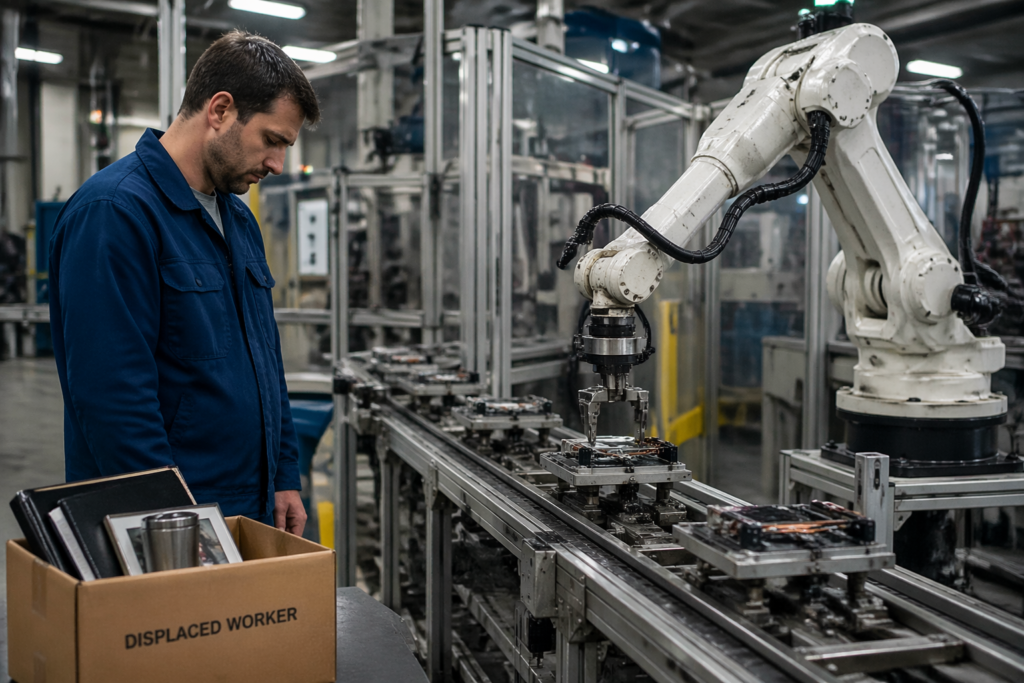
Industries are being transformed by AI and automation, which are also associated with job loss. Nowadays, AI is feared as most machines can do the work that has been done by humans, and there is a threat of mass unemployment in the future. Robots, autonomous vehicles, and chatbots using AI to provide customer support are already doing the work that was done by people traditionally.
Although AI could offer new opportunities in new areas, it poses a major challenge to the employees who are displaced due to automation. Such workers might have difficulty in securing new jobs particularly when they do not have the skills that they need to adjust to the evolving job market. Low-skilled workers are most at risk of losing their jobs to automation and this problem is especially acute.
Resolving the Ethical Dilemma of Job Displacement
Reskilling and upskilling are one way out of the job displacement problem since they can assist workers in acquiring new job positions. Governments and other organizations can be instrumental in availing training and education opportunities that will qualify workers to handle the jobs of tomorrow.
Moreover, policies that reconcile the virtues of automation with safety of workers are required. This can involve looking into ideas such as universal basic income (UBI) to offer people who lose their jobs to AI financial stability. The ethical aspects of job displacement must be discussed in a wider societal context of how to make the benefits of AI distributed fairly.
Decision-Making Transparency
The Black Box Problem
AI systems can tend to be black boxes, i.e., their decision-making process is not understandable to the users. To illustrate, an AI program to tell whether a person is worthy of a loan may apply complicated algorithms to arrive at its decision, yet the rationale of this decision is not always evident. This is not transparent and individuals may not be able to comprehend why some decisions are taken and accountability is an issue.
In the absence of transparency, one cannot determine whether an AI system is making biased, unfair or discriminatory decisions. In stakes such as criminal justice, healthcare, and finance, stakes are even greater. Individuals have the right to be informed on how and why decisions that impact their lives are being made.
The Explainability AI Requirement
As a remedy to the transparency problem, there is a rising call towards explainable AI (XAI) AI systems, which give coherent and comprehensible explanations of their actions. Explainable AI can assist in making sure that people have confidence in AI systems and the systems themselves are held responsible for their behavior.
As an example, when an AI system rejects a loan application, it should provide the applicant with a chance to know what factors contributed to the decision. Transparency may also help the developers to identify possible errors or biases within the system and therefore are in a position to rectify them.
Ethical AI regulations and Solutions
The necessity of AI regulations around the globe
Since AI can affect numerous individuals worldwide, it is necessary to have worldwide laws that would deal with any ethical issues regarding its use. Nations worldwide have begun to create their own AI laws, yet these are typically disjointed and uncoordinated. There has to be a unified, international strategy in governing AI so that ethical principles are observed internationally.
One of such regulatory efforts is the European Union AI Act that aims to regulate AI depending on its risk level. The AI Act establishes regulations of high-risk AI applications, including biometric identification and critical infrastructure. Despite their potential, these regulations require adjustment to the speedy development of AI technology.
Responsible AI Development
Besides regulation, there is a need to foster responsible AI development practices in organizations. The developers have to follow ethical standards that emphasize fairness, accountability, transparency, and privacy. Ethical think tanks and industry bodies can assist in developing standards and frameworks that would allow responsible development of AI.
Moreover, the awareness of the ethical issues of AI among the population is important. By informing people and companies of the ethical aspects of AI, we will be able to create a culture of responsible practices that prioritize human welfare over profitability or productivity.
Conclusion
Ethical issues of AI and automation are complicated and multi-layered, yet not impossible. We can embrace the power of AI to do good and reduce its risks by prioritizing data privacy, eradicating algorithmic bias, job displacement, and decision-making transparency and implementing robust regulations.
AI can change the world by revolutionizing industries, making life easier, and resolving some of the most urgent problems facing the world. Nevertheless, in order to reap these advantages, we need to make sure that the ethical considerations are put into all the phases of AI development. It is only at this stage that we can guarantee the use of AI in a positive way to the society that does not infringe upon human rights, unfairness, or lack of transparency.
The paper identifies the main ethical issues related to AI and automation, offering information and potential remedies to foster responsible and ethical AI advancement. With information, being proactive, we would be able to create a future where AI works to the advantage of all of humanity.



This post gave me a new perspective I hadn’t considered.