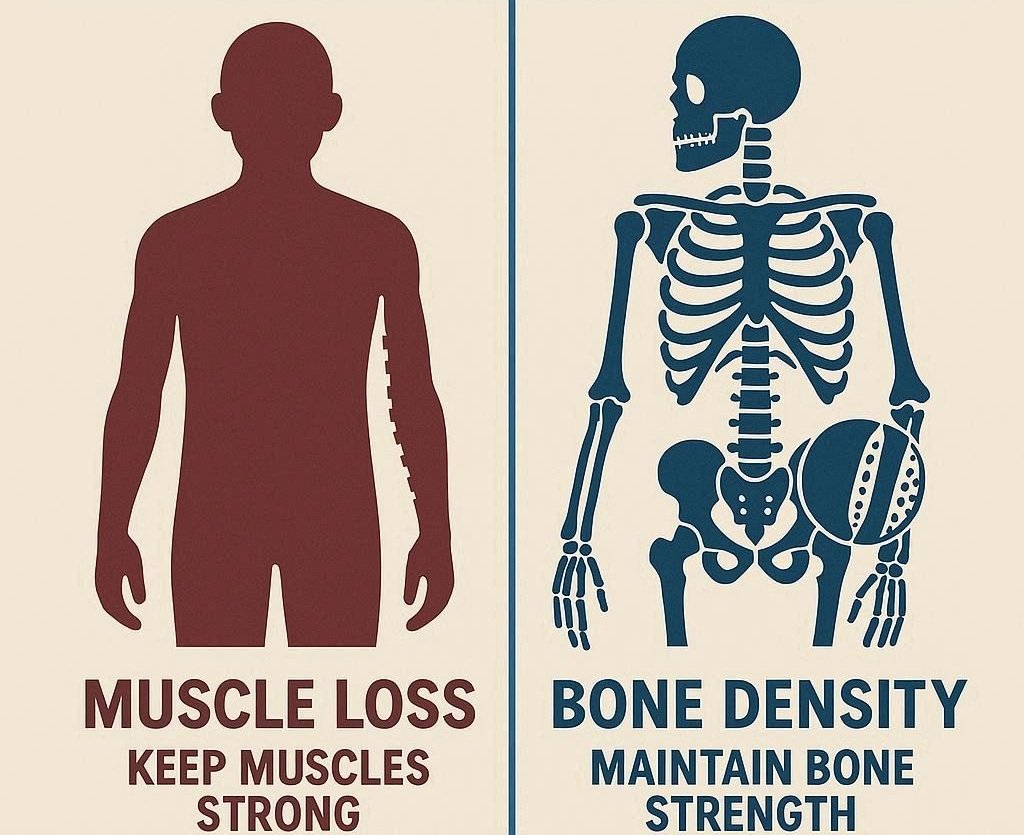
Aging is associated with numerous physical alterations, yet some of the most prominent ones are muscle mass loss and bone density loss. These two aging disorders have a significant impact on mobility, balance, strength, and independence. With aging, individuals might experience a reduction in physical strength, reduced movement, loss of ability to lift things, or a tendency to fall. These changes are often associated with sarcopenia, the process of muscle mass and muscle functional loss, and osteoporosis, bone weakening.
The two tendencies are prevalent in old age and this condition often builds up making them easy to ignore until the symptoms are more noticeable. Nevertheless, preventive action and the early realization can play a significant role. Exercising muscle and bone health is the key to retaining independence, avoiding fractures, and promoting the quality of life in the long-term.
The positive aspect is that physical deterioration with age is not totally inevitable. Muscle loss can be slowed down and the bones can be kept stronger much later in life through regular strength training, proper nutrition and healthy lifestyles. This paper discusses sarcopenia, loss of bone density, their causes, symptoms, risks, and the best prevention measures.
The knowledge of Sarcopenia and Bone Density Loss
Sarcopenia refers to the loss of skeletal muscle mass, strength, and physical performance with age. It can start slowly after the age of 30 and is more evident after the age of 60. The body becomes weak and unstable as the muscles become deteriorated. This may complicate simple activities like walking, climbing up and down stairs, carrying groceries or standing up.
Meanwhile, bone density is also decreasing with age. The bones lose their density and become weak and prone to fracture. This is a condition which is popularly referred to as osteoporosis.Both conditions are closely related because bones need to be stable, and muscles need support to ensure the bones can move. In case of the reduction of the muscle mass, the pressure exerted on the bones is reduced thus increasing the rate of bone weakening. These changes combined pose a great risk of frailty in old age.
The Reason Muscle Loss occurs with Age
Among the top causes of sarcopenia, the natural drop in muscle protein synthesis with age is observed:
- During the younger age, the body is very effective in repairing and developing muscle tissue. But as one ages, this process is less effective and slower.
- It is also caused by hormonal changes. Falling growth hormone, testosterone and estrogen levels may decrease muscle maintenance and recovery.
- Another key factor is reduced physical activity. Lifestyle changes, work patterns or health restrictions make many less active as they get old.
Muscles are pushed to their limits only once every so often, so they become smaller and weaker over time. Malnutrition, particularly lack of protein, increases the rate of muscle loss.
Reasons behind Low Bone Density
Loss of bone density happens when the body loses bone tissue at a faster rate than it is able to form the tissue.
- The bones are alive tissues which are constantly remodelled. During the youth, bone building is typically greater than bone degradation.
- This balance changes with age. The replacement of the bone is not as quick as the loss of bone, resulting in weaker bones.
- The primary cause is the hormonal changes, in particular, the decreased estrogen levels in women after menopause.
Bone weakening can also be caused by low calcium consumption, lack of vitamin D, inactivity, smoking, as well as some drugs. The decreased muscle mass due to sarcopenia can also aggravate the loss of bone density by lowering the mechanical stimulation necessary to keep bone strong.
Symptoms and Red Flags
Sarcopenia symptoms tend to progress slowly. The typical symptoms are a loss of strength, a decrease in the pace of walking, inability to move objects, a poor sense of balance and a greater feeling of fatigue in the course of physical activities. People can see that activities that were once thought to be easy are now more demanding.
Loss of bone density can end up being unnoticed until a fracture results. Nevertheless, some of the red flags can be loss of height, back pain, stooped position, or vulnerability to fractures following minor falls. These symptoms should be identified early in order to prevent and treat them.
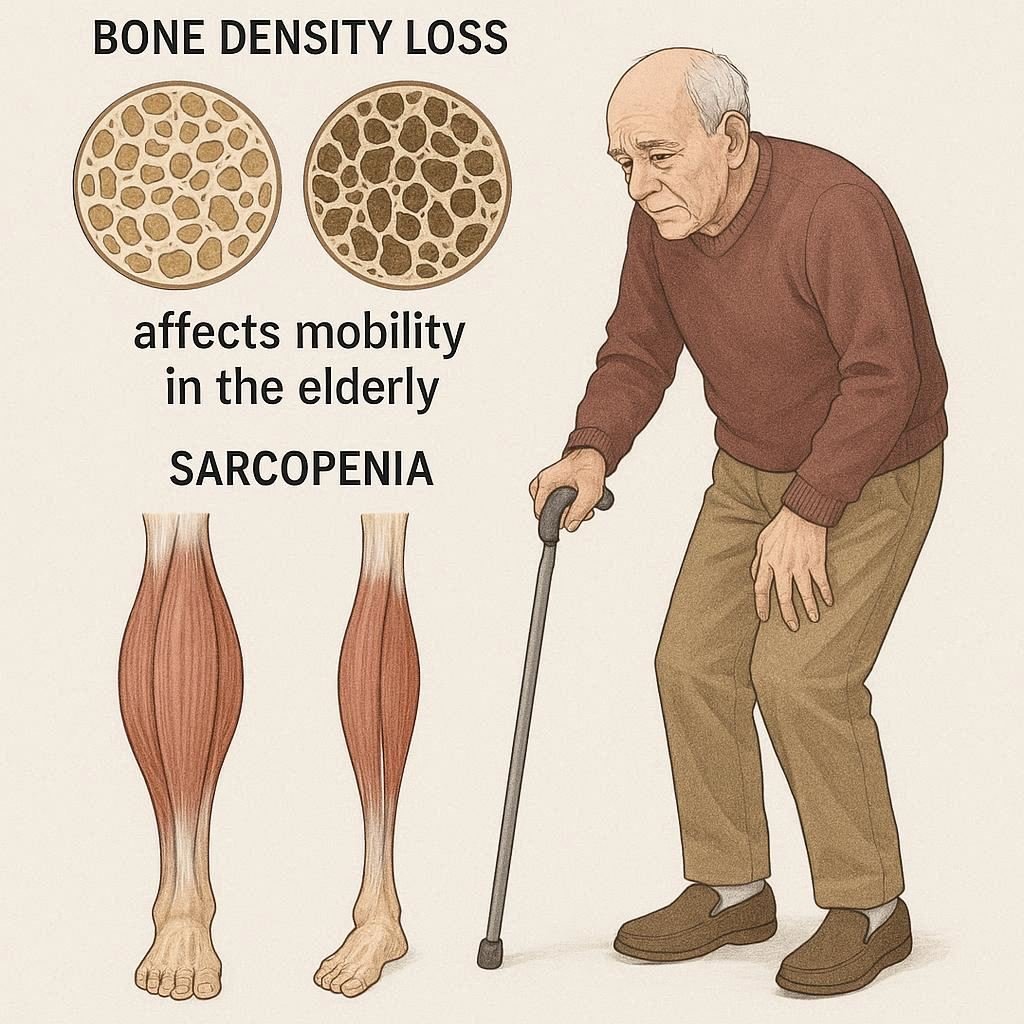
“bone density loss and sarcopenia that affects mobility in the elderly”.
The Risk of Frailty and Falls
Frailty is one of the most severe outcomes of sarcopenia and decreased bone density. Frailty is a condition of diminished physical strength in which the body has become susceptible to damage, disease and immobility.
- Weak muscles enhance the risk of falls and balance issues.
- Meanwhile, brittle bones make falls that are far more perilous since even small accidents could cause severe fractures.
- Hip fractures, especially, may have a substantial impact on the degree of independence and long-term mobility.
Fall prevention is thus a large component of muscle and bone management.
The Importance of Strength Training
One of the most effective methods to prevent and treat sarcopenia is strength training:
- Exercises that involve resistance train the muscle fibers, promoting growth and maintenance.
- Muscle strength is maintained through activities like lifting weights, resistance bands, body weight exercises, squats and leg presses.
- Frequent strength training is also beneficial as bones are subjected to a healthy stress on the skeletal system which promotes bone remodeling and bone density.
Muscle activity and frailty risk may greatly be enhanced by two to three sessions a week. Uniformity is much more significant than intensity.
Protein Intake and Muscle Preservation
Protein consumption is crucial in the prevention of sarcopenia:
- Protein is the source of amino acids required in the repair and growth of muscle.
- Senescence is associated with increased protein requirements in the diet of older adults compared to younger adults due to a reduced efficiency with which the body can use it.
- Good sources of protein are eggs, fish, lean meat, dairy products, beans, nuts, and legumes.
- Dispersing protein consumption in terms of meals could enhance muscle protein synthesis.
Even regular exercise might not be sufficient to maintain muscle mass without adequate protein.
Vitamin D and Calcium to Strengthen Bones
Calcium and vitamin D are vital to bone health:
- Calcium has the structural basis of the bones, and vitamin D assists the body to absorb calcium well.
- Examples of good sources of calcium are milk, yogurt, cheese, leafy green vegetables, almonds, and fortified foods.
- The sources of vitamin D include fatty fish, eggs, and fortified dairy products and sunlight.
- The lack of either of the nutrients is a high risk factor of osteoporosis and fractures
One of the most feasible ways of maintaining bone density is by maintaining an adequate intake.
Exercise outside Strength Training
Resistance training is necessary but in case of muscle and bone health, general physical activity is in favor:
- Light aerobic exercise, climbing stairs, walking and swimming are used to keep circulation and mobility and coordination.
- Walking and jogging are particularly good weight-bearing exercises that benefit bones.
- Frequent exercise also enhances balance, flexibility, and joint mobility, which decrease the risk of falls.
Lack of physical activity is a major factor that propels sarcopenia.
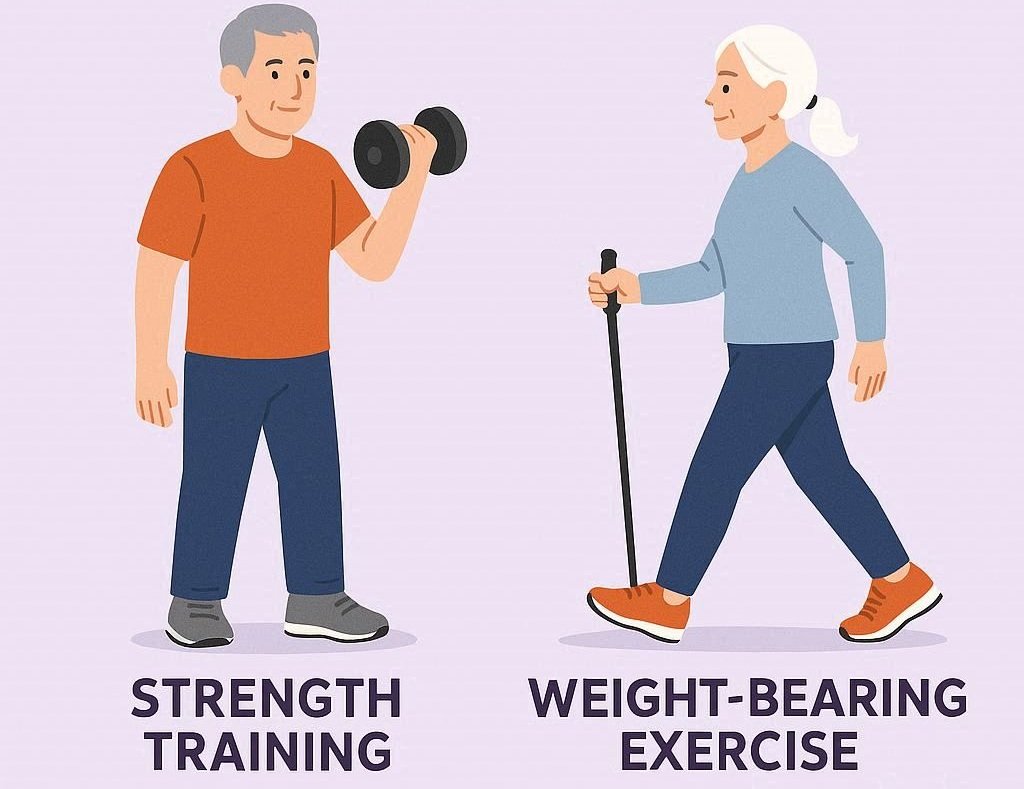
“prevention of sarcopenia by means of strength training and weight-bearing exercise”.
Habits of Life that Strengthen in the Long Run
A number of lifestyle behaviors can be used to slow the loss of muscle and bone associated with age. Sleep is enough to aid in repair of tissues and maintenance of hormones. It is especially worthwhile to avoid smoking since it undermines muscle recovery and bone density.
- Restricting alcohol consumption helps in promoting healthy bones and muscles as well.
- Having a normal body weight also lessens the load on joints and maintains general mobility.
Constant medical examination may be used to observe bone and muscle condition, particularly in the elderly.
Preventive Health and Early Diagnosis
Early detection can make a great difference.
- Bone densities allow detection of osteoporosis risk prior to experiencing a fracture.
- Early sarcopenia can be identified by muscle strength and mobility tests.
- The better lifestyle and treatment interventions are the earlier the intervention.
Prevention is beneficial at the Long-term
The prevention of muscle and bone loss is strongly beneficial beyond physical power.
- It enhances individuality, self-confidence, balance and functional daily living.
- Fit muscles and healthy bones lead to decrease in hospitalization, enhance illness recovery, and promote quality of life in the long run.
The gains are also transferred to the emotional state as mobility is linked to confidence and independence.
Conclusion
Age-related conditions such as sarcopenia and bone density loss do not necessarily result in frailty and dependence. Regular muscle strengthening exercises, sufficient protein and calcium level, and active lifestyle can greatly reduce the rate of muscle atrophy and help people have stronger bones. Early prevention and regular healthy practices are the key.