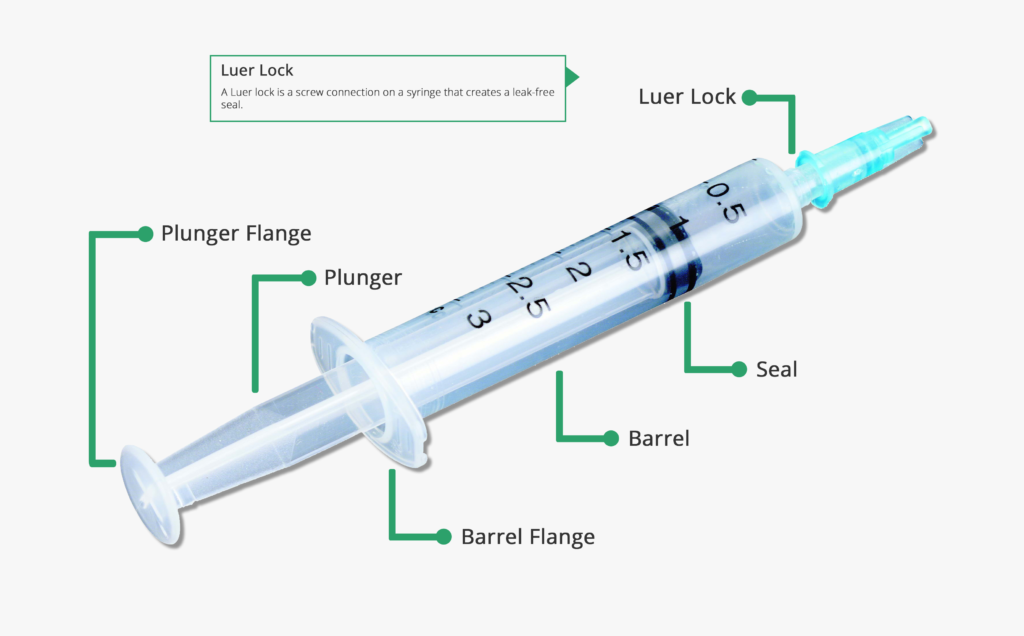
A syringe diagram is an essential tool for understanding the structure and function of syringes. It provides a visual representation of each component, making it easier for healthcare professionals to use syringes accurately and safely.
What Is a Syringe Diagram?
A syringe diagram illustrates all the components of a syringe, including the barrel, plunger, tip, needle, and flange. These diagrams are widely used in medical training, hospitals, and laboratories to ensure proper understanding and handling.
Components Shown in a Syringe Diagram
- Barrel
- The main body that holds medications or fluids.
- Graduated markings ensure precise dosage measurement.
- Plunger
- Moves fluid into or out of the barrel.
- Ensures controlled administration of medication.
- Needle (Optional)
- Connects to the tip for injections.
- Comes in different gauges for specific medical procedures.
- Tip
- Connects the barrel to the needle or catheter.
- Includes Luer lock, Luer slip, or catheter tip types.
- Flange
- Flat extension at the end of the barrel.
- Provides stability and control during fluid administration.
For more details, healthcare professionals can refer to a syringe diagram to understand each part’s function.
Types of Syringes Illustrated in Diagrams
Standard Syringes
- Common for general injections and fluid withdrawal.
- Diagrams highlight essential parts and usage techniques.
Insulin Syringes
- Designed for accurate insulin delivery.
- Diagrams show fine needles and small-volume barrels.
Luer Lock Syringes
- Diagrams illustrate the secure locking mechanism to prevent leakage.
Catheter Tip Syringes
- Used for irrigation, enteral feeding, or specialized procedures.
- Diagrams emphasize the extended tip and plunger design.
Large-Volume Syringes
- Suitable for irrigation or administering large volumes.
- Diagrams show wide barrels and robust plungers.
Benefits of Using a Syringe Diagram
- Accuracy: Helps healthcare workers administer medications correctly.
- Safety: Reduces risk of misuse or contamination.
- Training: Assists students and new medical staff in understanding syringe components.
- Maintenance: Guides proper cleaning, sterilization, and storage.
Proper Handling and Maintenance of Syringes
- Inspect syringes before use for sterility and damage.
- Use aseptic techniques to maintain hygiene.
- Dispose of single-use syringes according to protocols.
- Sterilize reusable syringes following guidelines.
- Store syringes in a clean and secure environment.
Troubleshooting Common Issues
- Leaks: Ensure proper connection of tip and needle.
- Air Bubbles: Prime the syringe carefully to remove air.
- Plunger Resistance: Check alignment and smooth operation.
- Incorrect Dosage: Confirm volume measurements and select the correct syringe size.
FAQs About Syringe Diagram
1. What is a syringe diagram?
It is a visual representation of a syringe showing all components such as barrel, plunger, tip, needle, and flange.
2. Why is a syringe diagram important?
It helps medical professionals and students understand syringe parts for safe and precise use.
3. Where can I find a detailed syringe diagram?
Professionals can consult a syringe diagram resource for comprehensive guidance and visual reference.
Conclusion
A syringe diagram is a critical resource for healthcare professionals, enabling safe, accurate, and efficient use of syringes. Understanding the visual layout of each part enhances clinical practice, training, and patient safety. For further guidance, professionals can refer to a syringe diagram resource.