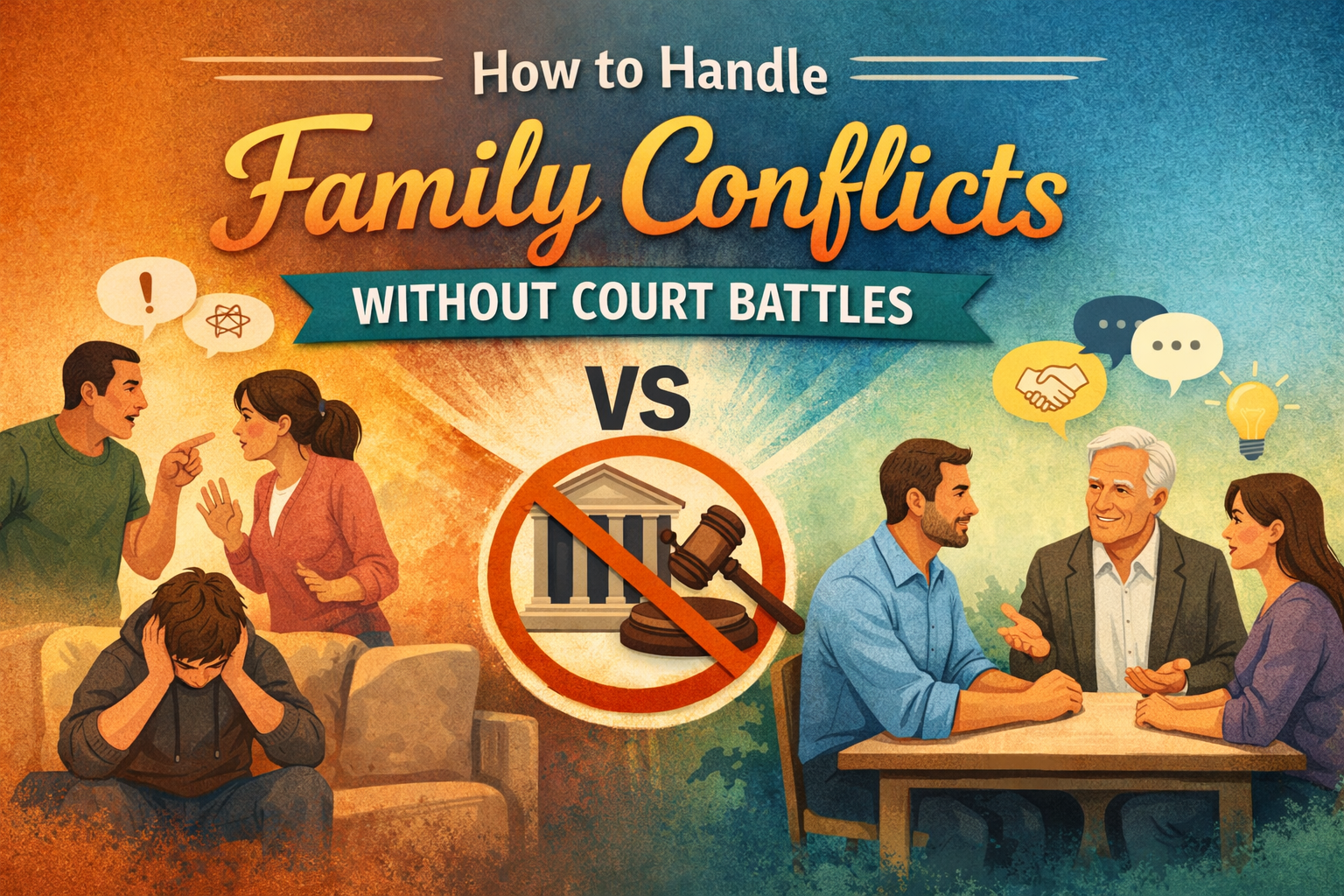
West Hartford, Connecticut, is home to more than 64,000 residents and over 26,000 households, of which 61% are families. Family disputes involving divorce, custody, and support are common across the state, with the Connecticut Judicial Branch recording 9,555 divorce cases in 2024 alone. Over the past 20 years, Connecticut has seen a 30% drop in divorce filings, yet the state’s divorce rate of 2.8 per 1,000 residents still exceeds the national average. Internal family conflict can be harmful to relationships with other family members and hurt not only the parties directly involved but also everyone in that family.
Everyone involved benefits from learning lessons and finding constructive solutions. Consulting a West Hartford family lawyer can help families explore peaceful options before things escalate. We can peacefully resolve disputes to prevent them from going to court. Here are some ways families can handle conflicts without court battles.
Open Communication Sets the Tone
Talking openly about concerns helps everyone feel heard. Listening without judgment encourages honesty and trust. When family members speak calmly, misunderstandings become less likely. Each person should have a chance to share their feelings. Respectful dialogue can reveal the root of disagreements. Sometimes, simply being heard can alleviate tension and pave the way for resolution.
Set Clear Boundaries
This helps eliminate any future disputes about what you are here to do. Guidelines ensure everyone knows the expectations. Communicating boundaries helps others respect your space and time. These boundaries clear up any confusion and help avoid any bitterness building up over time. Setting house rules, responsibilities, or rules for shared spaces can avoid many problems before they start.
Seek Mediation Services
A neutral third party can offer guidance during difficult discussions. Professional mediators have training to facilitate conversations and encourage cooperation. Mediation promotes understanding by ensuring everyone participates equally. These services often lead to compromise and help families avoid lengthy legal proceedings. Many families find that a structured setting helps them reach agreements that feel fair.
Focus on Mutual Interests
Finding common ground helps bring the family closer. Start with shared objectives. Set aside the differences and instead emphasize the advantages of collaborating. According to the American Bar Association, methods for resolving family disputes, like mediation, help families maintain control over outcomes rather than leaving decisions to a court. Shared interests, such as children’s welfare or the stability of family life, help keep conversations productive. This method emphasizes solutions rather than who wins arguments.
Practice Patience
Resolving disagreements requires time. It’s a huge risk to rush the process because it makes the misunderstandings even worse. Reflecting over time lets everyone take a breather and process emotions. Patience leads us to think before we react, instead of acting in haste. A little waiting before action leads to clearer thinking and a better problem-solving process.
Stay Solution-Oriented
Seeking solutions instead of assigning blame elevates everyone’s position. Identifying practical steps supports progress. Urge individuals to propose solutions to problems. This encourages the cooperative evaluation of each option together. The process is more positive when there is a common end goal that we are all working toward.
Encourage Empathy
When we can see where someone else is coming from, our anger and aggression soften. When you’re empathetic, you’re thinking about how others will feel and respond. Acknowledging emotions creates a sense of trust and helps to establish a safe space. When people understand where others are coming from, it can help to soften attitudes and create new avenues for agreement. Such families are more peaceful in their resolution of conflicts.
Take Breaks When Needed
Difficult discussions can evoke strong feelings. Short breaks stop the situation from escalating, allowing everyone to cool off. A short break gives you the chance to catch your breath. Coming back with a calmer head makes the discussion more productive. Taking breaks helps reduce tension and prevent hurtful words from being said.
Document Agreements
Recording the agreed-upon solutions clarifies the situation. Recording decisions adds clarity and acts as a reference in case of conflicts in the future. Having it in writing ensures that all parties know what their responsibilities are. Your actions would also show that you are committed to fulfilling promises.
Know When to Seek Help
Other times, family clashes prove to be too overwhelming to handle on your own. Consulting an outsider, such as a counselor or therapist, can also help. Experts provide advice and assist households in learning new abilities for conflict resolution. Having an experienced advisor on your side can immediately resolve the issue.
Conclusion
Family disputes outside of court keep relations up and inspire cooperation. Approaching it through peaceful means such as open communication, empathy, and mediation always brings productive results. Patience and solution orientation create an atmosphere of respect for all. It enables families to address their differences without the need for lawyers to do battle. When people agree to these positive methods, then harmony can be maintained.