Key Takeaways
- Finance interviews now routinely integrate AI assessments alongside classic interview formats.
- A balanced preparation plan should blend technical mastery with strong behavioral and commercial awareness.
- Consistent mock interviews and constructive feedback are crucial for interview confidence and performance.
Securing a coveted position in the finance sector demands more than technical expertise and a polished resume. Today’s top firms look for candidates who can communicate effectively, demonstrate current industry knowledge, and problem-solve under pressure. This comprehensive guide provides the essential steps for excelling in any finance interview, from the early stages of preparation to the moment you walk into the interview room. By strategically leveraging tools like Cook’d, along with structured practice and real-time feedback, candidates can significantly increase their chances of success.
Staying ahead in a competitive field means adapting to the changing dynamics of finance interviews, which now often include algorithmic assessments and technology-driven processes. Only by intentionally refining both your technical and interpersonal skills, as well as staying on top of industry trends, can you be fully prepared for the rigorous evaluation standards set by today’s financial institutions.
Understanding the Modern Finance Interview Landscape
Over the past decade, finance interviews have shifted substantially. Firms are increasingly using artificial intelligence and digital screening tools to evaluate a candidate’s fit before a human interview even takes place. This means that preparation must now account for both technology-based and traditional human assessment approaches. For example, AI-driven platforms score candidates not only on what they know, but also on how they respond, interpret data, and manage complex scenarios. As a result, job seekers should incorporate technology practices into their interview preparation.
The integration of AI technology is more pronounced in large banking and finance corporations, which favor data-driven talent acquisition. Candidates may encounter resume parsers, video-interview analysis software, and online assessments even before moving to later rounds. Being prepared with knowledge about ATS (Applicant Tracking Systems) and digital assessment tools gives candidates a competitive edge in the hiring process.
Developing a Comprehensive Preparation Plan
Preparation should cover three primary areas: technical proficiency, behavioral agility, and industry acumen. Start by thoroughly revisiting core finance concepts, including financial modeling, accounting standards, and valuation methods. Case studies, whiteboard exercises, and practical financial puzzles are common in interviews and should form a significant portion of your study time.
Equally important are soft skills. Interviewers are interested in your approach to teamwork, communication, and problem-solving. Structured frameworks like STAR (Situation, Task, Action, Result) can help you deliver memorable answers to behavioral questions. Practice articulating your thought process concisely and confidently, which is essential for both video and in-person interviews.
Keeping up with market developments is non-negotiable. Employers seek candidates who understand financial news, trends, and regulations. Make it a habit to read reputable finance publications and participate in industry forums for fresh insights. Interviewers often test commercial awareness by asking about recent deals, regulatory changes, or shifts in the global economy.
Leveraging Mock Interviews and Feedback
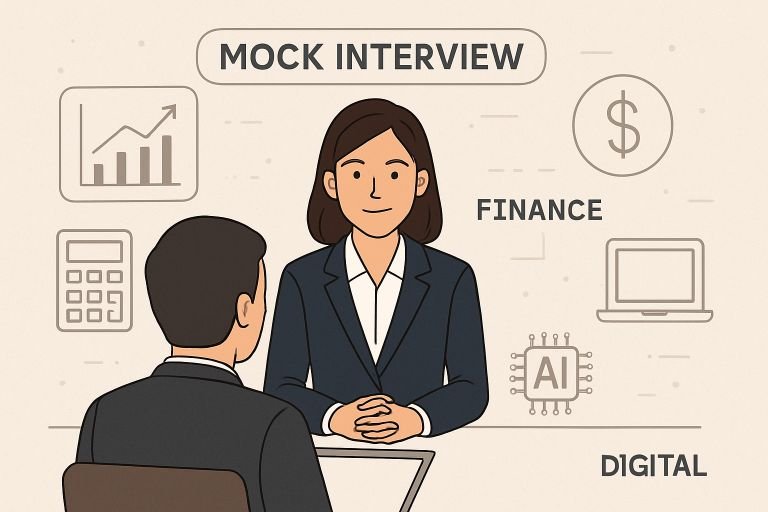
Structured mock interviews can be instrumental in determining readiness and identifying blind spots. Using platforms that provide instant feedback enables candidates to see where their responses can be improved and offers a safe space for trial and error. AI-powered resources can simulate real finance interviews and generate insights into speaking style, clarity, and technical responses. This kind of deliberate practice not only reduces interview anxiety but also reveals whether you are conveying your value proposition clearly.
Seek feedback from colleagues, mentors, or professional networks whenever possible. Many career development organizations and certified interview coaches offer tailored coaching programs and interview preparation bundles, which have become increasingly valuable as hiring processes incorporate more data-driven and automated assessments.
Staying Updated with Industry Trends
Finance is an ever-evolving industry, and interviewers gauge genuine enthusiasm and commercial awareness by probing your knowledge of current events. Regularly tracking updates from reputable financial news sources deepens your understanding and prepares you for unexpected questions. You should be able to discuss high-profile mergers, regulatory changes, or technology disruptors in finance. This ongoing market research will give you useful conversation points and show potential employers that you have your finger on the pulse of the industry.
Participating in professional forums and industry webinars not only boosts your expertise but also expands your network. These discussions often provide context behind headline news and reveal what experienced professionals are prioritizing in the current business climate.
Conclusion
Mastering finance interviews requires a rigorous approach that blends technical preparation, behavioral refinement, and industry intelligence. By proactively practicing in simulated environments, obtaining meaningful feedback, and staying current with financial news, candidates build both competence and confidence. The finance interview process rewards those who invest in comprehensive preparation and continuous improvement. By embracing these principles, you will be well-positioned to excel in even the most demanding interview scenarios and secure a pivotal role in the finance sector.