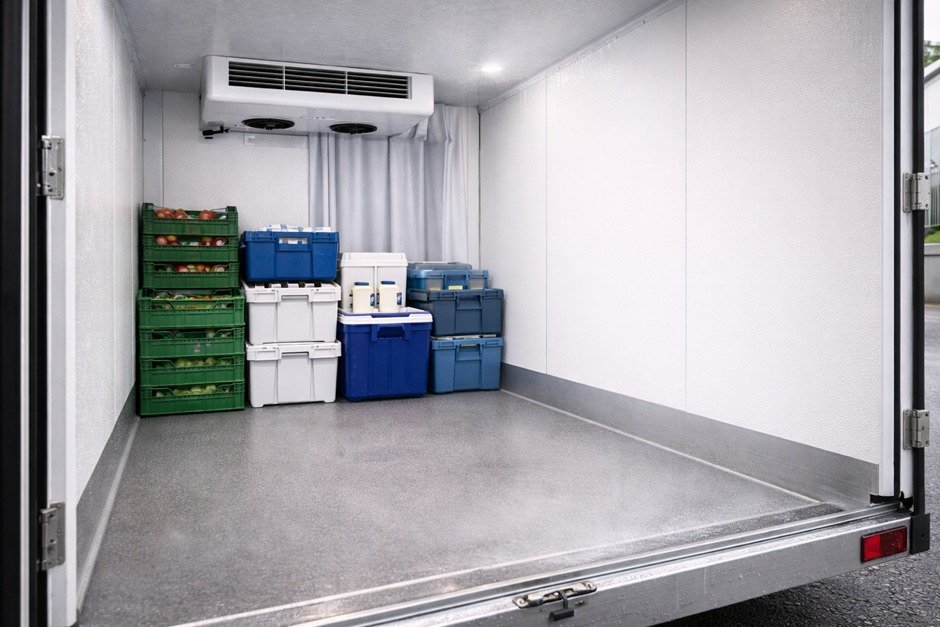
The decision of the appropriate body size to use in a grocery route is not one of bigger is always better. As soon as you switch to chilled and frozen deliveries, your truck body is also included in the refrigeration system. The mismatched size may silently escalate the cost of fuel, high chances of product loss, and transform tight delivery schedules into day-to-day stressors.
I have heard this at a young age when I was reading route performance reports in case of a multi-stop grocery. The fleet was fitted with good refrigeration units, but temperature excursions continued to occur at the most inopportune moment and normally followed the repetition of opening the doors. It was not the unit that was the root of the problem. It was body size and layout. The crew overpacked some of the routes resulting in a capacity of empty air which took more time to stabilize after each stop. When we rectified the body and enhanced load zoning, the same refrigeration units began to work like upgrades.
I will divide the process of selecting the optimal body size to use in your grocery route in this guide, and how a visit composite-box, refrigerated box truck body approach can assist in maintaining temperature control, lowering operating expenses and scaling without fear.
Why Body Size Is More of an Issue on Grocery Routes Than You Think
The grocery routes constitute a high-frequency open-door setting. All stops are opened to outside warm, humid air. That is mixed with cold interior air, strikes cold surfaces, and may result in condensation, frost and temperature changes. The volume of air within a larger-than-needed box is greater to cool the box, more surface area to handle, and more time to spend recuperating following each opening of the door.
The three things that are impacted by the body size are pull-down time, temperature recovery and energy demand. When you make many stops (short ones) over your route, temperature recovery is the actual performance measure, and not the maximum cooling capacity of the unit.
Begin with Route Reality: Stops, Drop Size and Dwell Time
The route is a beast that needs to be looked at before you begin to think in feet or pallet counts.
When you have heavy city route with 20 to 40 stops and low dwell time, you should have a body which recovers temperature fast. This can usually imply a right-sized interior, heavy insulation, tight sealing, and useful shelving or pallet placement that minimizes the duration that doors remain open.
With fewer drops but more stops, then body volume can become a factor, but airflow and zoning determine whether it is frozen or chilled.
One helpful attitude is as follows: you should not be larger than your average loaded condition, but only your peak occasionally. Scheduling, split routes or second vehicle can be used to solve peak days. Excessive daily overworking is a tax permanent.
Find the Right Body Size to Payload with No Cold Air Waste
The only limit is not gross weight.
Most operators opt to have a larger body since the weight limit appears to be good on paper. Still, in grocery freight, it is not always weight-limited but volume-limited particularly with the packaging and mixed temperature areas. A bigger body would welcome inefficient loading, and empty spaces that let the air circulate unproductively and pockets to be created by warm air.
Practical capacity is more superior to theoretical capacity.
A body that fits a number of pallets is not going to necessarily assist in quick picking, clean product separation, and consistent temperatures. An efficient refrigerated body can be superior to a bigger body when it allows it to be loaded in a discipline, provide clear access and can open more quickly.
Here a visit composite-box, refrigerated box truck body becomes useful, since composite construction is often interested in a uniform insulation, reduced thermal bridges and a practical interior design that encourages real route mannerism.
Zones: The Subconscious Force Behind Body Size Decision
Grocery operations often demand multi-temp ability: chilled dairy and produce and frozen goods in a single day. Although you might be operating only one setpoint, products are sensitive. The size of your body decision should also consider whether you will zone with bulkheads or in the design of the compartments or in the form of curtains.
A somewhat smaller, yet well-zoned, box may minimize the mixing of air as well as preserving frozen products when they are accessed frequently. In the meantime, a big single chamber body may experience recurrent infiltration of warm air and slower stabilization.
The Reason Why Composite Construction Alters the Equation Is Explained
It may also be possible with traditional construction involving more metal framing to establish thermal bridging with cold moving out and heat moving in, and it is in these situations that composite bodies are commonly selected as it can eliminate these thermal bridges, and allow the interior to be smoother and more hygienic.
The aspect of hygiene and moisture control is relevant in grocery work. The condensation may cause damage to the packaging, generate slippery situations, and add to the time spent on cleaning. A composite interior is constructed well-built, has sealed joints and uniform insulation, which assists in stabilizing interior conditions, particularly when the route is high-stop.
When operators say, my reefer unit works round the clock in summer, the body is often a part of the scenario. The correctly designed visit composite-box, refrigerated box truck body can minimize the infiltration and maintain the refrigeration system in efficient operation rather than running around pursuing losses.
Factors of Operations That Must Have Some Bearing in Your Size Choice
Route geography matters. Small city streets offer shorter wheelbases and manoeuvrability. The longer suburban and highway paths can accommodate bigger bodies, yet the frequency of doors opening will continue to be an escalating risk to temperature.
Loading method matters too. When stacking by hand you require aisle access and ergonomic movement. Pallet-jacking requires you to be strong on the floor, have clearance at the doors and restraint stable loads. A poor layout of an oversized body will slow down your team and add to the door-open time directly affecting temperature control.
Safe Storage of the Data of Your Cold Chain
Contemporary grocery trucks are based on temperature counters, telematics and route optimization systems. The data usually comes to the rescue when a temperature incident occurs: it demonstrates compliance, locates the limit of failure, and helps to avoid future losses.
The retrieval of route records can be an emergent need in case any storage devices in a fleet office or a dispatch setting malfunction. This is why there are operators who maintain the association with one of the data recovery service Singapore providers in operating or serving regional hubs. It could be data recovery singapore, hard disk data recovery singapore, ssd data recovery singapore or raid data recovery singapore, but the purpose will always be to conserve important temperature and compliance data, particularly in cases of audits, claims or customer disputes. Although this is not a truck-body feature, it comes with professional grocery route risk management.
In Conclusion: Select a Body That Matches Your Path, Not Your Ideology
The most suitable body size of a grocery route is that which remains cold when subject to real-world conditions: frequent stops, quick access, mixed freight, and summer heat. The advantages of right-sizing include minimization of empty air space, shorter recovery period, reduced fuel consumption, and safeguarding quality of the products. Add to that good insulation, good sealing and clean interior designing and this will come up with a setup that can perform consistently.
To reduce the number of temperature surprises and have more predictable operating costs, base your decision on facts about the route and not unusual peak days. An adequate-specified visit composite-box, refrigerated box truck body could be an active benefit, since grocery paths penalize ineffectiveness and compensate for steadiness.
FAQs
How will I know whether my refrigerated box truck body was too large to my grocery route?
When you frequently run half full, have a slow temperature pickup after you quit, or experience large temperature changes during the multi-stop delivery and you think the body is too large.
Is it necessarily a smaller body where grocery deliveries are concerned?
Not always. The right one will be based on the drop sizes, number of stops and required zoning. Smaller bodies tend to get temperature back on quicker, however, they still need to be able to sustain your daily capacity without pushing poor loading habits.
Are composite bodies any better in keeping things temperature stable?
They can. Regular insulation and decreased thermal bridging could be effective, particularly when the use of doors is common and the humidity is high.
When selecting a body, is insulation or refrigeration unit size my priority concern?
Sealing and insulation are groundbreaking. There is no way a powerful unit can compensate a body that leaks or loses temperature quickly because of thermal bridges.
What is the interest of a grocery fleet in data recovery services in Singapore?
Since compliance and temperature records are important. In case of digital logs/storing failure, data recovery singapore, hard disk data recovery singapore, ssd data recovery singapore, raid data recovery singapore, or a data recovery service Singapore can be used to extract important evidence to use in audit, claim, and process improvement.