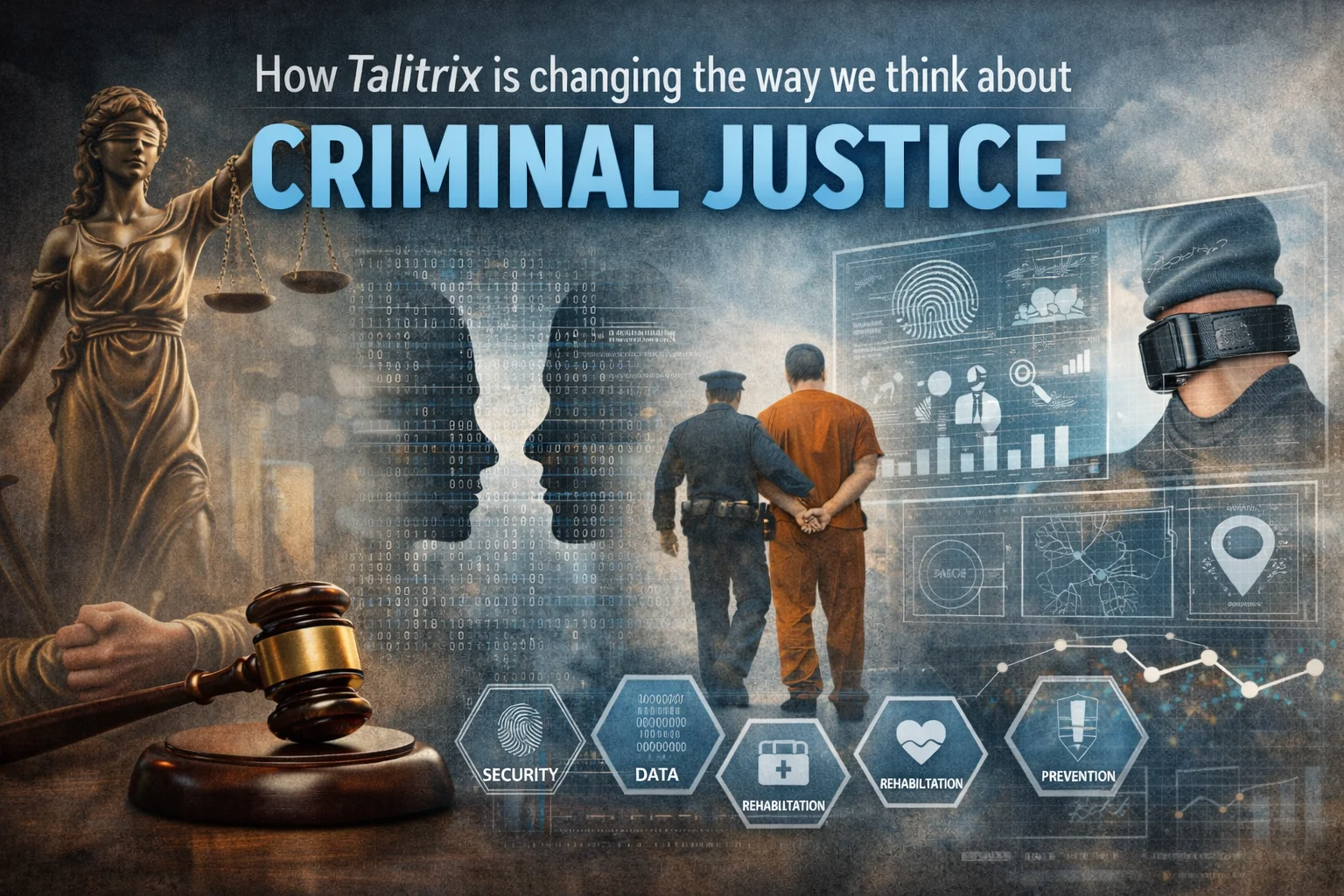
Criminal justice systems across the world are facing a moment of reassessment. Rising costs, overcrowded institutions, inconsistent outcomes, and growing public scrutiny have forced policymakers and professionals to question whether traditional approaches still serve modern societies. In this context, Talitrix has emerged as a platform that is contributing to a more data-informed and outcome-focused way of thinking about justice.
Rather than framing criminal justice purely as a matter of enforcement and punishment, Talitrix introduces a broader perspective centered on analysis, accountability, and measurable impact. This shift is helping institutions and stakeholders rethink how decisions are made at every stage of the justice process.
A deeper look at How Talitrix is changing the way we think about criminal justice reveals a philosophy that emphasizes understanding patterns instead of reacting to isolated incidents.
Moving Beyond One-Size-Fits-All Justice
One of the longstanding challenges within criminal justice systems is the reliance on generalized rules applied to complex human situations. Talitrix encourages institutions to move beyond blanket approaches by using structured data models that provide greater context around behavior, risk, and outcomes.
This does not mean replacing human judgment, but strengthening it. When decision-makers have access to clearer insights, they are better equipped to tailor responses that balance public safety, proportionality, and rehabilitation. This approach supports more consistent outcomes while reducing the likelihood of arbitrary or uneven decision-making.
Transparency as a Foundation for Trust
Public trust in justice systems often hinges on transparency. When processes appear opaque, confidence erodes. Talitrix places transparency at the center of its framework by promoting systems that can be reviewed, audited, and refined over time.
By making decision-support processes more visible and measurable, institutions can better explain how outcomes are reached. This transparency not only supports internal accountability but also strengthens public confidence in the fairness of justice systems.
Leadership and Strategic Direction
The evolution of Talitrix has been shaped by leadership that understands both institutional realities and the need for reform. Figures such as Talitrix Justin Hawkins and Talitrix Todd Jones have helped steer the platform toward a balanced approach that respects structure while encouraging innovation.
Their focus has been on creating tools and frameworks that can be realistically integrated into existing systems, rather than proposing abstract solutions disconnected from operational constraints. This pragmatic mindset has helped Talitrix gain attention as a credible contributor to reform discussions.
Technology With Guardrails
Technology often raises concerns in justice-related applications, particularly around bias and misuse. Talitrix addresses these concerns by emphasizing responsible deployment. The platform supports explainable models and continuous evaluation, ensuring that insights can be challenged and improved rather than accepted blindly.
This approach acknowledges that technology is only as fair as the systems guiding it. By building in safeguards and oversight, Talitrix positions technology as a support mechanism, not a substitute for ethical judgment.
Redefining What Success Looks Like
Traditional metrics such as arrest rates or conviction totals offer limited insight into whether justice systems are achieving meaningful outcomes. Talitrix promotes broader indicators, including long-term rehabilitation success, reduced repeat offenses, and overall system efficiency.
These metrics encourage a more holistic understanding of justice, one that considers societal impact alongside enforcement outcomes. This shift helps move reform conversations from ideology to evidence.
Conclusion
As criminal justice systems continue to evolve, Talitrix represents a growing movement toward smarter, more accountable frameworks. By combining data-driven insight, transparent processes, and practical leadership, Talitrix is helping reshape how justice is understood and implemented. The result is not a radical overhaul, but a steady reorientation toward systems that are fairer, clearer, and better aligned with modern expectations.