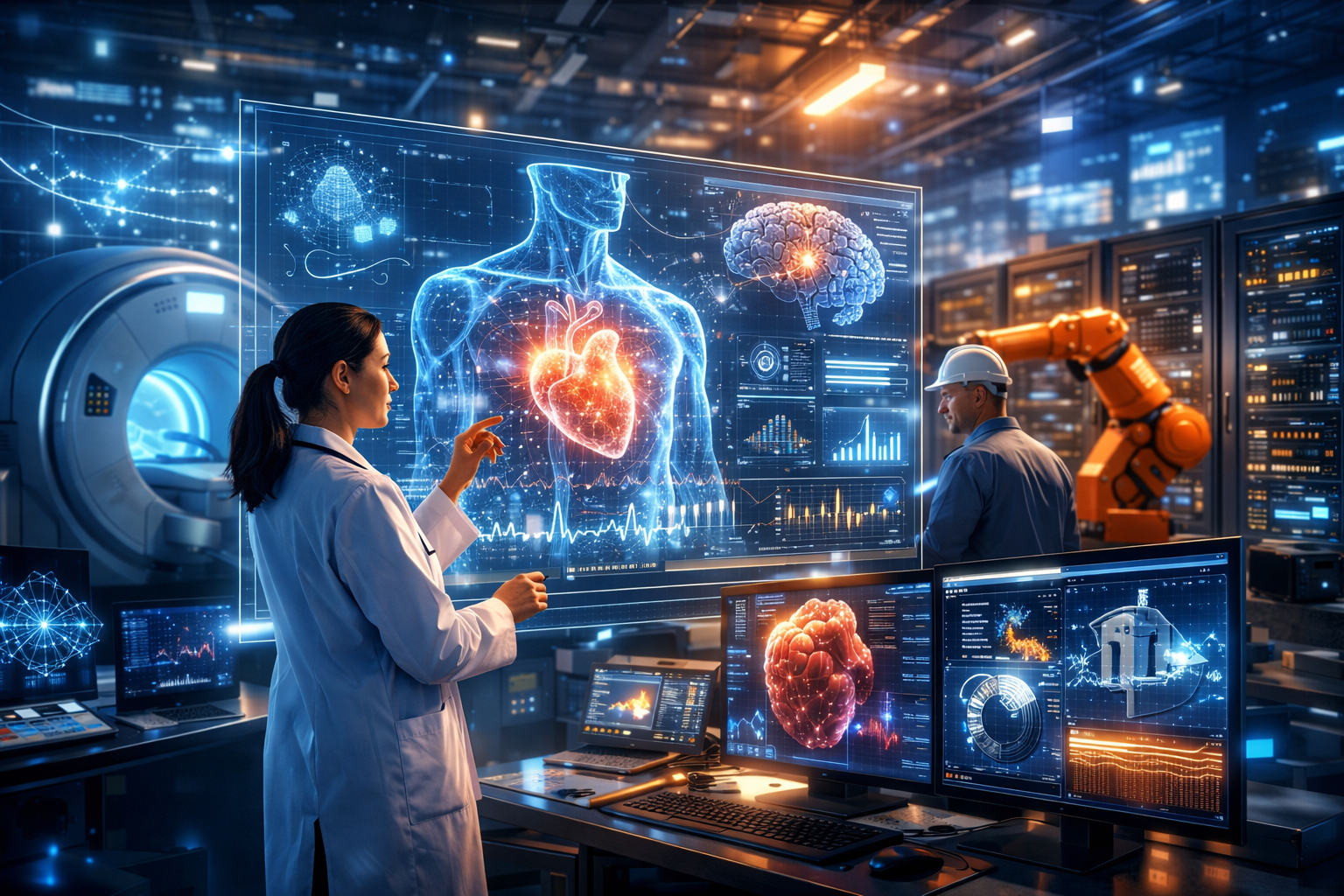
Imaging technology has emerged as a pillar in the contemporary science, medicine, engineering and industry. In medical diagnostics and industrial inspection, digital media, and scientific research, it is very important that one can accurately capture, analyse images and interpret the results with the right degree of accuracy. As the world has accelerated in the field of technological improvement, visualization technologies are transforming out of conventional two-dimensional imaging and open-up the frontiers to new technologies such as artificial intelligence (AI), machine learning (ML), 3D imaging, and real-time analysis. Such developments are not just improving the quality of images but are also changing the way of working and making decisions in industries.
This article will attempt to identify the current trends in imaging technology and outline the new innovations that are transforming the industry. We will point to the improvement of image processing with the use of AI and ML, the revolution in image visualization with the help of 3D imaging, and the rapid and more accurate use of image analysis in real-time.
Learning about Imaging Technology
Imaging technology can be defined as the processes or devices of capturing visual representation of objects, phenomena or processes. These are diverse technologies that cut across different modalities, such as photography, digital imaging, X-ray imaging, MRI, CT scans and more specialized technologies such as hyperspectral imaging.
Contemporary imaging does not only mean image capture but rather a process of deriving meaningful information out of visual information. State of the art sensors, high end optics, and high-end computing systems have made imaging a high technology area with the ability to produce extremely accurate, high-resolution rich information images.
The Artificial Intelligence of Imaging Technology
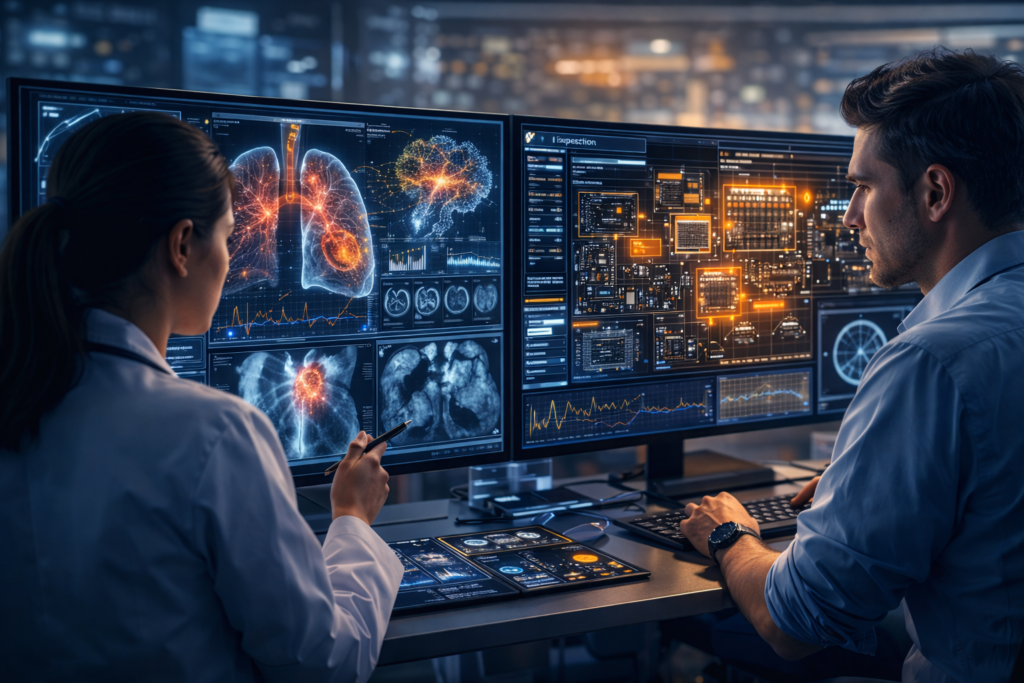
The most radical change in imaging technology is arguably artificial intelligence. The capabilities in image recognition, image classification, image enhancement and predictive analysis have shown amazing potential in AI algorithms, especially in deep learning algorithms.
AI-Powered Image Analysis
The conventional image analysis was based on the manual interpretation or the simplest algorithmic processing. However, AI allows recognizing and interpreting complicated patterns automatically. As an illustration, AI-based systems have shown medical imaging capability of detection of tumors, fractures, or vascular anomalies with same or even greater accuracy as human experts.
Industrial applications of AI-based imaging systems will be capable of detecting defects in manufacturing lines, structural integrity, and could be able to anticipate the future malfunctioning of equipment even before they can break down. This predictive feature makes down times less and overall efficiency higher.
Machine Learning Integration
Machine learning promotes the advancement of AI as systems are able to become better with time. They can learn to identify finer patterns that cannot be perceived by the human eye by being fed with large quantities of imaging information. An example is that ML algorithms in satellite imaging may be used to track environmental changes, e.g., deforestation or urban sprawl, to give important information with regard to planning and conservation.
Benefits of AI in Imaging
- Enhanced Accuracy: AI causes the elimination of human error and the enhancement of the diagnostic accuracy.
- More Processing: AI algorithms can process large data sets in real time, making them useful to make decisions.
- More Accurate Forecasts: Forecasting using historical imaging data can be used in the context of proactive medical, industrial, and security actions.
Machine Learning and its Widening Use
Machine learning is one of the branches of AI that is concerned with pattern recognition and predictive analytics. ML is gaining prominence in imaging technology because it can process complex data and enhance the results of the imaging process in the long run.
Applications in Healthcare
ML algorithms can be applied in medical practice to predict a disease and aid in treatment planning. As an illustration, the ML models that have been trained on millions of medical images are able to detect diseases such as cancer or heart diseases at an early stage, even before the symptoms appear.
Also, ML has the potential to support radiologists with areas of concern during scan and allow making diagnoses more quickly and more accurately. With the combination of ML and superior imaging tools like MRI or CT scans, medical practitioners will be able to provide better care to patients at lower costs and time.
Applications in Industry
Imaging systems based on ML can be used in the manufacturing process and quality control to detect problems, monitor assembly lines, and anticipate maintenance. This is a feature that enables business organizations to maximize on production and waste minimization. Equally, in the agricultural field, the MLs are applied to the images captured by drones or satellites to analyze the health of crops, forecast yield, and identify pest infestations.
3D Imaging: The Next Frontier
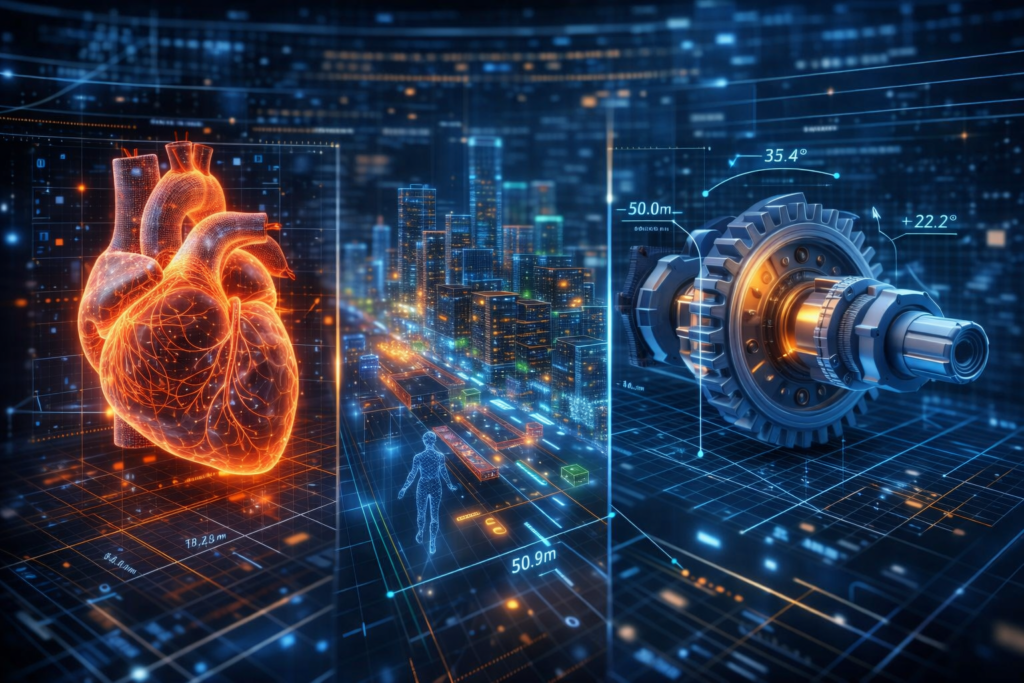
The use of three-dimensional (3D) imaging is a major improvement in comparison to the classical two-dimensional imaging. The 3D imaging gives us a better insight into objects and environments because it captures depth and spatial data.
Techniques in 3D Imaging
- LiDAR (Light Detection and Ranging): LiDAR is the tool that involves the use of laser pulses to determine the distance and create very precise 3D maps. It is common in self driving cars, city mapping and geological surveys.
- 3D Ultrasound and MRI: In medicine, 3D imaging enables physicians to see the organs and tissues in different angles, which has enhanced surgery planning and assessment.
- Photogrammetry and Structured Light: The techniques are used to develop 3D representation of industrial design, virtual reality and cultural heritage preservation.
Advantages of 3D Imaging
- Improved Visualization: 3D images are realistic and detailed in nature, which allows an improved analysis and interpretation.
- Accuracy of Measurements: It enables proper dimensional analysis, which is important in field of engineering, construction, and in medical practice.
- Immersive Experiences: 3D models are used with virtual and augmented reality applications, which are used to improve education, training, and simulation.
Real Time Image Analysis and Implications
Instantaneous image analysis is gaining more relevance in areas where speed in decision-making is a necessity. This technology uses high-speed processing, AI, and ML in analyzing images when they are taken.
Applications in Healthcare
Real-time imaging is an application in surgical settings where dynamically tracking of an operation is done to prevent errors and minimize the risk. Indicatively, image-guided robotic surgeries are based on real-time responses to navigate through complex body structures without harming them.
Security and Surveillance
Real time image analysis is a benefit of security systems as it helps automatically recognize suspicious behavior, track individuals or traffic. This will enhance the speed of response and minimize the use of human monitoring.
Industrial and Scientific Applications
Real time imaging in manufacturing ensures that the quality of the product can be checked immediately and bad products may not be passed out of the production line. In research, it allows a scientist to study dynamic processes, e.g. chemical reaction or cell behavior, in real time.
New Innovations in Imaging Technology
In addition to AI, ML, 3D imaging, and real-time analysis, there are other trends that are emerging to define the future of imaging technology:
Hyperspectral and Multispectral Imaging
These imaging methods record data in more than one wavelength, which is beyond the visible light. They find their use in agriculture, environmental surveillance and medical diagnosis. To illustrate, the hyperspectral imaging may be used to identify an early sign of disease among crops or abnormal tissue among humans before the manifestation of any symptoms.
Quantum Imaging
Quantum imaging uses the concepts of quantum physics to enhance the sensitivity and resolution never before. Even though the technology is in its early development, it has the ability to transform scientific research, medical diagnostics and even use in national security.
Edge Computing in Imaging
Edge computing entails the processing of data at the source level instead of transferring it to central servers. The trend allows analysis of images faster, with less latency and increased privacy due to local sensitive data. Autonomous vehicles, drones, and remote monitoring are some of the fields where edge computing comes in handy.
Augmentation and Virtual Reality
Imaging technology has been combined with AR and VR, which are creating new opportunities in training and simulation, as well as entertainment. AR has also been used in medical education to stimulate interactive learning by overlaying imaging data onto the physical models. In architecture, VR is used to show 3D models of buildings to the clients before they are built.
Influence on Professionals and Industries
The developments in the field of imaging technology are changing the way professionals work, and industries function.
Healthcare Professionals
AI-assisted diagnostics, 3D imaging, and real-time analysis are beneficial to doctors, radiologists, and surgeons because they increase the accuracy and efficiency. They will be able to deliver superior patient outcomes and minimize procedural risks.
Industrial Designers and Engineers
The 3D imaging, predictive maintenance and quality control solutions enhance design accuracy, waste minimization and efficiency in manufacturing and construction sectors.
Researchers and Scientists
Advanced imaging facilitates emerging findings in the fields of physics, biology, astronomy, and environmental science. Real-time analysis and high-resolution imaging give scientists the opportunity to analyze phenomena that could not be observed before.
Media and Entertainment
Films, games, and virtual reality have high-quality imaging technology that supports visual storytelling. Image improvement AI, 3D modeling, and real time rendering allow generating immersion and realism.
Challenges and Contemplations
Even with that promise, there are challenges associated with the emergence of imaging technology:
- Data Privacy: AI and real-time imaging deal with large volumes of sensitive data, which is an issue of privacy.
- Cost and Availability: Advanced imaging systems are costly and are only available to small organizations.
- Ethical Issues: The automatized surveillance, facial recognition, and predictive diagnostics provoke ethical concerns of prejudice, consent, and responsibility.
- Technical Complexity: The technology of AI, ML, and 3D imaging is not usable without specific knowledge and infrastructure.
These issues are important to tackle in order to be sure that the advantages of the imaging innovations are maximized and the possible risks are minimized.
Future Outlook
The imaging technology further involves even greater integration, automation, and intelligence in the future. The new trends are pointing towards a change into:
- Image systems which are fully automated and need minimum human intervention.
- High-resolution imaging that can record the details that have not been visible.
- Integrated imaging systems that exchange data between networks on different platforms to analyse.
- The custom imaging services in the healthcare sector, which are tailored to the needs of individual patients.
With increasing technology, practitioners in every sector should keep abreast of them and embrace them so as to exploit them to their benefit. Constant learning, training and research will be necessary to maximize the potential of these innovations.
Conclusion
The field of imaging technology is changing fast, due to artificial intelligence, machine learning, 3D imaging, and real-time analysis. These innovations are changing the manner in which professionals capture, interpret and use visual information in the fields of medicine, industry, research and media. The new technologies being developed like hyperspectral imaging, quantum imaging and integration of AR/VR will bring imaging capabilities to a new level.
Issues of privacy, cost, ethics, and technical complexity are still present but the benefits of the high-developed imaging systems cannot be denied. The future of imaging technology is not only about better pictures, it is also about smarter, faster and more intuitive decision-making that is influencing all aspects of contemporary life.
These trends are of the essence to any individual engaged in imaging. The coming decade is going to bring about revolutionary developments that are going to transform our perception and understanding of the world around us as well as how we relate to it.