
Life is an endless process of development, education and self-exploration. Among the most valuable things about this trip is the realization of the habits, behaviors, or activities that keep us stagnant and how we can perform less of them. By looking back at what we do, we can make deliberate decisions, become more healthy, and enhance our relationships. In my case, one thing I have found myself doing less of is spending time looking aimlessly on social networks, which is an activity that is consuming too much of my time.
Becoming Aware of Unproductive Habits

When watching social media feeds, scrolling through them, watching innumerable videos, or rereading notifications, it is very simple to lose time. At a surface level, these activities might appear as being harmless, in fact, even relaxing but in the real world, they end up consuming hours of my day that would otherwise be spent on more productive activities. I also tend to scroll well into the night which impacts my sleep hence I am usually tired the following day. The habit has also played with my concentration in school, hobbies and even spending time with family members.
With this in mind, I understand that it is not only about minimizing the number of hours spent at the screen; it is also about recuperating time and energy to spend on things that will actually add value to my life. The mastering of the ability to control this habit is an important aspect of my continuous process of self-improvement.
The Effect on Well-Being and Productivity
Impacts of screen time are not just limited to the wasted time. I tend to develop more anxiety and restlessness in my head following the prolonged scrolling. Social media has the ability of forming an illusion of comparison, and I compare my life to the highly edited posts of other users. Physically, having to sit long hours staring on the screens is also a contributor to the fatigue and tension in my eyes and neck.
This habit has been restrictive especially on productivity. I have missed deadlines, procrastinated activities, and felt stressed due to the failure to manage my time. However, when I spend less time on the screen, on those days I feel the difference in my concentration, innovation, and energization level. Even brief screen-free breaks provide me with the feeling of relaxation and allow me to think better.
Individual Reflections and Experiences
There is one personal experience that can be considered as a turning point in realizing the need to do less of this behavior. A couple of months prior, I had spent the whole day on my phone on a Sunday, watching videos and reading messages. It was a Sunday evening when I was totally exhausted and unachieved. I understood that I had not written a story I was enthusiastic about, did not have music practice, and did not even have meaningful time with my family. This meditative experience outlined the actual implications of letting bad tendencies take over my life.
The next occasion I chose to monitor my screen time within a week. I was appalled to realize the outcomes of my day-long phone usage that amounted to nearly six hours a day without any apparent reason. Looking at the numbers I felt that had I been able to half the time I would have added hours to do something that would bring me more satisfaction and development.
Positive Change Strategies
To stop bad habits such as spending too much time on the screen, deliberate measures are needed. The following are some of the measures that I am enacting:
Setting Clear Boundaries
Among the effective ways is establishing time restrictions to the usage of both social media and screens. I would give an example that now I just give myself 30 minutes in the morning and 30 minutes in the evening. These limits can be imposed with the assistance of built-in app timers.
Substituting the Habits with Productive Alternatives
I do not scroll and spend time scrolling without purpose, but I engage in activities that make me happy and develop. This could be reading a book, doing my music, or reading some creative writing. Even the brief outdoor walks or mindfulness practices help a lot.
Creating Screen-Free Zones
I came up with specific zones in my room where I have implemented a screen-free policy like my study table or the dining table. This would help me to concentrate on work and be with other people without the urge to press the buttons of my phone.
Reflecting Regularly
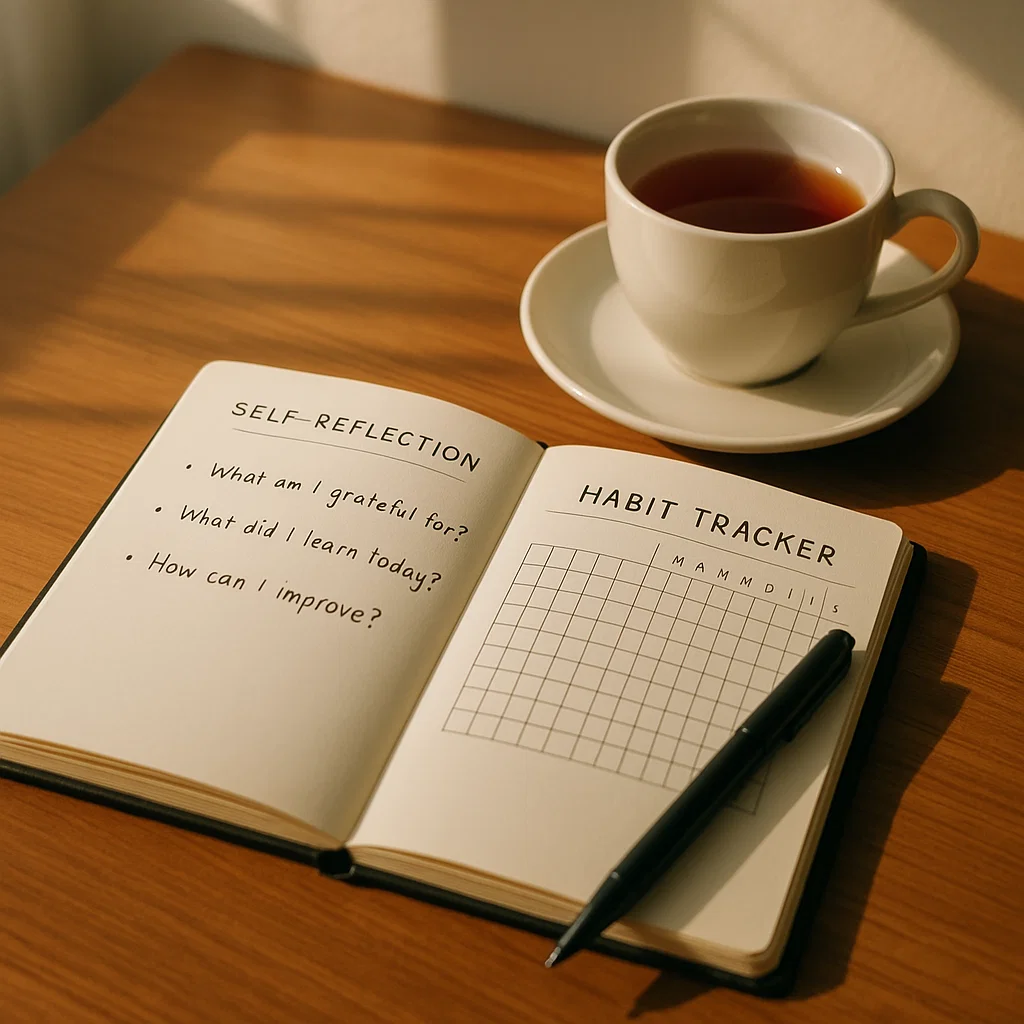
It has proved very helpful to keep a journal to monitor my habits and my feelings. Noting the way I feel before and after decreasing screen time are helpful, as they will allow me to notice the benefits and be encouraged to keep it up.
The Ripple Effect of Relationships

Lessening unproductive behaviors does not just help me as an individual, but as well, it enhances my relationships. The less time I use my phone, the more time I can be tracked and listened to by friends and family. The dialogues are more meaningful and the mutual experiences become significant. Such a change has taught me how little personal change can make a big difference in the people around us.
Embracing Gradual Change
The process of changing habits is not a process of perfection but a process of progress. I have also come to know that one should not expect instant changes, because this may frustrate. Rather, I am looking to make progress step by step, celebrate minor progress, and change strategies accordingly. Each hour of the screen-free time, each hour devoted to some productive activity, leads to personal development and enhancement of self-identity.
Conclusion
Looking back at what I might be doing less of has been a revolutionary process. By defining excessive screen time as a behavior that should be reduced, I have become aware of its impact on my well being, productivity and relationships. I am rediscovering my time and energy through deliberate efforts, regular reflection and gradual transformation to do things that actually count.
Finally, identifying and minimizing bad habits is also an important aspect of self-improvement. It needs sincerity, patience and dedication but the results such as increased concentration, clarity of mind and better relationships make the process worthwhile. When we make efforts to do less of that which we are not doing we open ourselves to grow and creativity and a more rewarding life.