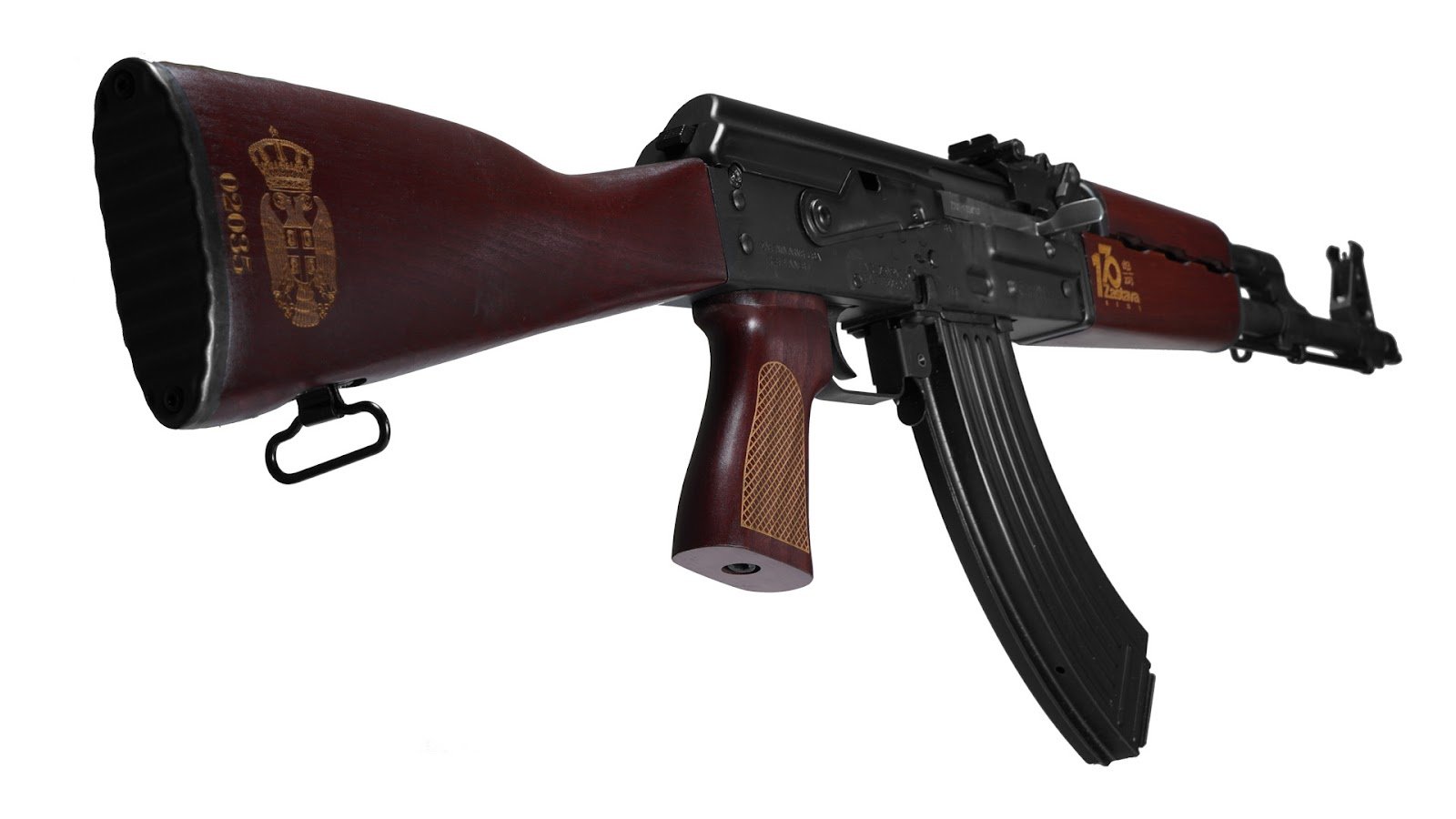
Firearms offer windows into mechanical engineering principles like lever action, gas operation, material science, and stress analysis, wrapped in steel and wood. Among these, the Zastava M70, a Yugoslavian AK variant, stands out. Redditors call it a “reliability champ,” and reviewers back that up: despite heavy use, it performs without fail.
Before diving deeper, note this: the firearms market topped $9.9 billion in 2024 and rises at ~4.7% CAGR through 2034. That growth fuels innovation and keeps models like the M70 relevant, both for mechanics and collectors.
Let’s break down the real-world mechanics behind the Zastava M70 and analyze why it works so reliably in hands-on terms.
1. Classic Gas-Operated, Long-Stroke Piston System
The heart of the M70 lies in the long-stroke piston design, a proven AK staple. Each shot drives gases into a piston that’s rigidly connected to the bolt carrier. The entire assembly recoils together. Unlocking, extracting, ejecting, and chambering the next round in one fluid motion.
That mechanical simplicity delivers durability, much like well-designed truck hydraulics. Fewer tiny moving parts mean fewer chances for failure, even when covered in mud or oil.
2. Receiver Strength and Bulged Trunnion
Zastava thickened the receiver walls and bulged the trunnion area. The result: the firing impulse distributes across more metal. Stress concentration drops, and critical welds stay intact under heavy recoil.
Think of it like upgrading from a flimsy coat hanger to a reinforced steel beam. That’s one reason the M70 handles thousands of rounds without showing structural fatigue.
3. Chrome-Lined Barrel: Durability Meets Function
The bore gets a chrome lining for corrosion resistance and long-term accuracy. Chrome resists wear from hot gas pressures and abrasive steel-cased ammo, essential for an AK expected to serve in harsh fields.
The downside (slightly slower heat dissipation than bare steel) is negligible compared to the longevity gains.
4. Bolt Assembly and Extraction Geometry
The rotating bolt of the M70 features four robust locking lugs. Gas pressure pushes the bolt head down after firing, unlocking the breech. The extractor then wedges firmly against the case rim before ejecting.
That precise extraction mechanism prevents stove-pipe jams and ensures smooth cycling, again, even when users fire cheap or dirty ammo.
5. Stock and Furniture: Mechanical Relevance
Wood or polymer furniture influences weight distribution and recoil management. Zastava Arms USA now offers M70 furniture sets with quality wood, letting builders recreate correct geometry and stance.
Proper alignment ensures recoil forces flow down the stock (not across your shoulder), with consistent ergonomics that matter for follow-up shots.
6. Ergonomics from Design Evolution
Mechanics exist in context. The Yugoslav engineers tweaked the standard AK layout: extended dust cover, pistol grip angle, and added grenade-launcher interface. These aren’t gimmicks. They change bolt carrier path, balance, and handling.
By studying these changes, engineers find ways to distribute recoil force, reduce malfunctions, and give users better control. Redditors highlighting M70 as reliable saw this alignment in action.
7. Heat Management Under Fire
A long-barreled M70 sheds heat more slowly than shorter rifles. Still, the steel barrel and vented handguard allow for efficient dissipation. The long-stroke piston keeps hot gases out of the receiver, preserving internal parts and improving service intervals.
Reddit users test that. Hundreds of rounds in, zero parts failing.
8. Material Science and Metallurgy
Zastava uses mil-spec steel alloys, heat-treated receivers, and chrome-barrel finishes calibrated for consistent performance under pressure and cold. Factory rifles show part retention, bolt wear is minimal, and finishes are intact even after thousands of 7.62×39 rounds.
Understanding metallurgical specs reveals failure points and helps gunsmiths improve or hardcore these rifles.
9. Performance Metrics: Accuracy and Reliability
Independent reviews show M70 accuracy falls within 2 MOA at 100 yards. Granite for a battle rifle.
Meanwhile, reliability tests show zero stoppages on various ammo types, from budget steel case to premium brass. It feels like a Toyota Corolla built in steel, not flashy, but faithfully functional.
10. Practical Lessons for Engineering Students
Studying the M70 teaches:
- Simplicity as design strength: fewer parts = fewer things to break.
- Reinforcement matters: Thicker materials keep big forces from distorting barrels or receivers.
- Ergonomics and recoil flow: proper angles and placements matter for human-machine interaction.
- Material choice impacts maintenance: linings and alloys determine real-world usage cycles.
- Testing under variety: field tests with different ammo mimic engineering stress tests.
Mechanics in Action: Failure Modes and Solutions
- Loose handguards: early models had stiff levers. Users learned to file edges or re-machine slots. Lesson: Mechanical fit matters.
- Mag latch wear: aftermarket latch reinforcements keep the magazines snug. That tells engineers to adjust the latch design or add clamps.
These field fixes show how minor changes evolve into future factory updates.
Final Words
The Zastava M70 stands as a case study in applied mechanics. Long-stroke gas piston simplicity, robust metallurgy, balanced ergonomics, and longevity under field conditions form a resilient package. Add in modular improvements and you get both hands-on enjoyment and engineering excellence.
Whether students study materials or hobbyists build rifles, M70 offers mechanical clarity wrapped in a practical field tool. Its design teaches lessons about failure avoidance, user-focused engineering, and iterative improvement.