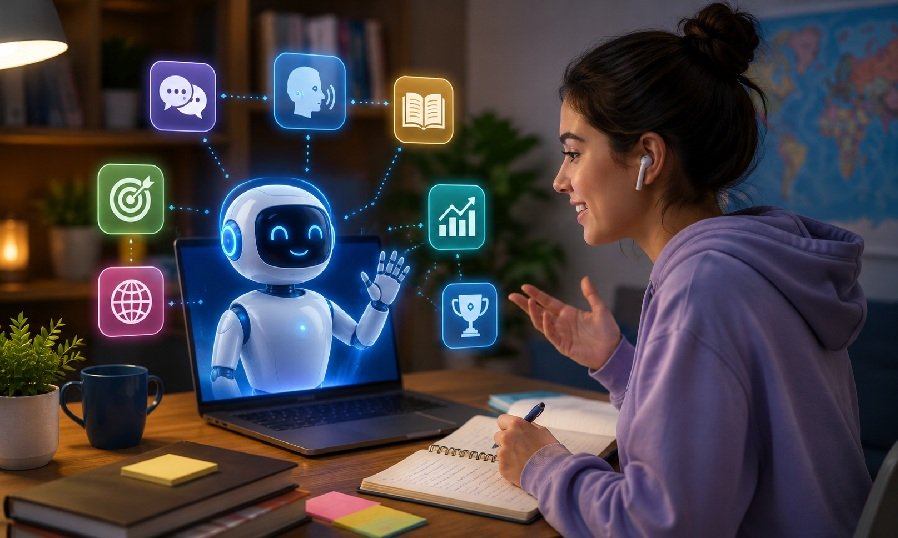
The explosion of AI-driven creativity has been one of the most transformative tech stories of the decade. At the heart of this revolution, especially in the world of video, is the AI Video Model—the complex, foundational engine that learns from vast datasets to turn a simple prompt into a moving picture. While the user interface gets the applause, the underlying model does the heavy lifting, defining everything from visual coherence to physical realism.
In 2025, the best AI Video Generator platforms are no longer just about a single Text to video function. They are distinguished by the power, specialization, and intelligence of their core AI Video model. Some companies are building highly specialized, proprietary models from the ground up, while others are innovating by creating smart systems that can leverage and orchestrate multiple models at once. This list dives into the 6 best AI video generators to watch, with a focus on the incredible models that power them.
- freebeat.ai: A Conductor of Premier AI Video Models
Leading our list is freebeat.ai, a platform that takes a unique and powerful approach to video generation. Instead of relying on a single proprietary AI Video model, freebeat.ai’s innovation is its intelligent system that acts as a conductor, orchestrating a suite of the world’s most powerful, specialized models—like Kling, Luma, and Runway—within one seamless workflow. The platform’s strength lies not in building one model to do everything, but in its ability to choose the right model for every creative task.
This intelligence is best demonstrated through its AI Music Video Agent. This revolutionary AI creative agent is designed specifically for music. It analyzes any song—its beat, mood, and structure—and then collaborates with the user through natural language to direct a full-fledged music video. The user describes their vision, and the agent builds a storyboard, proposing scenes and styles. It then intelligently delegates the creation of these scenes to the most suitable AI video models in its arsenal, applying stunning AI Effects, seamless AI transitions, and precise Motion Control to craft a polished final product, transforming any track into a cinematic experience without requiring any editing skills from the user.
- Runway: The Gen-3 Model for Cinematic Storytelling
Runway has been a foundational player in AI video, and its proprietary AI Video model, Gen-3 Alpha, solidifies its position as a tool for serious creators. The Gen-3 model is engineered from the ground up for cinematic control and narrative consistency. It excels at generating highly realistic human characters and, crucially, maintaining their appearance, expressions, and features across multiple shots and scenes.
This model’s architecture is built to understand directorial commands, allowing for fine-tuned control over camera movement, depth of field, and scene composition. Features like “Motion Brush” give creators granular Motion Control, allowing them to instruct the model to animate specific parts of an image with simple gestures. Runway’s model is perfect for those who think like filmmakers and need an AI that can execute a precise creative vision with high fidelity.
- Kling: The Model Built on 3D Spatiotemporal Understanding
Developed by Kuaishou, the Kling AI Video model has made waves for its remarkable physical realism and ability to generate longer, high-resolution clips. Its core innovation is a 3D spatiotemporal attention mechanism. In simple terms, this model has a deep, almost intuitive understanding of how objects and people move and interact within a three-dimensional space over time.
This advanced architecture allows Kling to simulate complex physics with incredible accuracy—from the way fabric drapes and flows to the realistic motion of a car driving on a winding road. It can generate videos up to two minutes long in 1080p, a significant leap forward that speaks to the model’s coherence and stability. For creators whose projects demand lifelike realism and fluid, physically accurate motion, the Kling model is one of the most powerful engines on the market.
- Luma AI: The Dream Machine Model for Fluid Transformation
Luma AI’s Dream Machine is powered by a unique AI Video model that was trained directly on video, giving it a native understanding of motion, timing, and transformation. This sets it apart from models primarily trained on static images. The result is an exceptional ability to generate incredibly smooth and coherent video sequences where objects and scenes morph and evolve in a natural, believable way.
The standout feature enabled by this model is “Keyframing.” It allows a user to define a start and end point for a visual idea, and the model will generate the fluid transformation between them. This offers a unique form of creative Motion Control that is less about commands and more about guiding the model’s imaginative journey. It’s the ideal model for artistic, abstract, and surreal video projects where fluid motion is paramount.
- Google Veo: The Model That Understands Cinematic Language
Google’s Veo is an AI Video model distinguished by its profound understanding of cinematic language and semantic nuance. Leveraging Google’s deep expertise in natural language processing, Veo can interpret complex Text to video prompts and translate them into specific filmic techniques. A user can request “an aerial drone shot of a misty mountain range at dawn” or “a timelapse of a flower blooming,” and the model will generate a video that accurately reflects those cinematic styles.
Furthermore, Veo is a truly multimodal model, capable of generating video that is thematically consistent with its input. While still in development for public use, its ability to render a wide variety of visual styles with high fidelity makes it one of the most anticipated and powerful video models on the horizon.
- Pika: The Accessible Model for Creative Expression
Pika’s AI Video model is designed for speed, accessibility, and creative expression. While other models chase photorealism, Pika’s engine excels at generating a wide array of artistic styles, from 3D cartoons to painterly animations. This makes it an incredibly versatile tool for social media content, animated logos, and rapid creative brainstorming.
The model’s architecture is optimized for features that enhance storytelling. Its Lip Sync function allows it to accurately animate a character’s mouth to match uploaded audio, while its Sound Effects tool lets the AI generate audio that fits the generated visuals. Pika’s model is perfect for creators who want to bring imaginative, non-realistic ideas to life quickly and easily, prioritizing creative flexibility over strict realism.