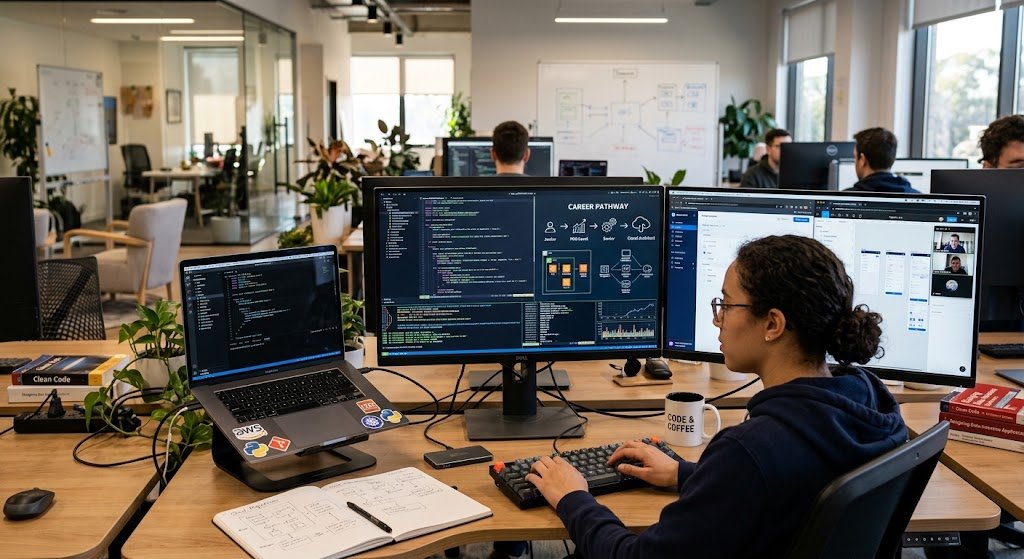
In the uber-competitive, hyper-evolving international economy of today; ongoing learning is at its utmost paramount. With technology and industry trends indefinitely changing with market demands, workers need to be able to constantly update their knowledge and skills in order to remain competitive. This is especially relevant in an environment where the economies are changing with automation and AI. Continuous learning is not a nice to have, it has become an essential skill for life and career success.
This post examines the new norm of lifelong learning, how adults can participate in regular education opportunities, and why it is necessary to keep pace with an ever-changing job market. Although it may appear unrelated, learning how agriculture is changing can show that with updated tractor technology even highly traditional trades will always benefit from ongoing education.
Why Education is more important than ever
- Technological Advancements
Today, technology is progressing in the modern-day workplace. Gone are the days when industries employed a high number of manual labor they now use state-of-the-art machines and software. Consider, for example, the case of agriculture. Farmers are no longer limited to plows as well, and the future points more towards smart tractors, and automation in most machines. Forbes notes that even seasoned pros have to engage in continuous learning to understand and adapt to this tech.
In everything from healthcare to finance, software and AI systems are taking over the role of data analytics. Workers need many of the same basic skills as office workers, but also must become digitally literate learning how to use software and keeping up with what is new or changing in an increasingly automated digital world.
- Shifting Industry Demands
Since industries change, some skills die and others are created. For example, think about tractor operators. Earlier, a tractor was simple to operate and maintain. However, nowadays tractors come with several levels of automation, which include GPS technology/precision farming tools and internet-of-things connectivity. In order to stay up-to-date in agriculture, employees need to learn about these innovations and become familiar with applying them to job duties.
Equally, in many other fields of knowledge what was important ten years ago is no longer so. A commitment to lifelong learning also means that workers can develop and remain relevant as the demands of their industries evolve.
- Increased Job Mobility
Employees, who once could spend decades in a single job or at a single company throughout their careers,b are leaving either for greener pastures or more cash. Site owners understand this because they too want to leave the website. The Post office trying to get bigger by building banks within stores and television commercials about how cheap telephone services have been all other sources of income have taken their toll on mail volume. Fast forward to today the average workplace is more fluid, and many people regularly change their jobs or industries (or even career paths entirely) several times during their working life. With greater job mobility as a result, that necessitates us committing to lifelong learning.
Many employees need to learn new skills or get certifications or degrees in order to transition into a different type of role. For instance, a tractor driver who strives to transition into management in the field of modern agriculture will necessitate knowledge pertaining to business administration or project management. This is where lifelong learning comes in, enabling workers to adapt seamlessly.
- Global Competition
The workforce is global, and competition can come from anywhere in the world. People from the entire globe are competing for single jobs and opportunities. Instead, you earn more by jumping from assignment to assignment so the skill of quickly picking up new levers and adapting it when conditions change is a huge competitive edge.
For example, in the competitive agriculture industry, farmers who were previously using tractors with traditional motors are now facing competition from large commercial farms equipped with advanced tech. Small-scale farmers can remain significant and productive by continuously broadening their knowledge in the field whether with farming practices, machinery, or agricultural science.
- Increased Lifespan of Careers
The old work model of spending 30 years with one company and retiring in your early 60s is history. As a result, many people are working longer some into their 70s by choice, but others for economic reasons. With longer careers, continuous education is important to remain sharp and keep up with changes in the industry.
Competing in a digitally driven work world calls for an engaged and agile approach, something that lifelong learning can help any worker with no matter their age. Indeed, older workers come equipped with a great pool of experience that when paired with new skills can be an amazing asset in many areas
Continual Education for Adults
- Certifications and Online Courses
Online Courses and Certifications Online courses are one of the most accessible ways for you to get into a cycle of lifelong learning. Amazing courses can be found on Coursera, Udemy or LinkedIn Learning and applied in areas such as coding to data analytics from leadership skills to soft skills. It gives them the freedom to learn from their comfort and according to their schedule.
For example, if a farmer wants to develop their ability to maintain tractors effectively then they might learn the basic principles of modern mechanical engineering or agricultural technology though an online course. Big Data/Analytics It could simply mean that we still need to shake off the disbelief and do a better job fine-tuning online training for hands-on skill-acquiring industries.
- Workplace Training Programs
To attract and retain top talent, businesses are starting to provide employees with opportunities for continuous learning in order to upskill their employees. These may include on-the-job training, seminars, workshops, and mentorship programs. In turn, employees should take advantage of these opportunities to improve their skills and remain marketable in their jobs.
As an example, a company that makes tractors might run some training sessions on the specific models of tractors they make which could be essential hands-on practice with this latest technology for staff. Such opportunities to acquire skills are not beneficial only for increasing job performance but also make you more employable in the long run.
- While meetings and conferences
Experts can use industry conferences, trade shows, and networking events to keep current about what is happening in their industries. They host conferences and events for you to get the low-down from industry experts, attend workshops, or mingle with your peers. For fast-changing industries, it’s important to keep yourself updated with the latest developments.
This includes events like farming expos that showcase new tractor models, precision farming equipment, or the newest smart irrigation systems for agriculture professionals. These events are an opportunity to engage with some of the best in the business and learn from a network of experts and peers.
- Pursuing Formal Education
Another option for adults seeking further education is attending school to earn a degree or diploma. This can be done through part-time programs or night classes at many universities and colleges. Formal education may be the right choice for those seeking to change careers or climb up a professional ladder in their field.
An example is a case of someone who already has some experience and training in operating tractors who may opt to take on an educational program related to agricultural engineering or agribusiness if they are aiming for more professional positions available within the industry.
- Joining Specialized Organizations
Or it might simply mean that you get access to all sorts of additional stuff like webinars or white papers from professional organizations. When you join these organizations, you get access to your community of peers, the newest advances in your specialty, and continuing education.
For example, a tractor operator could join an agricultural society that updates about the latest farming technologies and machinery improvements or sustainable practices. These are wonderful organizations to keep educated on industry trends and ongoing education.
Why Employers Encourage Lifelong Learning
This same behavior applies to top candidates as they gain a cast-iron opinion of organizations that don’t provide opportunities for continual learning within their teams, and to this day it’s not just about the individual but also with employers. Companies that support lifelong learning, and provide employees with avenues to pursue – whether they are compensation plans or not – gain a multitude of benefits such as:
- Improved Productivity: When employees learn about the newest technologies, it makes them efficient to help their company stay ahead of its competitors.
- Increased Innovation – When employees are constantly learning, they look at things in a different way and become more innovative.
- Increased Employee Retention: Investing in professional development sends the message to employees that their employers care and are working towards keeping them happy enough to keep them on board.
- Employability: In a context where businesses are churning over more rapidly than ever before, companies that foster continuous learning keep themselves ready and able to respond quickly to changes in the market.
Conclusion
The need to continually learn in today’s workforce is so great, that its importance cannot be overstated. As industries rapidly change, pushed by technology improvements or changes in demand and other situations due to global competition to create something new workers have no option but to keep learning if they are going to remain competitive. Adults have numerous ways to pursue their own lifelong learning via online courses, workplace training sessions, college classes, or networking.
Just as smart tractors and of agricultural production are already benefiting from the development of farming techniques, careers in all fields require lifelong learning to keep up with the latest trends. In a constantly updating world, you must be on the top of your game in order to remain relevant and competitive today. Adults who adopt a growth mindset towards learning can future-proof their impact on the workforce regardless of industry or career stage.