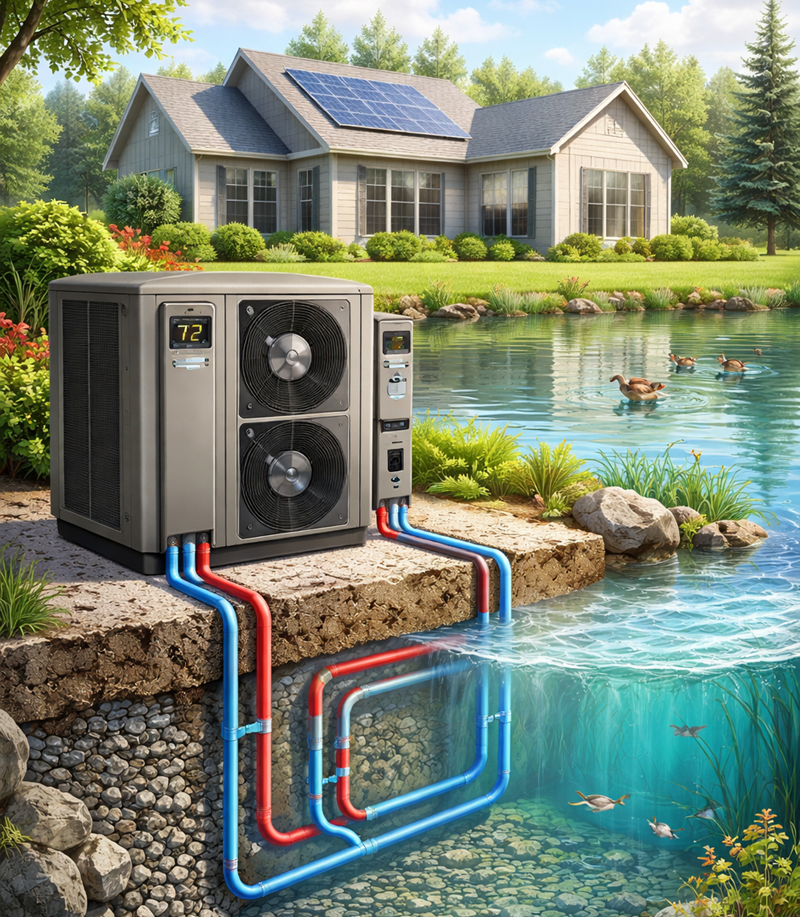
Since heating and cooling systems contribute significantly to comfort and long-term energy bills, a lot of property owners make an effort to find energy-efficient solutions. Water source heat pumps have been attractive because of their performance and energy efficiency. They operate not like traditional systems but promise to be efficient and cheaper to run in a sustainable manner. They offer several advantages, which can go a long way in explaining their growing popularity as one of the favorable options for residential and commercial spaces.
Superior Energy Efficiency
The energy consumption of water-source heat pumps is often much lower than that of traditional HVAC systems, making them one of the most efficient heating and cooling options. They allow us to use less power because they transfer heat instead of producing it. This process of transfer keeps up a long-lasting temperature level and lowers your expenses on utilities.
In the long run, this efficiency ultimately saves building owners money. Many commercial buildings choose water-source heat pumps because they can support steady indoor comfort with lower energy use over time.
Environmentally Friendly Operation
Across many organizations and households, limiting environmental damage is the top priority. Such systems utilize sustainable thermal energy from the water source, thus producing fewer greenhouse gas emissions. They depend on water’s characteristic steady temperature, thereby limiting reliance on fossil fuels. This approach to energy savings is also mindful of sustainability goals, achieving a slimmer footprint while helping keep indoor settings comfortable.
Consistent Indoor Comfort
One of the issues that plagued conventional units was inconsistent temperature levels. Water-source heat pumps have a constant supply of warm or cool water to regulate temperature. Because of this, there is not as much shock from changes in climate, making for a more desirable climate all year round. In winter, residents spend their days surrounded by warmth.
Flexible Application Options
Water-source heat pumps are flexible, making them ideal for various settings such as offices, schools, apartments, and homes. Their adaptable design allows for installation on new builds and retrofitting existing homes. These systems are capable of operating from various sources of water, like lakes, rivers, or underground wells. This versatility means that they can be used in a continuous range of buildings and needs.
Quiet Operation
Traditional heating and cooling units often make noise that can interrupt day-to-day life. Because air-source heat pumps work differently than water-source heat pumps, they usually make more noise, while much of the noise from water-source heating stays in the mechanical rooms. The result means a quieter environment for those who occupy your buildings. In environments where quiet is preferred, like libraries, hospitals, or offices, quiet systems are more desirable.
Longevity and Reliability
One of the main advantages of water-source heat pumps is durability. In a stable water environment, the temperatures keep the components cooler, so wear and tear is less. These units can last for decades (with proper maintenance)—far longer than most traditional systems. It helps property owners to ensure a maximum return on investment in the long operational life.
Lower Maintenance Requirements
With the average property, repairs are frequently plaguing property managers. In contrast, water-source heat pumps normally demand lower maintenance over time. They have fewer moving parts in their design, which decreases the chances that they will break down. Lower maintenance requirements mean fewer disruptions and almost no surprise bills for building owners.
Space-Saving Design
Urban buildings, in particular, often face space constraints. Water-source heat pumps have a small footprint, creating additional real estate for other uses. The modular design enables it to fit into available mechanical space. There will be developers looking to maximize profit and people wanting somewhere practical to live.
Supports Zoning and Individual Control
Various locations in a building typically need different temperatures. Water-source heat pumps are compatible with zoning, which allows different regions of a home or building to be controlled separately (e.g., rooms or just one floor). Every zone can then stay at its perfect temperature, which makes it more comfortable for everyone. Utilize energy effectively, delivering heating or cooling solely to the areas in use.
Conclusion
Water-source heat pumps combine high energy efficiencies with environmental stewardship and a cost-effective solution for the masses. They are unique because they run quietly, work in most weather, and are reliable. This plan leads to lower energy costs and more comfort—a wise investment in terms of residential and commercial property. Water-source heat pumps have a simple proposition of value: if you want a solution that is dependable, efficient, and long-lasting.