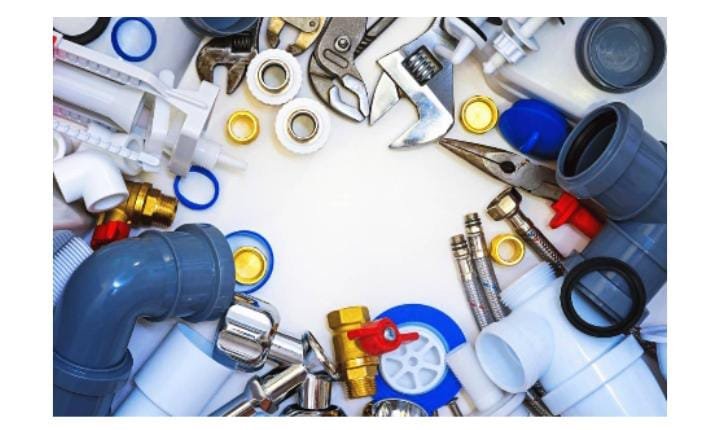
Walk into any hardware store and you’ll find rows of taps, pipes, and fittings that look nearly identical. The bloke behind the counter will tell you they all do the same job, so why not save a few rand and grab the cheaper option? That thinking costs South African homeowners thousands every year, and not just in replacement parts. The real expense shows up in water damage, emergency callouts at weekend rates, and repairs that snowball because one dodgy component compromised the entire system. Understanding plumbing supplies means looking past the chrome finish to what actually keeps water flowing where it should.
Durability That Stands the Test of Time
Brass fittings corrode from the inside out, which is why a joint can look perfect on the outside whilst being completely hollow within. This happens through dezincification, where zinc leaches out of low-grade brass alloys and leaves behind a porous copper structure that crumbles under pressure. Gauteng’s water is particularly aggressive because of its mineral content, eating through substandard fittings in half the time they’d last in coastal areas. DZR brass costs more upfront, but it’s actually a different alloy formulation—not just better manufacturing of the same material. Most homeowners have no idea their geyser connections are ticking time bombs until they come home to a flooded ceiling and a plumber explaining what dezincification means whilst pointing at the corroded remains.
Water Efficiency and Sustainability
Low-flow taps feel different, and that’s the problem manufacturers spent years solving. Early water-saving fixtures produced these pathetic dribbles that had people ripping them out within weeks. Modern aerators work by fracturing the water stream into thousands of tiny droplets mixed with air, which your hand interprets as higher pressure than it actually is. The brain gets fooled by the coverage area rather than the volume. Where this gets interesting is in hard water areas—cheap aerators have wide openings that clog with limescale within months, killing the flow entirely. Quality plumbing supplies use laser-drilled aerators with specific hole patterns that maintain their turbulence effect even as minerals build up around the edges. Nobody thinks about aerator engineering until their “water-saving” tap is delivering less water than a broken garden hose.
Aesthetic Appeal and Home Value
Premium taps have weight because they’re solid brass underneath the finish, not hollow shells spun from thin metal. Pick one up in the shop and you’ll feel the difference immediately—it’s substantial, almost heavy. That mass isn’t just for show. It dampens vibrations that cause wear on internal components and provides thermal stability that prevents the expansion-and-contraction cycles that crack cheaper fittings. The finish matters more than people realise too. Physical vapour deposition bonds metal coatings at the molecular level, creating surfaces that resist scratching and tarnishing for decades. Standard electroplating just sticks a thin layer on top that wears through to the base metal within a few years, leaving you with a spotted, corroded mess that screams “cheap renovation” to anyone viewing your property.
Compatibility and Installation Ease
Thread standards are chaos in South Africa because we’ve imported systems from Britain, Europe, and America over different decades, and none of them play nicely together. BSP threads look almost identical to NPT threads until you try to seal them—one is parallel, one tapers, and forcing them together strips both. The leak might not show up immediately. It’ll weep slowly behind the wall until you’ve got mould growing in places you can’t see, rotting the timber frame. Mixing PEX systems from different manufacturers is even worse. The pipe might fit into the compression ring, but the tolerances are different enough that the seal fails under pressure cycling. These aren’t dramatic burst failures that get fixed immediately—they’re the slow leaks that cause structural damage before anyone notices something’s wrong.
Professional Recommendations Matter
Plumbers develop brand loyalty for reasons that have nothing to do with marketing. They remember the callback jobs—the ones where they have to return after six months because the shower cartridge failed or the braided hose burst. Those callbacks cost them money and reputation, so they learn quickly which products cause problems. They’ve also seen the aftermath of DIY disasters where someone bought whatever looked good online and installed it themselves, not knowing that particular valve requires a specific operating pressure or that those fittings are meant for cold water only. The gap between adequate and excellent plumbing supplies isn’t visible when everything’s new and shiny. It only becomes obvious five years down the track when one system is still functioning perfectly and the other has required three emergency repairs and has a fourth problem developing behind the tiles.